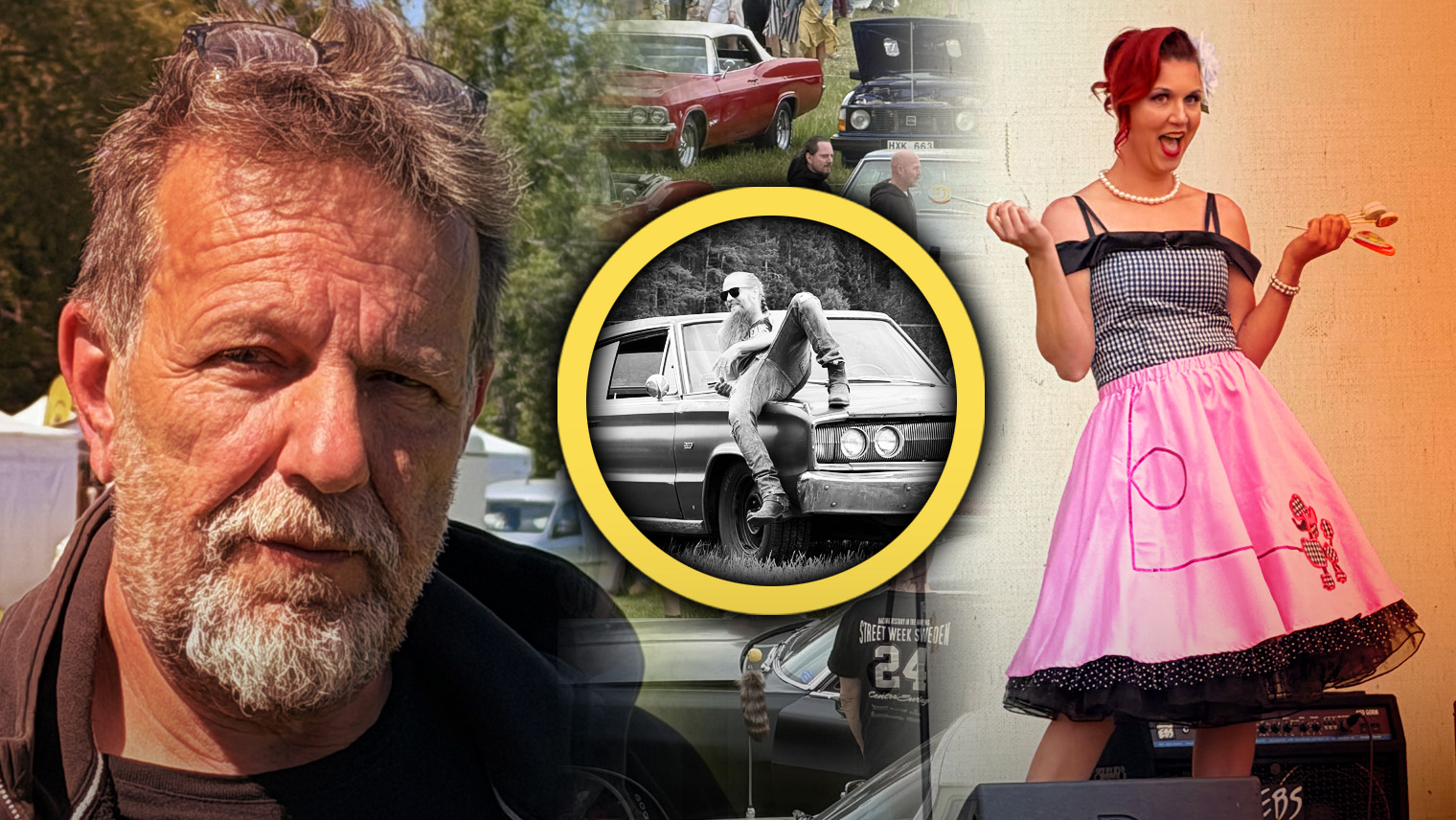
When Peter Dupet and his wife Marie left Stockholm for Nyköping, the plan was simple: to live a calmer life and stay out of the limelight. But after just a few months, an idea was born that would change everything. Today, Dixie Car Meet attracts thousands of participants from across the Nordics and has become one of Sweden’s largest meeting places for American cars, rockabilly culture, and cruising. Yet for Dupet, it’s about much more than engines and chrome – it’s about community, freedom, and a culture where people meet across social and political boundaries.
When the Dupet family moved to Nyköping, the intention was to take it easy after their years in Stockholm.
“We were going to move down here, be anonymous, have more kids, and just take it easy,” says Peter Dupet with a laugh.
The plan lasted about half a year.
Together with his wife, he began to sketch out a small car meet. The target was modest – about 300 cars.
The response was much bigger than that.
“The first year we had just under 3,000 vehicles on site. Cars, motorcycles, all sorts. That’s when we realized this was a good thing.”
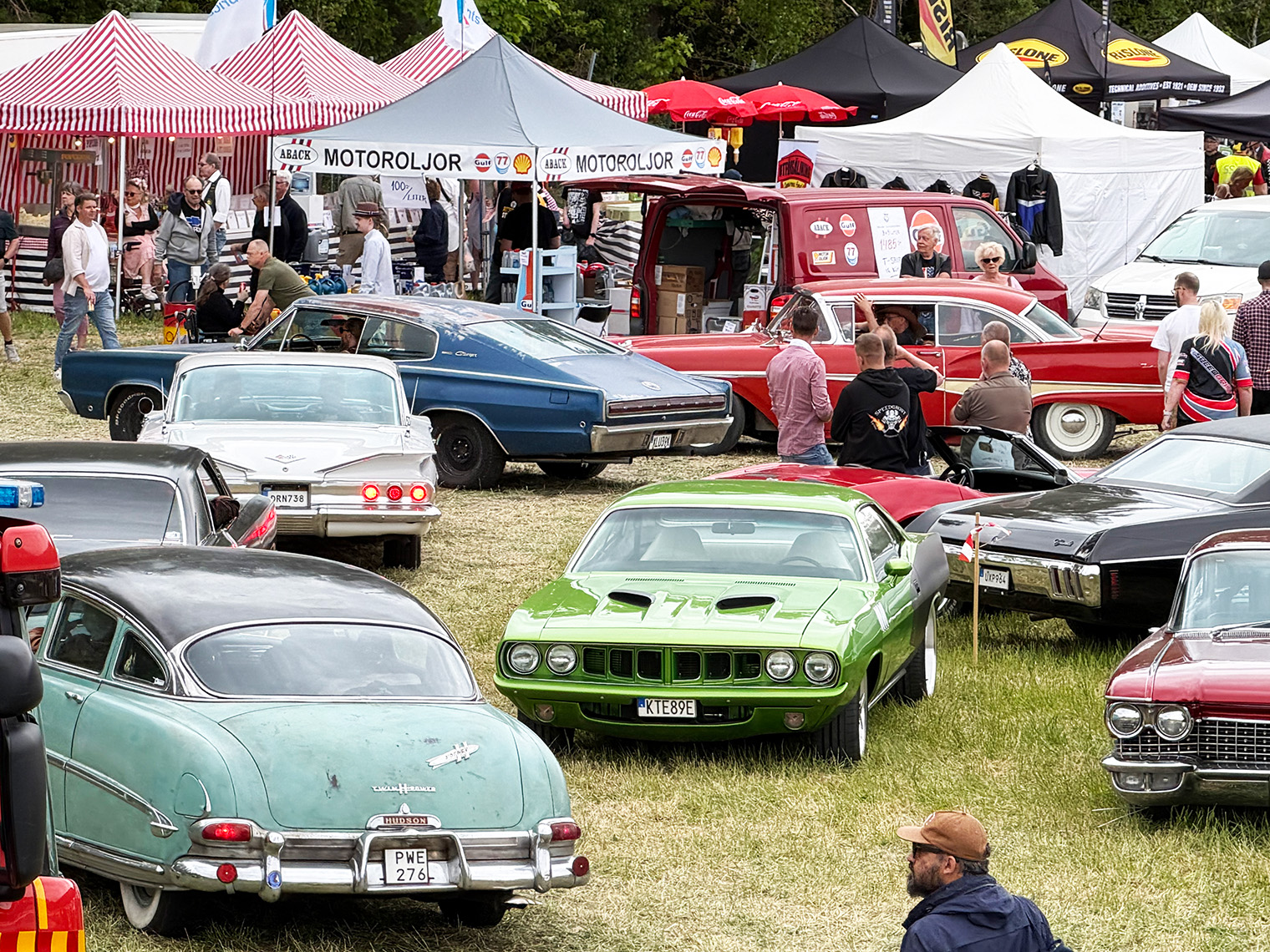
According to Dupet, conscious effort is behind the event’s success. Over many years he’s worked in marketing, advertising, radio, and motoring magazines, and he thinks many organizers underestimate the importance of being visible.
“A lot of people are really bad at marketing themselves. You have to keep things running all the time. It doesn’t have to be flashy, but people need to know you exist.”
Family Festival – But a Ferrari Should Be a Ferrari
One of the founding ideas behind Dixie Car Meet was to create an event where multiple generations could meet. Dupet describes it as a deliberate counter-reaction to the image of car meets as rowdy or alcohol-fueled.
“You should be able to come here with young children. You should be able to come with grandma or grandpa. It should be family-friendly.”
That’s why there’s no alcohol served at the event. Visitors are of course free to make their own choices, but the organizers don’t want alcohol to be the main focus.
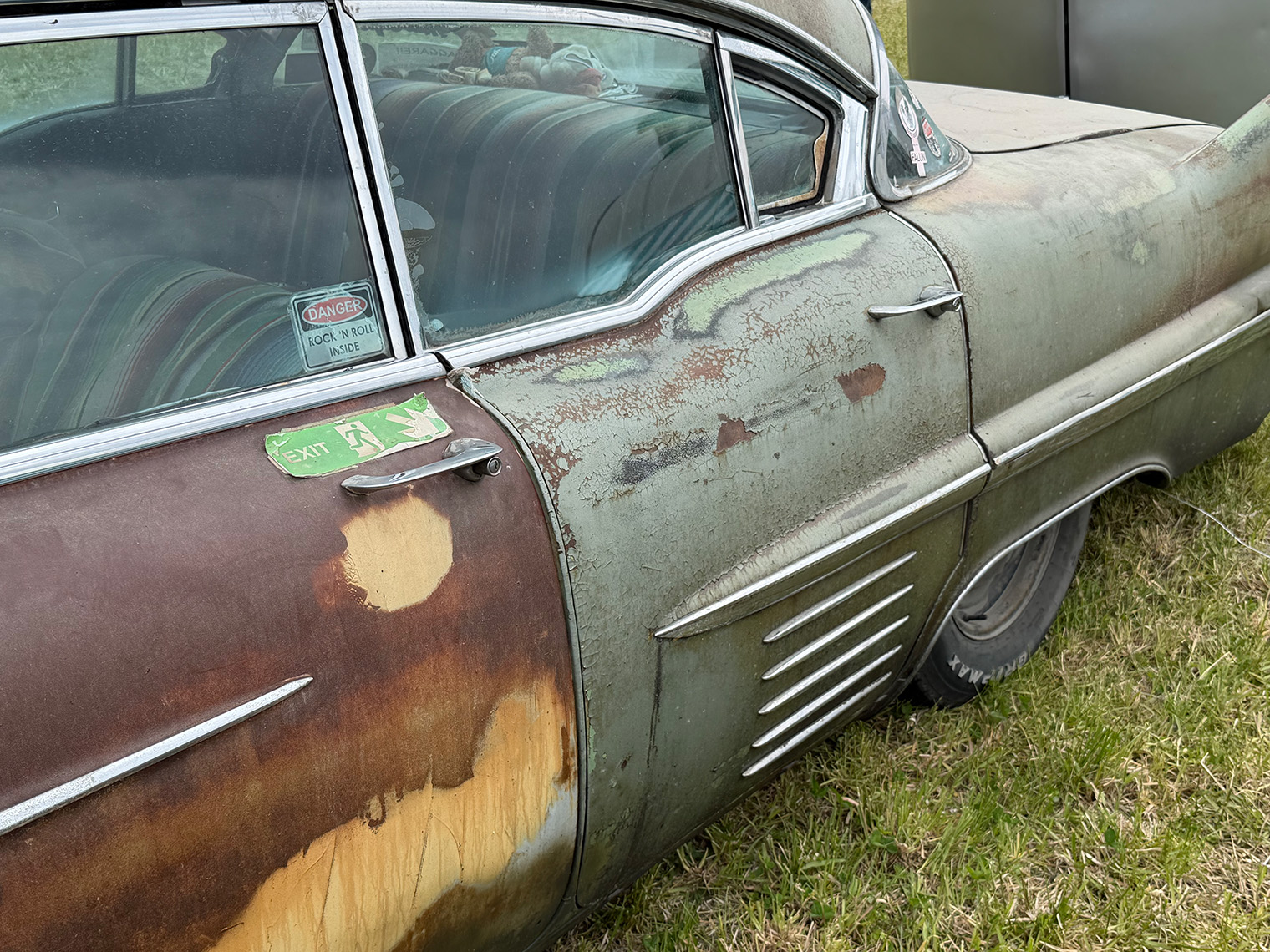
It’s equally important that visitors know who’s actually responsible for the event.
“If you have a question, you should be able to ask me directly. You shouldn’t have to go through lots of layers.”
The conversation turns to Ferrari’s launch of their new electric car “Luce,” Ferrari’s first EV, developed with former Apple designer Jony Ive. It received a cool market response.
After the launch, the stock fell up to eight percent, which according to several media outlets wiped out more than 50 billion SEK in market value.
How would you comment on such a development?
“No, but it’s so damn stupid. I think it’s good that people evolve, absolutely. But you’ve got to keep some basic principles. If it’s a Ferrari, it’s a Ferrari. It’s not some damn Fiat.”
Criticism of the Pin-Up Competition – “This Empowers Women”
One of this year’s new features is a pin-up competition, which drew criticism even before the event started. Behind the initiative is Marie Dudas, who has herself competed in pin-up culture for many years.
They are strong women who dare to go up on stage and show themselves. You’re not judged on whether you’re fat or thin, tall or short. It’s about style, charisma, and the overall impression.
Peter Dupet, organizer of Dixie Car Meet
“Some people thought it was the same thing as striptease or some kind of old-school strip show. But it has nothing to do with that,” says Peter Dupet.
According to the organizers, the competition is instead about recreating the fashion, hairstyles, makeup, and style expressions of the 1940s, ’50s, and ’60s.
“They are strong women who dare to go up on stage and show themselves. You’re not judged on whether you’re fat or thin, tall or short. It’s about style, charisma, and the overall impression.”
The jury consists only of women of various ages. The participants also help each other with everything from clothing choices to hairstyles.
“Several of them are competing for the first time. They contact Marie for advice about shoes, hair, and clothes. They support each other all the time. It’s fantastic to see.”
After the organizers responded to the criticism, Dupet says opposition faded quickly.
“This isn’t demeaning to women. On the contrary. This empowers women.”
The discussion and debate surrounding the new pin-up competition became so notable that even SVT Sörmland made a segment about it.
“Everyone Fits In This Culture”
When Dupet describes car culture, he returns again and again to the same theme – community.
“It doesn’t really matter what your background is. Everyone has a shared interest and everyone fits in. I think that’s most important.”
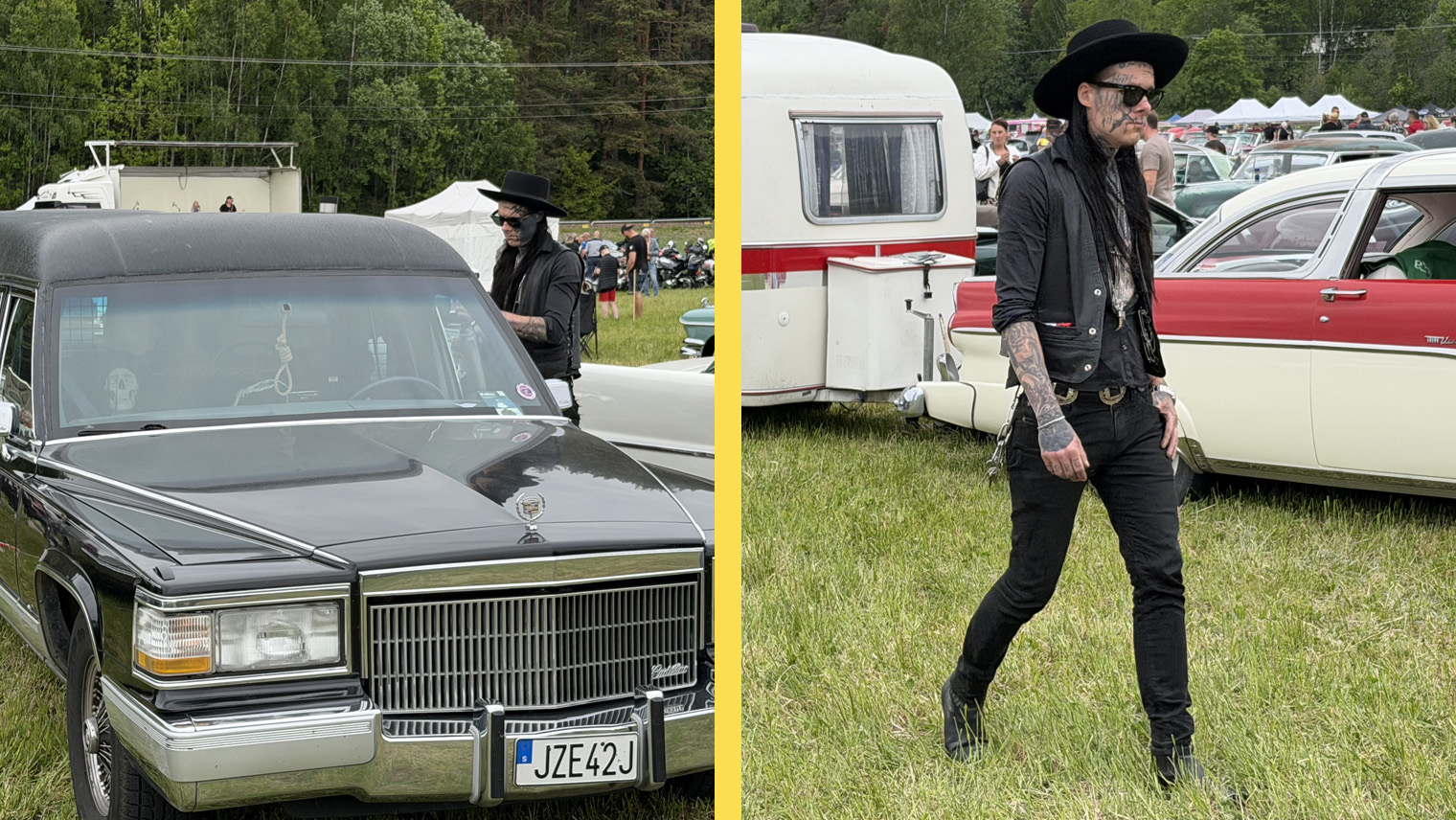
He describes how people who have never met before help each other with spare parts, repairs, or simply offer a seat in their car to anyone who wants to tag along.
They’re impressed by how it works. They realize these are regular people who are very open to others. I actually think things like this open people up more than much else. People see it’s not so scary. They’re welcome in our culture.
Peter Dupet, organizer of Dixie Car Meet
“Someone posts that they want to come but lack a car. Immediately there are ten or fifteen people replying, offering them a ride. Try pulling that off at other major events.”
According to Dupet, this openness is also visible among visitors with foreign backgrounds.
He says that many initially come in with preconceptions about the car-cruising world, but leave with a completely different impression.
“They’re impressed by how it works. They realize these are regular people who are very open to others.”
When Samnytt mentions how young women with immigrant backgrounds are often fascinated by cruisings and American cars, Dupet agrees.
“I actually think things like this open people up more than a lot of other things. People see it’s not so scary. They’re welcome in our culture.”
American Cars as Cultural Heritage
Dupet himself has been an enthusiast for a long time and owns, among other things, a 1947 Cadillac. He describes postwar American cars as something much more than just means of transport.
How would you describe the creativity in American car design in the 1940s, ’50s, and ’60s compared to today?
“They were works of art. Americans dared to stand out in a way we never really did in Europe. Here everything had to be functional and practical. There, it was also about joy and design – and you were allowed to stand out! He continues:
“But today it’s embarrassing to look at American cars.”
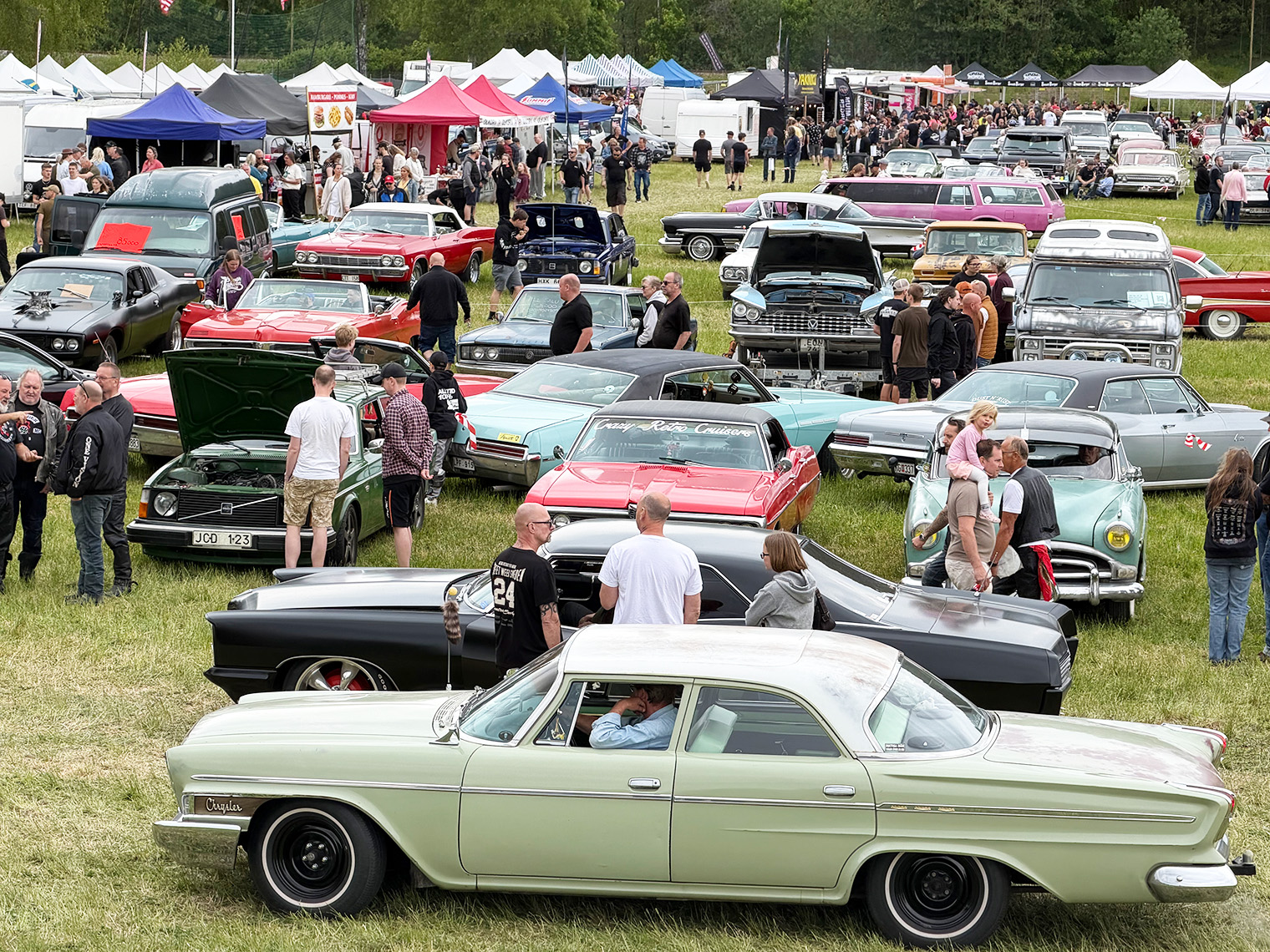
He believes much of that creativity has disappeared from today’s car industry. When the conversation turns to the EU’s much-discussed proposal regarding end-of-life vehicles, Peter Dupet is clearly skeptical. He argues that the rules might be understandable in countries where junk cars are left on the roads, but that they risk causing problems in Sweden, where car enthusiasts care for and restore vintage vehicles.
According to Dupet, Sweden is world-famous for its well-preserved American cars, and he feels that EU politicians show a lack of understanding for the culture they’re trying to regulate. “Don’t come here and mess around,” is how he sums up his view.
“The Car Is About Freedom”
Even though many participants have strong political views, the organizers have chosen to keep party politics out of this year’s event. The decision was made after a survey among the largest car clubs.
I can see good things in almost every party. But the Green Party has a lot of ideas that just don’t work in reality. People need to be able to get to work and live their lives. Sweden doesn’t work everywhere like downtown Stockholm.
Peter Dupet, organizer of Dixie Car Meet
“Many said they didn’t want politics at the meet. People can vote for whatever they want, but here the focus should be on the cars and the community. I thought that was a wise decision.”
At the same time, Dupet is open about seeing risks in political proposals that could affect car culture.
He directs particular criticism towards the Green Party’s views on energy, fuel, and motoring.
“I can see good things in almost every party. But the Green Party has a lot of ideas that just don’t work in reality. People need to be able to get to work and live their lives. Sweden doesn’t work everywhere like downtown Stockholm.”
For him, the car means something bigger than just transport.
It’s about freedom.
And when thousands of enthusiasts gather in Nyköping, that’s exactly the feeling he hopes will define this year’s Dixie Car Meet.
“The most important thing is that people come here, meet, and enjoy themselves together. That’s why this culture is still alive.”