Is the government’s exemption for elderly care a necessary way to secure welfare – or a way to keep labor migration going despite promises of tighter migration policies? This is the central question as doctor and Malmölistan party leader Nils Littorin levels harsh criticism at the government’s approach. According to him, the elderly risk paying the price when municipalities and care companies continue to rely on cheap labor instead of improving conditions in elderly care.
Samnytt has previously reported on criticism of the government’s decision to exempt certain professions from the new wage requirements for labor migration.
Former Moderate MP Hanif Bali described the exemptions as a departure from the promise of tighter migration policy and argued that Sweden should primarily prioritize the interests of its own citizens.
READ ALSO: Hanif Bali: “Sweden exists for Swedes” – Rages against wage requirement exemptions
In this interview, Nils Littorin goes even further, claiming that the exemption for elderly care is effectively about wage dumping and continued mass immigration.
The need for immigration from outside the EU for people to work in Swedish elderly care is nonexistent.
Nils Littorin, doctor and party leader for Malmölistan
Littorin is a doctor and party leader for the local party Malmölistan. In recent years, he has become known as a sharp critic of developments in Malmö, often raising issues concerning migration, crime, welfare, and elderly care.
In the 2022 election, he was elected to Malmö’s city council, where he has established himself as one of the city’s most outspoken opposition politicians.
According to him, there is no shortage of people who can work in elderly care. What is lacking are functional working conditions and an organization that encourages trained staff to stay on.
– The need for immigration from outside the EU for people to work in Swedish elderly care is nonexistent, he says.
READ ALSO: Tidö government eases wage requirements for some labor migrants
“There is no shortage of people”
Littorin points to high unemployment in Sweden, especially in Malmö, where he claims there are already large groups of people who could work in health and social care.
He also describes how many experienced assistant nurses are leaving the profession because the workload has become too heavy and operations increasingly pressured.
According to him, the problem is not a lack of labor but rather that the work environment has become so poor that trained staff are leaving.
He describes how municipalities and private care providers instead fill the gaps with people lacking education or sufficient language skills.
– Quality is the big problem, he says.
Littorin believes that this development drives away precisely those employees with long experience in care work and who demand quality, continuity, and good care.
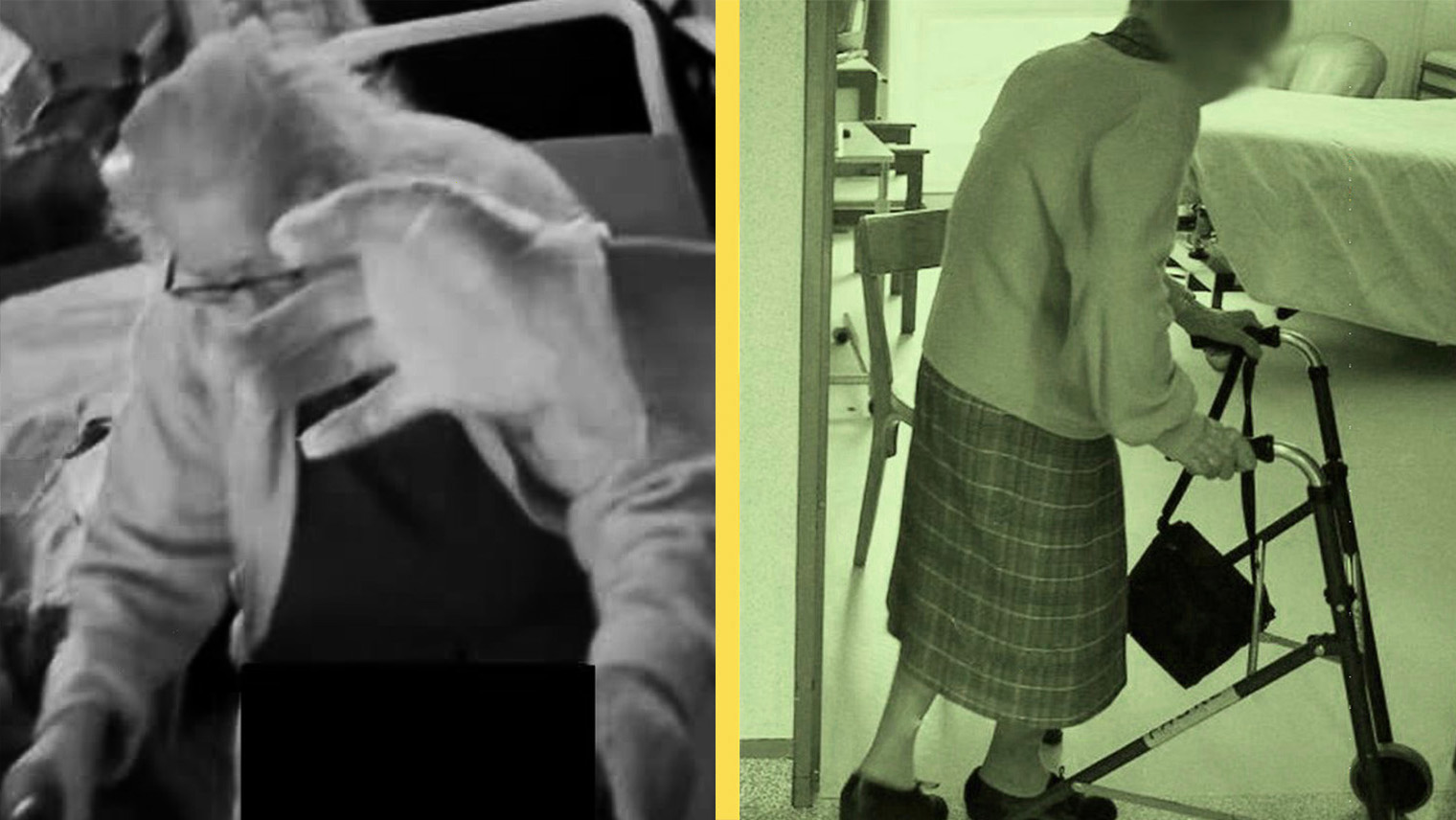
“Almost like a death cliff”
Perhaps his harshest criticism is directed at what he perceives as an attempt to use elderly care as an integration project. According to Littorin, the elderly are a particularly vulnerable group as they often lack the ability to protest against deficiencies in the system.
– The old don’t have the energy or aren’t able to speak out, he says.
READ ALSO: EXPOSED: Gang criminal hired in home care – raped pensioner
He describes how schools and other institutions at least have relatives who can react when problems arise, while many elderly people lack such a safety net.
This is part of our society beginning to crack. And to become old and sick is like a stamp and a stigma, because no one takes care of you and you become disposable, almost like an “ättestupa” (legendary cliff for abandoning the old).
Nils Littorin, doctor and party leader for Malmölistan
At the same time, he rejects the argument that Sweden needs labor migration to cope with elderly care.
How do you respond to claims that the more people come to Sweden, the greater the need for elder care?
– Yes, exactly. First of all that’s not true—you can’t say both that we need to take care of our elderly and that there is a staff shortage in healthcare, while at the same time in Malmö alone we spend a billion kronor annually on social assistance for over 100,000 unemployed people. He continues:
– To entire families, on benefits, year after year. There are no gains for Sweden. On the contrary, we risk lowering both quality of life and living standards, he says, and continues:
– It’s part of our society beginning to crack. And to become old and sick is like a stamp and a stigma, because no one takes care of you and you become disposable, almost like an “ättestupa” (death cliff).

READ ALSO: Home care in the new Sweden: Sexual assaults at night and “haram” to drink light beer
He also describes the exemption as a way to keep costs down by recruiting cheap labor.
– Wage dumping is exactly what this is about, he says.
Littorin also draws parallels to the Swedish school system, where he claims many families have already lost confidence in public services.
He points to Malmö as an example where, according to him, parents choose certain schools or move from the municipality to give their children a better education—in classes with fewer immigrants and fewer problems. The same development now risks hitting elderly care, he warns.
From human care to minute management
In the interview, Littorin repeatedly returns to how elderly care has changed over the past decades. He compares today’s home care service to the older model that existed in the 1970s and 80s.
In those days, a nurse could have just a few clients per shift. Today, work often involves managing a large number of scheduled interventions under time pressure. According to Littorin, a nurse could previously care for four or five clients per shift. Today, the same person may need to handle up to 30 interventions in a single day.
The result, he argues, is that human contact and social connection are pushed aside. For many elderly people, home care staff are the only human contact they get during the day.
– At least to be able to sit down, look each other in the eye, and say hello, he says.
READ ALSO: He lay in his own feces for eight hours – “But if I say anything I’ll lose my job”
The interview also broadens out into a discussion about how previous institutions such as old-age homes and mental hospitals were phased out at the end of the last century.
Littorin believes that the phasing out of mental hospitals, long-term care, and traditional old-age homes was part of a larger transformation where stable institutions were replaced by more individualized solutions. He admits the old systems had shortcomings, but emphasizes they also offered security, community, and round-the-clock staff access.
According to him, many people with extensive needs fell between the cracks when responsibility shifted to municipalities, without the resources following. He is not advocating a return to the old institutions as they were, but argues that society has lost something important when long-term, stable care environments disappeared.
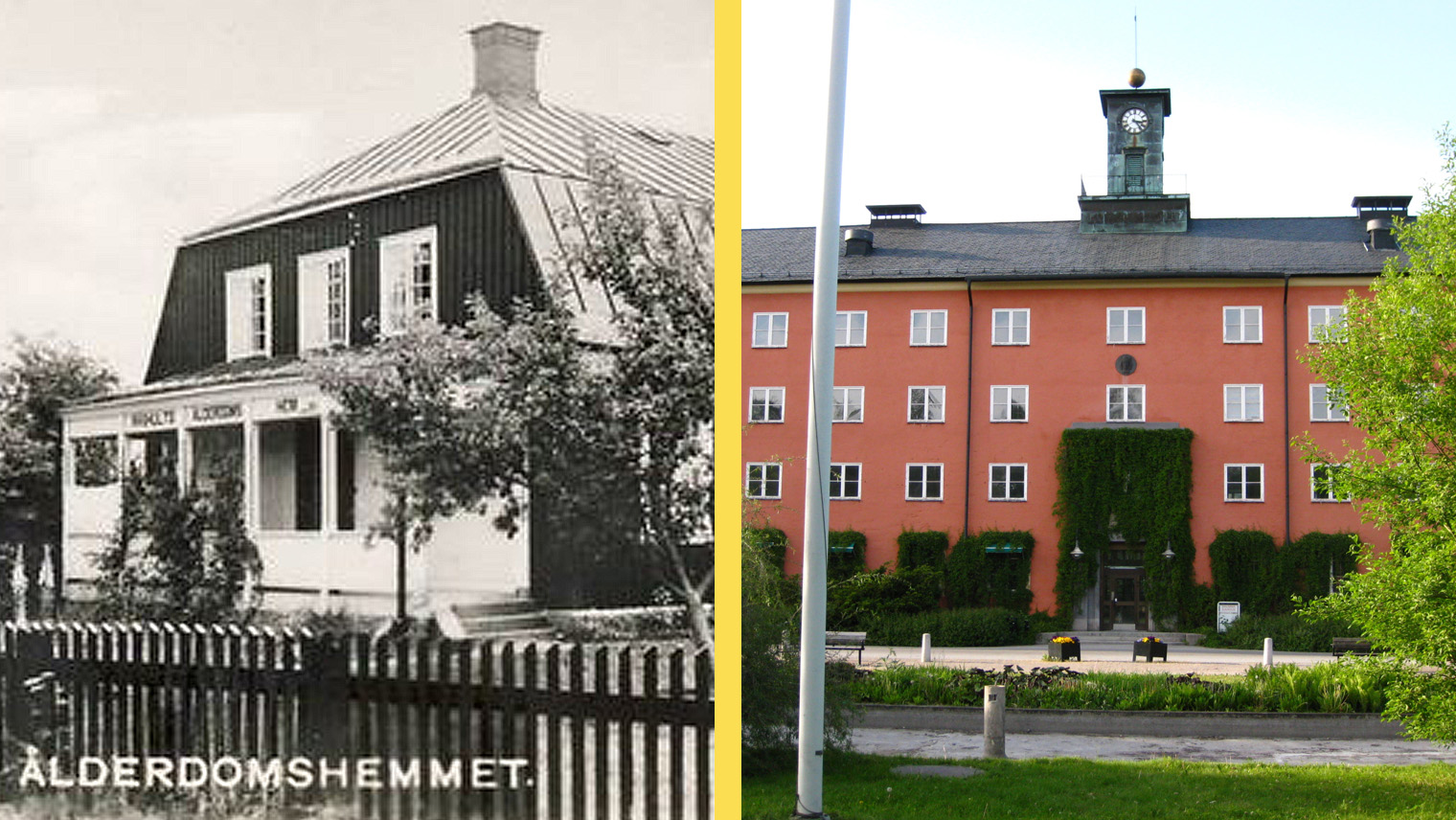
As an example, he talks about a relative who lived in the former mental hospital Sankt Lars in Lund, and who he says never managed the transition to a lonely life outside the institution and took his own life.
“SD should never have agreed to this”
Littorin is not content to only criticize the government. He also sharply criticizes the Sweden Democrats, who he believes should have stopped the exemption.
READ ALSO: INTERVIEW: The Sweden Democrats demand life sentences for rapes against the elderly
He claims the party is accepting an exemption that directly affects many of its own voters, since a large proportion work in elderly care or depend on it themselves. At the same time, he claims that continued immigration in the long term risks hurting the party politically, since many newcomers, according to him, overwhelmingly vote for left-wing parties.
I think it’s wage dumping. One should remember that the ideas of free immigration and open borders were not originally a Social Democratic idea, even if the Social Democrats later embraced it. Initially, it was pushed by forces within the Moderates and the Moderate Youth League (MUF), where Ulf Kristersson belonged to the generation arguing for open borders.
Nils Littorin, doctor and party leader for Malmölistan
– These hundreds of thousands of people who have arrived under this government won’t vote for stricter immigration policy. The majority will vote for S, V, and MP. So they are digging their own grave with these policies.
The conversation then turns into a wider discussion about migration in Sweden.
Littorin argues that the government and the Tidö parties are misleading voters by focusing on reduced asylum immigration while total immigration remains high, with family and labor migration included.
He points to countries like Denmark, Finland, Poland, Slovakia, and Hungary as examples of states that, according to him, have a significantly more restrictive migration policy.
– That is not what people voted for, he says.
READ ALSO: When imagined goodness outweighs responsibility—and the elderly pay the price
Why do you think the government makes these exemptions?
– I think it’s wage dumping. One should remember that the ideas of free immigration and open borders were not originally a Social Democratic idea, even if the Social Democrats later embraced it. Initially, it was pushed by forces within the Moderates and the Moderate Youth League (MUF), with Ulf Kristersson belonging to the generation that argued for open borders. Nils Littorin concludes:
– These parties have traditionally been close to the business sector and saw immigration as a way to push down wages and weaken union organizing. That’s why it is so important for the Moderates to maintain high immigration. The exemption in elderly care then becomes a loophole to justify continued immigration through labor migration.
123 083 33 50