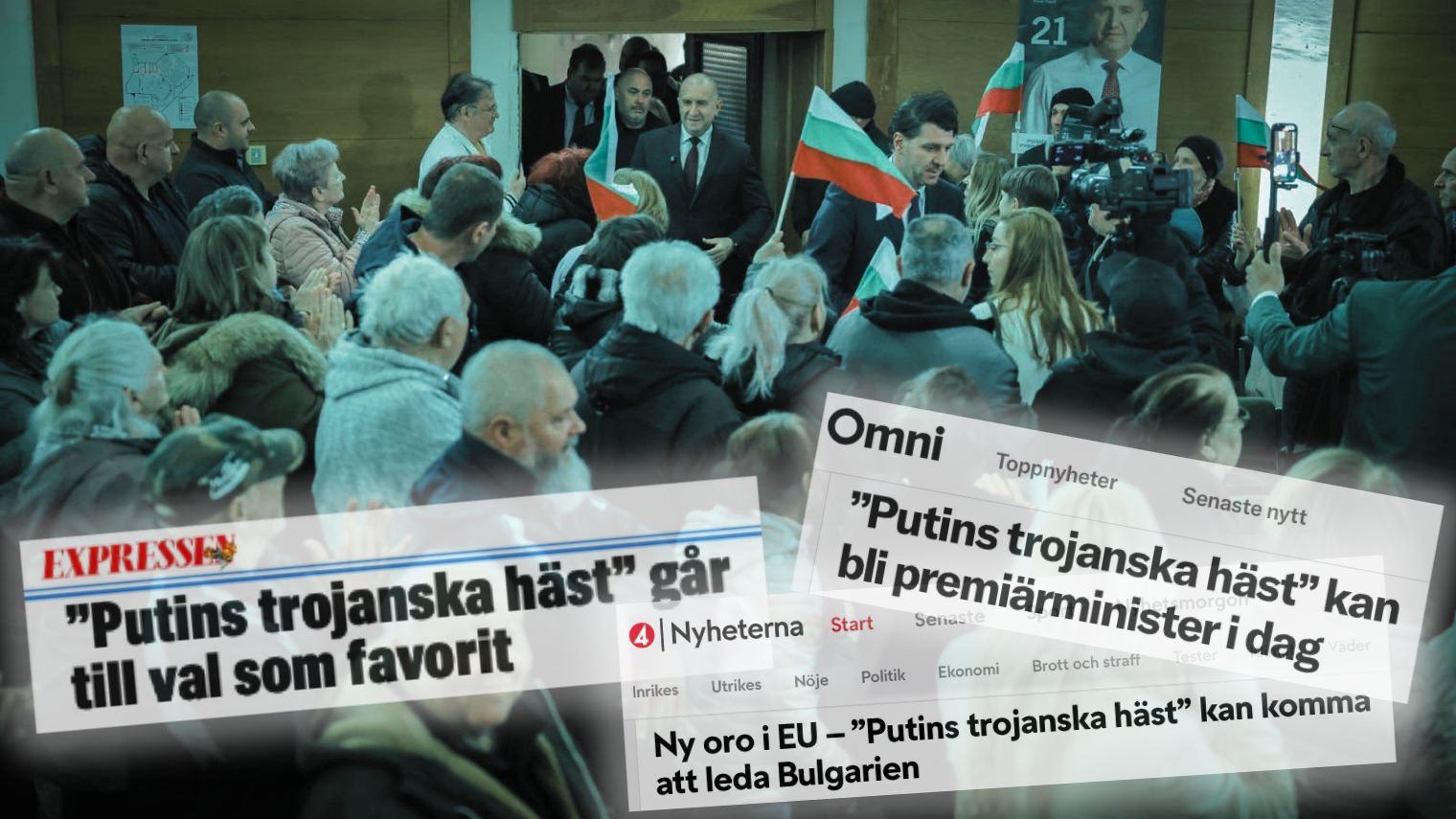
After yet another election in Bulgaria, the political landscape looks set to be redrawn once again. The newly formed alliance Progressive Bulgaria (PB), led by former president Rumen Radev, is surging ahead and could become the decidedly dominant force in parliament. In Swedish media, Radev is described as ‘Putin’s Trojan horse.’ At the same time, the country’s dependence on EU support is highlighted, which is said to set boundaries for how far political deviation from the Brussels line can actually go.
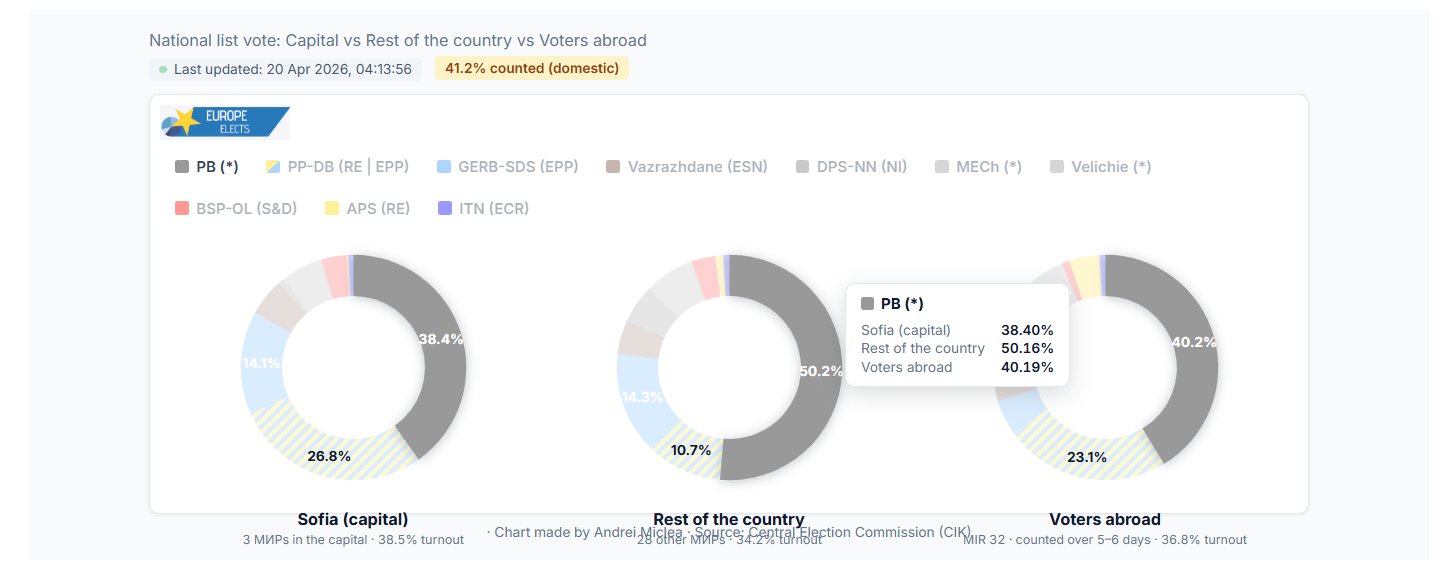
On Monday morning, Rumen Radev’s coalition appears headed for a major victory. With nearly 80 percent of the votes counted, Progressive Bulgaria is clearly in the lead with 44.6 percent. The outcome also opens the possibility for the coalition to achieve an outright majority, since several smaller parties risk falling below the four percent threshold.
Further down in the results are the traditionally powerful ruling parties. The conservative government party GERB and the liberal alliance PP–DB both land at only around 13–14 percent each.
Rumen Radev and his party Progressive Bulgaria (PB), which some describe as a center-left-leaning alliance, appear to have secured over 50 percent support outside the capital Sofia. In the capital, support is approaching 40 percent of the votes.
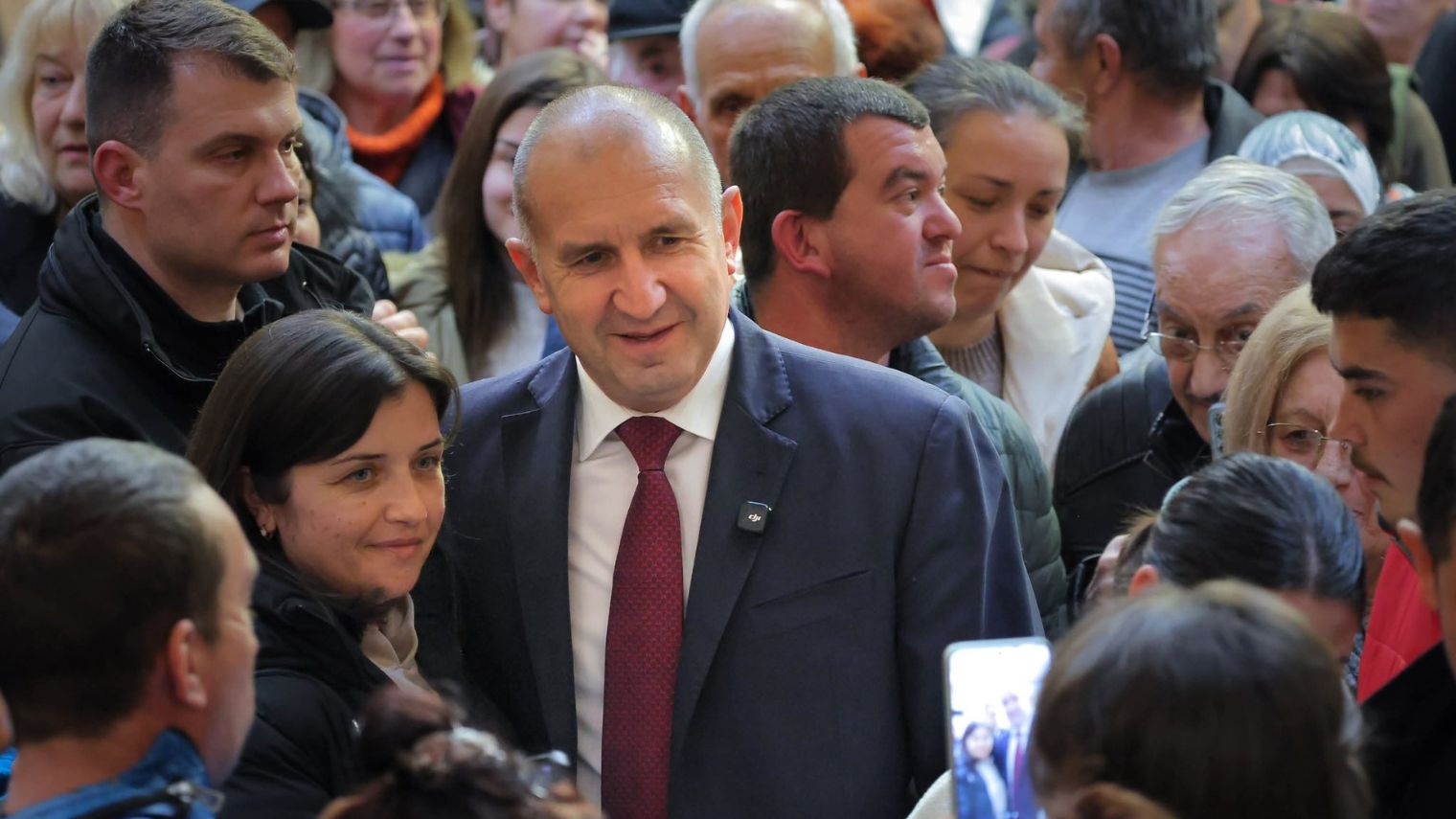
The former president Rumen Radev, who held office from 2017 and is also a general and former fighter pilot, has attracted voters with promises to fight corruption and break the prolonged political instability in the country. Meanwhile, the traditional and more EU-friendly parties are far behind in the polls.
SEE ALSO: The “wrong” candidate won – now the presidential election in Romania will be rerun
This is the eighth election in just five years—a sign of a country where governments have followed one another in rapidly collapsing coalitions. These have often consisted of EU-friendly parties from both the center-right and Social Democratic camps, which has contributed to political instability. At the same time, dissatisfaction with the political system has grown strong.
Labeled ‘Putin’s Trojan Horse’
But his successes are causing concern in Brussels and in editorial offices both in Sweden and across Europe. Rumen Radev, who was previously Bulgaria’s president, is described as representing a more Russia-friendly line and is said to resemble Hungary’s outgoing prime minister Viktor Orbán in this regard.
This is motivated, among other things, by the fact that he has opposed military support for Ukraine, criticized the sanctions against Russia, and opened up to resuming energy trade with the country in the east.
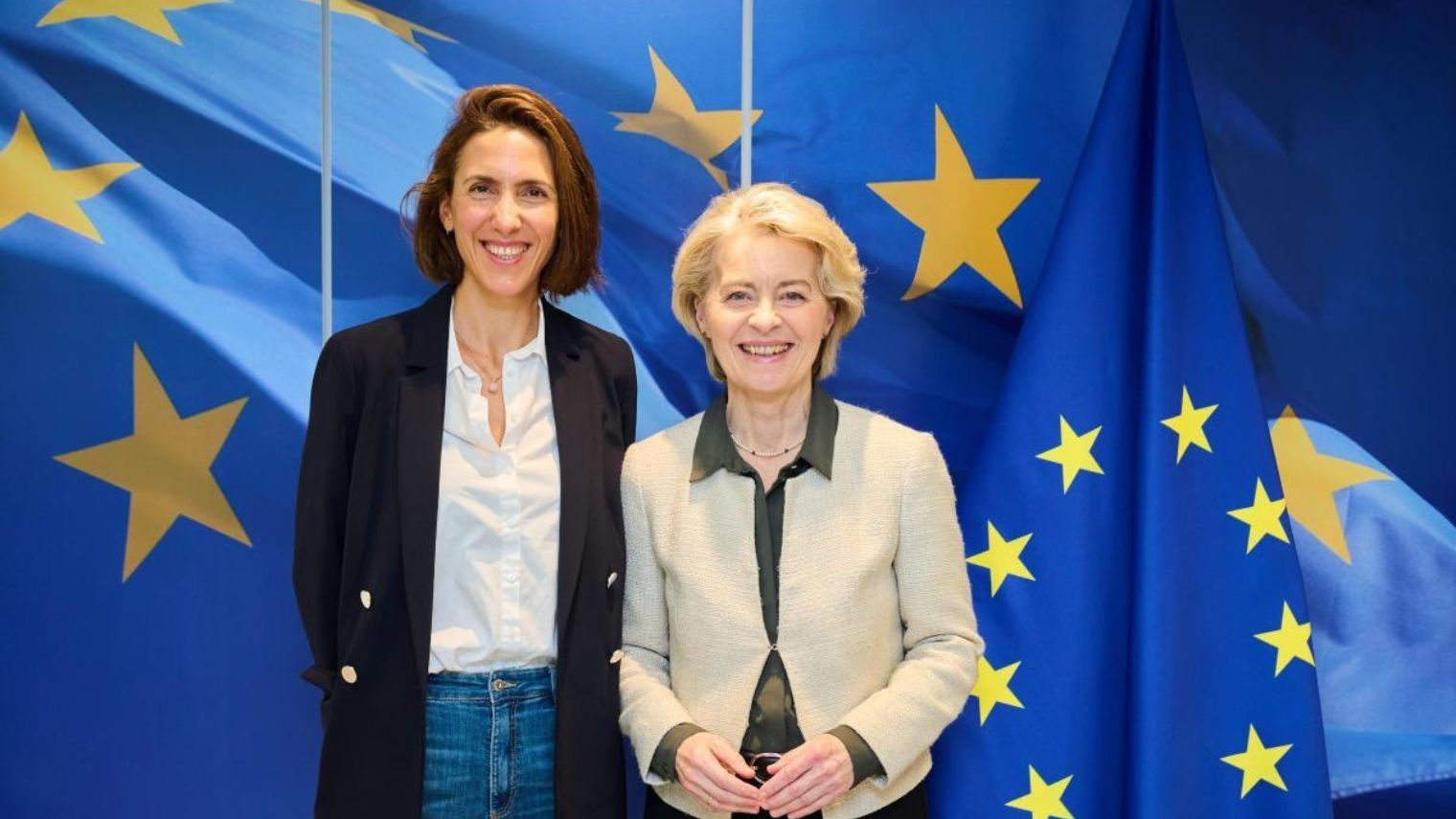
It is in an article in the Financial Times, widely cited by Swedish media, that French liberal EU parliamentarian Valérie Hayer expresses concern about the Bulgarian election. She says she is “very worried” that the Bulgarian people may have elected Rumen Radev as the country’s next prime minister in Sunday’s vote.
– Given Radev’s stance on Putin and Russia, there is a risk of a Kremlin-friendly government at a critical juncture—he would become Putin’s Trojan horse in Europe, the French liberal said.
Radev himself dismisses attempts to tarnish his reputation and describes his attitude as pragmatic and focused on safeguarding Bulgaria’s interests before Brussels’. At the same time, his political program is regarded as relatively broadly formulated, which, according to observers, may make it easier to cooperate with several different parties.
– For me, the most important goal is to form a regular and stable government that can solve the people’s problems. Holding new elections again is not an option, Radev said, according to Bulgarian media.
The Progressive Bulgaria coalition leads strongly with 44.6 percent of the vote when nearly a third of the votes had been counted, according to Reuters news agency. The coalition could even gain its own majority, as several parties appear to be missing the 4 percent threshold.
Voter turnout looks to be low, just over 40 percent, reflecting continued voter fatigue after years of repeated snap elections and political uncertainty.
Recently Joined the Euro
On January 1 this year, Bulgaria took the step into the euro cooperation and became the 21st country to adopt the euro as its currency. The decision marks the culmination of a long process that has been ongoing since the country joined the EU in 2007 and aimed to deepen economic integration with the rest of Europe.
SEE ALSO: Bulgaria joins the euro – despite popular opposition
At the same time, the transition has taken place in a politically charged climate. The introduction of the euro has met considerable popular opposition, with concerns mainly centered on the risk of rising prices, weakened purchasing power, and reduced economic self-determination. Protests have occurred in several cities, and there have even been violent clashes between demonstrators and police.
Dissatisfaction has been particularly evident among groups already pressured by high living costs and longstanding economic disparities. For many, the adoption of the euro has become a symbol in a broader debate about social inequality, political trust, and the country’s economic direction within the EU.