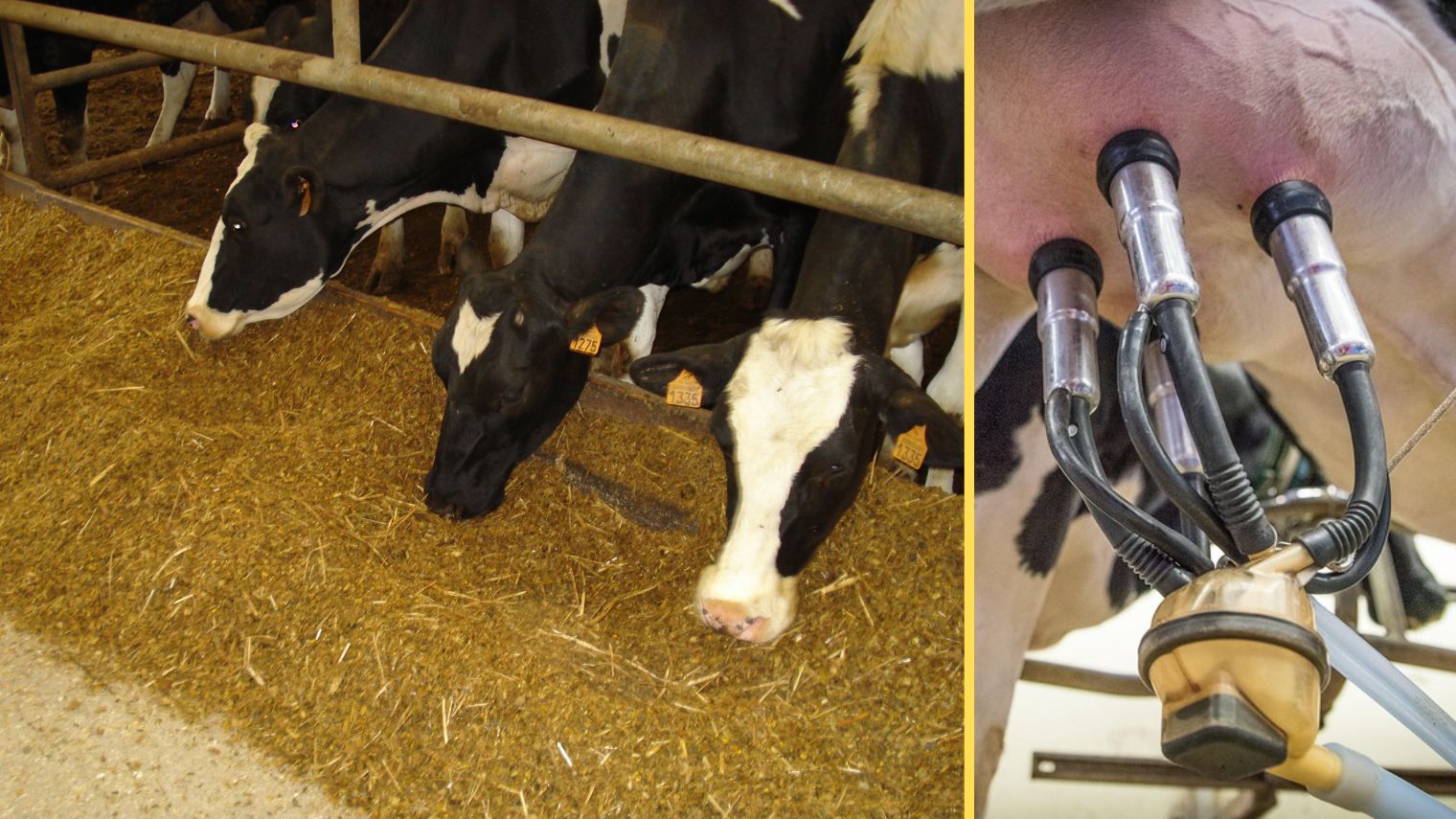
The supposedly climate-smart methane-reducing feed supplement Bovaer, which has been praised by food chains and approved by authorities, is now accused by Danish farmers of causing fever, infections, falling milk production – and even deaths among the cows. At the same time, the supplement is being investigated in the UK where similar trials are ongoing.
The climate-profiled feed supplement Bovaer, developed to reduce methane emissions from cows, has become the subject of intense conflict in Denmark. The active substance 3-NOP inhibits an enzyme process in the cow’s digestion and can thus reduce methane emissions by up to 30 percent. The supplement has previously been highlighted by chains such as Tesco, Aldi, and Morrisons as a tool to achieve significant emission reductions in milk production.
The supplement is approved by both the EU and the UK’s food authorities, and Arla has conducted extensive trials in both Denmark and the UK over the past year. But among Danish dairy farmers, the mood is anything but positive.
“In my opinion, Bovaer is a poison”
One of the most vocal Danish critics is dairy farmer Anders Ring, who milks 600 cows near Gredstedbro several times a day. He describes a range of problems that arose shortly after his herd began receiving the supplement.
“In my opinion, Bovaer is a poison. I have heard that on some farms, cows have collapsed. Some have bacterial problems in the milk, and others experience a loss in milk production,” he told The Telegraph.
On his own farm, cases of digital dermatitis increased, reproductive problems became more frequent, and the number of cows needing health checks rose sharply. At the same time, the somatic cell count in the milk increased.
READ ALSO: What the dairies say about Bovaer
After a month, he chose to stop using it – and claims that the effects were immediate.
“We had to stop giving Bovaer because the cows and our milk production suffered. Since we stopped… the cows showed clear signs of improvement. Two days later, the somatic cell count fell by more than 20 percent.”
Hundreds of reports – and political pressure
Since October 1, 2025, Danish dairy farms with more than 50 cows are required to use Bovaer for at least 80 days a year, with the risk of hefty fines for non-compliance. It is estimated that around 1,400 of the country’s approximately 2,000 dairy farmers have started giving the supplement from day one.
But as the number of cases of illness increased, many stopped following the requirement. The Danish agricultural organization reports that they are now in contact with a large number of farmers – the British newspaper The Telegraph writes about 40 directly contacted farmers, while the trade press speaks of “hundreds of complaints”.
READ ALSO: Arla: State support may be relevant for Bovaer
Ida Storm from the Danish Agriculture & Food Council for cattle says that they are not unaware of the criticism but at the same time wants to downplay the extent of the problem.
“We are aware of some cases where dairy farmers report problems after starting to use Bovaer. This is of course of great concern to us.”
The organization has launched an online survey to gather information.
Even politicians have reacted. Denmark’s Minister of Food and Agriculture, Jacob Jensen, commented that there are “challenges”.
“Some farmers are currently reporting challenges in connection with the use of Bovaer. I take this very seriously, and the Danish Veterinary and Food Administration is closely monitoring the situation.”
The manufacturer defends the product – but also investigates
Bovaer is manufactured by DSM-Firmenich, which emphasizes that the supplement has been scientifically tested for a long time. A company spokesperson emphasizes that many years of research are behind the preparation and refutes any suggestion that it would be in any way dangerous.
“Bovaer has undergone extensive scientific evaluation, with over 15 years of research and no evidence of negative health effects in cows.”
READ ALSO: Producer paid for study showing that controversial climate chemical for dairy cows is safe
At the same time, the company admits that since October, they have been in close contact with both farmers, advisors, and authorities.
“DSM-Firmenich has been in contact… to offer our support in analyzing the situation,” they said.
The company emphasizes that the official Danish investigation should be awaited before any conclusions are drawn other than that Bovaer is harmless.
Concern in the UK as well
In the UK, where Arla has recently completed its trials, the authorities are closely monitoring the situation. A spokesperson for the British government says that they are aware of the protests in Denmark but have not yet encountered similar criticism from British dairy farmers.
“We are aware of this story in Denmark. We are monitoring the situation, and we are not aware of any similar reports or food safety issues related to Bovaer in the UK.”
But the government is not entirely up to date. British farmers also express concern about manipulating the cow’s digestion. Norfolk farmer James Runciman is one of them.
“You can’t just play with the ecosystem in a cow’s stomach. It’s far too complex for people to handle. Farmers have to wear protective equipment to handle Bovaer and report health problems.”
Ongoing Danish investigation with growing pressure on the government
The Danish government has asked both the Danish Veterinary and Food Administration and Aarhus University to investigate the reported cases and determine whether Bovaer is behind the illnesses.
At the same time, many farmers are demanding that the requirement for the supplement be paused until the results are clear. Anders Ring expresses hope that decision-makers will listen to the farmers’ concerns.
“I hope the government will come to its senses and listen to the farmers’ concerns.”
How the process ends can have implications far beyond Denmark – not least because Bovaer has been considered a key component in the European agriculture’s climate strategies.