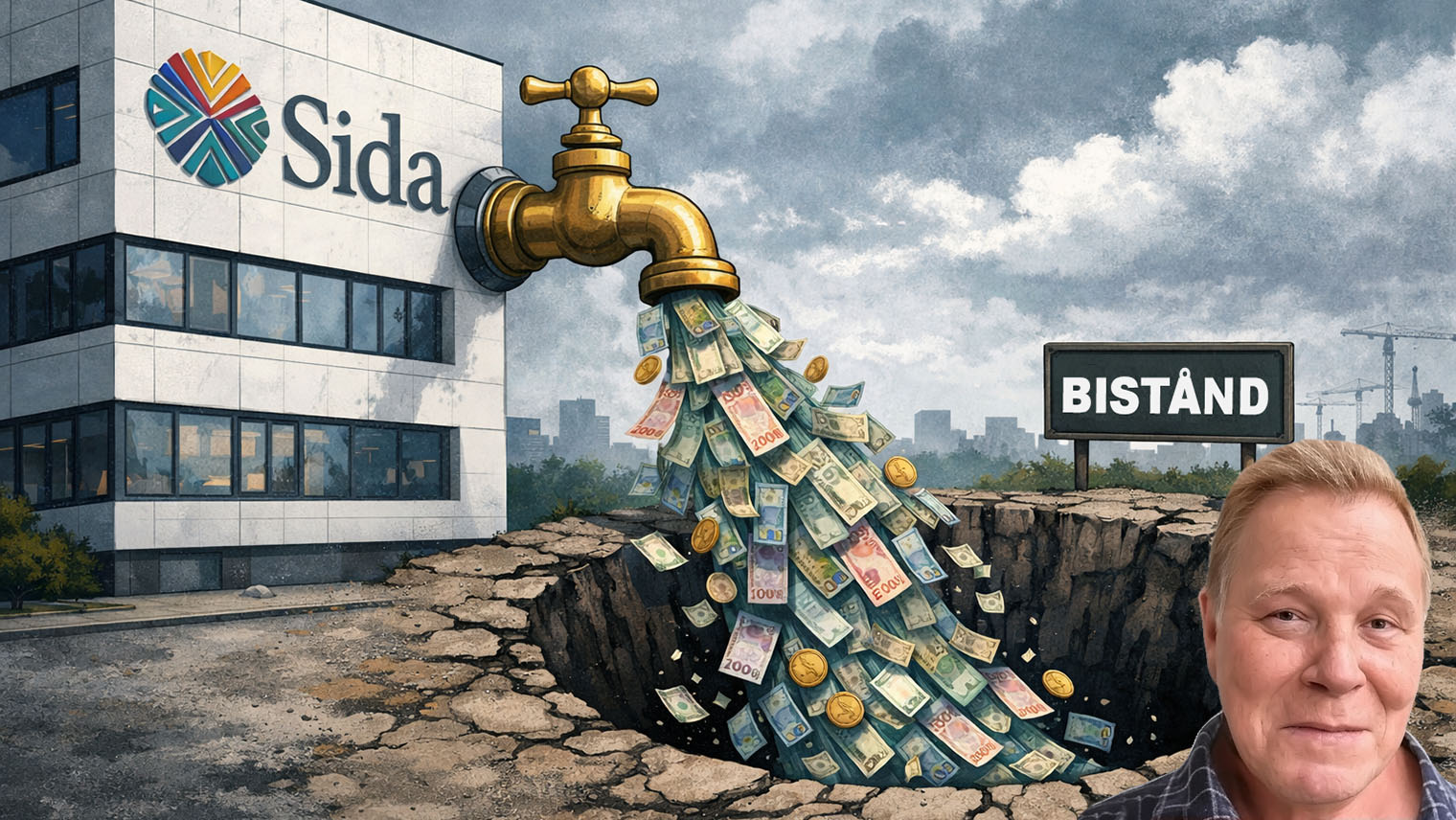
EDITORIAL • When aid is discussed in Swedish politics, it is almost always in terms of a percentage of GDP. It sounds technical, responsible – and uncontroversially low. But for voters, it is a misleading measure. In reality, aid burdens the government budget, not GDP – and constitutes a significantly larger share there. At a time when the effectiveness of aid is being questioned, when the government lowers the level and the opposition rages, it is reasonable to demand greater honesty about what aid actually costs – and what it crowds out.
Aid is reported as a percentage of GDP. But GDP is not the state budget. GDP is the sum of all production in the country: private and public, wages and profits, exports and consumption. The state does not finance aid with ‘GDP’, but with tax revenues and borrowing. It is the government budget that is affected – every year, in absolute numbers.
On paper, reduced aid can in fact be increased aid if GDP has grown – which it generally does in Sweden by a couple of percent each year. It can also strain state spending harder if the budget is tight. Yet it is rare for aid to be reported as a share of government expenditures and the rule is that it is presented in a practically misleading way. Why?
A Politically Convenient Measure
Using GDP as a measure has technical advantages. It makes comparing countries and setting international goals easy. But it also has a clear political effect: the cost appears smaller than it actually is in practice.
0.8 percent sounds marginal. 2–3 percent of the state budget sounds like something else, and more significant. It’s no coincidence which measure dominates in public debate.
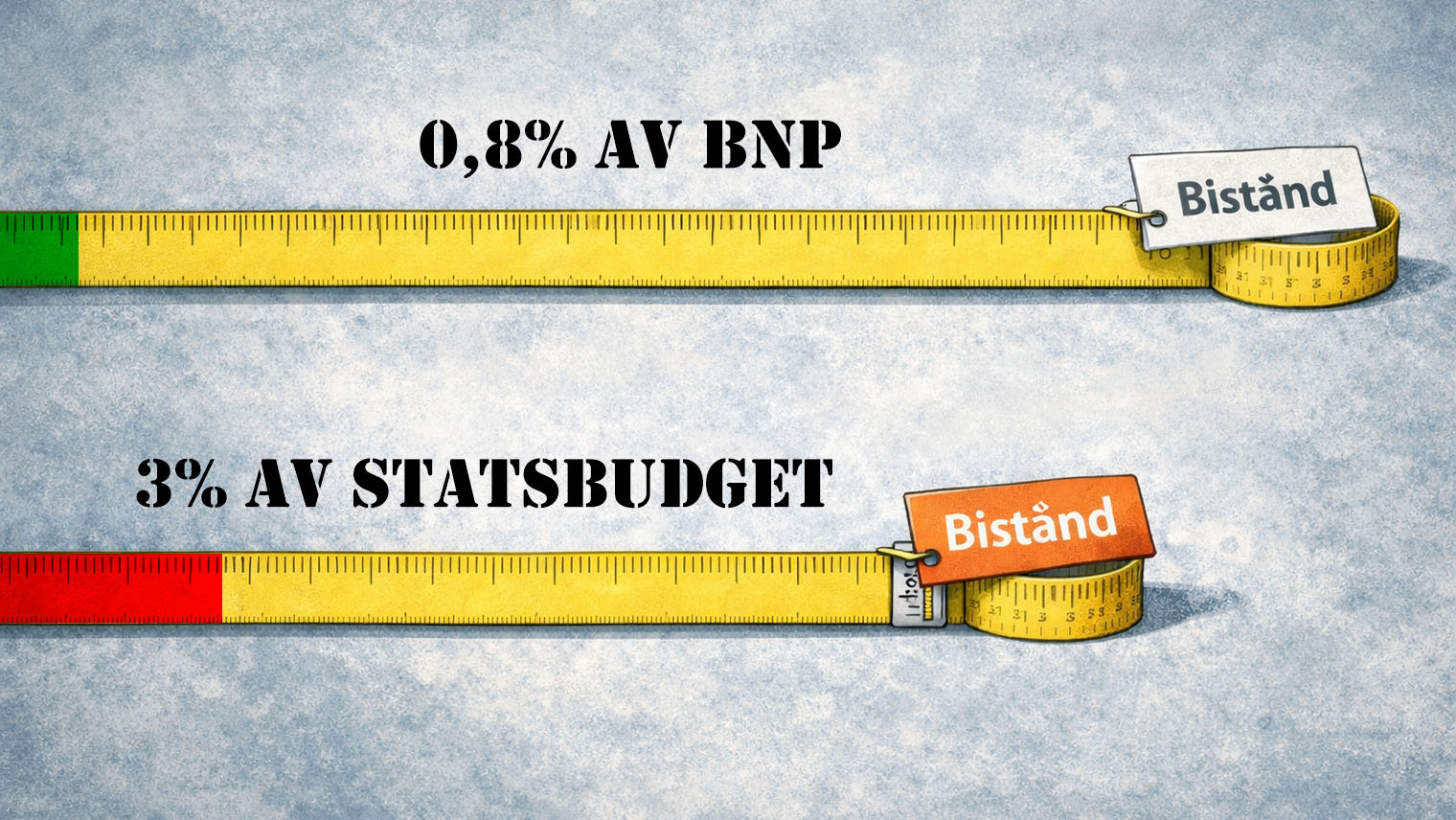
This becomes especially clear when compared to defense spending. These are also formally governed by a GDP target – NATO’s requirement of two percent of GDP – but in national debate and in the budget process, they are always openly presented as part of government expenditures, in billions of kronor and as a share of the budget.
Aid is the major exception: politically tied to GDP, but rarely reported as a percentage of the budget frame where it actually competes with other expenditures. One cannot help but suspect that this is because aid is a highly questioned expense by many taxpayers, which is therefore intentionally made to appear relatively smaller than it actually is.
Some Things Are (Consciously?) Hidden in the Aid Debate
When aid is presented as a share of GDP, several key questions disappear from view: How much of the politically available expenditure does aid constitute? What could the same money have been used for nationally? What expenditures are crowded out when aid is prioritized? How much larger is aid compared to many individual reforms that are hotly debated?
SEE ALSO: Government: Swedish aid went to Hamas and Islamic Jihad
In reality, aid makes up a significantly larger share of the government’s actual expenditures than the GDP number suggests. This influences how priorities are perceived – and how legitimate the policy appears.
Not Fractions, But Several Whole Percent – of the State Budget
At the same time, aid policy is under sharp scrutiny. The criticism is about efficiency, corruption, aid dependency structures, and whether aid in some cases actually makes recipient countries more passive rather than strengthening them. The latter point is bolstered by the fact that the same countries, year after year, decade after decade, have been receiving aid without it lifting them from poverty to self-sufficiency.
In this situation, the government is lowering the aid level. The red-green opposition and organizations that rely on aid accuse the government of betraying international solidarity and breaking norms. But both sides miss a crucial point: voters have a right to understand the real budget dimension of aid.
It is not unserious to want to help the world, but it is unserious to do so without full transparency. When aid is cut, critics have an interest in hiding how large it actually still is, while the government is keen to point out that it remains much larger than what the previously set but now abandoned one-percent goal signaled.
SEE ALSO: Sida: Suspected corruption in every tenth aid project
Despite harsh criticisms of aid in general and Sida in particular when the center-right and Sweden Democrats were in opposition, the reductions while in government have been quite modest – from the previous one percent to 0.84 percent in 2024 and 0.81 percent in 2025. What has been cut amounts to at most a billion kronor or so from aid that previously approached 60 billion tax kronor annually.
It is still far above the average for the so-called DAC countries in the OECD’s Development Assistance Committee at around 0.35 percent of GDP, and also higher than the UN target of 0.7 percent of GDP where, for example, our neighbor Denmark is (although they also, on top of that, send roughly 4 billion kronor to their colony, Greenland).
Critics of the Tidö parties should have it made clear just how much we are actually paying in aid: between 2 and 3 percent of the country’s total tax revenue. And voters for the Tidö parties have the right to know that. Neither has happened.
Moral Exception vs Political Choice
One of the most problematic effects of GDP reporting is that aid is implicitly positioned outside of the usual budget logic – as if it were a moral necessity rather than a political choice. Some may think so, but very many do not – especially in light of the criticism directed at aid and the need for money to patch holes in our domestic welfare system.
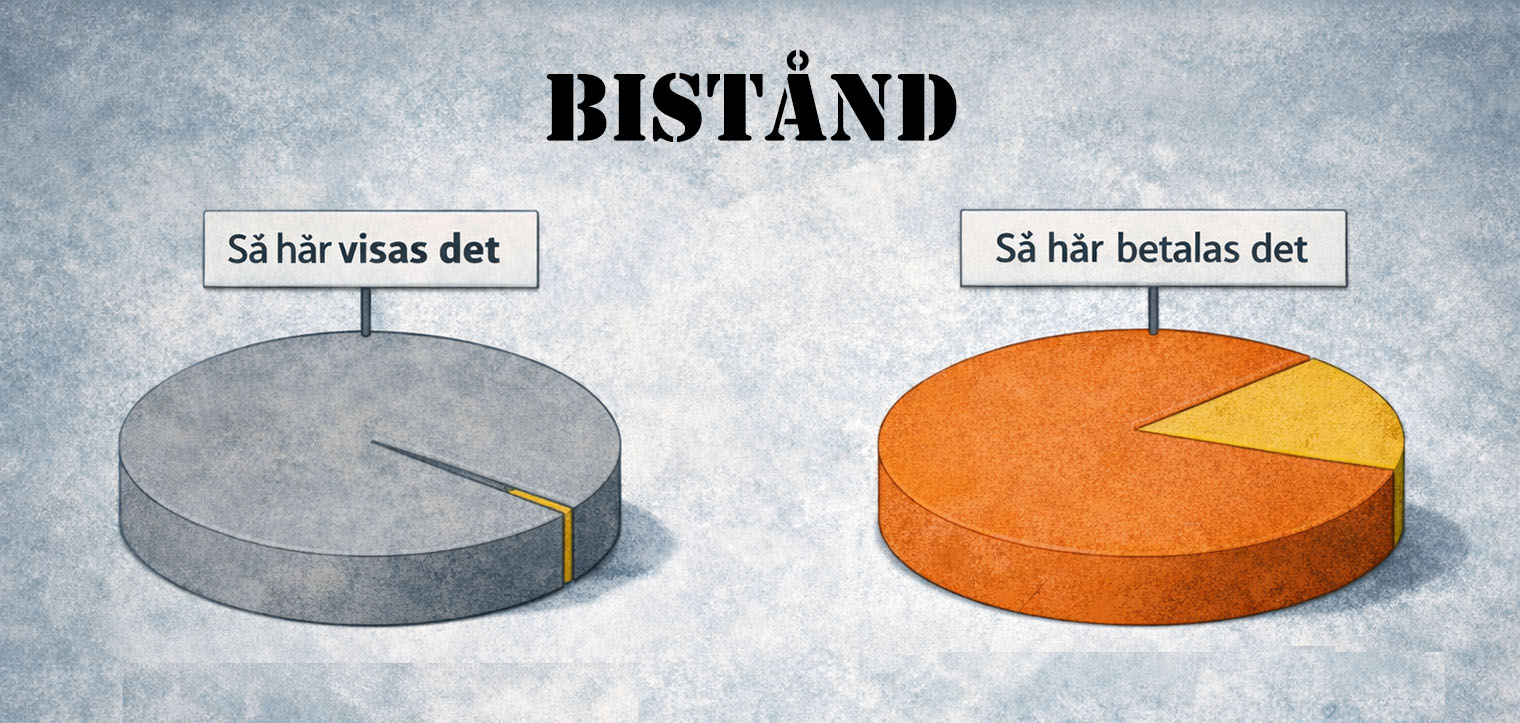
That is why aid needs to be presented in the same way as other major expenditures: in absolute amounts – which happens occasionally – but most importantly – which never happens – as a share of the state budget. Only then can voters make informed trade-offs between international commitments and domestic needs. It’s a matter of democratic honesty.
More Honest Reporting – Increased Legitimacy
The reasonable approach would be for aid to always be reported in parallel in three ways: as a share of GDP – for international comparability, in absolute amounts – for comprehensibility, and as a share of government expenditures – for budget realism and relative cost perspective.
Such reporting would not diminish the legitimacy of aid. On the contrary, it would force a more mature debate on level, design, and effectiveness – and thereby strengthen faith in aid policy.
Those who want to see continued high levels of aid should be especially interested in this, so as to at least address some of the criticism. But even those who wish to reduce aid have a reason to openly show what share of government spending is actually at stake.
Transparency a Reasonable Demand
Sweden has one of the world’s highest tax burdens. The money should cover more welfare than we get. Security policy challenges and commitments require additional resources that have to be funded from the government budget. We’ve imposed enormous public costs due to immigration, and aid is debated – even the percentage of it that goes to co-finance the more immediate and defined “refugee” reception.
SEE ALSO: Ekeroth: “Sweden would have been so much richer without the aid”
There are plenty of reasons not to keep handling aid as a bookkeeping technicality. Transparency and clarity are cornerstones of democracy, not least concerning how what we all pay into the government coffers is used. Many argue these qualities are particularly absent regarding aid – that it feels like throwing money into a big black hole.
A minimal requirement for upholding legitimacy in aid policy is that taxpayers at least are informed about how much money is at stake – in actual sums and as a percentage of GDP, but also, and most importantly for most people, as a share of our paid taxes and in relation to the government’s total expenditures.