
The government wants to raise the minimum sentence for aggravated defamation from fines to imprisonment. This is stated in a legislative council referral submitted last week. Thus, private individuals who warn about pedophiles and women who speak out about the men who raped them can be punished more severely than today.
– We fear that a harsher penalty risks exposing women even more, says Adine Samadi from the National Organisation for Women’s Shelters in Sweden (Roks) to Samnytt.
It was last Thursday that the government presented the legislative council referral Double penalties for crimes in criminal networks and tougher sentencing scales. The referral, which is part of the government’s sentencing reform SOU 2025:66, mainly concerns harsher penalties for up to fifty different types of crimes.
At a press conference attended by, among others, Minister of Justice Gunnar Strömmer (M) and Justice Committee Chairman Henrik Vinge (SD), the changes were described as a “fundamental overhaul of Swedish criminal policy” and a “paradigm shift.”

– Simply put, we want criminals to be locked up so that law-abiding people dare to go out, Strömmer explained during the press conference.
Prison for Aggravated Defamation
One of the changes the government wants to make is to raise the minimum sentence for aggravated defamation, from today’s fines to up to two years in prison.
“The current minimum penalty of a fine does not seem consistent with how seriously one ought to regard the violation of integrity that aggravated defamation typically entails,” the government writes in its referral.
“Someone who points out another as criminal or reprehensible in their way of life or otherwise provides information apt to subject them to the contempt of others,” will in the future be sent to prison if the crime is deemed aggravated, instead of today’s practice: fines.
READ ALSO: Ebba Busch was convicted of defamation – but what was the verdict about?
And this change is sparking some reactions. The reason is several high-profile defamation cases in recent years, where the guilty verdicts have often been criticized.
Among others, a 2023 case where a man in his 50s living in Stockholm was prosecuted for aggravated defamation after warning the public in a Facebook group about the convicted Ekerö pedophile Vilma Andersson. He was fined for regular defamation, but under the new law, he would have risked prison.
Referral Bodies Say No
One of the referral bodies opposing the legislative change is the Swedish Women’s Organisations. Another is the National Organisation for Women’s Shelters in Sweden (Roks).
Adine Samadi is Vice Chair of Roks, and she is concerned about the consequences the new law could have for women who have suffered abuse and want to speak out about it.
– What we saw during “Me too”, among other things, was that women who talked about their experiences were sued for defamation, she tells Samnytt.

– We believe that you must be able to talk about your experiences. We fear that a harsher penalty risks exposing women even more.
Samadi points out that Swedish law does not consider whether pointing someone out as “criminal or reprehensible” is true or not.
– That is how the legislation looks now, and we saw that especially during “Me too.” Even in cases where there were guilty verdicts, where it was legally established that the woman had been abused, it did not affect the defamation verdict. It was not taken into account whether it was true or not, she notes.
SD: “Of Course You Should Be Able to Warn”
The Sweden Democrats also see problems with tougher penalties for aggravated defamation, even though the party is part of presenting the referral. SD MP Pontus Andersson Garpvall, member of the Justice Committee, tells Samnytt:
“The problem with the defamation law is that it is misapplied. We want to establish a national pedophile registry and of course people should be able to warn about, for example, those looking to abuse children,” he writes in an email, continuing:
“The harsher punishment for aggravated defamation is intended to make the penal code more consistent so that equally serious crimes get equal penalties, but given many high-profile cases in recent times, it is obvious to us that the defamation law needs to be fundamentally reformed. This is to avoid punishing those who tell the truth, for example about perpetrators.”
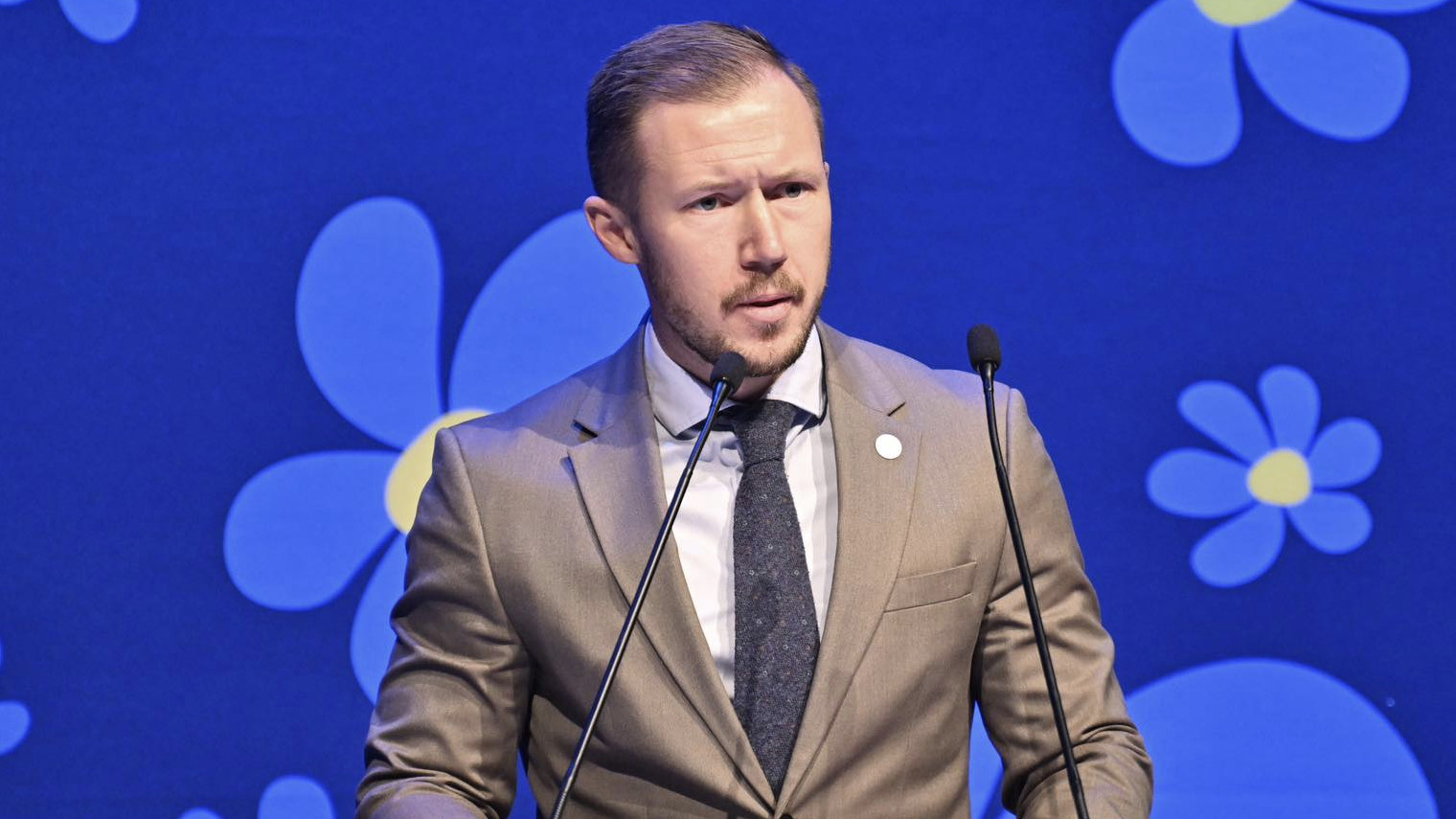
Andersson Garpvall also mentions the conviction of Samnytt’s former responsible publisher, who was sentenced to prison for aggravated defamation for journalism considered illegal.
– We have the Mats Dagerlind case, he says.
READ ALSO: Court of Appeal: Mats Dagerlind imprisoned after journalism about Näthatsgranskaren
Stockholm District Court disapproved of the newspaper’s reporting on a legal process between two public figures, and the Svea Court of Appeal and Supreme Court later upheld the conviction.
ALSO READ: Now Mats will serve prison time for illegal journalism
More Journalists in Prison?
Sweden, together with Russia and Belarus, is the only EU country that imprisons journalists for journalistic publications. Even in Hungary, proceedings have been initiated against a journalist for his publication, but it never led to a conviction.
Now that the government is increasing the penalty for aggravated defamation, this could lead to more journalists being imprisoned for their publications. It has also been previously pointed out that journalists are more likely to self-censor to avoid antagonizing those in power.
READ ALSO: The prison sentence against Samnytt places Sweden in the same league as Russia and Belarus
Despite this, no journalistic organizations were invited to comment on the proposed legislative changes.
“We are not a referral body and have therefore not submitted any response. The matter has also not been discussed with us,” writes Stefan Eklund, CEO of the industry organization Utgivarna, in an email to Samnytt.

SD Satisfied With Other Legislative Changes
Apart from the part about the defamation law, the Sweden Democrats are satisfied with the referral.
“This is a major change that will significantly toughen the penalties for those who commit the most serious crimes,” Pontus Andersson Garpvall writes in his email and continues:
“Let’s take aggravated weapons offenses as an example: Just five years ago, the minimum for such an offense was one year in prison, today it is four years and, together with the removal of the youth discount for serious crimes, are two sub-explanations for why shootings have decreased so sharply—from 391 in 2022 to 158 last year. In June, it will be raised to at least eight years in prison for gang criminals, further raising the stakes for those ready to commit serious crimes.”
The government’s proposed legal changes are planned to enter into force on July 3 this year.
READ ALSO: Samnytt acquitted of defamation of climate extremist
Less than 1% of our readers support us
Hundreds of thousands read Samnytt, but only 1 in 100 contributes. Help us grow and continue delivering in-depth reporting and investigations.
Without your support, Samnytt does not exist.
No advertisers. No state support. Only our readers. Thanks to you, Samnytt has published over 31,000 articles challenging the mainstream narrative in Sweden.
123 083 33 50
Swish any amount
Thank you for reading and supporting Samnytt