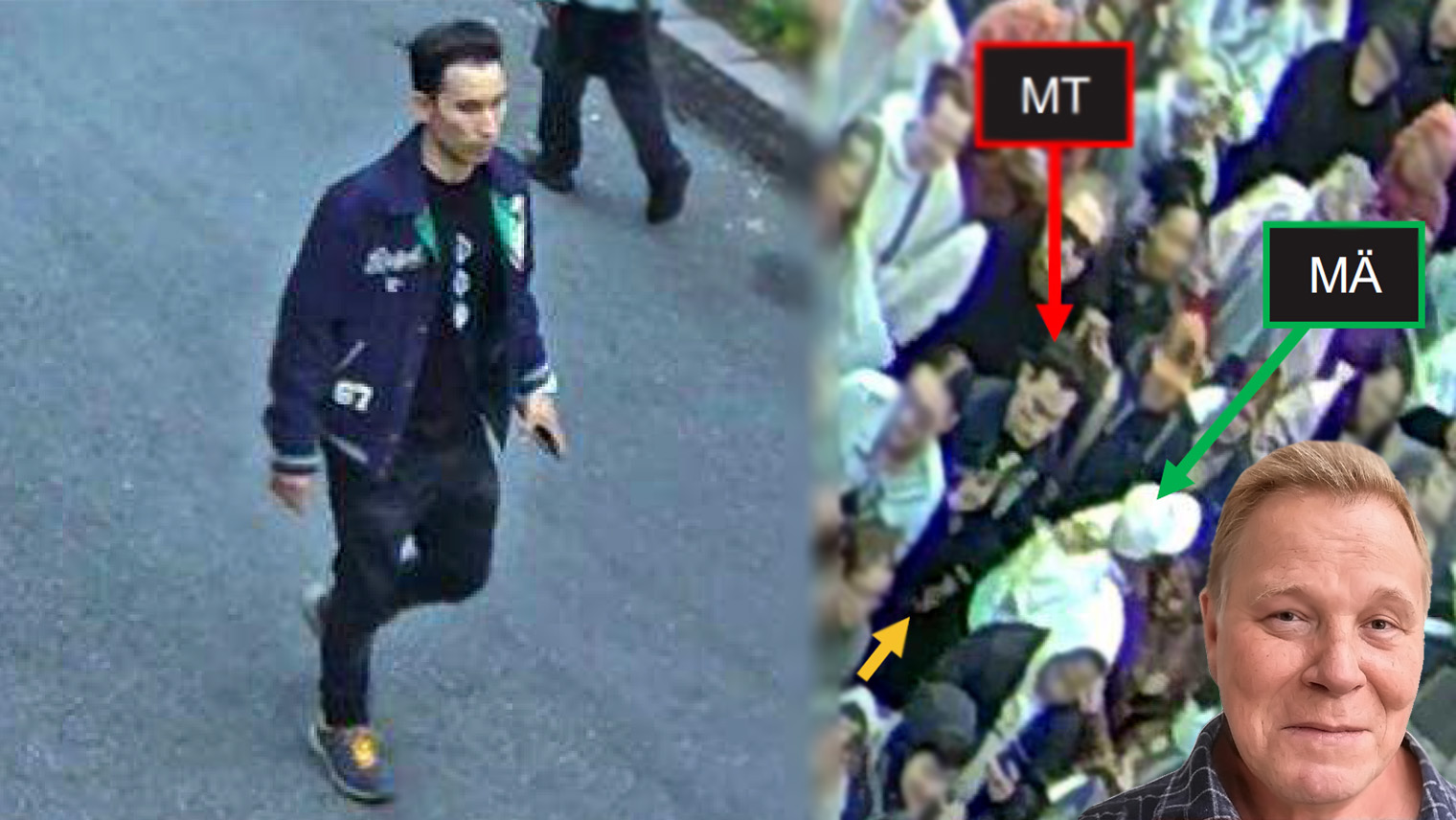
EDITORIAL • A man is convicted of sexual molestation—with previous convictions and without Swedish citizenship—yet the question of deportation is never examined. When the prosecutor abstains from requesting it and also fails to explain why, and the court does the same, the principle that decisions in a legal process should be made transparently is abandoned. How secure is justice when no one has to explain why the law isn’t applied?
I recently wrote about a case where a man was convicted of sexual molestation after masturbating behind a woman in the crowd at Gröna Lund and ejaculating on her clothes. According to the district court, the crime was serious enough that its penalty value corresponded to a short prison sentence. It also concerned a repeat offense of the same type of crime.
The man had previously been convicted of a range of other crimes, indicating not only a general lack of respect for the law but also drug abuse. He lacks Swedish citizenship. Despite this, the matter of deportation was never raised during the legal proceedings.
READ MORE: Afghan student masturbated and ejaculated on woman at pop concert – avoids prison and deportation
I contacted the prosecutor in the case to seek clarity on her reasoning. The response was as brief as it was arrogant: she had made a “collective assessment” but did not intend to elaborate on its content or reasoning.
That some sort of assessment was made, I also assumed. The alternative would have been flipping a coin. The formulation says nothing beyond the obvious. It does not clarify which factors were considered, how the legislation was interpreted, or why the conclusion was not to request deportation—in a case where it appears to be a relevant issue to consider.
In subsequent email conversations, the prosecutor expressed some understanding of my “thoughts” but still claimed to be prevented from commenting on the specific case. For general questions, I was referred to the thematic officer at the prosecutor’s office Development Center and information on the authority’s website regarding the rules for deportation.
A Decisive Decision – Without Motivation
Swedish law does not require prosecutors to justify their claims in an indictment. This is especially true for things that superficially and deceptively may appear as if no decision was made—such as not requesting deportation.
Prosecutors are bound by the principle of objectivity (must consider both for and against), the legality principle (must prosecute when evidence is sufficient), and internal guidelines from the Prosecution Authority.
This means that the prosecutor must make a substantive assessment of the deportation issue, considering aspects such as ties, risk of recidivism, and proportionality—but that assessment does not need to be openly disclosed in the application, and can be withheld from both parties, the public, and investigative journalists.
Courts must make a decision and give reasons if a prosecutor has requested deportation whether they grant or reject it. But the prosecutor, who often de facto decides whether the issue should be tried, has no such corresponding obligation. No deportation request = no explanation.
ALSO READ: Chairman of Afghan association raped 11-year-old girl at swimming pool – not deported
The result is that a decisive decision—whether a person should be deported or not—can be made without the reasons ever being made public. In the current legal case with the lone Afghan high schooler who ejaculated, there isn’t so much as a syllable about deportation in the indictment, the preliminary investigation, or the judgment.
Nor Does the Court Need to Explain
The problem doesn’t end with the prosecutor. The court can raise the question of deportation on its own initiative—ex officio. But if there is no request, there is also no obligation to do so—or to explain why it refrains.

This means the court too can let the issue pass completely without motivation. Only if deportation is actually tried does an obligation to state reasons arise. It’s unreasonable that the judicial system can refrain from pursuing or trying a far-reaching measure without having to explain why—especially when it can have such serious societal consequences as allowing a habitual criminal to remain in the country.
A System Defect When Someone Has to Ask the Question
In many cases, it can seem so obvious why a certain question is not raised in a legal process that there is no need to provide reasons. The question of deporting a person who has committed repeated crimes in Sweden and lacks Swedish citizenship does not belong to that category.
Whether the prosecutor chooses to request deportation or not, it needs to be justified. Whether the court, in the absence of such a request, then chooses to itself raise the issue or not, it needs to be justified.
To choose not to act is not the same as not making a decision. That is philosophical fundamenta. If one is an educated jurist or legislator, one should be aware of this.
Choosing not to deport should not be allowed to pass in silence. The public and the potential future victims of the convicted person have the right to know how prosecutors and courts reasoned, what reasons were weighed against each other, what risk assessment was made, how the so-called proportionality principle was applied. That it wasn’t simply glossed over.
Stricter Rules – Unchanged Lack of Transparency
The legislation has also been tightened in recent years. The thresholds for deportation have been lowered and recidivism weighs more heavily than before. This makes the question even more urgent to answer—why no deportation.
If the pending legislative proposal passes, the rules will soon become stricter. Every crime with imprisonment in the penalty scale, if I understand correctly, shall be accompanied by a request for deportation from the prosecutor for the court to consider. Any enforcement obstacles shall not be considered at all but will instead fall entirely to the Migration Agency after the sentence has been served.
But until then, as long as prosecutors and courts have freer hands, it is problematic that there are no transparency requirements in decision-making. When the legislator has clearly signaled that deportation should be considered in more cases, there should also be an obligation to explain when and why it isn’t done.
A Gap in Legal Security
Decisions must be understandable and reviewable. No citizen or investigative journalist reading an indictment should have to guess what prosecutors and judges were thinking. No one who asks should be met with the non-answer that a “collective assessment” was made.
ALSO READ: Afghan received Swedish citizenship in a week – thanked with knife rape
Sometimes it is possible to clarify the question marks by requesting internal notes, emails, or decision-support documents in the prosecutor’s case management system. But if a prosecutor does not want you to know, he or she can categorize all such documents as internal work material and exempt them from the principle of public access.
They Themselves Decide If Their Decisions Will Be Scrutinized
The same prosecutors and judges who have failed to report their decisions also have the authority to cover their tracks if someone is too curious. It’s the fox guarding the henhouse.
Some completely independent and impartial authority should determine what may be hidden from the constitutionally enshrined principle of public access. In the judiciary, obstruction of transparency is particularly serious.
Trust in the prosecution and judicial system cannot rest only on the assumption that the right decisions are made for the right reasons—there must be a way to actually verify this, to eliminate any nagging suspicion that could undermine trust in this cornerstone of a democratic society.