
EDITORIAL • There is a certain kind of political panic that recurs with historical regularity: when the “wrong” side wins elections, democracy is said to be on the brink of the abyss. In the USA, Donald Trump has for years been described as a future dictator. In Sweden, we repeatedly hear that the Sweden Democrats’ influence is a step toward a “system shift” in the sense of democratic decay.
Niall Ferguson offers a useful reminder for those who want to understand politics rather than just signal group identity: dictatorship is not an epithet for policies one dislikes. Fascism and totalitarianism are, historically, very specific phenomena. When critics believe they see Germany 1933 around every corner, these concepts are diluted until they mean nothing at all. The blurring of sharp boundaries poses a real danger to democracy, and ironically, it’s not conservatives who constitute this threat, but rather their alarmist liberal opponents.
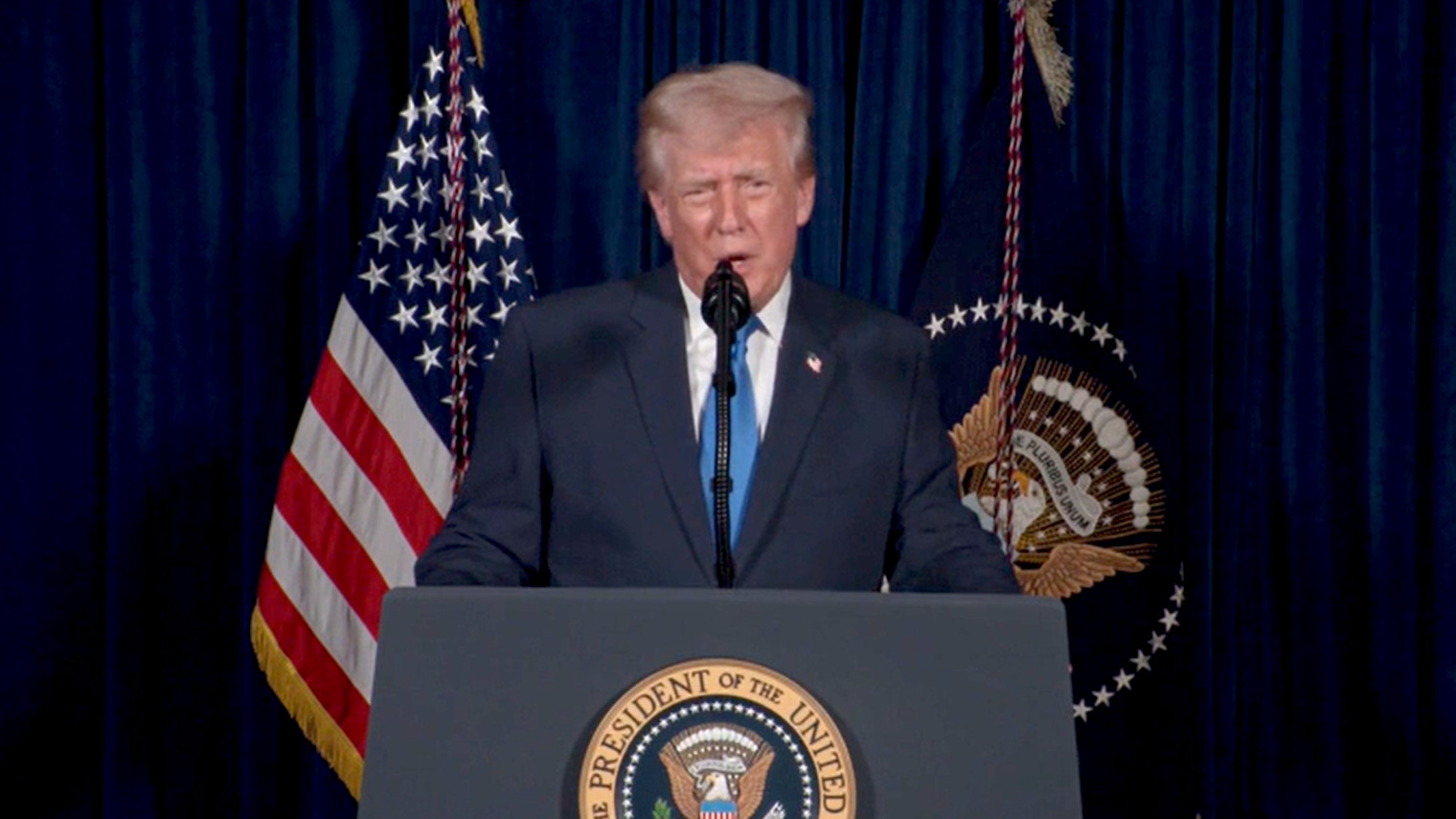
Ferguson’s main argument against those likening Trump to Putin or Hitler is straightforward: American institutions are not powerless. Courts review, stop, and limit. The Supreme Court is—within a functioning separation of powers—precisely the place where difficult boundaries are decided. Congress is neither abolished nor even politically neutralized. American society also contains strong informal checks: media, lawyers, states, business leaders, and a military culture that is loyal to the Constitution rather than to any one person. This is not a guarantee against abuse of power. But it is just the kind of braking system that distinguishes a raucous democracy from a genuinely authoritarian breakthrough.
Swedish Democracy Remains Strong
Translate this to Sweden: it’s not a dictatorship for a major party—which has long had significant voter support—to gain real influence. And even if it is constitutional practice that “the largest party in a coalition gets the prime minister post” and one can argue that this should be followed—even if that party happens to be the Sweden Democrats—the prime minister is chosen by parliament through negative parliamentarism. What matters is whether a candidate—in this case Jimmie Åkesson—is tolerated by a majority.
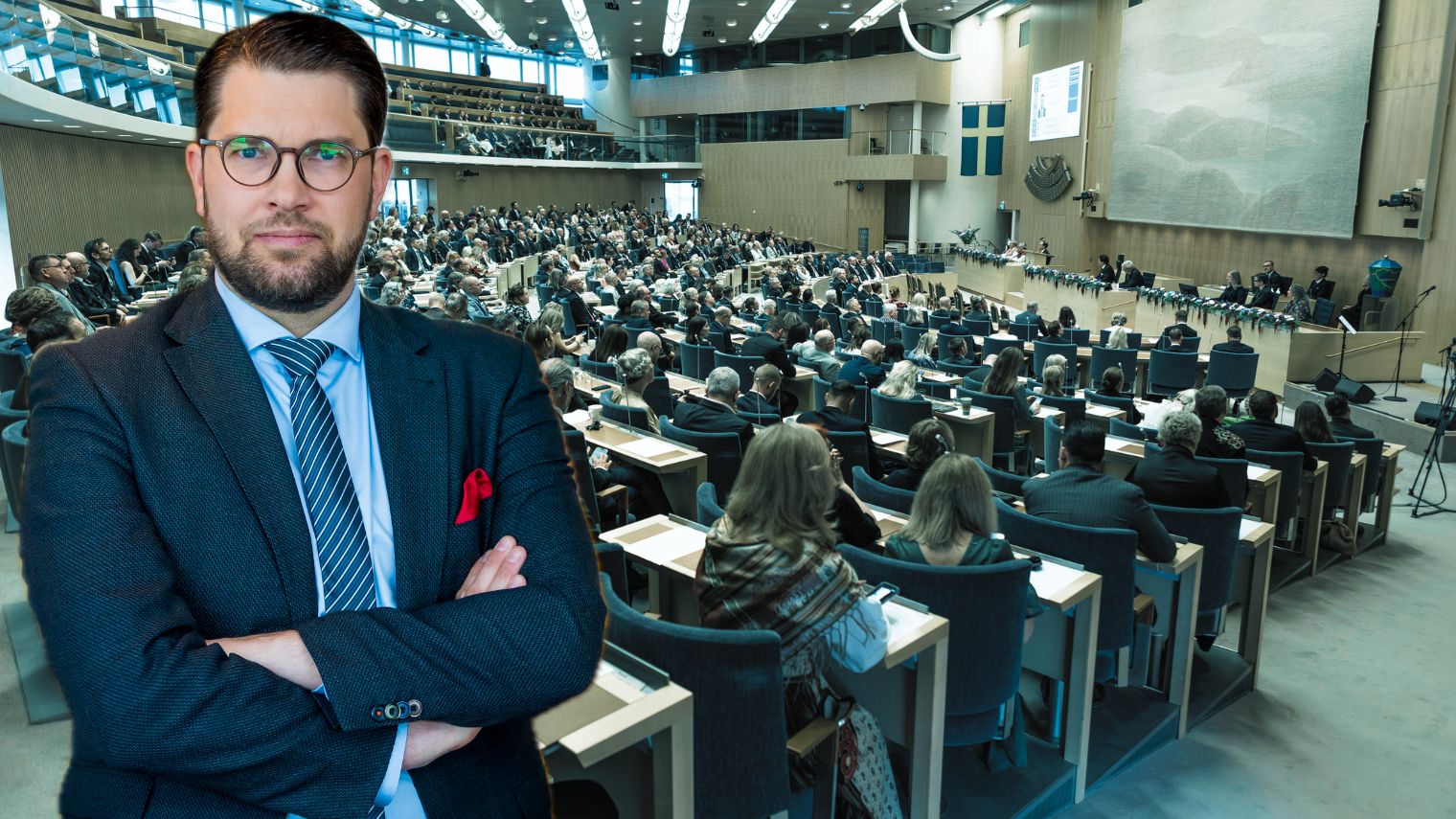
This does not mean one should be naïve. But vigilance must be factual. Those who cry “the end of democracy” every time the political compass shifts in a conservative direction in the USA, Sweden, or any other EU country, undermine the meaning of words and signal to large groups of voters that their political preferences and party choices are fundamentally illegitimate. This is a dangerous message in a country built on the idea that political power can change hands without either side being regarded as traitors. And just as in the USA, there is a range of institutions that prevent democracy from being replaced by dictatorship. What the German Nazis did after being democratically elected cannot easily happen here or in the USA.
The Authoritarian Left-Liberalism
At the same time, another, less acknowledged authoritarian movement is underway: a part of the left-liberal establishment has started to treat the core of democracy—freedom of speech and opinion—as a problem to be “managed.” At the EU level, we see expanding regulation of platforms and the “information environment”; the Digital Services Act has already been used for tangible sanctions against large actors. The EU is also pursuing a “Democracy Shield” agenda against information influence. And in the debate about “Chat Control” (child protection online), data protection agencies have warned of privacy risks: good causes tend to bring with them technical and legal tools that, over time and with mission creep, may normalize more extensive control.

One can support the ambition to fight crime, manipulation, and threats—but still recognize the principled problem: when politics becomes the ultimate judge over “acceptable” discourse and “correct” information flow, democracy’s nervous system is gradually centralized.
A Conservative Opportunity After Left-Liberal Failures
Libertarian democracy is not the same as the liberal democracy liberals themselves talk about. Its strength is not that it always produces liberal policies. Its strength is that it produces legitimate changes of power, with limits on authority and civil liberties, even when people vote differently than one would like. If conservative winds are blowing in Europe, it does not mean we are marching toward the 1930s. It means voters are responding to perceived liberal policy failures and want to try a different course within the same democratic rules of the game.
READ ALSO: Dagerlind: New Rules for Constitutional Amendments – When Democracy Is to Be Saved from Democracy
Democracy is therefore not in danger just because the political arrow is not continuously pointing in a left-liberal direction. The real danger arises when one side starts to claim that only it is democratic—and that the opponent therefore must be blocked, silenced, or treated as a “systemic threat.” Historically, this is a recipe for a society where political antagonism moves from the ballot box to moral panic and exception logic. Or as Ronald Reagan foresightedly said in an interview already 50 years ago: “If fascism ever comes to America, it will come in the name of liberalism.”
Swedish Voices Warning About Dictatorship and Democratic Breakdown
In Swedish debate, recurring warnings appear that both the USA and Sweden are on the brink of dictatorship, often tied to the political influence of Donald Trump or the Sweden Democrats. Some examples:
Sweden Democrats as a Threat to Democracy
- Arbetet has published articles with headlines discussing a possible “SD dictatorship,” describing the party’s influence as a systemic threat rather than a parliamentary transfer of power.
- Dagens ETC in several articles and editorials has asserted that SD attacks democracy and that their influence must be stopped to protect the democratic system.
- AIP (the labor movement’s news site) has published opinion pieces presenting the SD’s role in the government as a democratic threat.
Trump and the USA as Threats of Dictatorship – Sometimes Compared to Russia
- In Swedish TV and press, Donald Trump has been described as “more dangerous than Putin” and as a leader with dictatorial ambitions, including in statements by Fredrik Reinfeldt on TV4.
- Security policy commentators such as Mikael Odenberg have compared Trump’s political movement to Russia’s development under Putin and warned that the USA could become a greater threat than Russia in certain respects.
- In columns and opinion pieces, Trump is often placed in the same category as Putin, Mussolini, and other authoritarian leaders, contributing to the image of an impending democratic breakdown in the USA.
EU Initiatives Critics Say Risk Curbing Freedom of Expression and Open Debate
Parallel to warnings about right-populist threats to democracy, the EU has in recent years launched several initiatives aimed at protecting democracy, children, or information environments. Critics argue that these sometimes risk becoming more directive and interventionist than is compatible with classic liberal freedoms and rights. Some even claim that’s precisely the purpose of the initiatives.
- Digital Services Act (DSA)
The EU’s set of rules for digital platforms gives the Commission far-reaching powers to review and sanction major actors. The law has already been used to impose notable fines, for example against X, on the grounds that the platform does not meet EU requirements for content management and transparency. Critics note that this gives political institutions indirect influence over public conversation. - European Democracy Shield
The EU Commission has launched a framework to protect democracy against disinformation, information influence, and foreign threats. The official aim is to strengthen resilience in elections and public debate, but critics warn that vague definitions of “disinformation” can pave the way for political restrictions on what constitutes legitimate opinion-forming. - Chat Control / CSA Regulation
Proposals for mandatory or voluntary scanning of digital communication to combat child abuse have met with harsh criticism from data protection authorities. The European Data Protection Board (EDPB) and European Data Protection Supervisor (EDPS) have jointly warned of serious risks to privacy, due process of law, and proportionality. - European Media Freedom Act (EMFA)
EMFA aims to strengthen media pluralism and protect editorial independence in member states. At the same time, some critics point out that yet another EU regulation in the media sector contributes to a growing centralization of norms around how media and information flows should operate.