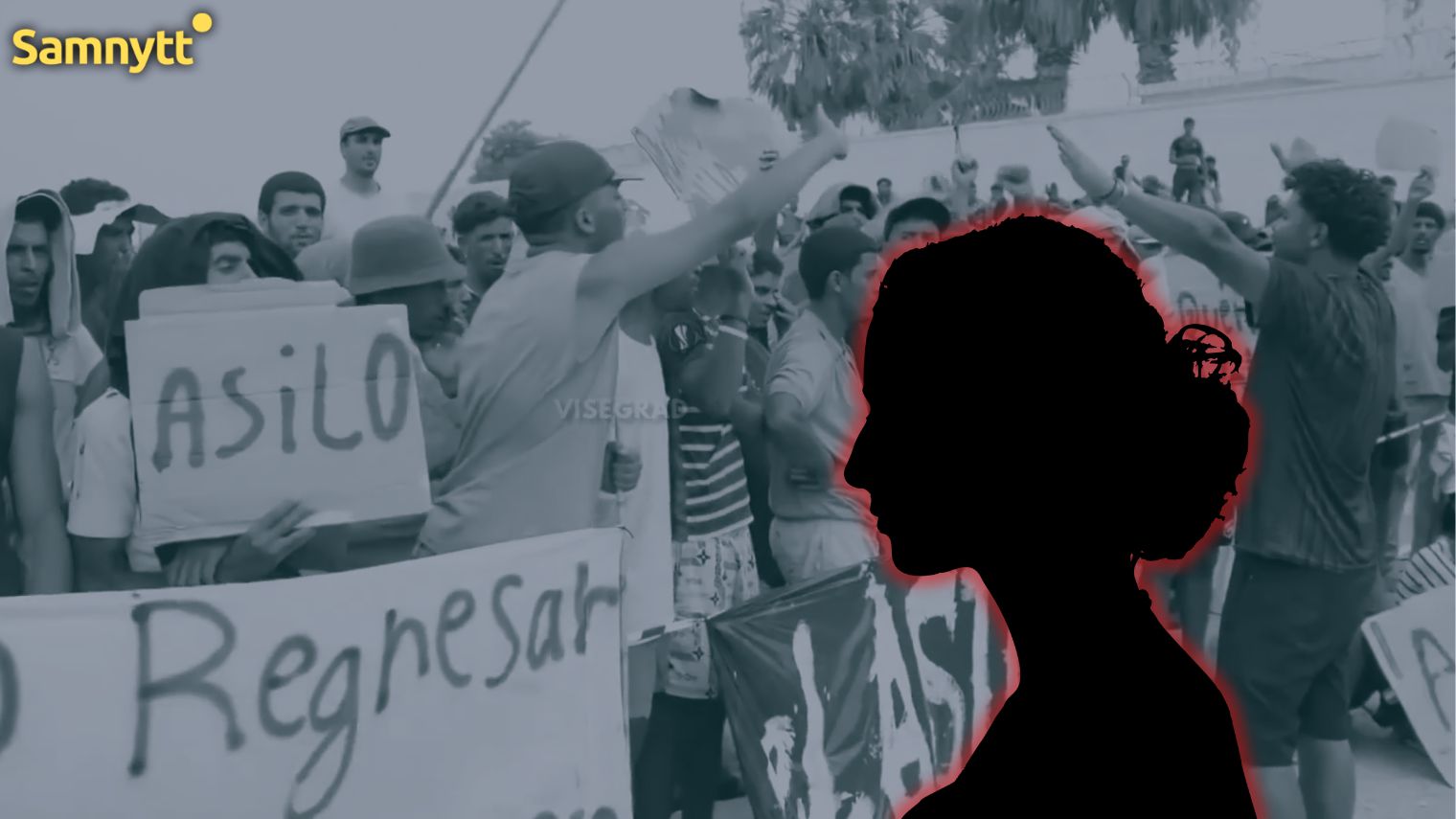
Tens of thousands of migrants entered the Spanish enclave of Ceuta from Morocco at the end of July. Most have returned, but thousands remain. Meanwhile, reports abound of rapes, sexual assaults, fear among residents, and problems with theft and intrusions. When another mass attempt was planned a few days ago, Moroccan security forces intervened and arrested nearly 300 people. Now, Ceuta’s mayor Juan Jesús Vivas has given the Spanish government 30 days to act.
The crisis in the Spanish enclave of Ceuta has entered a new phase. After the historic mass invasion on July 30-31, thousands of migrants have remained in the city, while authorities try to cope with a greatly increased burden on police, healthcare, and reception systems.
The most dramatic moment came at the end of July when about 70,000–80,000 people entered Ceuta from Morocco. The exact numbers vary, but the Spanish government later referenced a figure of about 80,000.
READ ALSO: Meta issues warning on Ceuta searches – links to information about migration
Many crossed the border on foot, while others swam along the coast. A large number of people died in their attempts to reach the Spanish side. Reuters reported that the massive influx had been preceded by several warnings from border workers’ unions, who said the situation was escalating.
The vast majority subsequently returned to Morocco, but by no means have all left. Estimates of how many remain in Ceuta have varied greatly. Spanish authorities cited a few thousand, whereas local authorities estimated up to 8,000–11,000 people.
A pregnant Spanish woman in Ceuta unleashes after a migrant defends the invasion of Ceuta
She says the Spaniards are locked into their homes because it’s impossible to take your children safely to the playground as the migrants are fighting everywhere
She calls on Spain to rise pic.twitter.com/YFvnSeCoNP
— Visegrád 24 (@visegrad24) August 16, 2026
15 Rapes After Mass Entry
The security situation has also become a central issue during the crisis. Spanish media have reported that the Guardia Civil has identified 15 reported rapes in Ceuta since the mass entry on July 30. The numbers have been reported by outlets such as Onda Cero and confirmed for El Mundo by sources within the Guardia Civil.
One of the most recent cases concerns a ten-year-old girl. According to reports in Spanish media, three individuals attempted to sexually assault the girl on a street in Ceuta.
Euronews reported earlier in August that at least five girls, none older than 14, had been treated at Ceuta’s hospital after suspected sexual assaults.
????????????JUST IN: 15 rapes have now been reported in Ceuta since the mass migrant invasion at the end of July, including a 10-year-old girl, according to Spanish newspaper El Mundo.
Spanish women are now reportedly fleeing the city.
"Why do I have to leave my city, the city where my… pic.twitter.com/mgN9HVN64k
— Remix News & Views (@RMXnews) August 17, 2026
Fear Among the Local Population
It is not only the authorities who describe a pressured situation. Local media have reported residents feeling unsafe and changing their daily routines.
El País has described how residents in certain areas have put up construction fences and organized patrols to prevent migrants from entering residential neighborhoods. The newspaper has also reported claims from residents about thefts, aggression, and people entering their homes.
One woman interviewed by the paper said she brought a knife when going to the pharmacy out of fear. She also recounted how, according to her, people had entered homes and then hidden when military patrols approached.
READ ALSO: Moroccan raid stopped new wave of illegals to Ceuta
Other local media also describe growing anxiety. Ceuta Actualidad reported residents’ main concerns as thefts, aggression, rapes, and the situations facing shops and general security.
El Faro de Ceuta in its coverage warned of problems including fights, theft, unlawful intrusions, and people seeking food or places to sleep in residential areas.
Tens of Thousands Returned – but Thousands Remain
A particularly difficult issue is the migrants who still remain in Ceuta. The normal reception capacity of the authorities has been far less than required by the current situation. The number of identified unaccompanied minors has also risen sharply. On Tuesday, reports indicated that police had identified 2,168 unaccompanied minors since July 30.
Many of the migrants sleep outdoors or in improvised camps. In the Hadú district, for example, many have taken refuge in parks and other public spaces. RTVE, meanwhile, reported that relationships between migrants and locals in that district are still relatively calm in some areas.
New Attempt to Reach Ceuta
Tensions increased further before August 15. Calls for a new mass attempt to enter Ceuta spread on social media. Spain and Morocco therefore intensified border security significantly.
On August 15, hundreds attempted to reach the border. Moroccan security forces intervened before the group reached Ceuta.
According to Moroccan authorities, 294 migrants from sub-Saharan Africa were arrested, while an additional 61 Moroccans were arrested on suspicion of organizing or facilitating the migration attempts.
Spanish media reported that migrants had gathered in areas near the border and that security forces spent several hours trying to stop them.
There was thus no new mass entry on the same scale as at the end of July. But the attempt itself was a clear reminder that the crisis is not over.
????JUST IN: Migrants chant "Allahu Akbar" in Ceuta.
The scene occurred during a protest demanding asylum and access to the Spanish mainland.
Follow: @RMXnews pic.twitter.com/ioxcX6J2mm
— Remix News & Views (@RMXnews) August 17, 2026
Vivas Gives Sánchez 30 Days
The political conflict has also escalated. Ceuta’s mayor, Juan Jesús Vivas of the Partido Popular, has heavily criticized Prime Minister Pedro Sánchez’s government, accusing Madrid of passivity.
On August 17, Vivas announced that he is giving the government 30 days to resolve the crisis. If he does not consider adequate measures to have been taken, he threatens to proceed legally and take the issue up to Spain’s highest courts.
READ ALSO: Doctors raise alarm after Ceuta chaos: “We see raped girls”
Vivas has, among other things, questioned why there is still no clear picture of how many migrants remain in the city and how many are subject to return proceedings.
He has also questioned whether the central government is unwilling to take tougher measures for fear of worsening relations with Morocco.
Sánchez Under Pressure from Several Directions
Pedro Sánchez’s government is meanwhile trying to find a solution to the acute situation. On August 18, the central government and Ceuta’s local authorities reached an agreement on four locations where about 1,500 migrants can be given temporary accommodation.
But this capacity is still far from enough if estimates of several thousand remaining migrants are accurate.
The government has also faced criticism from both the opposition and local authorities for not acting swiftly enough. The government, for its part, defends its cooperation with Ceuta and has described the situation as both a humanitarian and an administrative crisis.
For the residents, however, the central question is simpler: when will life return to normal?
Since the mass entry at the end of July, soldiers and police have continued patrolling the city. The hospital has been under immense pressure, the reception system is overloaded, and thousands remain stuck in legal and practical limbo.
And after the new attempt on August 15, both Madrid and Ceuta know that another mass movement toward the border can no longer be considered a distant scenario. Morocco’s actions were decisive in stopping it this time – but the question remains of what will happen if Moroccan border security is not sufficient.
A doctor in Ceuta is almost crying on live television.
Every hospital is completely overrun with migrants. Rooms are full. Medicine is running out. They even opened a dedicated hospital for migrants, and that one is full too.
Doctors are afraid to treat them.
They’re scared… pic.twitter.com/rcU2qaxViu— Yossi BenYakar (@YossiBenYakar) August 16, 2026
READ ALSO: Meloni and Frederiksen in joint statement: “Defending our values”