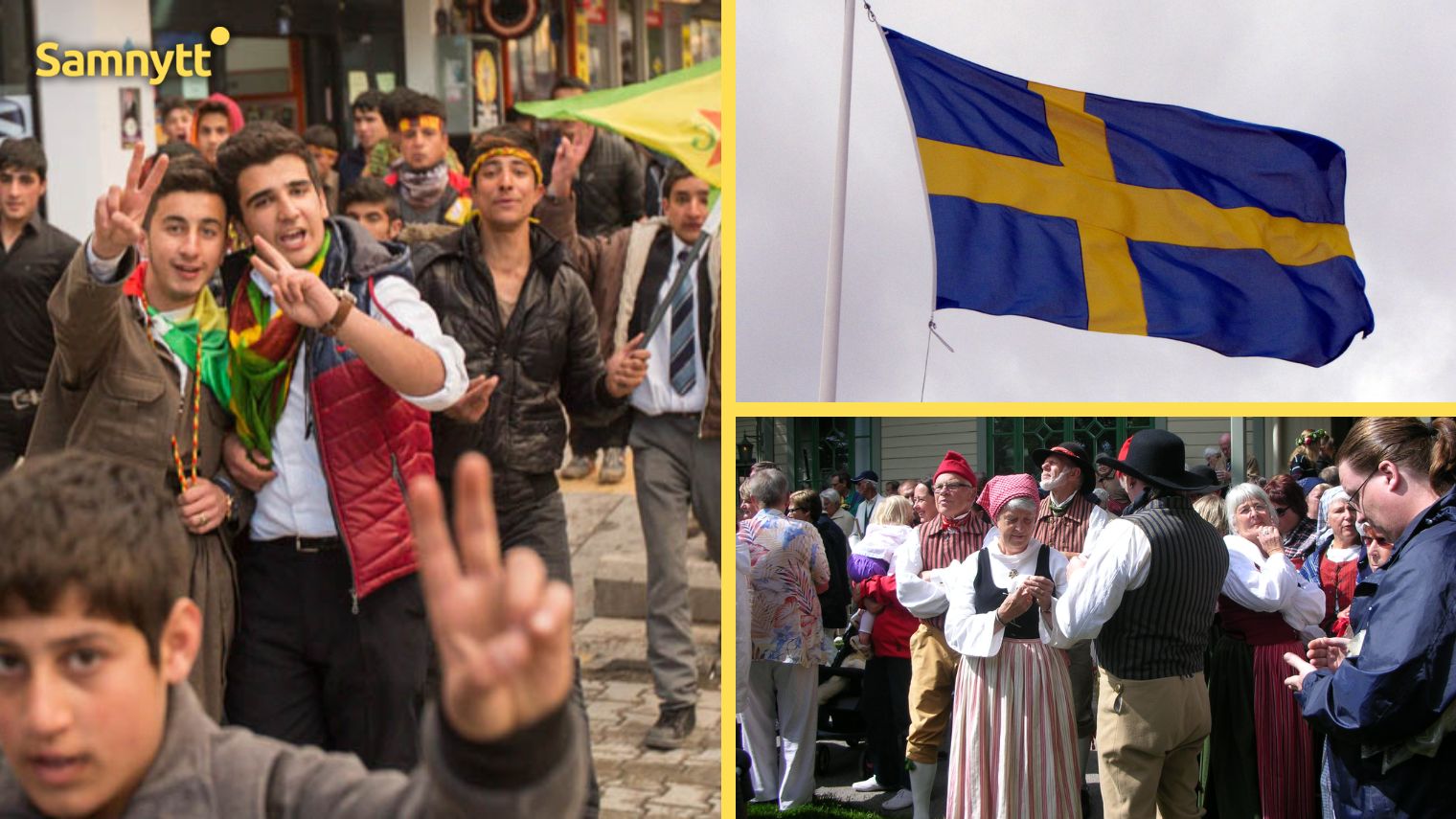
On Friday, the Institute for Language and Folklore, Isof, presented new additions to the list of Sweden’s intangible cultural heritage. Several of these have nothing to do with Sweden itself.
The national list is part of Sweden’s work with UNESCO’s convention on intangible cultural heritage, and the new entries are mainly based on proposals submitted by the public.
According to Maria Nyström, senior advisor at Isof, it concerns heritage that cannot be touched, such as knowledge, skills, and traditions.
READ ALSO: The Agency defends Ramadan campaign: “Reflects our daily life and society”
The new heritage elements now added include the Afghan, Kurdish, and Persian New Year Newroz, the Indian festival of lights Diwali, May singing, straw crafts, sauna bathing, candle making, charcoal burning, Bellman jokes, brick craftsmanship, and Bodapolska (a traditional dance).
– The purpose of this list is not to highlight only heritage that is Swedish, but rather heritage that is practiced in Sweden. So they do not need to have a Swedish origin, says Nyström to the national broadcaster.
The list was started in 2011 and now includes around 100 examples of intangible cultural heritage.
Newroz is a festival celebrated mainly by Kurds but also by several ethnic groups in the Middle East and Central Asia. The festival marks the spring equinox and the start of the new year according to the Persian calendar, usually on March 20 or 21. Newroz has roots that stretch back thousands of years and is associated with renewal, the arrival of spring, and ancient Zoroastrian traditions. For many Kurds, the festival has also become a symbol of freedom, identity, and resistance.
The celebration of Newroz often includes large gatherings outdoors where people dance, sing, and light bonfires. The fire symbolizes the triumph of light and goodness over darkness. Many wear traditional clothing and share meals with family and friends. In countries like Turkey, Iraq, Iran, and Syria, the festival has sometimes held political significance, especially in Kurdish contexts where Newroz has become an important cultural and national symbol.
Diwali, sometimes called the festival of lights, is one of the biggest and most important holidays in Hinduism. It is mainly celebrated in India but also by Hindus worldwide, usually in October or November. The festival symbolizes the victory of good over evil and the triumph of light over darkness. Diwali has different meanings depending on region and tradition, but it is often linked to the story of the god Rama returning home after defeating the demon king Ravana.
During Diwali, people decorate their homes with oil lamps, light strings, and colorful patterns called rangoli. Families gather to eat festive food, exchange gifts, and participate in prayers and ceremonies. Fireworks are also common during the celebration. The holiday is important not only religiously but also socially and culturally, as it represents community, hope, and a new beginning.
READ ALSO: Why Police Printed Thousands of Business Cards for Ramadan: “Their major holiday”