
More and more people are leaving their home countries in the Western world. According to analyses by The Economist, emigration is at record levels, with consequences that go far beyond individual life choices. The phenomenon affects tax bases, labor markets, and even the functioning of democracy in the countries being left behind.
When politicians discuss migration, the focus is usually on immigration – who is coming in. But a less noted trend is that more and more are also leaving.
The Economist describes in an analysis how around four million people emigrated from about thirty Western countries during 2024. That is roughly 20 percent more than before the pandemic. The increase is evident in many countries – Sweden, Canada, New Zealand, and Italy have all noted sharp rises in the number of people relocating abroad.
However, measuring the exact figures is difficult. For a long time, many countries have had inadequate systems for registering when people leave the country. Only in recent years has better data made it possible to see the full picture – and it clearly points upwards in numbers, even as the graph for the economic consequences of the exodus points clearly downwards.
More Than Just Temporary Movements
Part of the increase can be explained by many who immigrated in the years following the pandemic now leaving again. Students finish their studies, temporary workers return home, and some change their plans.
But according to The Economist, that explanation is not sufficient. There is also a marked rise in native citizens choosing to move abroad. In several countries, emigration among the native population has increased significantly, especially among the young and highly educated.
SEE ALSO: Annika Strandhäll Unaware of Swedish Emigration to North America
It’s therefore not just about “rotation” in the workforce – but a more permanent shift where people in the West are increasingly building lives outside their home countries.
The Emerging “Expat Economy”
All of this points to something bigger – the rise of a :censored:6:cdd6bbaa89: “expat economy.” People no longer move just out of necessity, but to optimize their lives – economically, professionally, or personally.
They move between wealthy countries, often with similar standards of living, creating new patterns of work and consumption. This disadvantages the countries people leave and economically benefits those they move to.
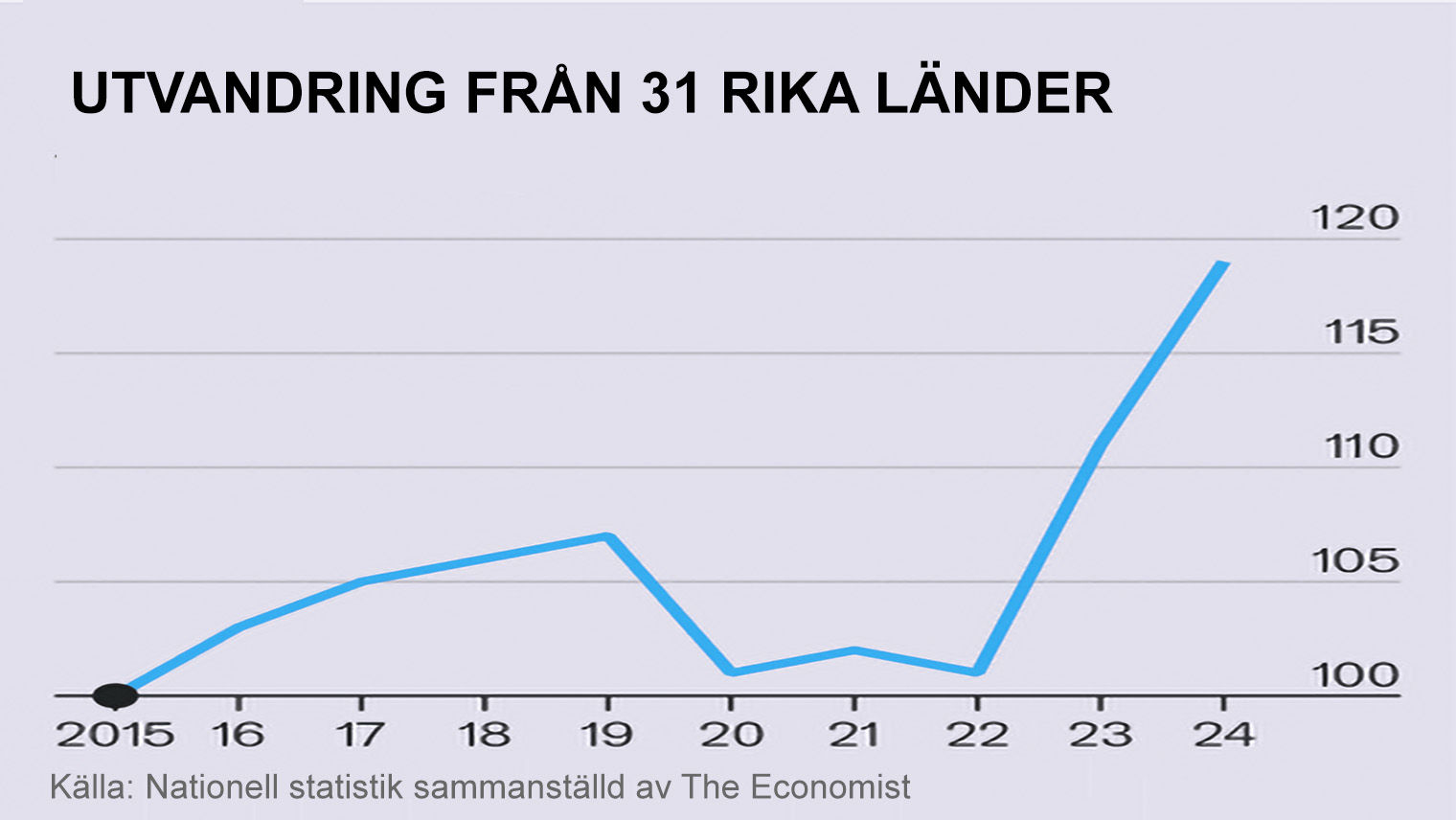
According to The Economist, the number of Westerners living in other Western countries has increased by about two million since 2019. The USA and certain European countries have become particularly attractive destinations.
Three Forces Driving This Trend
Remote work and flexibility: The pandemic changed perceptions about where work can be carried out. Once working from home became accepted, it was only a small step to working from another country. Companies have also increasingly hired staff abroad.
Taxes and economy: High earners in many Western countries are facing ever higher taxes. For some, it becomes rational to live temporarily in countries with lower taxes, especially those with mobile careers.
Politics and dissatisfaction: Political divisions also play a role. People, both on the left and right, increasingly feel that their home countries’ political systems aren’t working as they’d like. Research that The Economist refers to also shows that declining faith in democracy tends to increase emigration.
Consequences for Countries Losing People
When people leave a country, the economic effects are clear. When young and highly educated people emigrate, the state loses future tax revenue – even though it has often invested in their education. For smaller economies and countries with aging populations, this can be particularly painful.
SEE ALSO: The Social Democrat Government Is After the Savings of Emigrated Swedes: “Patience Is Over”
The Economist also highlights political effects. Studies indicate that those who emigrate are often more liberal than those who stay. Their departure may help change the political climate in their home countries.
But Someone Else Gains
At the same time, migration is a zero-sum game on a :censored:6:cdd6bbaa89: level – what one country loses, another can gain. Countries that receive these emigrants gain access to skills, entrepreneurship, and labor.
And for the individual, moving often results in higher incomes or a better quality of life. In addition, emigration is not always permanent. Some eventually return, often with new experiences, capital, and networks that can benefit the country they return to.
A More Connected World
Despite politics in many countries becoming more nationalistic, people are moving across borders more than ever. The Economist interprets this increased mobility positively – as the Western world, in practice, becoming more intertwined than ever before.
The venerable economic journal ultimately wants to see the positives in people building lives spanning several countries, thereby creating new economic and social bonds. This, they argue, means that the future economy will not only be shaped by trade and capital flows, but also by people’s increasingly :censored:6:cdd6bbaa89: life choices.
However, many natives who leave their home country – for example Sweden – convey a different and more negative view. They often say they are fleeing political mismanagement, the consequences of mass immigration, climate-hysterical energy policy, and a focus on identity politics and other things not conducive to growth, prosperity, and security.