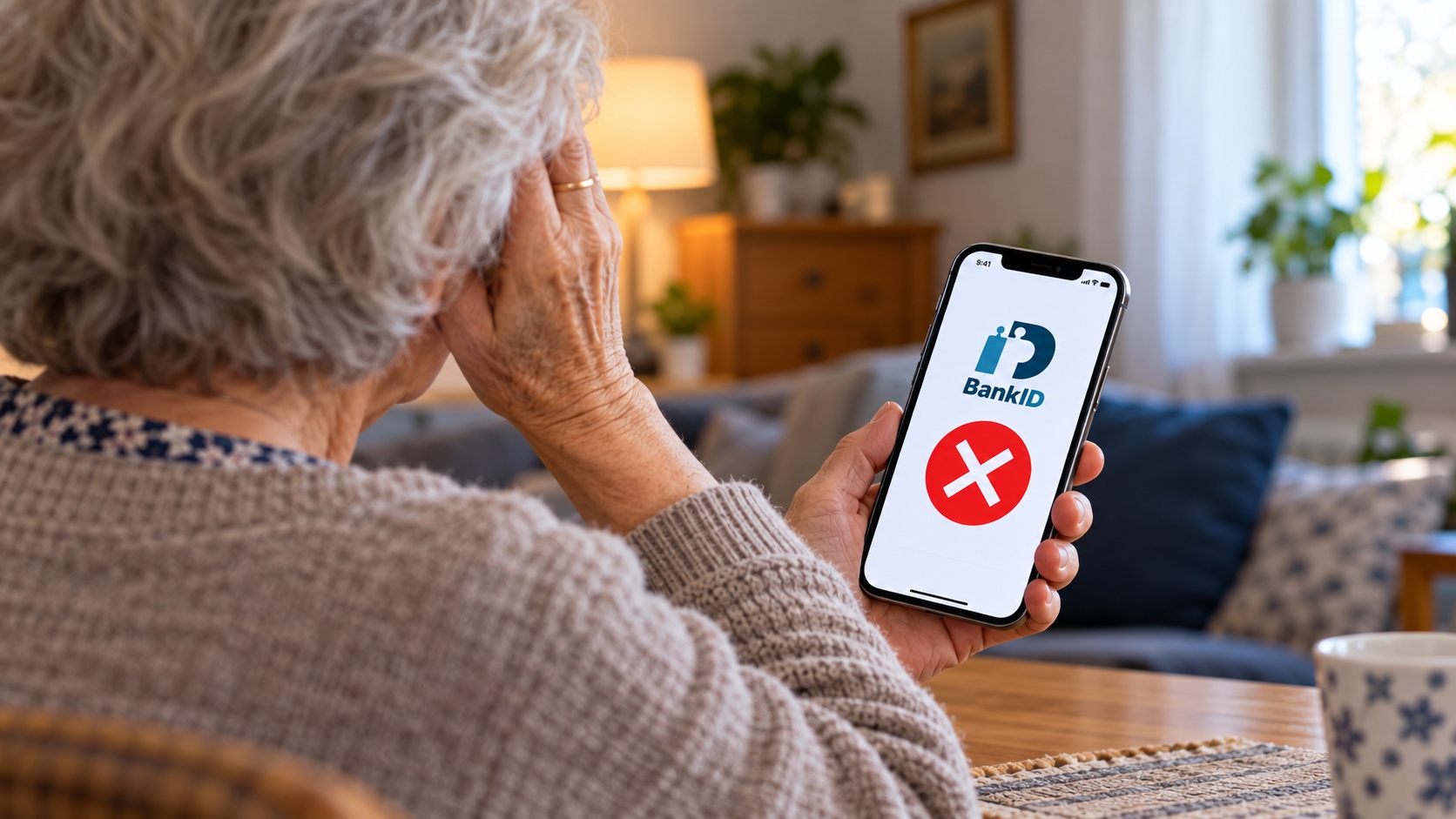
78-year-old Inger Löwe was scammed out of 30,000 kronor. When she contacted her bank, she received another blow: the bank blocked her BankID and prevented her from getting a new one for a year. The decision could not be appealed to the National Board for Consumer Disputes (ARN).
It was at the beginning of the year that Inger Löwe fell victim to a fraud and lost 30,000 kronor from her account at Länsförsäkringar Bank. But when she turned to the bank for help, the consequences became significantly greater than the financial loss.
The bank blocked her BankID and also removed her ability to use Swish. In addition, she was prevented from obtaining a new BankID from any other bank. The ban was to last for one year, reports Dagens Nyheter.
The bank’s reasoning was that her BankID had been used in violation of the service’s terms of use. Although she herself had been the victim of fraud, she still had to bear the consequences of the bank’s security measures.
The Block Applies Even to Competitors
Losing one’s BankID means much more than just being unable to use the bank’s app. The e-ID is now used to identify oneself to authorities, log into healthcare services, manage insurance matters, and handle a range of everyday tasks.
Moreover, switching banks does not necessarily help. The banks behind BankID use a shared system where information about blocked users is circulated among participating banks. This is clear, for example, from SEB’s information on how personal data is handled.
READ ALSO: Ekeroth: “The banking system must be deeply reformed”
A customer blocked by one bank can therefore be prevented from obtaining a new BankID even with a competitor. The system is intended to prevent fraud, money laundering, and other unauthorized use, but it also means that a single banking decision can have consequences far beyond the bank itself.
Länsförsäkringar Bank declined to comment on Inger Löwe’s specific case, citing bank confidentiality. However, the bank explained to DN that serious breaches of the terms of use can lead to blocking, and that these measures ultimately aim to combat crime and maintain security in the BankID system.
Cannot Have the Decision Reviewed by ARN
What makes Inger Löwe’s situation particularly difficult is that she has not been able to have the blocking decision reviewed by an independent body such as the National Board for Consumer Disputes (ARN). That board can handle disputes regarding access to payment accounts with basic functions. However, BankID is not covered by these rules, as e-ID is not considered such a basic account function.
This means that anyone blocked from BankID does not have the same right to review by ARN as someone denied a regular payment account. The bank that made the blocking decision is itself responsible for handling any request for reconsideration.
The problem is not limited to a single case. According to DN, the Swedish Consumers’ Banking and Finance Bureau says it is encountering more people who have lost their BankID after being subjected to scams.
Fredrik Nordquist, lawyer and deputy director at the bureau, describes how people seeking advice are frustrated by not being able to have the blocking decisions reviewed by ARN.
Samnytt’s Reportage
For some time, Samnytt has highlighted the shortcomings in the banking system and how easily banks can act against individuals, making it difficult for them to assert themselves.
One of those affected is businessman Michael Fridebäck, who last year suddenly discovered that he had been banned from the banking system—without warning. Samnytt produced a three-part reportage about those expelled from the banking system.
See part 1 below:
READ ALSO: REPORTAGE: Michael banned from the banking system – “Slow state rape”