
The government now wants to pay people to accept wind power in their local environment. According to a recent proposal, living close to new wind turbines could grant residents up to 38,000 kronor per year, tax-free.
The official justification is that it should “pay off” to have wind turbines as neighbors. But behind these statements lies another reality: in many places, wind power faces such strong resistance that the government now sees economic incentives—bribes, in everyday language—as necessary to enable more land-based projects.
The proposal means that anyone living within nine turbine heights from a new wind farm will receive a share of the wind park’s revenue. In southern Sweden, where electricity prices are higher, compensation could reach 38,400 kronor per year, according to government calculations. In northern Sweden, it’s about 19,400 kronor. This is reported by, among others, SvD.
At the same time, the government is announcing an investigation into the possibility of residents close to new wind turbines having their properties bought out, for those who cannot tolerate the turbines or have seen their house values plunge.
Recognition of Growing Resistance
The government’s decision to go ahead with economic compensation is seen as an admission that wind power does not gain popular support on its own through climate signaling. If the installations were seen as unproblematic and positive, there would be no need for tax-free payouts to get people to accept them locally, critics argue.
The opposition is not just about aesthetics or general reluctance to change. In many parts of the country, residents report a tangible decline in their quality of life: noise, shadow flicker, blinking obstruction lights, concerns about falling property values, and a sense of being steamrolled in processes driven by developers, authorities, and politicians—while residents are expected to adapt.
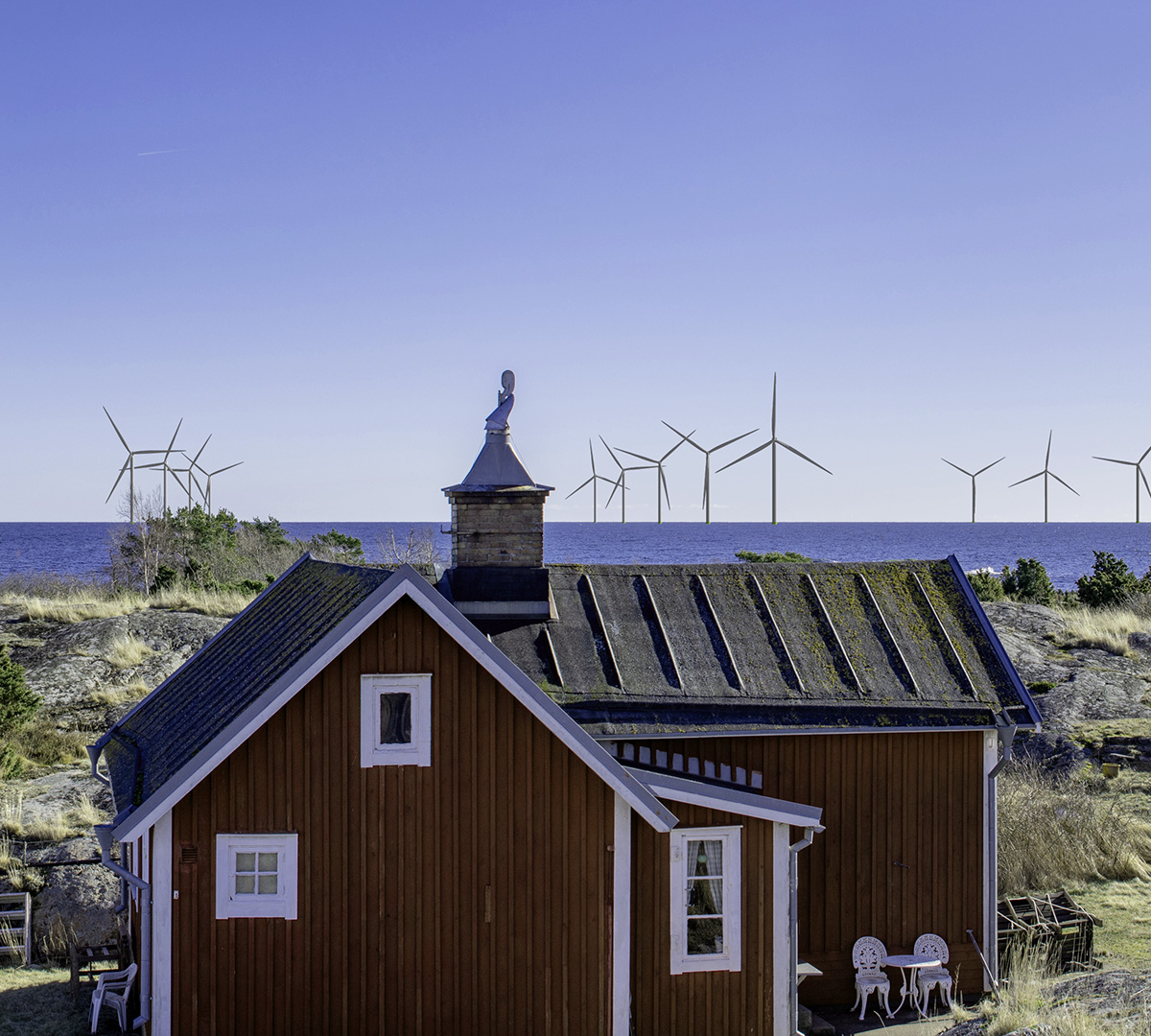
It is also telling that the government explicitly says local acceptance must increase for wind power to continue to be expanded. This indicates that the problem is not primarily technical, but social and political. Wind power meets resistance because many people simply do not want it nearby.
Residents Testify to Disturbances – Authorities Trust Companies
In several areas, locals describe dramatic declines in their everyday life after wind turbines were put into operation. In Vaggeryd municipality, residents reported disruptive noise from the Boarp wind farm after Eolus started the turbines in the area. According to residents, the noise was much louder than the company had previously implied, and independent measurements reportedly showed levels far above what is permitted.
Despite this, the County Administrative Board chose not to demand any external, accredited control measurement. Instead, the case was closed with reference to prior calculations and trust in the company’s own reports. The message to residents was thus that the authority saw no reason to pre-empt the measurements the company itself would later carry out.
Homeowners Bear the Costs Themselves
Another recurring complaint concerns property values. When wind power is planned or built nearby, the consequences can hit individual homeowners hard—long before any possible compensation even becomes relevant.
A noted example is Sven and Görel Willén, outside Smedjebacken. According to their information and a preliminary valuation, their farm risks losing half its value if the planned Styggtjärnsberget wind farm becomes reality. The bank also denied further borrowing, citing the uncertainty about the project’s influence on the property’s value.
READ ALSO: The Threat from Wind Power Halved the Value of Sven and Görel’s House
For the couple, this was not some abstract debate about energy policy, but about a home in which they had invested years of work and money. New well, new bathroom, refurbishments, repayments—all risk being wiped out by a project they neither asked for nor can substantially affect.
Meanwhile, wind power company representatives have made it clear that full compensation for such drops in value is usually not on the table. Where compensation is offered at all, it is typically limited to those living closest to the turbines. However, research has suggested that impacts on property values can be felt at much greater distances.
READ ALSO: No compensation for homeowners affected by wind turbines
This means that many households risk financial harm without being covered by the new compensation models presented. Thus, when the government now discusses payouts to nearby residents, it does not mean the problems are resolved—instead, it signals an attempt to patch up a system in which many already feel like losers.
Health Risks Continue to Raise Questions
Criticism of wind power is not only about finances and living environment, but also health. Recent research has highlighted the issue of infrasound from wind turbines—frequencies below the range of human hearing, but which still can affect the body.
A Swedish research team, with links to the University of Gävle among others, has sounded the alarm about high measured levels. According to the researchers, exposure can be linked to issues such as stress, headache, and migraines. At the same time, they note that knowledge about long-term health effects is still insufficient.
READ ALSO: Research warning: Health-hazardous infrasound levels from wind power
The uncertainty itself is pointed out as part of the problem. Despite questions about potential health risks, expansion continues, while residents are expected to live with the consequences as research races to catch up. There has been little sign of a clear precautionary principle guiding development.
Municipalities Say No – Then Come the Payouts
Resistance to wind power has also left a clear mark on local decision-making. In recent years, a very large share of projects have been stopped at the municipal level. The government’s response has not been to pull the emergency brake, but to increase the economic incentives.
Municipalities have already been promised compensation for saying yes to wind projects. Now, even nearby residents are to share in the money. The message is clear: if people and municipalities do not voluntarily accept expansion, resistance will be suppressed with payouts.
Record Production – and Record Losses
While the government is trying to pave the way for more projects, the economic picture for wind power is getting gloomier. New audits of financial statements show that the industry, despite high production, faces very large profitability problems.
According to an analysis by Associate Professor Christian Sandström and business economist Christian Steinbeck, 240 wind power companies reported a combined loss of about 6.3 billion kronor for 2024. The companies in the review represented the majority of Swedish wind power production, making the figures particularly noteworthy. The average profit margin after financial items stood at minus 51 percent.
This trend is not described as a temporary blip but as a growing structural crisis. Especially in Norrland, where expansion has been greatest, overproduction and low electricity prices have hit hard. But even elsewhere in the country, the numbers are in the red.
READ ALSO: Record production and record losses – researchers warn of a wind power industry in crisis
A central explanation is that wind power produces electricity when it is windy, not when demand is highest. When many turbines feed large volumes into the grid at the same time, prices are pushed down—sometimes to zero or even lower. This means extra production doesn’t bring more profit, but instead results in lower income for all.
Vattenfall Shows How Bad the Situation Is
Not even the state-owned energy company Vattenfall seems able to make Swedish wind power profitable. New annual reports show that the business suffered heavy losses again in 2024. According to summaries, Vattenfall’s Swedish wind power business posted a negative operating result of 870 million kronor that year.
This makes it five straight years of losses. All companies in the Swedish wind division posted negative results, despite continued political support and ongoing expansion.
READ ALSO: Annual reports show: Vattenfall’s wind power running at a massive loss five years in a row
This, critics say, makes the government’s new compensation model even more remarkable. While households are to be enticed to accept wind power through tax-free payouts, and municipalities compensated for saying yes, the financial statements show that the core business model for large parts of the sector is weak. Critics have begun asking how much wind power expansion would have taken place on entirely commercial terms.
When Business Calculations Collapse, Others Pay
Beyond the companies’ own losses, wider system costs are also highlighted. Wind power is weather-dependent and requires backup capacity from other power sources for when it isn’t windy. This means the system must bear double costs: for the wind power itself and for the reserve capacity that takes over when the wind dies down.
Added to this are grid expansion, balancing costs, and risks associated with future dismantling and land reclamation if projects fail financially. Critics argue that these costs are not fully reflected in the companies’ own calculations, but can ultimately be shifted to electricity consumers, municipalities, or taxpayers.
Watch Samnytt’s Wind Power Documentary
If you haven’t yet, feel free to watch Samnytt’s three-part wind power documentary, where we take a wide and critical look at the effects of the green energy transition.