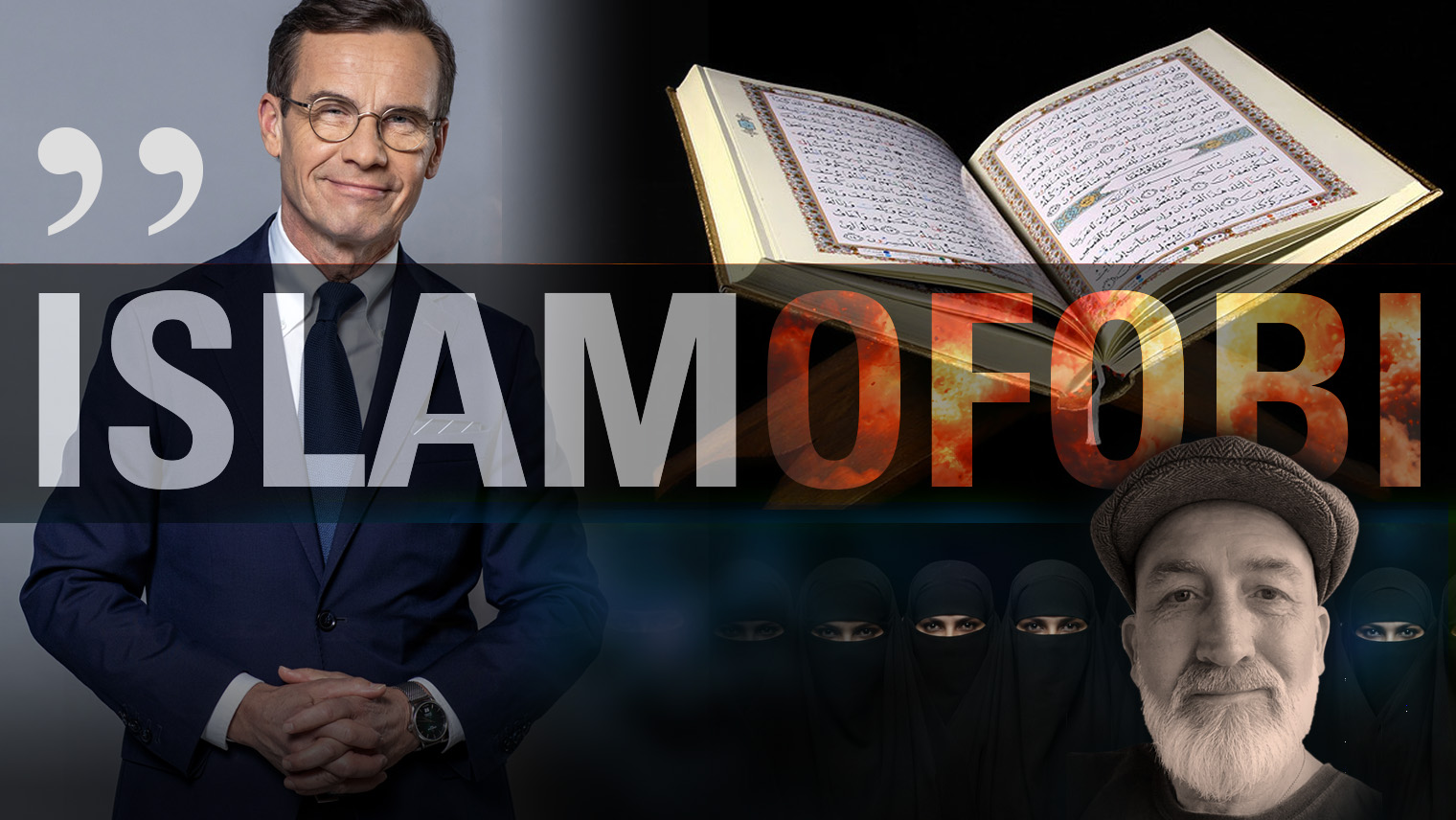
COLUMN • The term “islamophobia” has, in a relatively short time, become one of the most charged and contested political words in the Western world. It is often used to describe alleged hatred and hostility, but is increasingly functioning as a rhetorical tool to limit or cast suspicion on criticism of Islam and Islamism. As the term gradually becomes institutionalized in international resolutions, national politics, and bureaucratic language, the question grows as to who actually holds the authority to interpret reality. In this context, Samnytt’s journalist Jonas Andersson reflects on how the evolution of language not only shapes the climate of debate, but also helps form the political conflicts that define our era.
The concept of “islamophobia” is not a neutral description of reality. It is a political word. It has been established as a political tool. Its function is not primarily to protect people from hatred, but to protect a political ideology from scrutiny. This is a crucial distinction that is systematically blurred in our time.
READ ALSO: Court of Appeal confirms ‘blasphemy verdict’ – must distance from islamophobia
The author and associate professor Johan Lundberg has, in several essays and books, argued that the concept of “islamophobia” broke through in an intellectual climate that was greatly shaped by postcolonial theory after the publication of Orientalism by Edward Said.
According to Lundberg’s interpretation, Said helped establish an intellectual framework where Western criticism of Islamic societies often came to be understood as acts of power or cultural dominance. Thus, the focus in debate shifted from objective analysis of religious and political ideas to an examination of the critic’s motives and position.
This is a classic technique of power. It has been used by totalitarian ideologies throughout history. It is being used again in our time.
Jonas Andersson
In Lundberg’s reasoning, this is not about Said inventing the word islamophobia itself, but that his theoretical contribution made it possible for the concept to gain particular normative weight in academia and public debate.
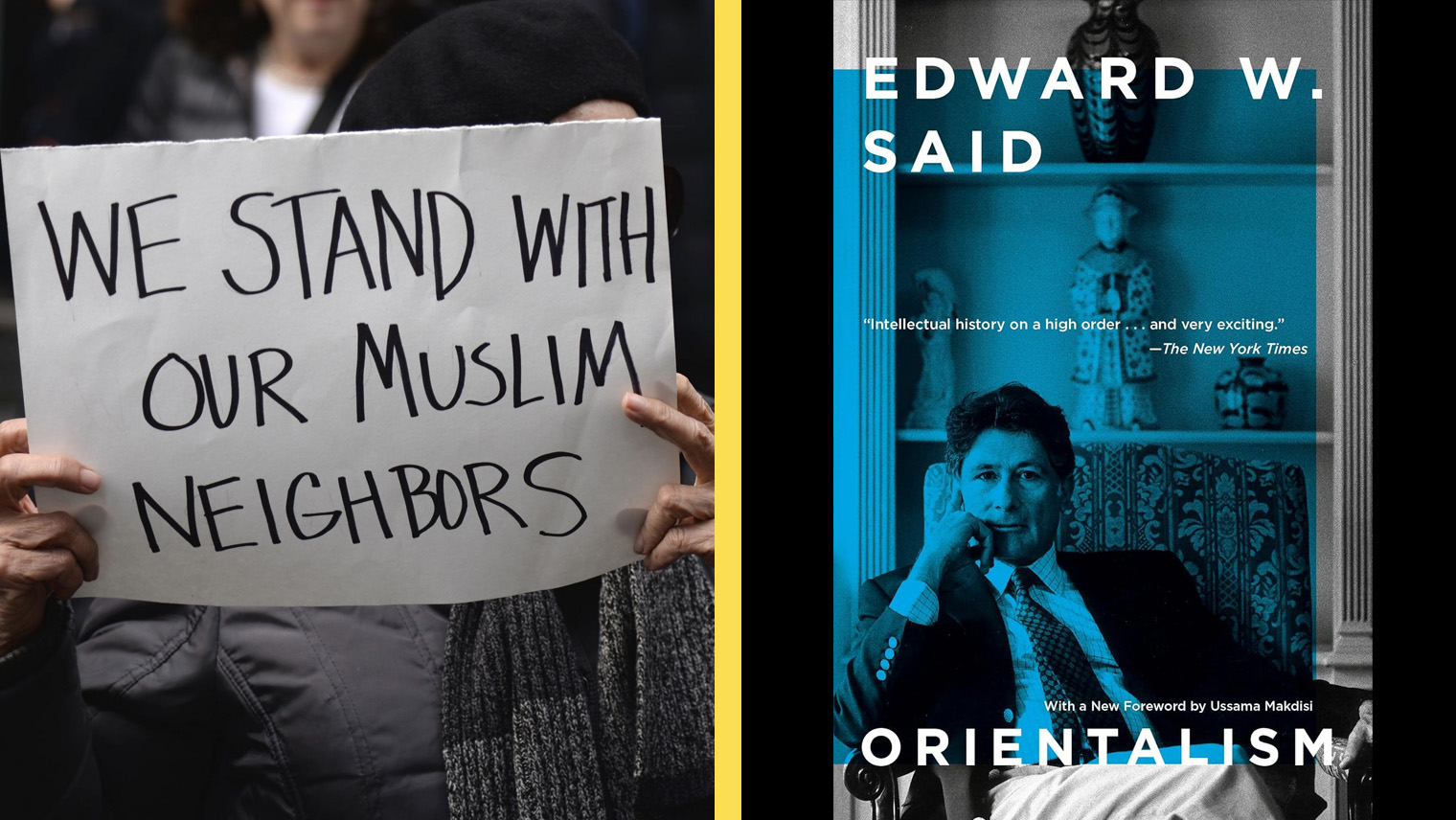
Lundberg develops this view particularly in his books Enemies of the Light and When Postmodernism Came to Sweden, where he analyzes how postmodern and identity-political theory have affected views on culture, power, and freedom of expression in Western societies.
In Lundberg’s analysis, islamophobia is not just a descriptive term for perceived hostility toward Muslims, but a central component of a broader ideological reinterpretation of Western civilization. The term, according to him, is an intellectual tool to delegitimize the Enlightenment tradition of criticizing religion and shifts the focus from the substance of ideas to the critic’s moral status.
READ ALSO: Feminism finally found its ally in Islamism
This risks undermining the very possibility of rational criticism of religious and political doctrines. Lundberg sees this not as an isolated linguistic change, but as a deeper cultural-political transition where Western norms of secularism, freedom of expression, and intellectual universalism are gradually relativized in the name of tolerance and identity politics.
For Lundberg, this is not a semantic detail but a decisive front in an intellectual-historical battle about the future of the Enlightenment.
The State’s New Terminology
In a free society, people must be protected from violence and discrimination. But ideas—religious, political, or cultural—must be open to criticism without such criticism being pathologized. When critique of Islam or Islamism is reflexively labeled as phobia, racism, or extremism, there is a shift from substance to psychology. The opponent is made into the problem. The arguments needn’t be addressed.
This is a classic technique of power. It has been used by totalitarian ideologies throughout history. It is being used again in our time.
READ ALSO: Here is the imam demanding the Sweden Democrats apologize for ‘islamophobia’
Islamism is such an ideology. It is not only a religious faith, but a political project that, in many interpretations, claims authority over the state, the law, and social life. In large parts of the world, this project has resulted in theocracies, repression, and oppression. In other areas, it takes the form of social control, parallel normative systems, and ideological mobilization—and demands for submission.
Jonas Andersson
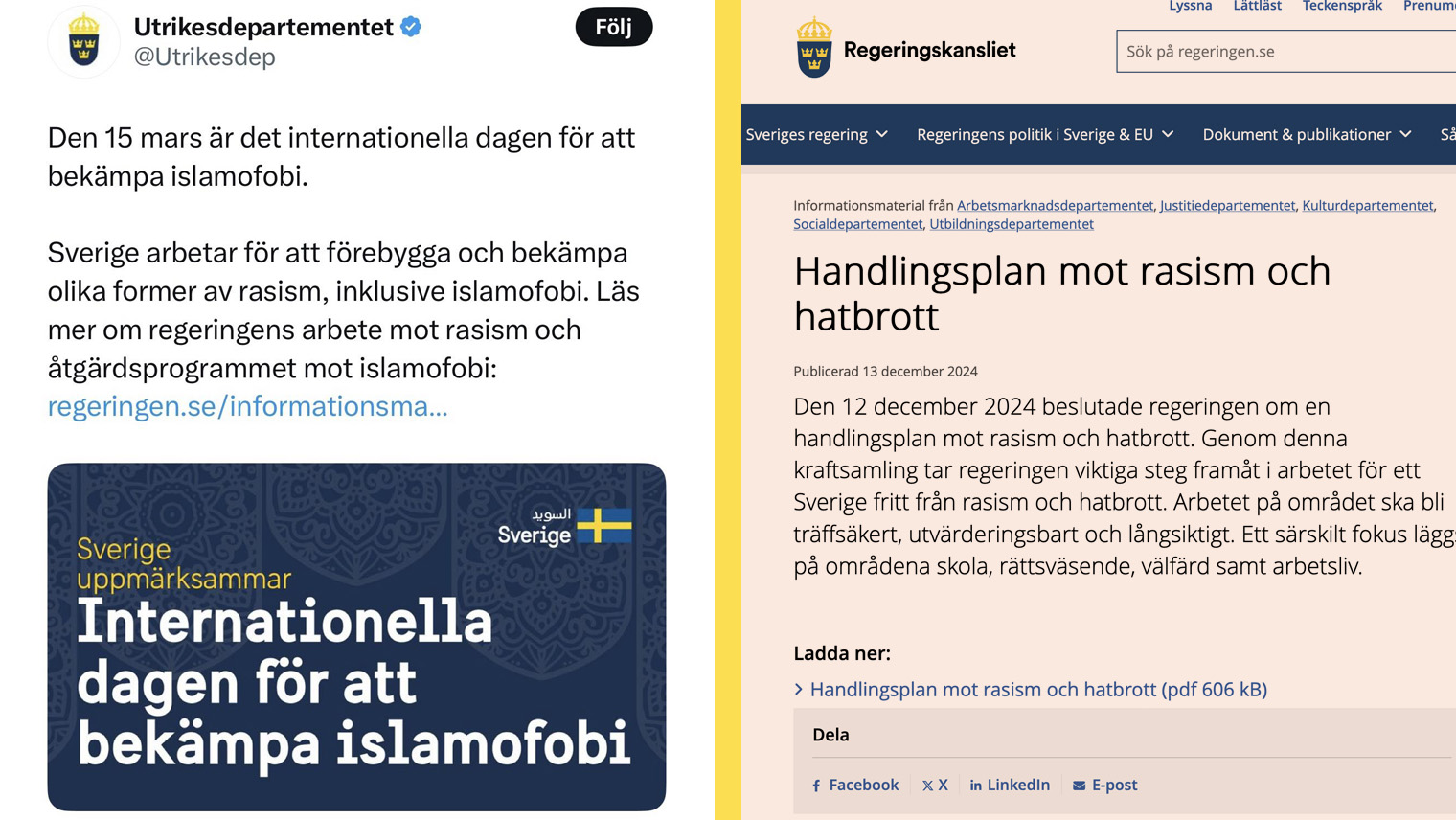
The Ministry of Foreign Affairs, this March, highlighted the so-called International Day Against Islamophobia, a theme day established by the UN General Assembly in 2022. In its message, the ministry referred to work against racism and discrimination, but the use of the very term islamophobia also illustrates a larger linguistic and political conflict.
For example, the government’s own policy texts refer to the Swedish National Council for Crime Prevention’s (Brå) report Islamophobic Hate Crimes (2021:3), which summarily states that such crimes “take many different forms and are not limited to any particular place, time, or person,” and that “visibility in the form of religious clothing means that, for example, women who wear a veil may experience islamophobia as part of everyday life.” The anxious vagueness is striking.
READ ALSO: The government’s new campaign: ‘Combat Islamophobia’
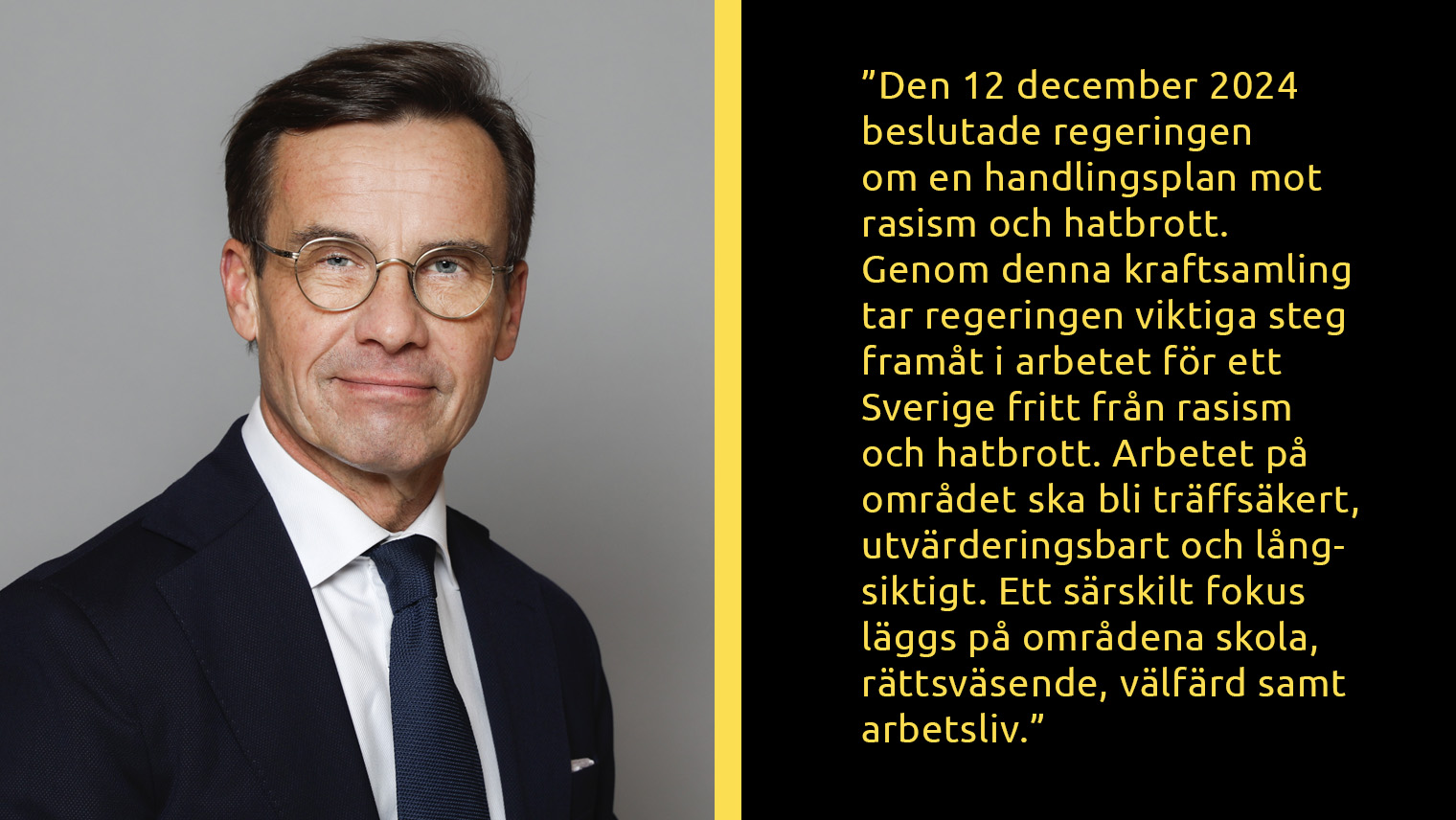
The introduction of this terminology into official government language also illustrates how the concept has gradually been institutionalized in Swedish politics and administration, despite the meaning and boundaries of the term continuing to receive strong criticism.
At the same time, the Western public sphere is characterized by a deep reluctance to admit that destructive ideologies exist as such. Conflicts are reduced to socioeconomic factors, historic injustices, or cultural misunderstandings. But history shows that some ideas inherently claim violence, power, and submission. They proclaim themselves as absolute and consider criticism illegitimate.
READ ALSO: The Tidö government to fight ‘islamophobia’: ‘Muslims enrich our country’
Islamism is such an ideology. It is not only a religious faith, but a political project that, in many interpretations, claims authority over the state, the law, and social life. In large parts of the world, this project has resulted in theocracies, repression, and oppression. In other areas, it takes the form of social control, parallel legal systems, and ideological mobilization—and demands for submission.
Ideology and Civilization
Europe is meanwhile undergoing a historically rapid transformation. Migration, :censored:6:cdd6bbaa89:ization, and political decisions have fundamentally altered social structures. In certain areas, normative systems arise where religious authorities have greater influence than state institutions. The legitimacy of the secular rule of law is not always openly challenged, but it is gradually undermined.
READ ALSO: ‘We are already living as dhimmis’ – Mona Walter on Islamism’s silent war against Sweden
For many, describing this development as a civilizational conflict remains taboo. But taboos do not change reality. They only change our ability to understand it.
The deeper question is ultimately about the direction of civilization. The West has built its societies on ideas of individual liberty, secular lawmaking, and political pluralism. These ideas are historically specific and not universally accepted. When they meet competing normative systems, tensions inevitably arise.
Jonas Andersson
In parallel, an ideological consensus has emerged within parts of the Western elite. In politics, media, and academia, a norm has been established where criticism of Islamism is viewed with suspicion, while criticism of Western traditions is encouraged.
This creates an asymmetry that undermines trust in institutions. When people feel that their experiences cannot be articulated, a rift forms between public rhetoric and social reality.
Language plays a decisive role here. Our era is characterized by a constant production of new political concepts. These words serve not only as descriptions but as instruments of control. They define what is legitimate to think and say. They can dampen conflict—but also conceal it.
READ ALSO: Police: The Islamization of Sweden has been ongoing for 30 years
When concepts are used to neutralize criticism rather than to clarify reality, a democratic problem also emerges. A society that cannot talk about its conflicts risks losing the ability to manage them.
At the same time, a fundamental distinction must be maintained. Criticism of Islamism is not criticism of all Muslims. There are Muslims in Europe who live secular lives and share democratic values, even if they are remarkably few.
But recognizing this must not lead to a denial of ideological conflicts. It is possible to hold two thoughts in one’s head at once—to defend individual rights and to criticize ideas that threaten them.
READ ALSO: The societal shift no one voted for—the concrete traces of Islamization in Sweden
The deeper question ultimately concerns the direction of civilization. The West has built its societies on ideas of individual liberty, secular lawmaking, and political pluralism. These ideas are historically specific and far from universally accepted. When they meet competing normative systems, tensions inevitably arise.
To describe these tensions as expressions of fear or intolerance is to misunderstand the present. To acknowledge them is a prerequisite for managing them.
READ ALSO: Social Democrats: Eid al-Adha is a Swedish holiday
The Limits of Empathy
In his new book Suicidal Empathy: Dying to Be Kind, the Canadian evolutionary psychologist Gad Saad argues that what he calls an excessive and irrational empathy in Western politics and culture risks undermining society’s stability.
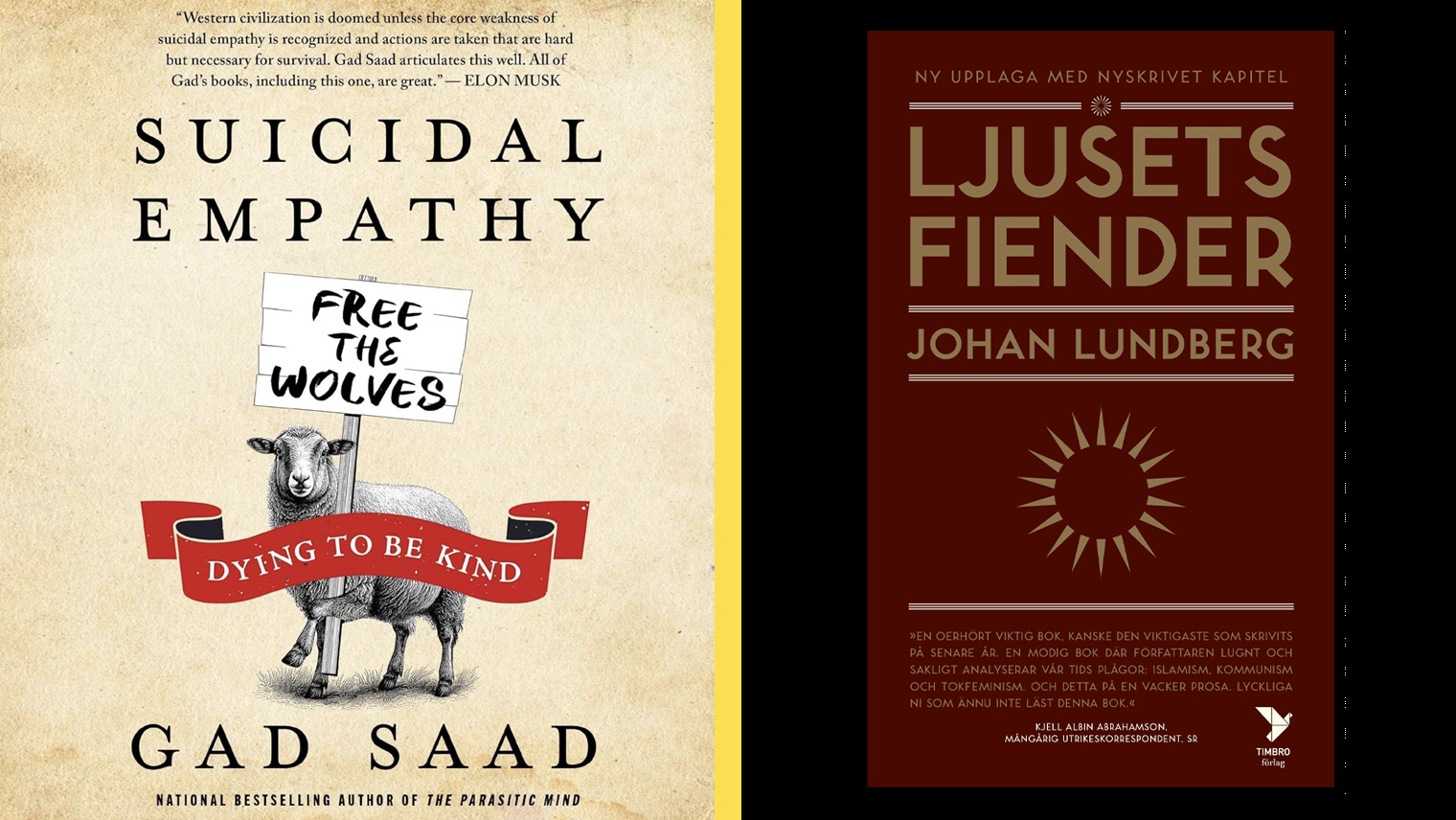
The book is a polemical follow-up to his previous works on the psychological and cultural consequences of ideas and criticizes what he describes as a moral climate where feelings and symbolic politics take precedence over rational analysis and long-term social interests.
READ ALSO: Malmö spends millions on work against Islamophobia and Afrophobia—challenged by SD
Saad argues that this development promotes an “inverted moral logic,” where destructive behaviors are excused while norms and institutions once seen as stabilizing are questioned or weakened.
Saad’s analysis coincides with the development that Lundberg describes—a moral and intellectual shift where Western norms themselves are questioned in the name of tolerance. Samnytt will return to Saad’s Suicidal Empathy: Dying to Be Kind.
READ ALSO: Save the Children’s radicalization project ignores Islamism and left-wing extremism
Ultimately, this is not just about religion or Islamization. It is about power, language, and self-understanding. About which values should be fundamental and which should be negotiable. About how far tolerance can be stretched without dissolving the norms that make tolerance possible.
Anyone who wants to understand our time must dare to talk about ideology without hiding behind euphemisms. One must dare to admit that conflicts exist even when they are uncomfortable. And one must realize that something called evil does exist.
There is hatred of the West. There is violence. There is oppression.
But there is no such thing as islamophobia.
Do you appreciate Samnytt?
Hundreds of thousands read Samnytt every week—but only 1 in 100 contribute. Help us continue to deliver investigative and in-depth reports that show more of reality.
Without your support, Samnytt does not exist.
Thanks to our readers, Samnytt has published nearly 34,000 articles that show more of reality—what the establishment media often chooses to hide.
123 083 33 50
Swisha any amount
Thank you for reading and supporting Samnytt