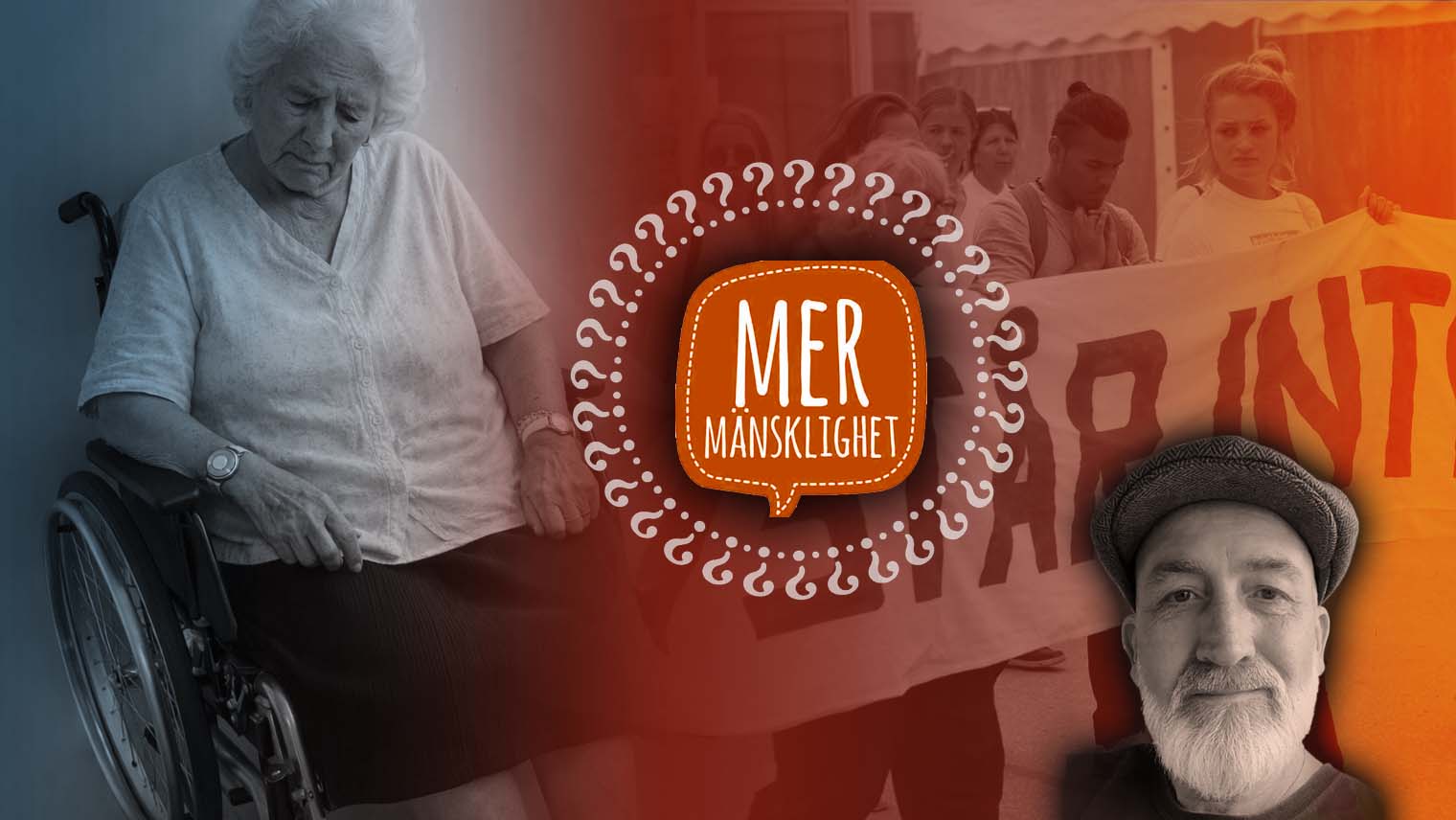
A convicted fraudster who exploited the elderly in their own homes is allowed back into elder care – and is able to work there for nearly a year. No one notices. No one stops it. Not until Samnytt does. When those responsible are confronted, they refer to routines that turn out to be toothless. Jonas Andersson highlights a system where controls are just a formality, responsibility dissolves – and the most defenseless are left to their fate.
There’s a question that should be asked more often than it is.
Not just in Nacka Municipality – to all their area managers, operations managers, unit managers, production directors, city managers, deputy city managers, business area managers, HR managers, communications managers, quality managers, group managers, team leaders, and executive management teams.
But to the entire Swedish welfare system – and the responsible politicians. It’s a simple question:
– How could it come to this?
A man is sentenced to prison for exploiting the elderly in their own homes. He uses his role in care work to get bank cards, codes, and money. The court determines that the crimes are especially severe, precisely because they are committed in a profession founded on trust.
Shortly afterwards, he is back. Back in elder care. Back among the people he once exploited. And no one seems to be able to explain how. Or, perhaps more accurately – no one seems to want to. And most of those I try to speak with make themselves unavailable.
A word I, as a journalist, am increasingly beginning to hate – and fear – because it speaks of a rot far beyond individual instances and mistakes.
Because when those responsible are confronted, something strange happens. Suddenly, concrete questions turn into abstract reasoning. Routines. Processes. Systems. Everything sounds correct – until you look at the result.
And the result is this – a convicted elderly scammer from Afghanistan has once again been able to work for nearly a year with our elderly pensioners, our old people, those who remain of those who built Sweden.
This isn’t a mistake. It’s a systemic failure. But it’s also something more than that. There is a deeper dimension here – one that stretches beyond individual hirings and into the culture that has emerged in Sweden in recent years.

Because while cases like this are uncovered, there’s another story. The story of commitment, the will to help, and the movements that arose during the refugee crisis and the years that followed.
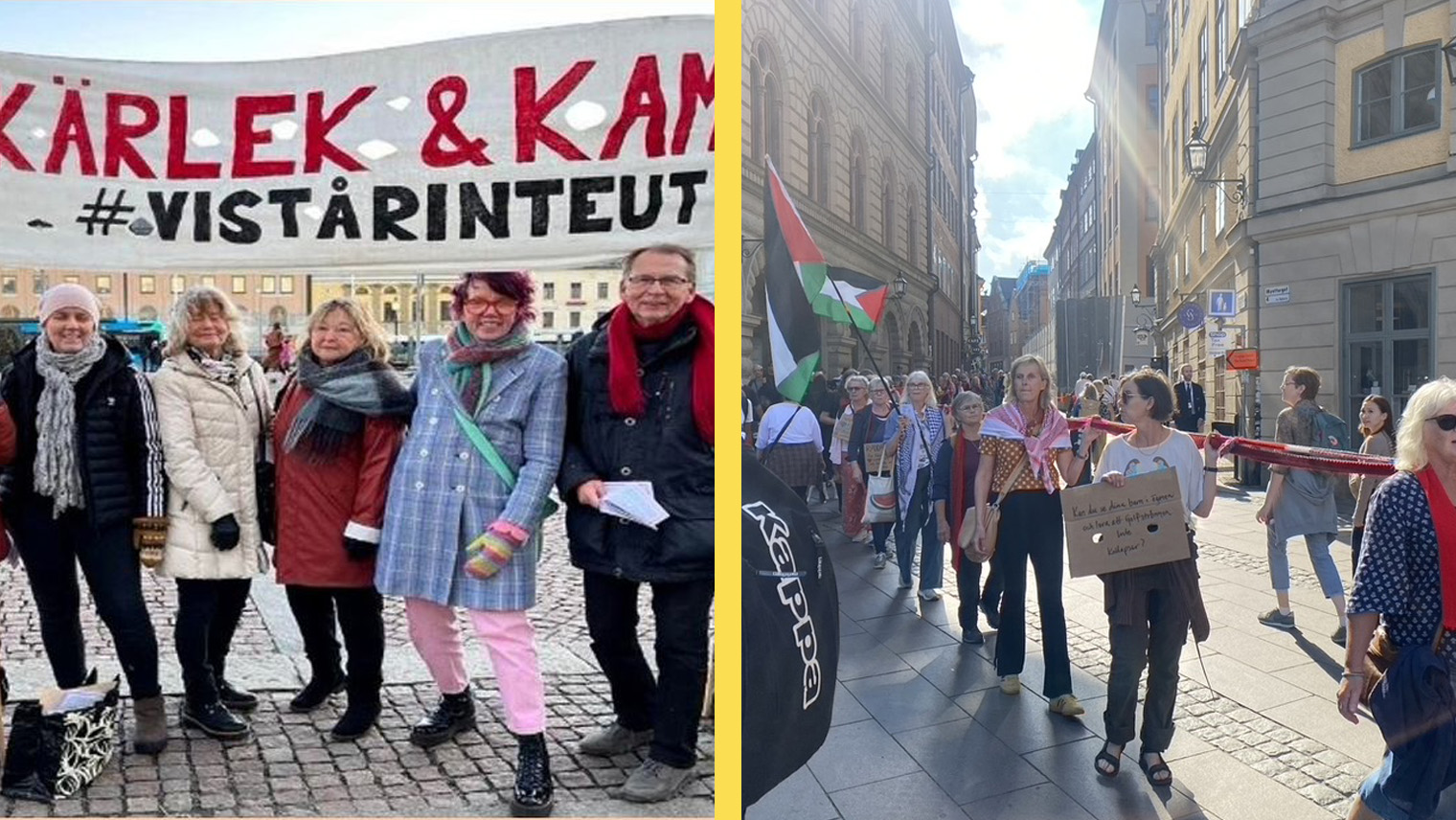
Thousands mobilized. Appeals, manifestations, networks. Not least women – often older, often established in society – who organized to support unaccompanied Afghans and demand that they be allowed to stay.
The Humbug Concept of the “Unaccompanied Minor”
Movements like “Vi står inte ut” (“We Can’t Stand It”), the sit-ins at Medborgarplatsen, and other political demonstrations contributed to the political pressure that led to the so-called High School Law of 2018, where, not least, Annie Lööf (Centre Party) pushed to allow tens of thousands of Afghans – young men – without grounds for asylum to stay in Sweden.
This is where the real rot lies. Between the will to signal ‘goodness’ and the obligation to be responsible – and to do the right thing, for real. For a society that cannot protect its most vulnerable has a problem that no amount of value statements can hide. And elder care may be the clearest test of all. There are no ideological smokescreens, no abstract reasoning. There is only a simple question – can we guarantee safety for those who cannot protect themselves?
Jonas Andersson
It was a movement built on virtue-signaling empathy. And empathy is fundamentally a good thing. But empathy without consideration of consequences is something else. It becomes selective. It is directed one way – and away from another. Yes, empathy can even become suicidal.
SEE ALSO: Accused of rapes in home care – then became a Swedish citizen
Because while the commitment for the so-called ‘unaccompanied’ (even that term is a staged deception) grew, there was another group that rarely took center stage – our elderly.
Those who are dependent on care. Those who let staff into their homes. Those who have no way of defending themselves when something goes wrong.
Yes, a society should be able to help several groups at once. But in practice, conflicts arise – especially when the control systems fail. And that’s where we are now.
For what happens when imagined benevolence, “to include,” becomes so strong that it begins to push aside the demand for control? What happens when you’d rather presume people are honorable than ensure that they actually are?
SEE ALSO: Christer, 76, about life in a retirement home: “If you criticize, you get called xenophobic”
What happens when an envelope from the police is considered enough, even in an operation where the consequences of a bad hire can be devastating?
The answer can be found in my latest reports right here on Samnytt. And when the damage has already been done, the same pattern appears again. They refer to routines. They investigate. They review processes.
But the fundamental question remains unanswered – why was it not more important to get it right from the start?
‘Virtue-Signaling Arrogance’
This is where the real rot lies. Between the desire to signal ‘virtue’ and the obligation to be responsible – and act rightly – for real. For a society that cannot protect its most vulnerable has a problem that no value statements in the world can conceal.
And elder care may be the clearest test point of all. There are no ideological smokescreens, no abstract arguments. There is only one simple question – can we guarantee safety for people who cannot protect themselves?
In Rahimi’s case, the answer is obvious. No. And what’s most concerning isn’t that it could happen, but that it took investigative journalism for it to even be discovered.
As long as this is the case, there is every reason to ask an even more uncomfortable question – how many times has this already happened and how many times does it keep happening – without anyone noticing or realizing it?
When the person responsible for recruitment at Nacka Municipality, Henrik Feldhusen, responds dryly that he cannot comment on “individual cases” after I have revealed Rashimi’s criminal history, it’s clear that the care he has is for himself, not for the most fragile in society, those he was tasked with protecting.
SEE ALSO: This is what the final stop looks like for those who built Sweden
Yusuf Rahimi could very well keep working in Nacka Municipality – and continue to deceive and plunder our elderly. We know nothing about this, because Nacka Municipality refuses to answer my questions.
This is what meanness looks like, this is what self-satisfaction looks like, and this is what virtue-signaling arrogance looks like – while the most vulnerable are left to their fate.