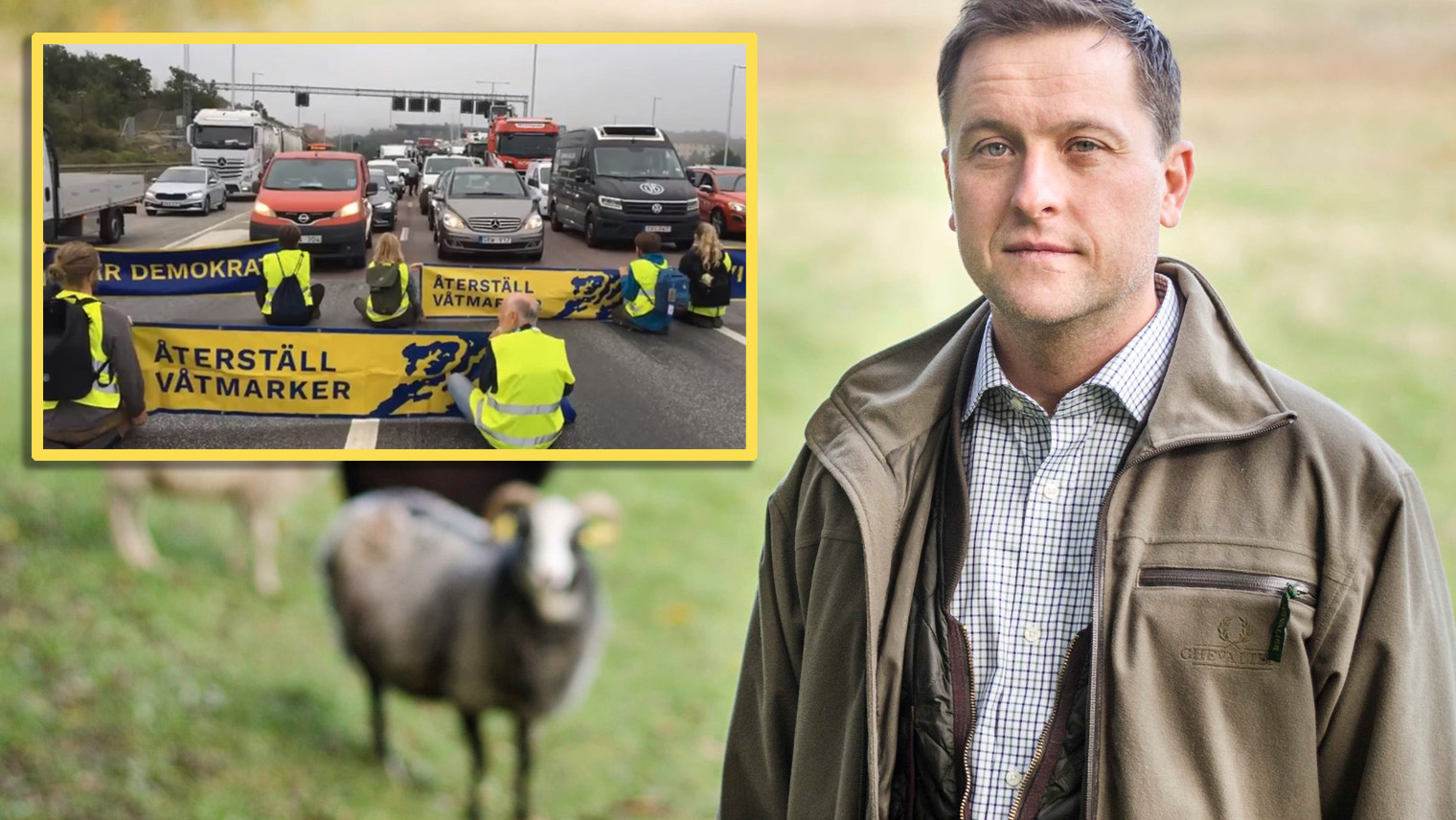
In a response to accusations from the climate-criminal organization Återställ våtmarker, Rickard Axdorff, Secretary General of Svensk torv, sharply criticizes the extremists whom Expressen has given a platform. He argues that the debate about peat has gone off the rails, that facts are being set aside, and that criminal activism is allowed to influence social development in a way that may ultimately weaken Sweden.
When Axdorff addresses the accusations—in which he was, among other things, labeled a “conspiracy theorist”—he uses it as a point of departure to outline a broader issue. He sees the label as symptomatic of our times: a debate in which opponents are not addressed on the merits, but dismissed with derogatory epithets.
Axdorff writes that it is “in some way indicative of our era,” and claims that the extremist movement resorts to increasingly forceful rhetoric as their arguments come under scrutiny. They seek to drown out criticism by “singing both louder and more off-key.”
Peat as a Social Asset – Not a Burden
A central part of Axdorff’s reasoning concerns the role of peat. He opposes the activists’ proposals for alternative materials, claiming they do not measure up.

The alternatives are more expensive, less effective, and actually result in greater climate impact, making Återställ våtmarkers illegal break-ins and sabotage against peat extraction facilities counterproductive. His conclusion is clear: “Feel free to use them, but peat is superior on every level.”
READ ALSO: What happened to the climate extremists who hijacked fields – celebrate despite convictions
Axdorff also points out that peat is used in several areas—cultivation, animal husbandry, energy, and water purification—and depicts it as a broadly beneficial resource, rather than a problem as Återställ våtmarker portrays it.
Minimal, No, or Positive Climate Impact
In his reply, Axdorff directly addresses claims about the climate impact of peat production. He refers to government data and research showing that the effect on the climate is very limited.
He claims the emissions are so negligible that they barely justify taxation, and he even asserts that some studies point to positive climate effects from peat use.
This stands in contrast to the criticism he is responding to, which paints peat extraction as a significant source of emissions. According to these findings, Återställ våtmarker is contradicted by the science.
Greater Biodiversity After Peat Extraction
Axdorff also counters criticisms about nature impact. He emphasizes that a very small portion of Sweden’s peatlands are actually utilized.
On “99.5 percent” of the land, there is no peat extraction, he writes, meaning that these areas remain free for biodiversity. Furthermore, he claims that restored peatlands after extraction can have greater biodiversity than they did before when they were untouched.
Radicalized Activism – From Protest to Threat to Society
The most pointed part of his reply is directed at the criminal extremist movement behind the criticism. Axdorff describes it as part of a larger European network and links it to foreign funding.
He refers to earlier reports of lawbreaking within the movement and argues that their actions—such as unlawfully blocking roads and disrupting public functions—are more than mere advocacy and fall outside the democratic rules of the game.
In his words, supporting the activists is also a stance: “If you support the activists, you support actions that weaken us.”
Peat as a Symbolic Issue
Toward the end of the article, Axdorff lifts his gaze from the facts to a more ideological level. He describes peat not just as a resource but also as a symbol.
Peat represents stability, independence, and resilience in uncertain times, he argues, and warns of a development in which “social order is dismantled” and activism gains excessive influence over political decisions.