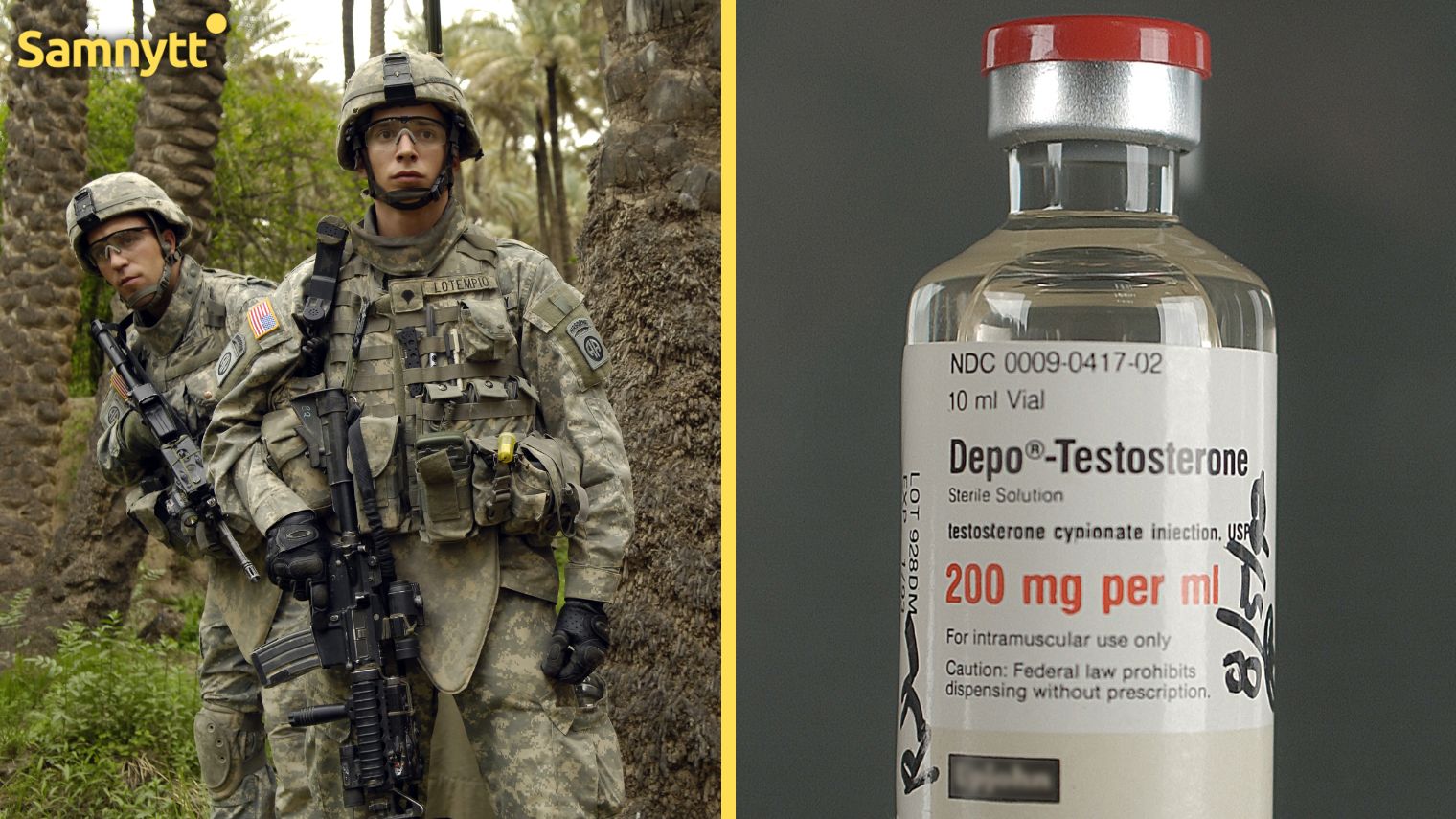
U.S. Secretary of Defense Pete Hegseth is launching a new program in which American soldiers over the age of 30 will be tested for testosterone deficiency as part of their annual health examinations. Soldiers found to have low testosterone levels will subsequently be offered voluntary testosterone treatment.
The announcement came in a video message where Hegseth stated that the modern battlefield places extreme demands on both physical and mental performance. According to him, the program aims to ensure that American soldiers have the biological prerequisites to perform at their best and to improve their long-term health and resilience. At the same time, soldiers under 30 years old will be given the opportunity to voluntarily test their testosterone levels.
According to the Pentagon, the initiative is not about performance-enhancing doping but rather about identifying medical testosterone deficiency and offering treatment to those who need it. Hegseth described the initiative as a way to “optimize” soldiers’ natural ability rather than artificially enhance it.
The initiative comes as the Trump administration in several areas has signaled a more positive attitude toward testosterone replacement therapy (TRT). The Department of Health has also proposed relaxing the rules around prescribing testosterone to men with age-related conditions, following new research that suggests limited cardiovascular risks for certain patient groups.
READ ALSO: Researchers Sound the Alarm: Men’s Testosterone Levels Have Halved in 50 Years
The program has, however, sparked political debate. Democratic politicians have criticized the decision and pointed out that Hegseth previously promoted policies that restrict the ability of transgender individuals to serve in the U.S. military.
Critics argue that it is contradictory to now offer hormone treatment to soldiers with testosterone deficiency while hormone treatment for transgender people has been opposed within the military.
Opinions also differ among physicians. Some experts believe that regular testing can help men with undetected testosterone deficiency and improve both health and performance, while others warn that the evidence for broad screening and testosterone treatment is still limited and that the treatment could pose risks for certain patients.
The High-T Department of War. pic.twitter.com/hlAUq3j2cD
— Secretary of War Pete Hegseth (@SecWar) July 15, 2026
Declining
Several studies have shown that men in the Western world have on average experienced lower testosterone levels in recent decades. Research from the U.S., Denmark, and Finland, among others, suggests that the decline cannot be explained solely by an aging population or the increase in obesity, but that testosterone levels appear to have dropped between generations even when those factors are accounted for.
The cause of this trend is still debated. Researchers have pointed to a number of possible explanations, including increased overweight and physical inactivity, poorer sleep, chronic stress, changing dietary habits, and exposure to so-called endocrine disruptors in, for example, plastics, pesticides, and certain consumer products.
No single explanation has been established, and many researchers believe that various factors likely interact.
In recent years, the issue has drawn increased attention beyond the research community. Advocates for increased screening argue that many men live with undetected testosterone deficiency, which affects energy, muscle mass, libido, and mental well-being, while critics warn that natural age-related changes risk being medicalized and that testosterone treatment could be overused without clear medical indications.
READ ALSO: Samnytt TV: The Hidden Side of Gym Culture – How Steroid Use Has Become Normalized