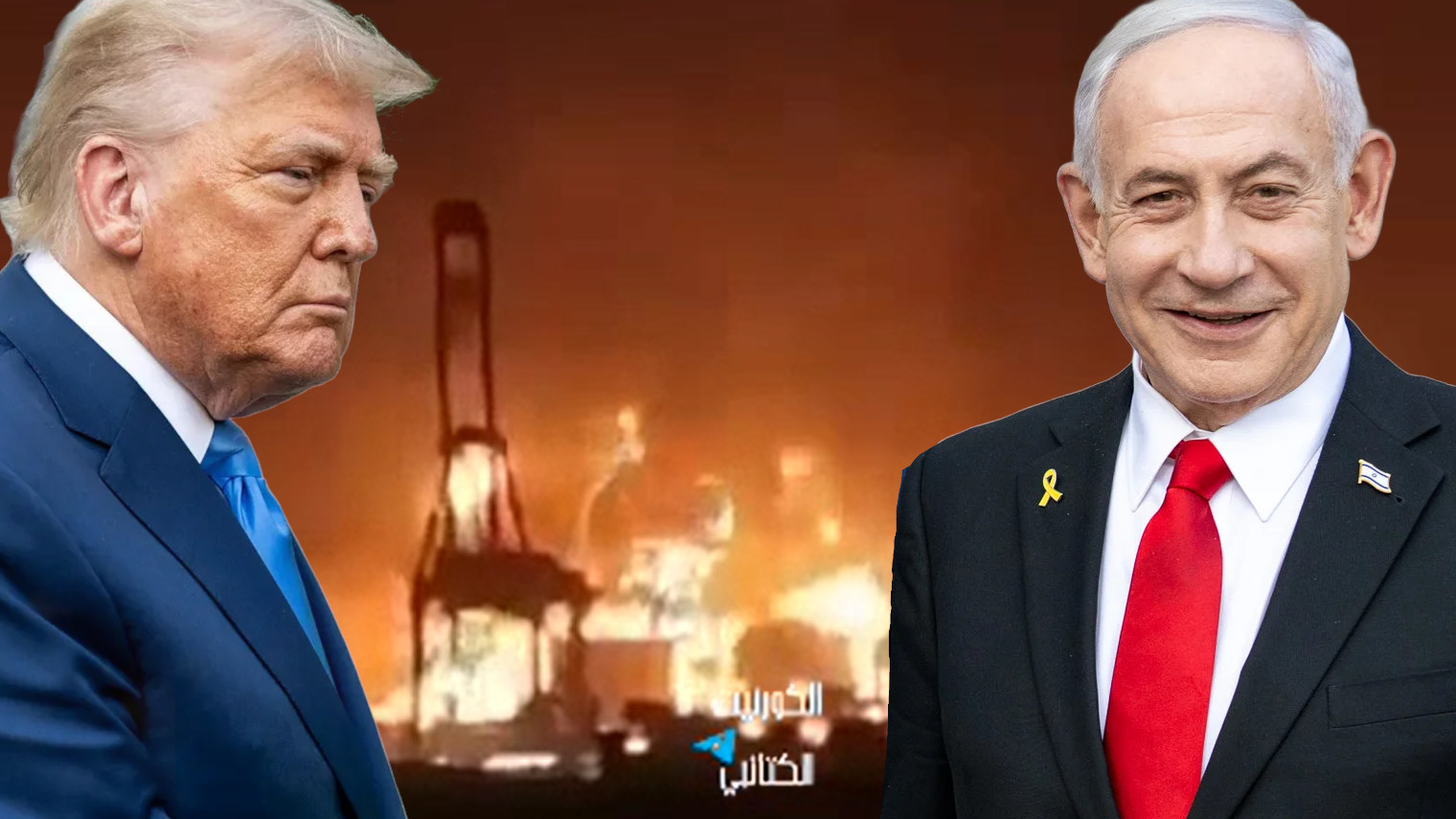
On Wednesday, Israel bombed a gas field in Iran. Iran immediately responded by attacking a corresponding field in Qatar on the other side of the Persian Gulf. Now U.S. President Donald Trump is raging against the Israeli attack.
The South Pars field is by far the world’s largest contiguous natural gas field. It is located in the middle of the Persian Gulf, on the border between Iran and Qatar.
Although Russia overall has the world’s largest known natural gas reserves, they are distributed over a larger number of fields. The world’s next biggest field, the Urengoy field in Russia, is only one-seventh the size of the South Pars field.
Israel blamed for the attack
On Wednesday, the Iranian section of the South Pars field was attacked, and parts of its facilities caught fire. Initially, it was unclear whether the U.S. or Israel was behind the attack.
However, in a post on his own site Truthsocial, Donald Trump placed the blame entirely on Israel.
“Israel, out of anger over what has happened in the Middle East, has violently struck a major facility known as the South Pars gas field in Iran,” he wrote.
<video>
The American president further claims that the U.S. “knew nothing about this particular attack” and insists, in capital letters, that “ISRAEL WILL NOT CONDUCT ANY MORE ATTACKS” on the gas field.
Iran, in any case, responded immediately to the Israeli attack by attacking Qatar’s part of the gas field on the other side of the Persian Gulf.
Qatar is a close U.S. ally that allows American bases on its territory, including the U.S. Central Command’s Al Udeid airbase outside Doha.
Fought against ISIS – bombed by the U.S.
This Saturday marks three weeks since Israel and the U.S. started their joint war against Iran; a war that Trump previously said would be over in “four to five weeks.”
The motive for the war is vague. Trump in particular has given various contradictory explanations for it. Dominant themes include claims that Iran tried to develop nuclear weapons before the attack, and that the country poses a threat to Israel.
In any case, the U.S. and Israel have attacked a large number of targets, not least in Iran, in recent weeks. A dozen high-ranking leaders, including Iran’s supreme leader Ali Khamenei and some of the country’s most important military officers, were killed in the initial attacks on February 28.
READ ALSO: VIDEO: Here a U.S. submarine sinks an Iranian warship
But it’s not only over Iran that American-Israeli bombs are falling. Both war-hungry countries are also targeting Shiite militias in Lebanon and Iraq that are or are considered allied with the enemy.
One of these is Iraq’s Popular Mobilization Forces (PMF). The militia was founded in 2014 to fight the terrorist sect ISIS and is officially part of Iraq’s military. It participated in every major battle against the dreaded terror sect; not least the final battle for Mosul in the winter of 2016/2017.
In the past few weeks, however, over a dozen PMF bases in Iraq have been bombed by the U.S. and Israel because of their religious ties to Iran.
Iranian retaliation attacks
Iran has responded to the American-Israeli bombings by attacking targets in the region linked to the aggressors—especially in Israel and at U.S. bases in Arab countries, and now most recently the gas field in Qatar.
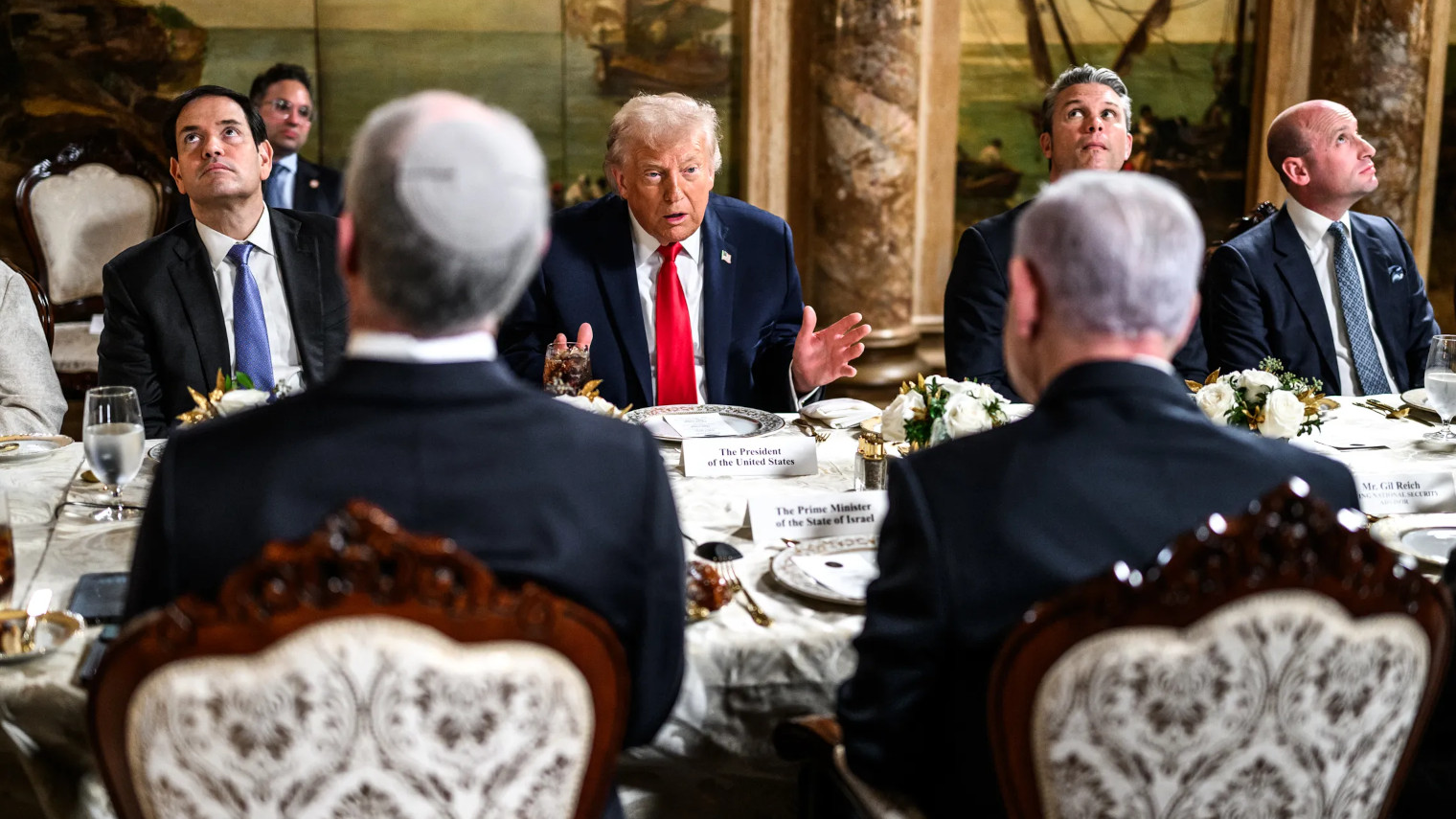
Even though there is no doubt about which side holds the military advantage, Iranian drones and even ballistic missiles continue to pose a threat to the U.S. and Iran.
On Truthsocial, Trump threatens to “completely blow up the entire South Pars gas field, with a force and power that Iran has never before seen or witnessed,” if attacks against U.S. allies continue, and says he “will not hesitate to do so.”
The question is whether the American president will dare to escalate the war even further. So far, thirteen American soldiers have been confirmed dead and hundreds have been injured. Worse still: Oil prices have risen dramatically in recent weeks, and after the events at the South Pars field, natural gas prices also risk skyrocketing.
Soaring oil and energy prices are something that heavily sanctioned Iran can live with. On the other hand, it is something that Western economies, including the U.S., will not be able to withstand in the long run—leading to growing discontent among voters at home in the U.S.
This has led to speculation as to whether Trump has bitten off more than he can chew and entered a war he cannot win, no matter how many Iranian leaders are killed. And whether he will want to continue escalating the war, or rather look for a way out of it.
READ ALSO: Iran’s new Ayatollah promises to open “other fronts” against the West