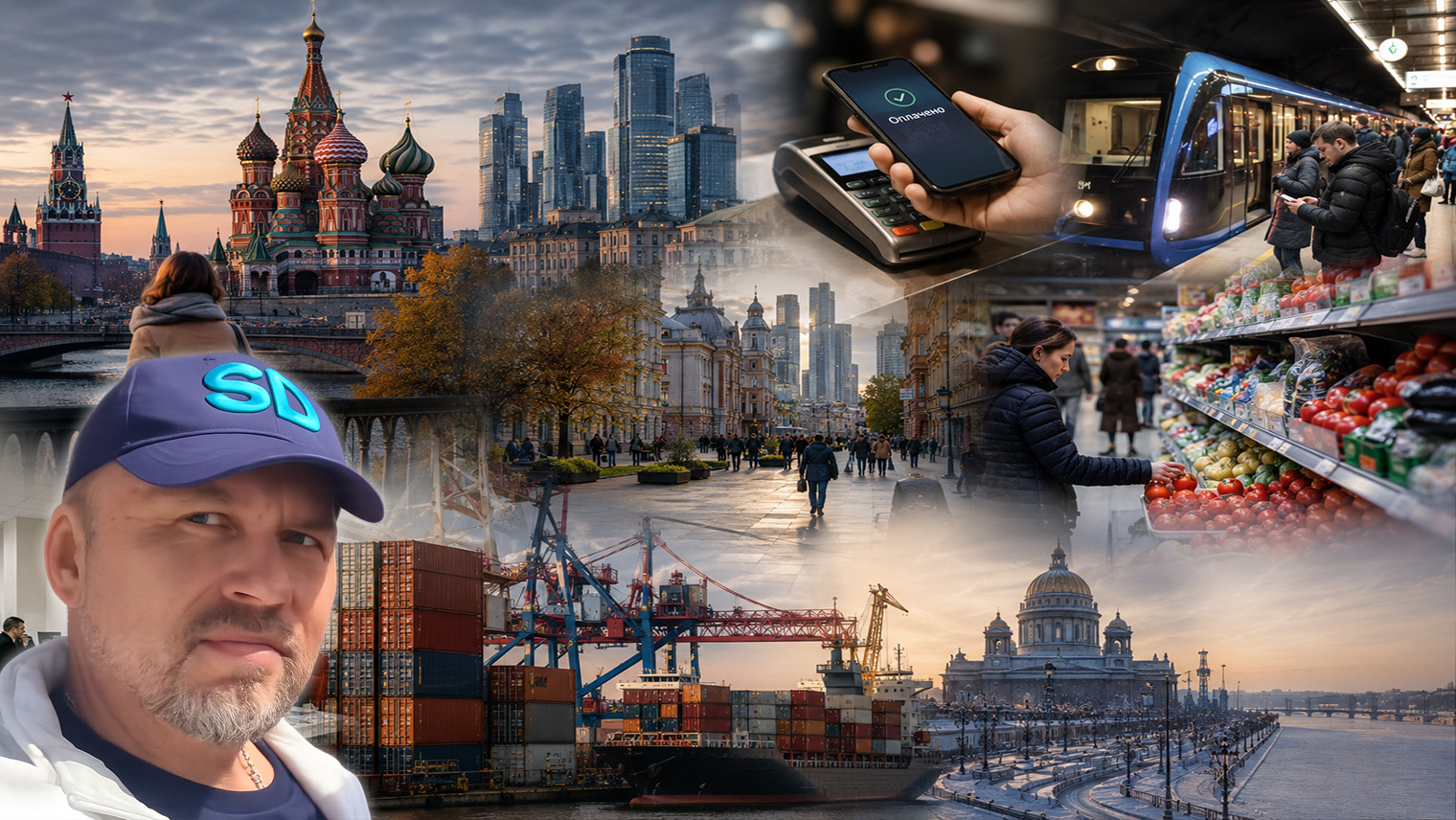
OPINION • National strength is built on realism, not assumptions about the weakness of others
OPINION • There are few things more dangerous in security policy than underestimating an opponent. Yet this is precisely what I have long reacted to in the Swedish debate about Russia. Not because I wish to romanticize the country, defend its political leadership, or gloss over the decisions taken by the Russian state, but because a country like Sweden, given our geographic location and history, must have as accurate a view as possible of the reality we have to deal with.
If your analysis is based on caricatures, wishful thinking, or simplistic notions that Russia is a weak, poor, technologically backward country on the verge of collapse, with a population ready to rise up in some kind of revolt at any moment, you risk making decisions on false premises. This applies to political, defense, and security policy decisions, economic decisions, and also the general understanding of what is actually happening in our vicinity.
This concern has been my main point in the discussions I have participated in. I have not attempted to write posts to defend Russia’s warfare, Vladimir Putin, or the Russian government. This article is not about the war in Ukraine as such, but since that issue is now quickly used to cast suspicion on any attempt at nuance, I still want to clarify the following:
I do not support Russia’s full-scale invasion of Ukraine, I do not believe the invasion was justified, and I do not defend wars of aggression, civilian suffering, or violations of international law. It is entirely possible to hold that view and at the same time believe that the Swedish perception of Russia as a society, economy, everyday country, and actor in security policy is often too shallow, too simplistic, and in some parts directly misleading.
Followed Russia on the Ground – Not Just in Articles
I have been living with Russia as a subject, workplace, and everyday environment for a very long time. I have lived, worked, traveled, and operated in large parts of the country, from northwest Russia and St. Petersburg to Moscow, southern Russia, and further east. I speak Russian, have worked with Russian authorities, companies, ports, transport, day-to-day contacts, administration and practical societal functions, and have followed developments not only through articles, reports, or second-hand information, but through personal experience of how the country actually functions over nearly thirty years.
This experience naturally does not mean I have a monopoly on the truth, but it does make me react when people who lack deeper firsthand experience of the country make very categorical statements about what Russia is like, how Russians think, how everyday life works, or how close the country supposedly is to some form of total collapse.
The view often conveyed in Sweden is that Russia is more or less a failed third-world country with nuclear weapons. There is talk about poverty, deprivation, corruption, oppression, fear, technological backwardness, and a society where nothing works. Sometimes you get the impression people cannot lead normal daily lives, authorities do not function, modern payment solutions are lacking, stores are empty, social services are primitive, and the population as a whole is just waiting for the system to collapse.
This is not the reality I recognize.
Many Problems, Challenges, and Deficiencies
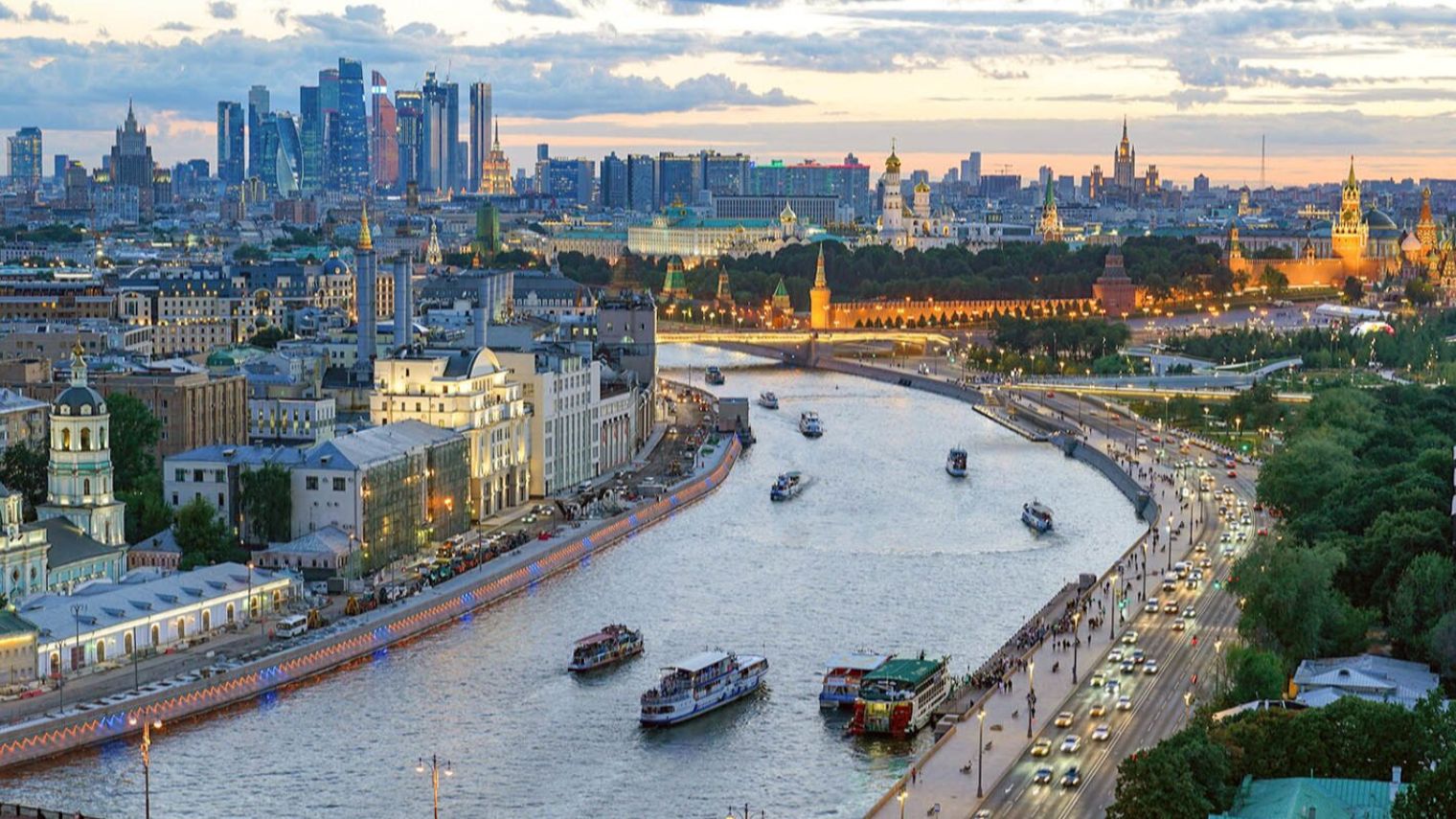
This does not mean that Russia has no problems. There are significant regional differences, economic weaknesses, political limitations, demographic challenges, and major shortcomings concerning opposition, rule of law, media freedom, and political competition. But that is something entirely different from the simplified image that is often spread, where Russia is reduced to a caricature. Anyone visiting a major city such as St. Petersburg, Moscow, Kazan, Yekaterinburg, Sochi, or Novosibirsk today will not encounter a country that matches the old stereotype of a gray and decaying post-Soviet society.
You encounter modern city environments, well-functioning digital services, extensive public transport, well-developed shopping centers, a large restaurant and cultural life, modern residential areas, functioning governmental services, advanced payment systems, and a daily life that in many ways is faster, smoother, and more digitalized than many Swedes could imagine.
Everyday life is crucial to understand. For the ordinary citizen, life is not about our Swedish headlines but about work, school, housing, transport, healthcare, food prices, children’s leisure activities, contacts with authorities, vacations, family, and plans for the future. Much of this functions in Russia today in a way that many Swedes would be surprised by. Contacts with authorities that used to be bureaucratic and complicated have, in large parts of the country, been moved to modern service centers and digital platforms.
The payment systems are fast. Delivery services, banking, reservations, public service, and practical daily matters are often highly developed. This does not mean the country is problem-free, but it means that the image many Swedes have received does not match the actual daily experiences of many people there.
Sanctions Hit Others Harder than Russia
A very clear example is the development after 2014. When sanctions and retaliatory measures changed trade flows between the EU and Russia, the prevailing idea in the West was that Russia would be hit hard, especially by reduced access to foodstuffs. At that time, I worked with container shipping between the EU and Russia, with ties to ports and offices in, among other places, St. Petersburg, Hamburg, and Rotterdam, so I had a front-row seat to how export flows, import patterns, and logistics changed.
This hit parts of shipping hard and badly affected European producers who lost a major market. But what was often not understood in Sweden was that Russia very quickly began to build and modernize its own food production.
Strengthened Rather than Weakened Russia
The result was not the simple weakness that many had imagined. On the contrary, the Russian agricultural and food sector developed rapidly. Domestic producers took market share, the range of products changed, new supply chains emerged, and Russia became far more self-sufficient in several areas than before.
Anyone walking into modern Russian grocery stores today will not see empty shelves or a country lacking goods. On the contrary, there is often a very wide range of meat, dairy products, vegetables, fruit, ready-to-eat food, local products and imported goods from countries outside the EU. While the suppliers may no longer be the same, the shortage many presume simply doesn’t exist.
In a way, one could say that the sanctions and counter-sanctions helped Russia become more self-reliant in some areas. The term often used in Sweden now is resilience. Russia built precisely this – a greater capacity to withstand external pressure by reducing dependence on certain western flows, while developing their own or alternative solutions.
Of course, this is not the whole picture—sanctions have also created problems, costs, and limitations. But if you simply believe that sanctions automatically lead to weakness, shortage, and collapse, then you are missing an important part of the actual development.
Western Companies Leave — Asians Take Their Place
The same is true in other fields. When Western companies left or reduced their presence, other actors took their place. The car market is a clear example. European, Japanese, and American brands have largely been replaced by Chinese, Korean, and other manufacturers, and many of these vehicles are of a quality and technical level that does not match the old Swedish idea of cheap and simple substitutes.
Russia’s car fleet, in many places, has been significantly modernized, and in major cities, you now see a large number of modern cars, electric vehicles, SUVs, and new models from brands that many Swedes barely recognize. The fact that this is rarely reported in Swedish media does not make the development any less real.
Urban Development at a Furious Pace
Urban development is another area where the difference between Swedish beliefs and Russian reality is often very large. In several Russian cities, the pace of construction, scale, and infrastructure have developed in ways that may be hard to imagine from a Swedish perspective. New residential areas, shopping centers, business districts, schools, sports facilities, parks, metro extensions, roads, and public spaces have sprung up to an extent comparable to the fast-growing regions of Asia or the Middle East.
When Swedes think of Russia, they often think of dilapidated houses, gray facades, and old images from the 1990s. But when you actually move through many of today’s Russian cities, the impression is often quite different—scale, investment, consumption, trade, restaurants, technological infrastructure, and public spaces that many would not associate with the image they have received from Swedish media.
Major Investments in Multiple Areas
Even education, children’s activities, and sports are areas where Swedish assumptions are often too simplistic. Russia invests heavily in schools, technical education, languages, music, mathematics, sports, programming, culture, and organized leisure activities.
You may have objections to aspects of ideology, the state’s role, or the political content, but such criticisms should not be confused with the notion that the country lacks competence, ambition, or institutional capacity.
In many fields, not least in technology, science, sports, music, and certain forms of specialized education, there is a very strong culture of achievement and a clear societal expectation for knowledge, discipline, and results.
Security Policy Is About More Than Weapons
This is important because security policy is not just about tanks, artillery, and missiles. It is also about the economy, industry, food supply, education, population resilience, the functionality of government agencies, social stability, transport flows, energy systems, and the general capacity to adapt to external pressure.
If you believe Russia is weak because you’ve heard the country’s economy is smaller than that of some southern European country, or think the population will soon topple the government because that’s what you think they ought to do, you risk missing how the country actually functions. A nation’s true strength is measured not just in nominal GDP calculated in dollars, but in what the country can produce, supply, mobilize, endure, and replace when external conditions change.
You Must Know Your Opponent
This is why I often return to the principle that you must know your opponent. In intelligence and serious security policy analysis, this is fundamental. You need to understand how society works, how the population thinks, which weaknesses are real and which are merely wishful thinking on our part, what resources actually exist, which structures support the state, and which assumptions are dangerous to build on. If the map does not match the terrain, it is not the terrain that needs to be adjusted to the map. It is the map that needs to be redrawn.
My criticism of much of the Swedish debate about Russia is that it all too often confuses moral condemnation with actual analysis. You can condemn a war, criticize a political system, and be very worried about a state’s actions, but still need to analyze that state objectively. In fact, when you perceive a state as dangerous, a correct analysis is more important than ever. Underestimating a harmless actor may be a limited mistake. Underestimating a dangerous actor can lead to decisions with far greater consequences.
No Whitewashing, But No Caricatures Either
Russia should not be whitewashed. The country has major problems, and its political trajectory has for a long time moved in a more and more authoritarian direction. There are restrictions on opposition, media, and civil society, and the Russian leadership bears responsibility for decisions with very grave consequences. But Sweden does not become safer by replacing whitewashing with caricatures. We are not better prepared by believing that Russia is simpler, weaker, poorer, or more unstable than it actually is.
On the contrary, a more reality-based image should lead to greater seriousness in Swedish defense and security policy. If Russia is more resilient, more adaptable, and more capable than many believe, then the conclusion is not that Sweden can relax, but that we must strengthen our own capabilities. We need a strong Swedish defense, high national preparedness, greater self-sufficiency in strategically important sectors, better civil preparedness, and an energy and industrial policy that makes Sweden less vulnerable. You do not build security by hoping that other countries will soon fall apart. You build security by being strong, prepared, and grounded in reality yourself.
A Nuanced View Is Needed But Deemed Suspicious
I understand that this can be hard to say in today’s climate, where every attempt to nuance the picture of Russia is quickly suspected of being sympathetic to the Russian state. But that is precisely why the discussion is needed. To understand is not to excuse. To analyze is not to support. To say that Russian daily life, economy, urban development, agriculture, education, or public service works better than many Swedes believe is not to claim that Russia is a role model. It is to say that Sweden must make decisions based on reality, not on caricatures.
For me, ultimately this is a matter of Sweden’s security. We must understand Russia as it is—a large, complex, resource-rich, contradictory, and resilient country with significant flaws, but also considerable strengths. We need to know how daily life functions, how people reason, how the state mobilizes resources, how the economy adapts, and how the country responds to external pressure. Only then can we make a serious assessment of the risks, threats, and opportunities Sweden actually faces.
That is the debate I want to have. Not a debate about defending war, not a debate about defending any government, and not a debate about romanticizing Russia, but a debate about Sweden needing a more sober, accurate, and reality-based image of Russia. A country can be problematic, dangerous, and at the same time stronger than we think. That is exactly why we must not underestimate it.
Joakim Virtanen (SD)
Second Deputy Chairman of the Sweden Democrats in Kristinehamn. Substitute on the municipal council, the schools committee, as well as the committee for support, care, and welfare. Running in 2026 for both the municipal and regional councils.
Virtanen has a background in the Swedish Armed Forces, where he completed his service at the Interpreter School, was employed at the Swedish embassy in Moscow, and was assistant manager at one of IKEA’s megacenters in Russia. He is fluent in Russian.