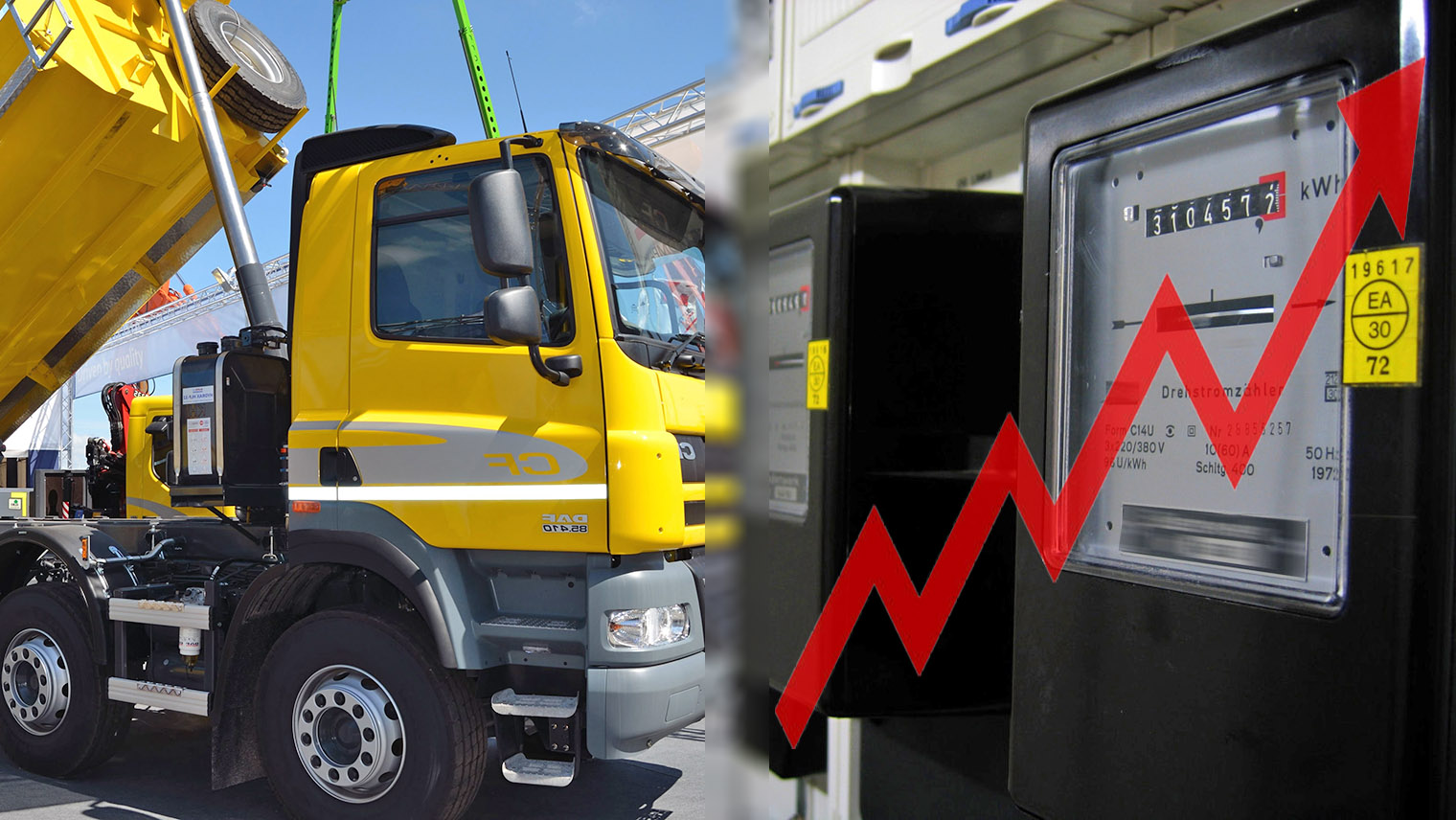
Sigge, a haulier in southern Halland, invested millions in electric trucks, in line with the EU’s and Sweden’s climate goals and the mandates for a “green transition.” What was promised as an investment in the future may instead become the company’s downfall, due to sky-high electricity grid fees – a result of both EU rules and Swedish decisions.
Two years ago, Sigge the haulier faced a crossroads: diesel or electric. Politicians in both Brussels and Stockholm had long pointed the way – the transport sector was to be electrified. Sigge took them at their word.
He bought two electric trucks – not as a symbolic gesture, but as a business decision. The idea was that staying a step ahead in a transforming industry would pay off.
“I did what you asked us to do. I invested millions,” Sigge writes in an open letter to politicians published by Tidningen Proffs.
At the time, the decision felt right. But it soon became clear that the playing field was not as it had been portrayed.
Reality Caught Up
The problem didn’t come on the roads – but at the power socket. When the trucks are fast-charged at the same time, something often necessary for the business, high power peaks occur. And in today’s energy system, it’s the peaks that are costly. Very.
The so-called power tariff, collected by grid companies, means businesses pay not only for how much electricity they use—but also when and how quickly they use it. For Sigge, it amounts to tens of thousands of kronor extra every month.
“It cost me 40,000 kronor plus VAT in power tariffs… not because I use more electricity overall, but because I use it when the business requires it,” he writes.
READ ALSO: Sharp criticism as grid fees soar
Sigge points to a collision between theory and practice. The penalty charges are intended to encourage consumers to use more electricity when grid load is low, and vice versa. Which, in theory, may seem reasonable.
But transport is driven by customer demand, not grid load. A truck needs to charge when it needs to run. Otherwise, it stands idle. And an idle truck generates no income.
EU Part of the Problem
The background is partly at the EU level. Legislation such as the climate package ‘Fit for 55’ and tougher emission requirements for heavy vehicles have put clear pressure on the electrification of transport. At the same time, the EU is also pushing for more efficient use of electricity grids – including so-called power-based pricing.
The idea is to smooth grid loads so operators don’t need the costly capacity investments that would otherwise be required. The responsibility is placed on the customer, who is penalized for using electricity in the “wrong” way at the “wrong” time.
The consequence is that businesses with high, simultaneous power needs – such as haulage firms relying on fast-charging – are hit hard. Sigge is among those punished and feeling blindsided.
The EU hasn’t directly decided on Swedish power tariffs, but has set the framework and pressured member states: more electrification, more flexible power usage, and more responsibility for users to adapt—instead of the grid operators fixing capacity bottlenecks in the system.
Swedish Regulations Worsen the Situation
How this plays out in practice is decided nationally. In Sweden, the Energy Markets Inspectorate has been given free rein at the agency level to push for a transition to power-based grid fees. The stated purpose is to create a more robust electricity system.
But the change has been criticized for happening without businesses clearly understanding the consequences. Sigge is among those who feel duped. Behind the buzzword “robust” also lurks its opposite—a lack of the robust grid needed for a large-scale transition from fossil fuels to electricity.
Many of these regulations and industry directions were introduced under previous Swedish governments, when electrification ranked high on the agenda. The current government has largely inherited the system but is criticized by business owners like Sigge for not fixing it.
His criticism is thus not just directed at the past – but also at the Tidö parties. Despite the problems being obvious before and during the term, the rules have not been adjusted to keep pace with reality.
READ ALSO: Higher grid fee blamed on the climate transition
No one warned Sigge before he made the costly investment. No one warned him that charging the electric vehicles could become an economic catastrophe for his company.
“No one told me the charging… would become a new economic risk factor via the grid monopoly,” he writes.
This refers to the lack of competition among network providers. Instead, they have staked out geographic territories where they enjoy monopoly and can more or less set whatever prices they want.
Small Businesses as Guinea Pigs
In practice, pioneers like Sigge have become guinea pigs. Those who made the transition early – often small and medium-sized companies – now have to pay the price for an energy system that hasn’t been adjusted to the transformation required by policy.
“Those who switch first have to pay the most,” Sigge notes, warning this risks slowing down the entire transition – without predictable financial terms, fewer dare to take the leap.
Government: “Electrification Key to Climate Goals”
In 2023, Minister for Energy and Business Ebba Busch announced that electrification of the transport sector is central for Sweden and Europe to meet their climate goals. This came during the introduction of SEEL’s battery technology, described as “a milestone in developing a more sustainable transport sector.”
– Sweden has a proud tradition in the automotive sector, and with SEEL we are further strengthening the country’s competitiveness. The testing and research conducted here will play a decisive role in the shift to an electrified transport system. With SEEL, Sweden’s transport sector can lead the :censored:6:cdd6bbaa89: move toward greater sustainability, Busch said at the time.