Despite stricter immigration policies, the influx remains relatively high and every year thousands of people become Swedish citizens. In just a few decades, Sweden transformed from one of Europe’s most homogenous countries to the opposite. So how is integration going? Not very well, concludes a new report.
The Kunskapsverket Foundation conducts analyses of social issues across various fields with the aim of contributing to fact-based public debate, and produces brief reports. The foundation is politically independent and funded through donations – however, it does not accept contributions from the state, municipalities, political parties, or interest groups.
The latest report concerns the ever-relevant topics of immigration and integration, focusing on 2016 and onwards. Ten years ago, Sweden shifted direction in its migration policy by introducing stricter border controls, among other measures, and permanent residence permits were replaced with temporary ones.
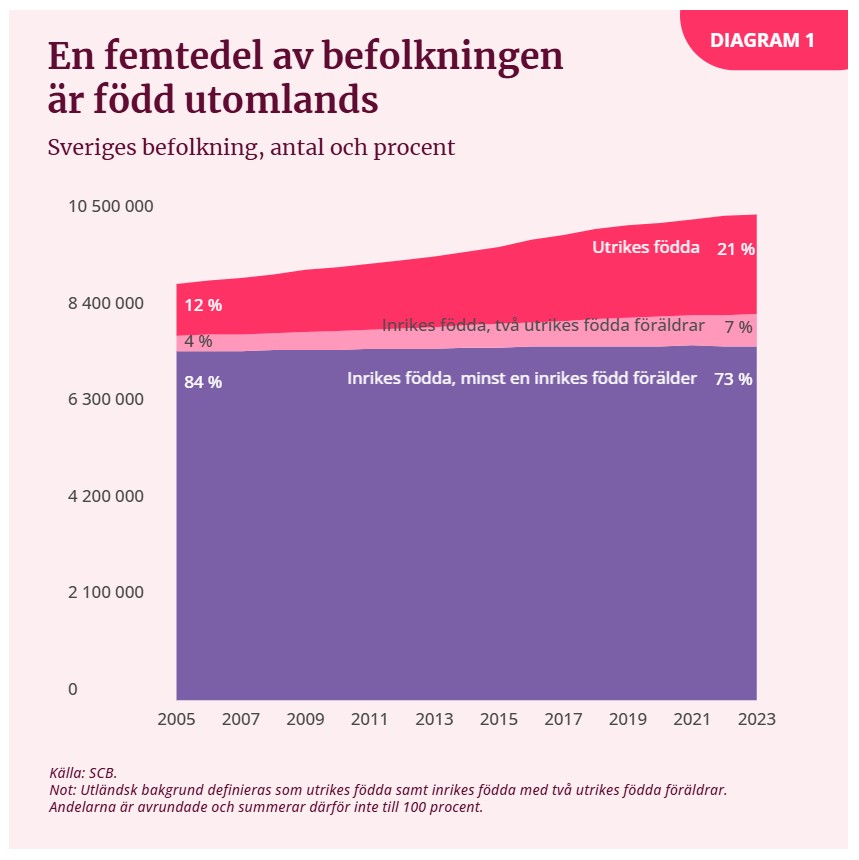
Today, almost 30 percent – just under three million – of the population were born abroad or have two foreign-born parents. The analysis focuses on those born abroad, which is about 2.2 million people (21 percent). In 2005, this group was half as large.
READ ALSO: Sweden’s Unemployment Is High – Immigration and Low Work Ethic Are Explanations
The group is on average younger than those born in Sweden, and most live in and around the major cities. Half have immigrated from what are categorized as typical refugee countries. The five largest countries of origin among this group are Syria, Iraq, Iran, Somalia, and Afghanistan.
Since 2005, the group of foreign-born from refugee countries has grown by about 650,000 people, an increase of just over 130 percent. This means that a little more than half have arrived in Sweden in the last 20 years.
Stay Longer
A significant difference between those coming to Sweden as asylum seekers and other immigrants is that asylum seekers, on average, stay longer. Of those from refugee countries who have arrived since 2005, eight out of ten have stayed, whereas more than half from labor market countries and EU countries have emigrated again. Refugee immigration therefore affects the population composition for a longer period.
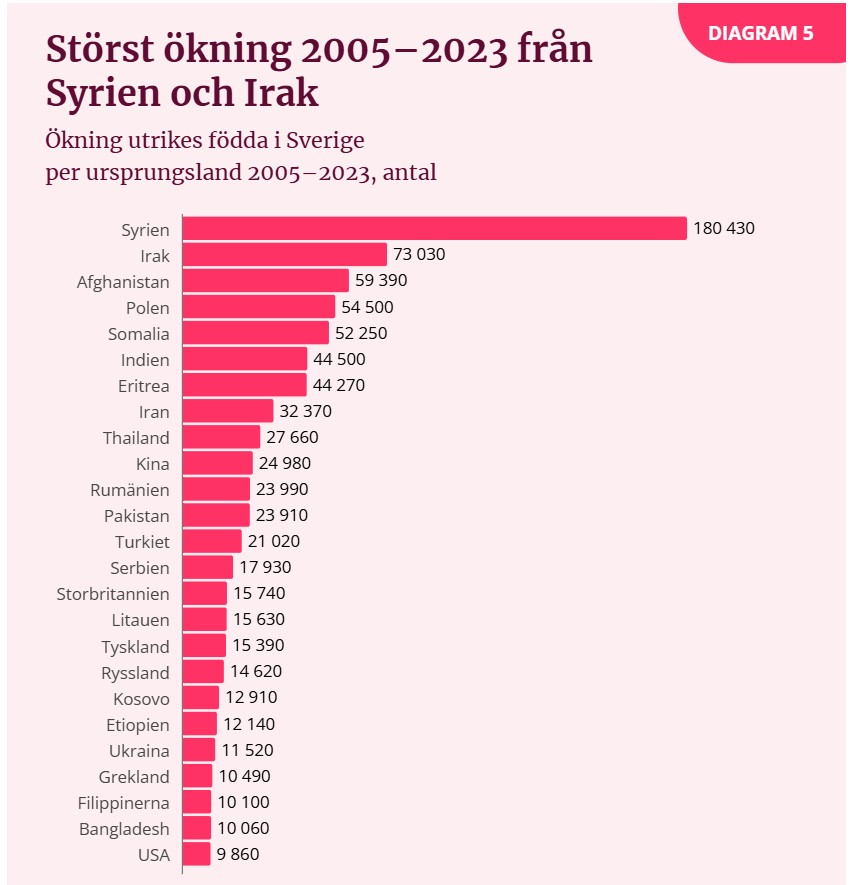
In the past 20 years, more people have immigrated from countries that are geographically, economically, politically, and culturally further from Sweden. In 2005, the two largest countries of origin were Finland and the former Yugoslavia – today, these positions have been taken by Syria and Iraq.
According to the report, the differences on average between native- and foreign-born have decreased in recent years. At the same time, there is a larger group than before without their own means of support.
33 Percent Not Working
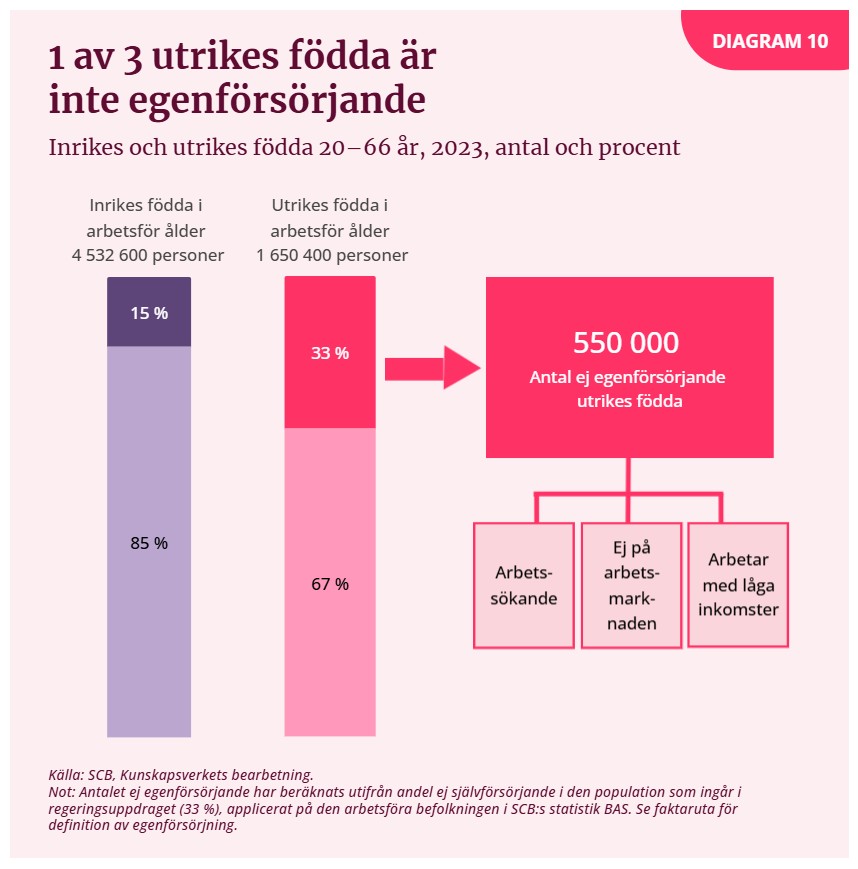
Of the foreign-born, 1.7 million are between 20 and 66 years old and of working age. Three-quarters are of working age, a higher proportion than among those born in Sweden (50 percent). Among working-age Swedish-born men and women, about 84 percent are employed; among foreign-born, 70 percent. 85 percent of those born in Sweden are self-supporting, compared to 67 percent among those born abroad.
READ ALSO: High Unemployment an Immigrant Problem
Thus, 33 percent of foreign-born are not self-supporting, and among those who have arrived since 2005 the proportion is even higher: 37 percent. Meanwhile, the unemployment rate among native Swedes is 2.3 percent, but 8.9 percent among foreign-born. Of the total 146,000 foreign-born actively seeking work, eight out of ten come from refugee countries.
The gap is also significant between those born in Sweden and abroad who neither work nor seek jobs – 3.5 percent and 13 percent, respectively.
Simple Jobs
Many foreign-born have jobs that do not require higher education. One in four foreign-born in the labor market today works in municipalities and regions.
Between 2005 and 2023, the number of foreign-born not working increased from just over 300,000 to nearly 500,000. Two obstacles cited are a lack of relevant education and insufficient Swedish language skills. One in four employers cites poor Swedish as a problem in recruitment.
Few Complete SFI
At the same time, a third of foreign-born of working age – just over 560,000 people – are considered to lack sufficient reading skills in Swedish to participate in the labor market. That’s an increase of about 100,000 people in ten years.
Meanwhile, few complete the SFI (Swedish for Immigrants) program. From 2017 to 2023, 384,000 students began an SFI course, but during the same period, only a third as many completed the final level, which is intended to correspond to functional independence in Swedish.