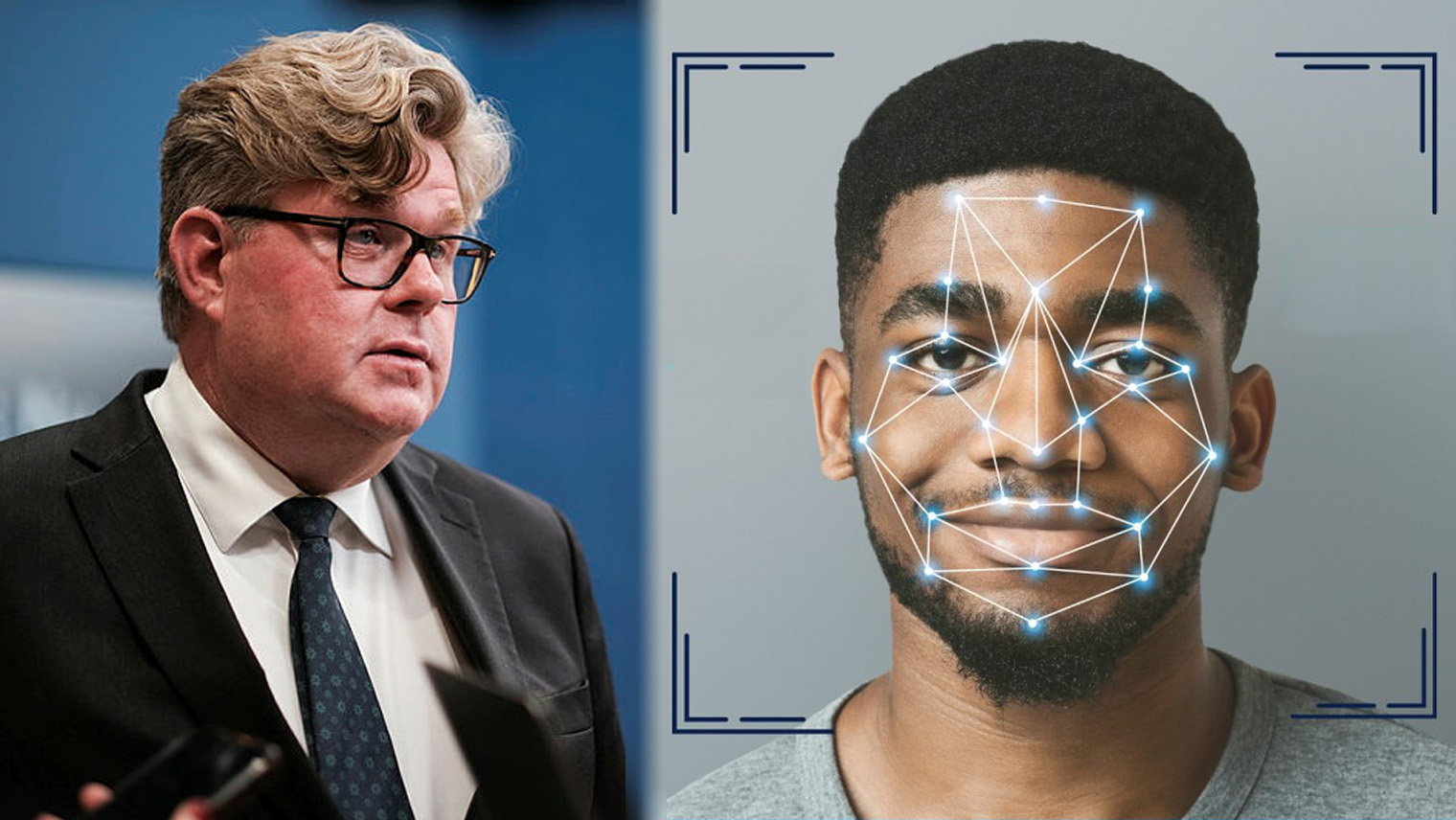
The government is proposing a new law that would allow the police to use AI-based real-time facial recognition to combat serious crime. The technology could be used to find suspected perpetrators, prevent serious crimes, and locate victims. At the same time, the government emphasizes that its use will be surrounded by clear legal safeguards and permit requirements.
The government has submitted the bill ‘Police Use of AI for Real-Time Facial Recognition’ to parliament. The proposal means that the police will be allowed to use artificial intelligence to analyze camera footage and identify individuals in real time for the purpose of combating serious crime.
The background is the increase in violent crimes within the immigrant criminal gang environment, with repeated shootings and bombings. The government states that the justice system needs more effective tools to be able to prevent and investigate these crimes.
“Police need more effective tools to combat serious crime, and new technology provides new opportunities. We are now ensuring that the police will be able to locate suspected perpetrators in real time with the help of AI,” says Minister for Justice Gunnar Strömmer in a press release.
According to the government, the law is scheduled to take effect on July 1, 2026.
Can Be Used for Several Types of Serious Crime
The proposed framework means AI-based facial recognition may only be used in particularly serious situations and when it is deemed absolutely necessary.
The technology could, among other things, be used to locate people suspected of being victims of kidnapping or human trafficking, find missing persons who may have been subjected to crimes, identify people suspected of planning a serious violent crime, track down individuals suspected of having committed serious crimes with at least four years’ imprisonment in the sentencing guidelines, and locate individuals who have been convicted of such crimes in order to enforce a penalty.
In practice, this means the technology could be used in situations such as suspected murders, serious violent crimes, or the pursuit of individuals on the run after serious crimes.
Permits and Oversight Will Protect Privacy
The government points out that the technology’s use must come with several legal safeguards. In general, the police must first obtain permission from a prosecutor or court to use the AI system. The decision must specify which person is being sought, in what area the technology may be used, and for how long. The permit may not apply for longer than one month.

If the situation is urgent, the technology may be used immediately, but the police must then apply for a permit afterward – at the latest, within 24 hours. The Swedish Authority for Privacy Protection is proposed to be responsible for the oversight of how the technology is used.
EU Regulations Require Special Exemptions
Use of real-time facial recognition in public places is basically prohibited under the EU’s AI Act. However, the regulation allows member states to adopt exemptions in national law for certain law enforcement purposes.
In the Swedish bill, it is considered that the proposed rules constitute such an exemption, regulating when and how the technology may be used.
“Can Take Seconds Instead of Weeks”
In a debate article, Minister for Justice Gunnar Strömmer and Minister for Civil Affairs Erik Slottner write that AI technology can give the police entirely new opportunities in investigative work.
“What would normally take several days or weeks can take just a few seconds, which would save time and make investigations more efficient.”
READ ALSO: Prime Minister to Gang Criminals Abroad: We Will Find You, Arrest You, and Lock You Up
The ministers believe the technology can contribute to more rapid identification of perpetrators and thereby strengthen the fight against organized crime. They also write that the government has already seen results from previous reforms.
“Deadly gang violence has been halved in three years. At the same time, the clearance rate of the most serious gang crimes has doubled.”
Balance Between Crime Fighting and Privacy
At the same time, the government emphasizes that the legislative proposal is based on a balance between effective crime fighting and protection of individual privacy.
“While the police are given a necessary tool for effective law enforcement, we ensure that legal certainty and personal privacy are safeguarded,” Strömmer and Slottner write.