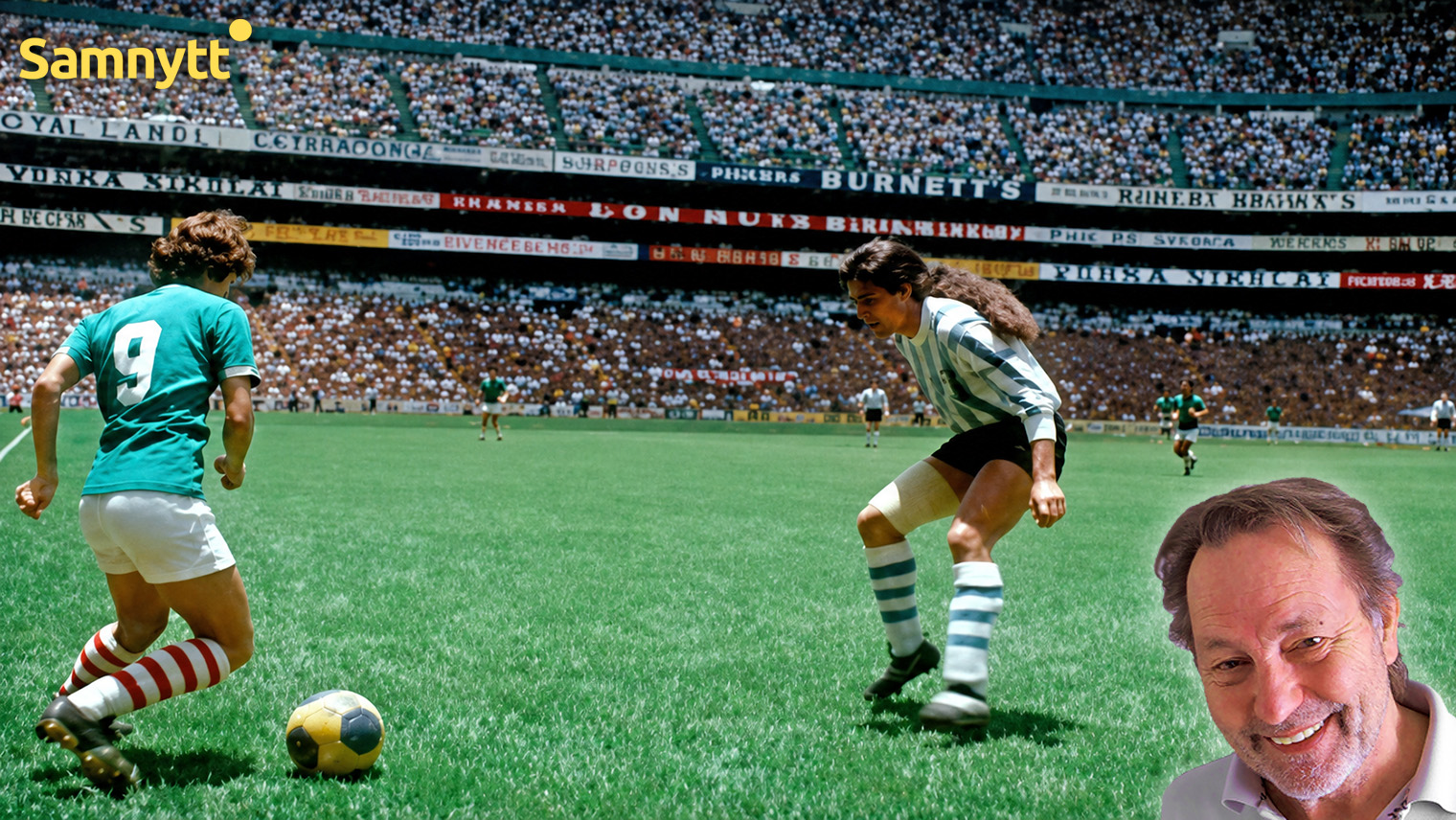
FOOTBALL COLUMN • In these days, the iconic Azteca Stadium is once again in the spotlight as part of the World Cup matches are played there. The arena was built for the Mexico Olympics in 1968 and the 1970 World Cup, where Brazil’s star Pelé got to lift the Jules Rimet World Cup Trophy for the third time after a 4–1 win over Italy in the final. Some claim that the Brazilians had the best team of all time, with players like Jair, Tostão, Rivellino, Gérson, Carlo Alberto, and Pelé.
In 1986, Mexico once again hosted the World Cup (after Colombia withdrew), and in the final at Azteca Stadium, Argentina beat West Germany 3–2, allowing the world’s then-undisputed best footballer Diego Maradona to raise the trophy for his country, which for the second time—first time being on home soil in 1978—emerged victorious.
But if I claim that a World Cup in football was played in Mexico in 1971, most will probably say you got the year wrong—it should be 1970. But in fact, on September 5, 1971, in front of 110,000 cheering spectators at Azteca Stadium itself, a World Cup final in football was played—namely in women’s football!
The year before, the Italian spirits company Martini & Rossi had sponsored an unofficial Women’s World Cup in Italy with seven participating nations, and Denmark emerged as the winner. Mexico’s girls came third, but as they were celebrated as “The revelation of the tournament”, they got a taste for victory and wanted revenge after losing 2–1 to Italy in the semifinals. Mexican businessmen, seeing a chance to make some extra money from football fever after the 1970 World Cup, thought: why should Azteca Stadium remain empty when, with comparatively cheap ticket prices—30 to 80 pesos—we can fill the stadium again.
No sooner said than done, once more with Martini & Rossi as sponsor, several nations were invited to participate. FIFA, the International Football Association, protested and refused to sanction the championship. They threatened invited countries with exclusion if they did not obey the “old men” of FIFA’s board.
Still, six teams finally accepted the invitation despite FIFA’s threats and warnings. The Mexican Football Federation was also against the tournament, as FIFA had threatened them with fines and exclusion if the matches took place on football fields under the federation’s control. This meant that the two largest arenas, the one in Guadalajara and Azteca Stadium, became the venues, since they were outside of the football federation’s control and owned by Mexico’s largest media company.
Martini & Rossi paid for travel and accommodation for the young girls—many were teenagers who had never been abroad—and the media group, which owned the arenas and controlled TV and radio stations as well as newspapers, launched a massive PR campaign for the event. So when the opening match between Mexico and Argentina was played on August 15, 100,000 spectators had filled Estadio Azteca.
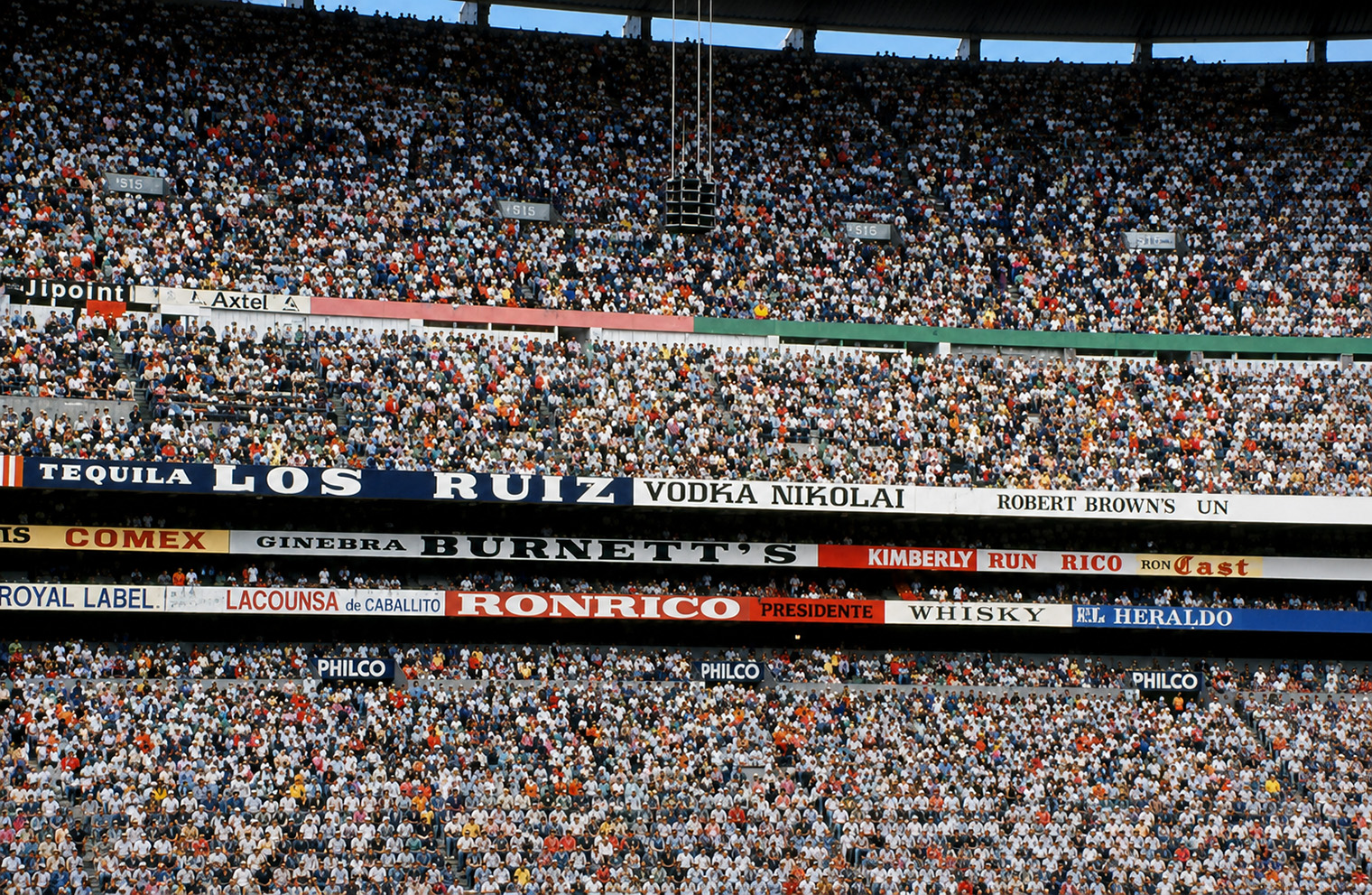
The tournament was a success, drawing huge crowds and, judging by the few video clips that remain, was actually of fairly high quality. Mexico played Italy in the semifinals, and as the organizers wanted to see Mexico in the final, one could perhaps say that the French referee Frère was “brotherly” inclined towards the home team, awarding them two penalties while two Italian goals were disallowed. One of the goals—a free kick from 40 meters taken by Italian star Elena Schiavo—was disallowed due to the indirect free kick rule, even though Schiavo scored with a rocket shot straight into the goal.
So Mexico advanced to the final, facing Denmark, who had let in only one goal (1–1 against Italy) and defeated Argentina 5–0 in the semifinals. Something a bit unfair to women’s football was that the goals (goal size) were adjusted for male goalkeepers, making it easier to score against the comparatively shorter female goalkeepers. The fact that height can be an advantage in football turned out to be a factor in the final, as the Danish players averaged 1.70m tall while the Mexican girls were just 1.54m. Still, football is a very “inclusive” sport compared to, say, basketball or tennis, where height is often crucial, as some of the world’s best footballers were relatively short: Maradona 1.66, Messi 1.70, Pelé 1.73, Cruyff 1.78, the same as Alfredo Di Stéfano. But it also works well being tall, for example Zlatan Ibrahimović, who is 1.95m.
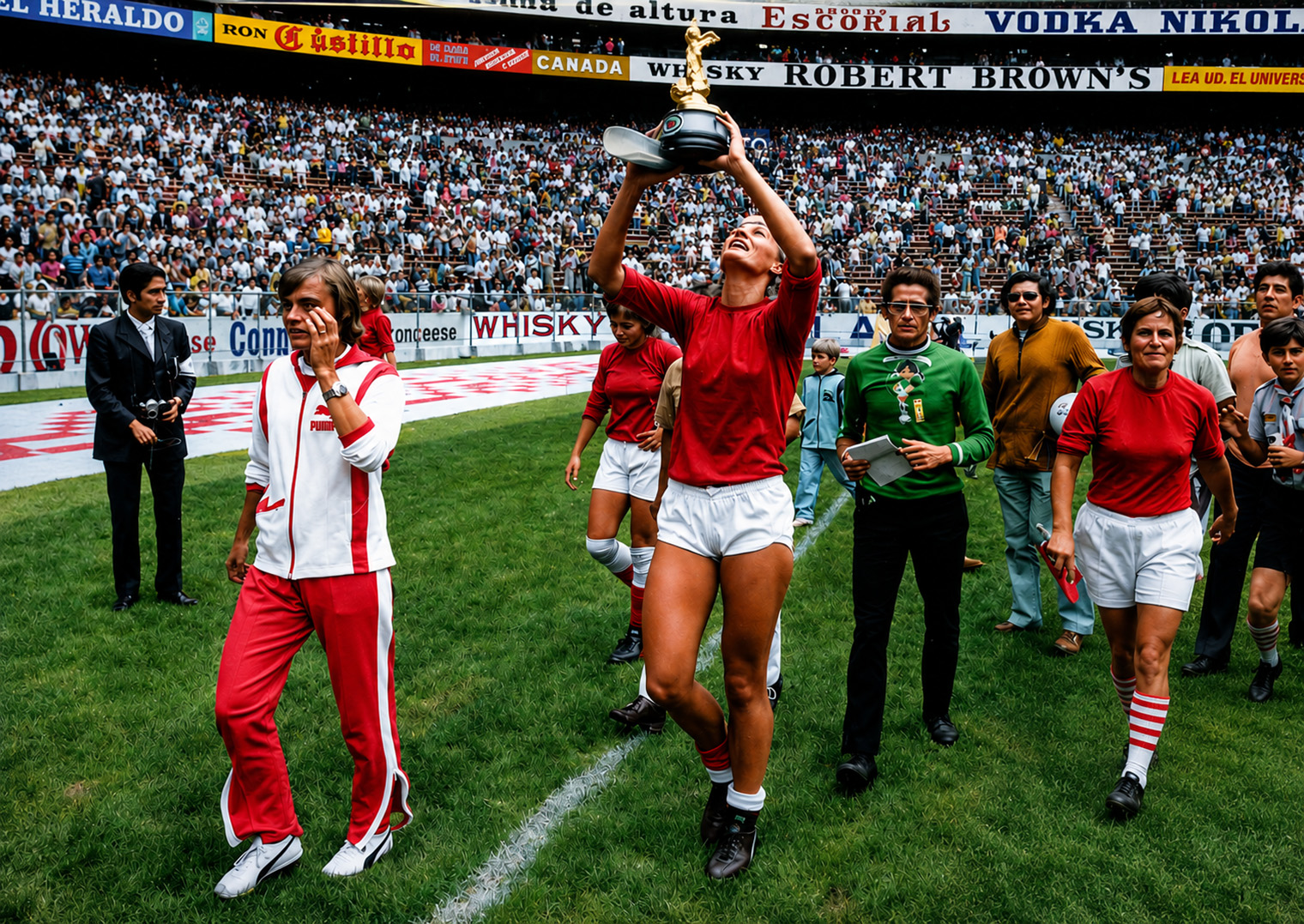
No referee in the world could prevent the Danes from crushing the diminutive Mexican team in the final at a packed Azteca Stadium. 3–0 for Denmark, after a “hat-trick” (three consecutive goals) by the only 15-year-old Susanne Augustesen. The Danes were celebrated in the press and on TV when they returned home, but a week later, they were forgotten. The same happened with the girls from the other nations, and the 1971 Women’s World Cup slipped into total obscurity. It would be 20 years before FIFA recognized the first official championship in 1991.
Nowadays, women’s football is so established that the “women’s” prefix is no longer often used, which can be confusing for those who want to watch men’s football, as sometimes nothing in the schedule indicates that a match is for women. The push for gender equality has also made itself felt in football, as women demand equal salaries with the men—for instance, at the World Cup. Anything less has been called unfair by feminists, a leftover from the conservative “oppressive patriarchy” of FIFA’s “old boys’ club.”
No matter how much can be said about FIFA’s historically idiotic attitude to women’s football, as usual, the feminists still get it wrong. In the last men’s World Cup in 2022, the teams and players shared about 7 percent of the total revenue and profit. When the latest Women’s World Cup was held in Australia and New Zealand in 2023, the women got a significant pay raise—nearly 27 percent of the revenue. In percentage terms, the women earned four times as much as the men, but due to the enormous turnover difference, earned three times less in absolute money.
The women have come a long way compared to 50 years ago, but there is still no current indication that women’s football will ever generate as much revenue as the men’s game. So, reaching the prize money levels of, for example, women’s tennis—which are equal to the men’s—may still be a way off. But surely, it’s not all about money, right? Listen to the older women who were football pioneers as they recount the 1971 World Cup in the documentary “Copa ’71”, available on SVT Play. You’re almost moved to tears hearing them describe the pure joy of “chasing a ball on a lawn,” the usually disparaging “old ladies’ judgment” of the sport. Billions of people all over the world love football, and that is likely how it will be for the foreseeable future.