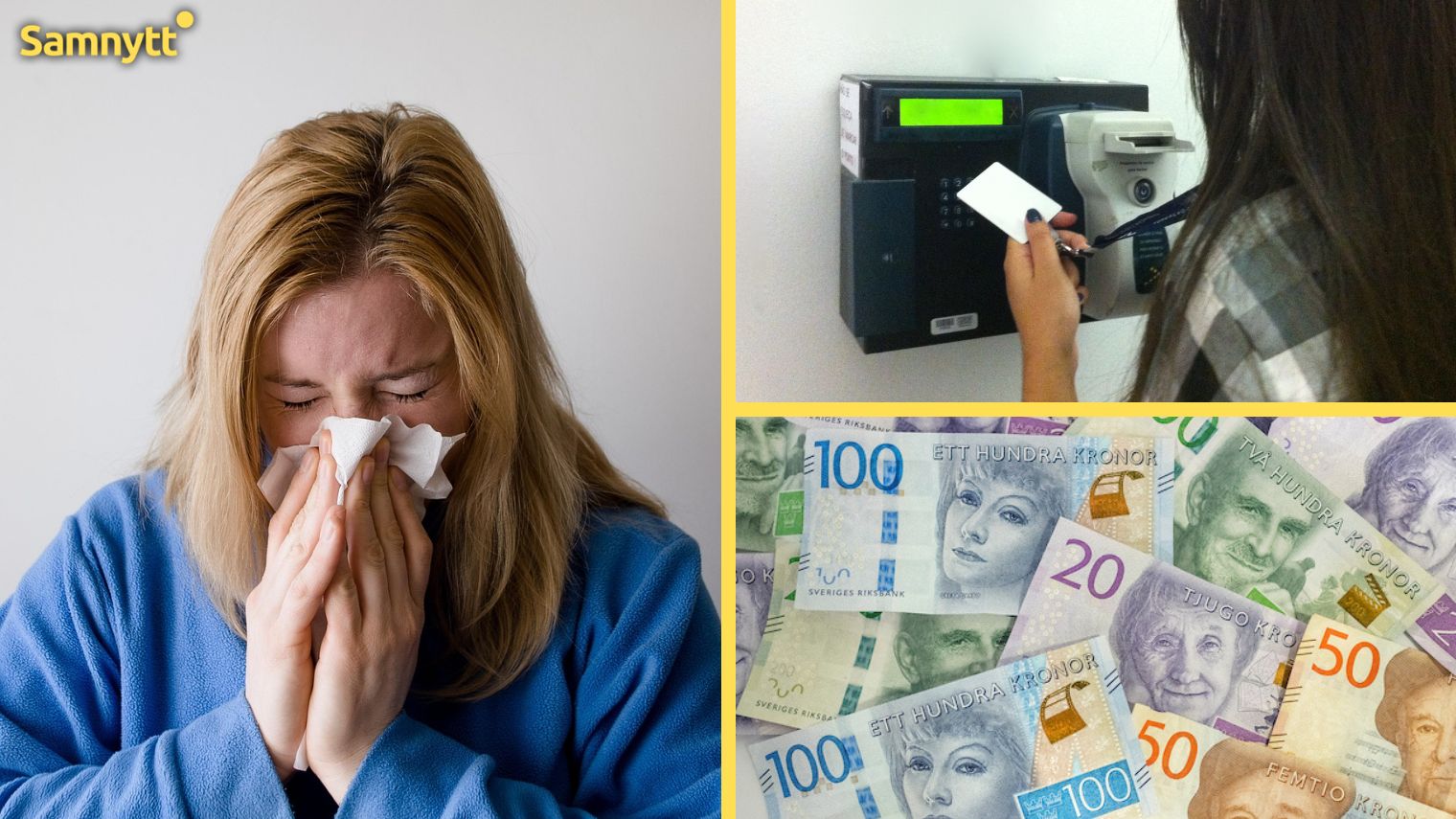
The Social Democrats are running on a platform to abolish the qualifying deduction for sick leave. However, this is not popular among the country’s entrepreneurs, who warn of consequences such as increased short-term sickness absence, loss of production, and fewer new hires.
In a survey conducted by the Confederation of Swedish Enterprise, six out of ten companies said they believe that short-term sickness absence would increase if the qualifying deduction was scrapped. An even larger proportion—almost seven out of ten—are worried about loss of production, and half would become more cautious when hiring new employees.
“These are expected figures. We believe the same thing, and basically, everyone probably thinks so too. You can debate how much sickness absence would increase, but everyone believes that it will increase,” Svenskt Näringsliv’s Deputy CEO Mattias Dahl told Tidningen Näringslivet.
READ ALSO: Here are the professional groups who report sick the most
Dahl refers to the 1980s when there was no qualifying deduction, and rates of sick leave were considerably higher.
“We want Sweden to raise its growth ambitions, but abolishing the qualifying deduction would mean the country would move in the opposite direction. Sweden cannot afford that.”

More Oversight and Suspicion
According to Dahl, Sweden already has a worrying unemployment rate, and there is a need for more jobs and more working hours—not fewer. He points out that companies’ ability to hire new staff is absolutely crucial, and emphasizes that if businesses say they will become more cautious with recruitment, it is a serious signal that must be heeded.
Another consequence he fears a removed qualifying deduction could bring is a change in the relationship between employers and employees, leading to increased oversight and suspicion.
The debate also includes arguments that the system is unfair, since certain white-collar workers can work from home when ill, while other occupational groups have no choice but to call in sick.
Facts about the qualifying deduction
Up until December 31, 2018, the qualifying day meant that the first day of sick leave was completely unpaid, regardless of what time during the day you became ill.
On January 1, 2019, it was replaced by the qualifying deduction, a deduction equal to 20 percent of an average week’s sick pay, making the system fairer for people with irregular working hours.
With the qualifying deduction, it does not matter if you go home in the middle of a shift or fall ill in the morning—the deduction is proportionate.
The reform aimed to create greater equality between different work schedules and reduce unreasonable differences in the impact of the first sick day.
READ ALSO: Government reverses on qualifying day—after Sweden Democrats’ demand