
Official reports reference routine deficiencies, workplace issues, and high staff turnover in elderly care. But behind the phrasing, there are concrete stories—of situations where elderly and care-dependent individuals find themselves in a vulnerable position that goes far beyond what the system is intended to handle. Two interviews conducted by Samnytt point in the same direction—a reality where vulnerability isn’t just about care needs, but also about power, dependency, and what happens when boundaries aren’t maintained.
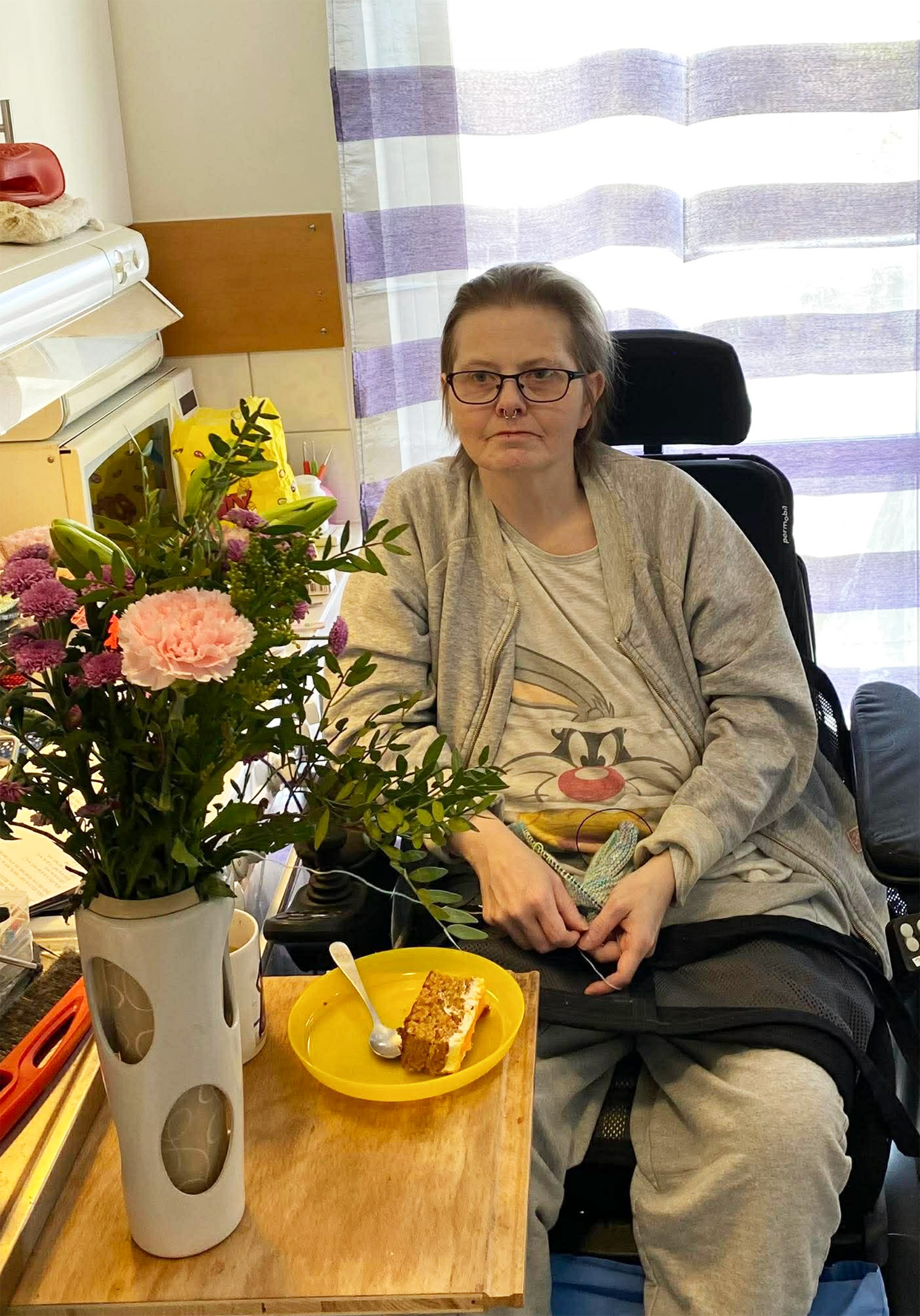
Vendela Ahlstedt tells Samnytt’s journalist that she is 51 years old and has been ill for many years. She uses a wheelchair and mobility scooter, is dependent on extensive support from home care services, and has at times suffered from aphasia—an inability to express herself verbally.
– I was non-verbal. I could only communicate using a speech synthesizer by typing, she explains.
The diagnosis is functional neurological syndrome—and for nearly nine months, she cannot speak. At the same time, she is in an extremely vulnerable situation in her own home. She is cared for in a bed in the living room, with limited space and the need for help several times a day—including at night.
“He pressed his fingers against my genitals”
Would you tell us what happened?
– What was missed by the home care or the district was that the nighttime help I needed wasn’t just supervision—I needed help with personal hygiene.
The assistance is provided by only one staff member, although two are required. It is during these nights that something begins to happen.
He put his whole hand in, pressed his fingers against my genitals. He pretended he wanted to check that my incontinence pad was secure. But at the same time, he pressed his fingers against my private parts and moved his hand upward.
Vendela Ahlstedt
– He didn’t do it the way the regular day and evening staff did it.
Vendela describes how a man from the night staff repeatedly performs actions that deviate from all normal routines.
– He put his whole hand in, pressed his fingers against my genitals. He pretended he wanted to check that my incontinence pad was secure. But at the same time, he pressed his fingers against my private parts and moved his hand upward.
READ ALSO: INTERVIEW: Sweden Democrats want life imprisonment for rapes against the elderly
At that time, she cannot react in the moment. She is half asleep and unable to speak.
– It took me about two months to process this. Because it happened every time he worked.
How often did it happen?
– It lasted two months, several times a week, at night.
Can you say anything about who the man was?
– I don’t remember the name now, and the municipality refuses to provide the name. But he was from Somalia.
READ ALSO: 82-year-old left by home care in her own feces—had to amputate leg
The assaults are repeated several times a week over a longer period.
Only when she starts asking the day staff about it via her speech synthesizer does she get confirmation.
READ ALSO: Elsa, 84, raped by home care staff—the suspected rapist now demands half a million SEK in damages
– I asked, “Is it normal for someone to put their hand inside the diaper when performing personal hygiene?” Vendela continues:
– Everyone reacted and said no, that’s not normal, that’s not how you do it. That’s when I realized this was some kind of sexual assault.
When she finally tells her mother, she breaks down.
– I broke down in tears while explaining what had happened.
A police report is filed, a Lex Sarah report is made, and an investigation begins. But according to Vendela, the perpetrator does not disappear from the workplace.
– They never removed him from service; they just made sure he didn’t come to me. He continued to visit other clients. She continues:
– They refused to tell me the name of the man—they tried to protect him at all costs.
The woman I spoke to who was the chief over the night patrol said she absolutely wouldn’t care about my views in these matters, and that they send whatever staff they have. She said you can’t choose whether you want a man or a woman to come at night.
Anne-Pia Ahlstedt
The preliminary investigation was later closed, despite an appeal. The incidents occurred as recently as 2023.
READ ALSO: Several new reports of sexual abuse within home care
– This is just the tip of the iceberg, she concludes the interview.
“They send the staff they have”
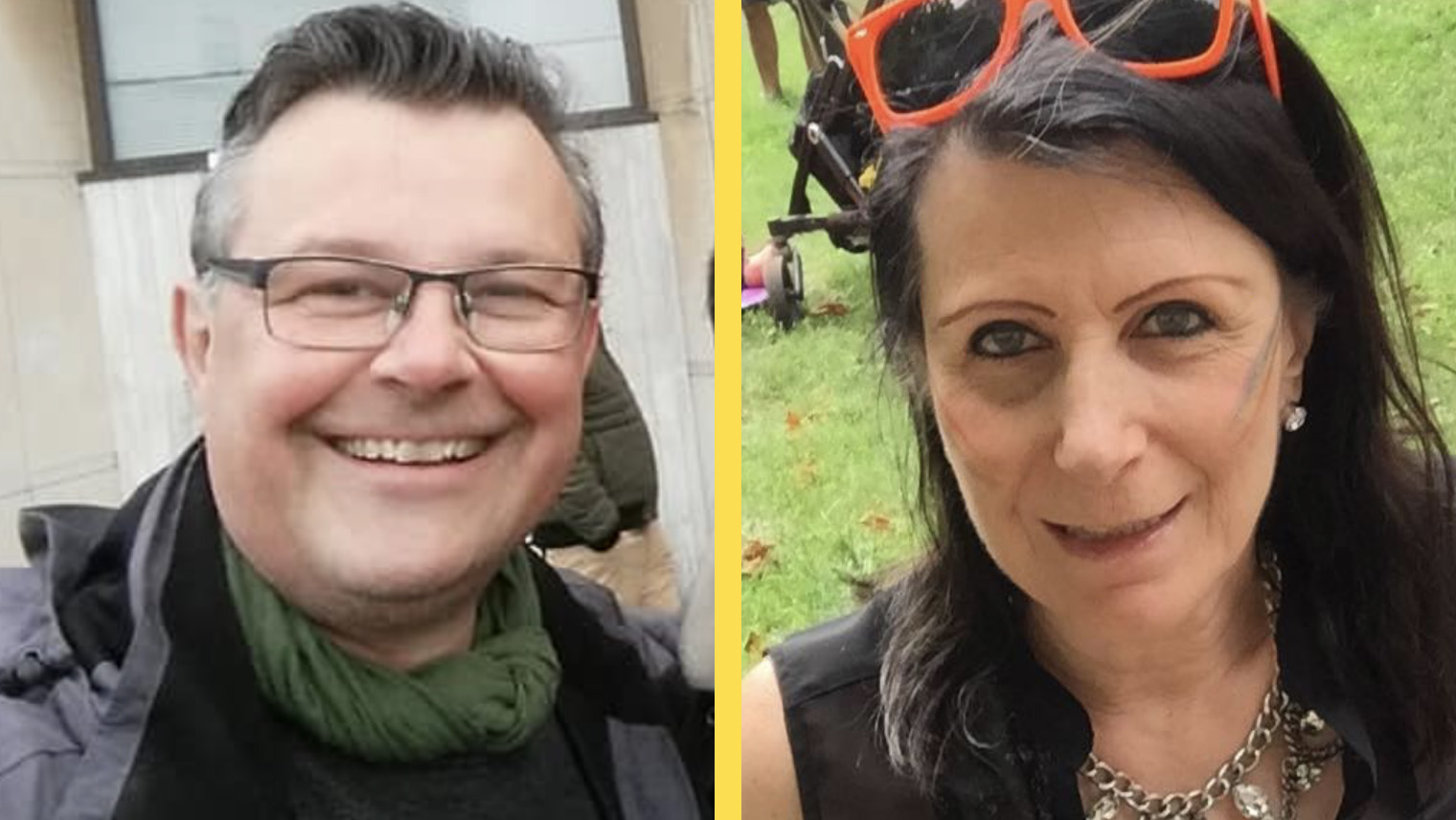
Samnytt also spoke to Vendela’s mother, Anne-Pia Ahlstedt, 70, who confirms her daughter’s experiences.
How did you experience this event?
– It was when Vendela’s best friend and I were at Vendela’s home that she told us about this. And I called the police almost immediately. She continues:
– But it probably took about a week before she dared tell us. She was really shaken. That it had happened, I understood. She adds:
– Any woman who has been improperly groped knows if it’s a mistake or not. I promise, we have a sixth sense about this. And this isn’t something Vendela would make up.
Did you bring this up with the care company?
– Yes, I called the manager and told her that I had reported the person to the police for sexual assault. I also have friends who are police officers, and they all think it’s absurd to send men alone to women at night.
She notes that the police themselves are not even allowed to search someone of the opposite sex.
– Vendela was so traumatized by this incident that she now refuses diaper changes at night.
What response did you get from the municipality and care company?
– The woman I spoke to, who was the chief over the night patrol, said she absolutely wouldn’t care about my views in these matters, and that they send the staff they have. She said you can’t choose whether you want a man or a woman to come at night.
Do you know anything about this Somali man’s language skills, could he speak Swedish?
– No, but you don’t need to be educated to get a job in home care, you hardly need to speak Swedish. She adds:
– It’s not only about sexual assault, it’s about communication. Handling lifts and many other things, like distributing medication. And there’s no expertise.
When the police report was made, what was the outcome?
– The police did their job, they also came to Vendela’s home, interviewed her, where she had to write and show with her hands where he had touched her. They also filmed this. Anne-Pia continues:
– But then everything was dismissed, since it was word against word…
READ ALSO: Report against rapist in home care is dropped—the police do not believe 82-year-old Irene
What would you say to the politicians responsible for this?
– That they must stop closing their eyes and open them. Many politicians don’t even believe things like this happen. And if they do, they think it’s a rare occurrence. And they just pass the buck.
Refused to serve light beer—‘racist’ to question it
Another story does not involve abuse in the same sense—but is about what happens in the daily encounter between staff and client.
Peter Wallenskog recounts the story of his mother, who in her final years received home care in Örebro. She was 88 years old, continued to live at home, and received both public and private care.
READ ALSO: He lay in his own feces for eight hours—”But if I say anything, I’ll lose my job”
What stuck with him was a seemingly small detail. His mother used to enjoy a light beer with her meal.
– She thought it was such a shame she couldn’t have her beer served, he says.
For her it was about routine and quality of life. But one employee refused.
The conclusion of what he said was that I shouldn’t be racist. He thought I should “tone down my demands”.
Peter Wallenskog
– It turned out it was a Muslim woman in a hijab. The woman told her that even light beer is “haram.” He continues:
– If you live at home and a civil servant comes to carry out a task, they should serve and do what’s required of them.
READ ALSO: Asked to remove hijab in home care—felt offended: “Shocked”
His mother didn’t want to create conflict. “I don’t want to make a fuss,” she told her son. Instead, she accepted being served something else to drink when that person was there.

Peter contacted the municipality and eventually reached a politically responsible official.
READ ALSO: Home care in Örebro hired gang criminal Syrian—humiliated and tortured a large number of elderly
What was the response to your complaints?
– Well, I managed to reach a man from the Center Party, and I explained the whole thing. He continues:
– The conclusion from what he said was that I shouldn’t be racist. He thought I should “tone down my demands.” Peter adds:
– He made a political stand that it was OK, which frustrated me, as I felt my mother was caught in the middle.
This is a dominance behavior that comes with this culture. My interpretation is that this woman follows sharia. The rules we have here are the rules that should be followed. And if you can’t accept that, you shouldn’t have this kind of job.
Peter Wallenskog
Peter says he unfortunately cannot remember the politician’s name, but after the incident he spoke to friends who had immigrated from the Middle East. He describes them as secular or having distanced themselves from Islam.
READ ALSO: Christer, 76, on life in a retirement home: “If you criticize, you’re called xenophobic”
– When I talked to them about this, they were appalled. They thought it was terrible and nothing one should accept.
He perceived that the focus shifted from the rights of the elderly person to a discussion about values.
– It’s not me who has the demands. My mother has legitimate expectations.
For him, the event became an example of how boundaries can be shifted in small ways.
– This little everyday incident is what highlights the bigger problem.
Can you elaborate on what you mean?
– It’s about this acquiescence that has become institutionalized. And we have politicians who defend it—and who are also condescending, arrogant, and act superior.
How would you summarize your thoughts around this experience?
– It is a dominance behavior brought about by this culture. My interpretation is that this woman follows sharia. The rules here should be followed. And if you can’t do that, you shouldn’t have this kind of job.
READ ALSO: When imagined kindness comes before responsibility—and the elderly pay the price
Later, his mother was also the victim of a theft. Gold jewelry, including a bracelet, disappeared from the home. Peter emphasizes it cannot be attributed to any specific person.
Many different employees moved in and out of home care, both from the municipality and private providers, and turnover was high. But for him, it reinforced the picture of an elderly person whose control over their home gradually diminishes.
READ ALSO: Home care Afghan stole from demented pensioners—avoids deportation
A supervision that doesn’t work
The stories differ in severity. One is about suspected sexual assault, the other about everyday decisions with ramifications for an elderly person’s autonomy. But what they share is dependency.
Needing help in your own home means granting someone else access—and in practice, influence—over your most private matters. It’s about body, hygiene, food, routines and, in many cases, even the ability to communicate.
When that balance is upset, when communication breaks down, or when supervision doesn’t function as it should, situations arise where the individual can quickly become disadvantaged.
In several of the cases highlighted, it is not only about isolated mistakes, but about circumstances that make it difficult to detect what is happening.
Limited ability to speak up, shame, fear of “causing trouble” or high turnover with many people passing through the same home contribute to boundaries being pushed without this being immediately noticed.
READ ALSO: This is the end station for those who built Sweden
At the same time, accountability becomes complex in retrospect. When matters finally emerge, it can be hard to establish what happened, who was involved, and what measures were taken—especially in contexts where documentation, continuity, and follow-up vary.
The remaining question is therefore not only about what happened in specific cases, but how the system is designed to handle situations where the victim has the least ability to speak up themselves—and what mechanisms exist to detect, investigate, and prevent such incidents from recurring.
???? Together we help Samnytt grow
We are very grateful to all of you who read Samnytt every day. Your engagement makes our work possible.
If you’re not already a subscriber—please consider becoming one and help us continue to grow, develop, and deliver important news and investigations.
Your support makes a difference.
123 083 33 50
Swish any amount
Thank you for reading and supporting ????