From July 1, new language proficiency requirements will be introduced in elderly care. The aim is to improve communication between staff and care recipients as well as increase safety in the workplace. For many in the sector, the change is seen as an important step towards safer and higher-quality care.
The issue of inadequate Swedish language skills in elderly care has been highlighted for several years by both authorities and the government. Now a change is being made to the Social Services Act, which means employers will have a clearer responsibility to ensure staff develop the language skills required for their work.
At Vallås care home in Halmstad, Swedish assistant nurse Frida Landgren welcomes the reform, believing that language proficiency is essential in daily work.
“My hope is that people will actually make use of the resources that will be created,” she tells Hallandsposten.
READ ALSO: Pensioner Given Vinegar by Home Care Instead of Juice – Several Similar Cases
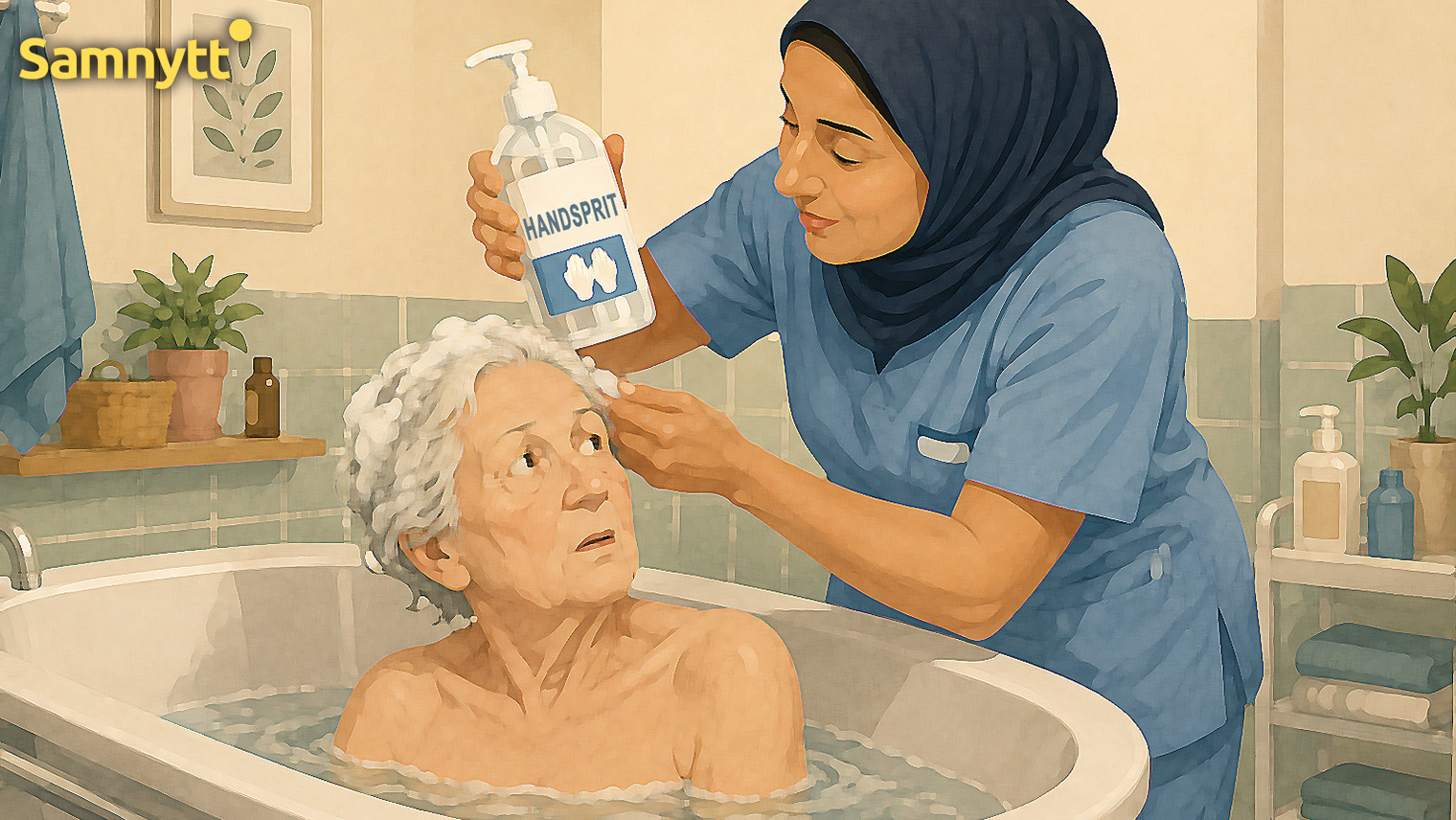
Could Mistake Shampoo for Hand Sanitizer
According to Frida Landgren, inadequate language skills can lead to both inefficiency and insecurity at work. She describes how communication can sometimes become a barrier when colleagues struggle to understand or make themselves understood in Swedish.
“When you work with someone who has language deficiencies, it can get very frustrating. Everything takes a little longer. Misunderstandings can occur, both big and small. Or it can be as simple as confusing shampoo with hand sanitizer.”
READ ALSO: Poor Swedish in Elderly Care in Three Out of Four Municipalities
Communication is especially crucial in dementia care. For people with cognitive difficulties, misunderstandings can cause anxiety and insecurity, even if they do not lead to serious incidents.
Still Not Required to Know Swedish When Hired
The new language requirement does not mean that newly hired staff must immediately meet a certain language level. Instead, the responsibility is placed on employers to create opportunities for language development and to ensure that employees gradually attain the necessary skills. There is no specified time frame for how long this may take.
READ ALSO: 79-Year-Old Eva Served Cat Food by Home Care: “Language Difficulties”
The level corresponds roughly to high school Swedish, but there is no obligation for all employees to meet the requirement when the law change takes effect. To help the process, the National Board of Health and Welfare has developed various support materials and models that organizations can use in their development efforts.
Language Representatives to Enhance Security
At the Pålsbo care home, language support for staff has already been a priority for several years. Through collaboration with adult education and healthcare training programs, the organization has invested in strengthening employees’ language skills.
Unit manager Dljara Kolosovskaya tells Hallandsposten that language representatives play an important role in this work.
READ ALSO: Paramedic Raised Alarm Over Language Chaos at Dementia Facility – Now Closed
“A language representative is a person who is very interested in language and creates security for other colleagues. They can be approached with questions about documentation, but also about cultural differences and traditions.”
The goal is to create a safer working environment for the staff, while giving elderly residents a better chance to be understood and treated well.
Multilingual Diversity Seen as an Asset
While the new language requirement is being introduced, the importance of embracing the linguistic diversity already present in elderly care is also emphasized. Many organizations today work with staff and service users from a variety of language and cultural backgrounds.
“It is of course an asset that we have multilingual staff now that we have such a diverse culture,” says Dljara Kolosovskaya.
READ ALSO: Relatives Criticize Care Home’s Language Skills – Get Called ‘Racists’
The hope is that the new regulations will contribute to better quality of care and improved conditions for staff to do their jobs, without losing the positive effects of a multilingual workforce.