
A few days ago, Eurostat released figures on immigration to the EU for 2024. A total of 4.2 million people migrated to one of the 27 EU member states. This figure excludes asylum seekers and/or refugees from Ukraine.
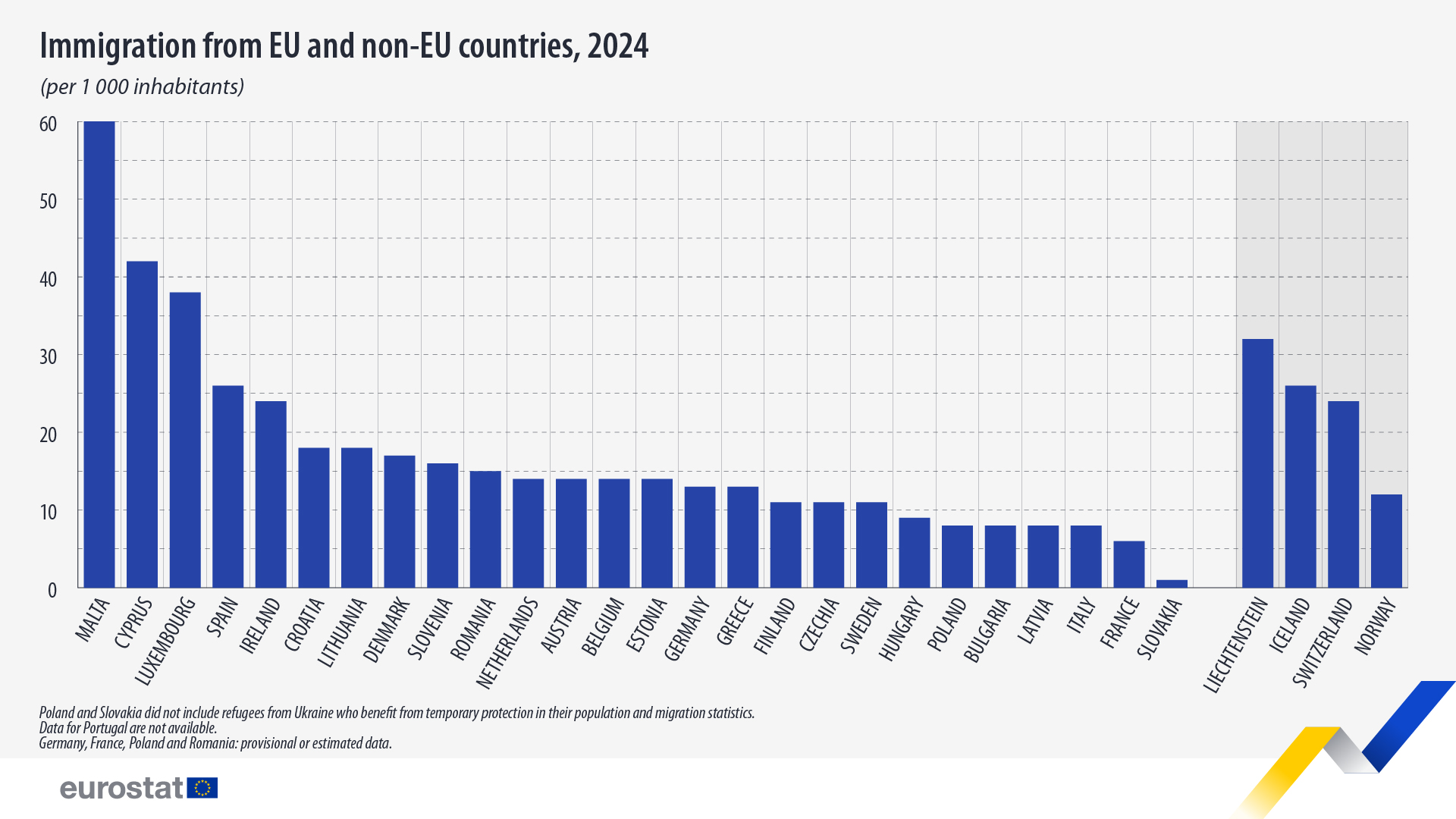
In 2024, the highest rate of immigration from both EU and non-EU countries in relation to the resident population was recorded in Malta (60 immigrants per 1,000 inhabitants), followed by Cyprus (42) and Luxembourg (38).
The lowest immigration rate, with one immigrant per 1,000 inhabitants, was in Slovakia, followed by France (6), Italy, Latvia, Bulgaria, and Poland (all with eight).
In total, the number of immigrants from countries outside the union is now estimated at 9.2 per 1,000 EU inhabitants.
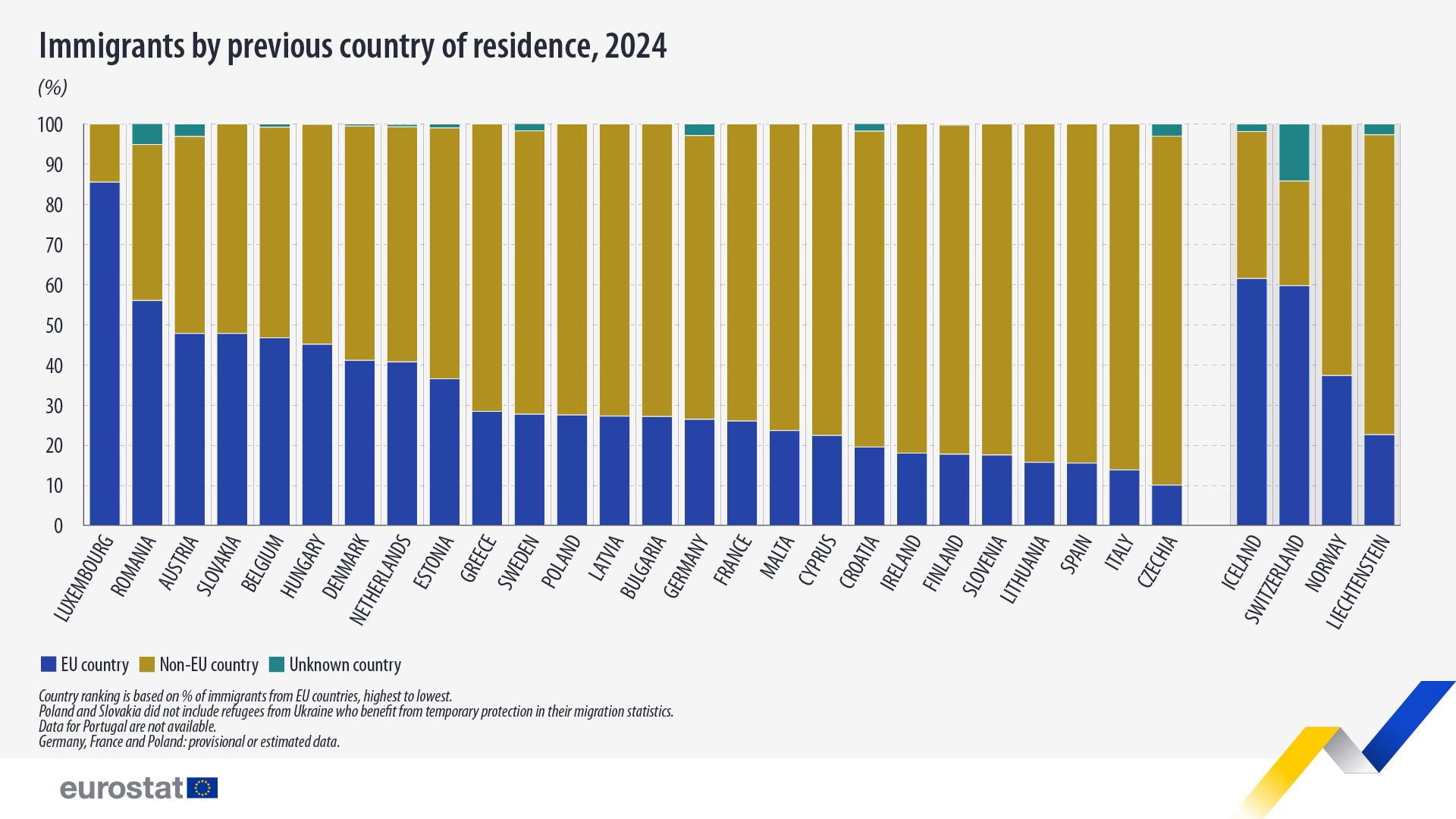
In almost all EU countries, the total number of immigrants from countries outside the EU in 2024 was higher than the number of immigrants from other EU countries. The only exceptions were Luxembourg (with 85.5 percent immigrants from other EU countries) and Romania (56 percent).

In 2024, 1.5 million people migrated between different EU countries. 1.6 million left the EU and moved to a country outside the union.
The highest shares of immigrants from non-EU countries were recorded in Czechia (87 percent), Italy (86.2 percent), and Spain (84.5 percent).
In absolute numbers, Spain received the most immigrants, with almost 1.3 million, followed by Germany with just under 1.1 million and Italy with 451,600.
READ ALSO: Spanish amnesty for illegals could double the number