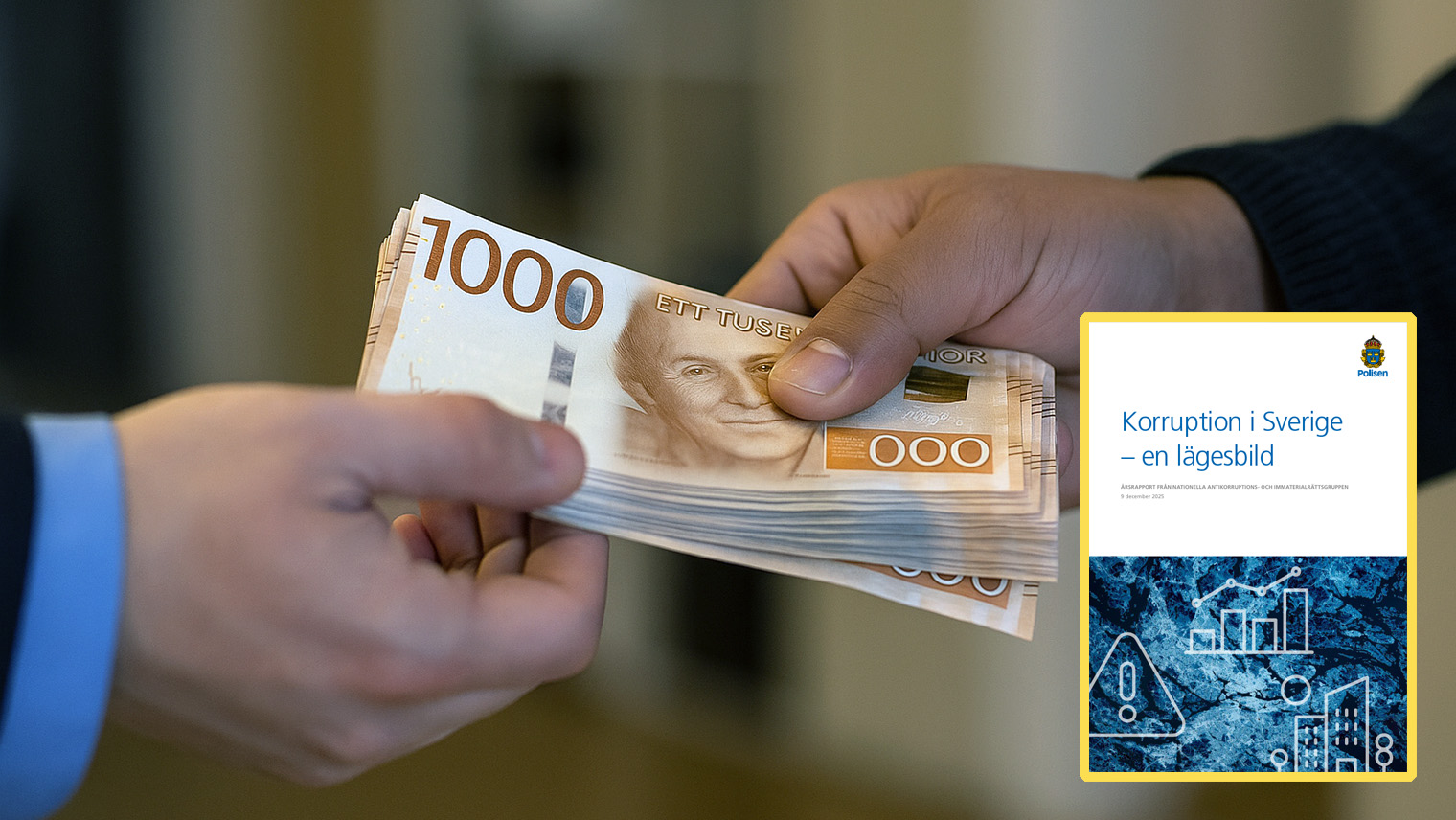
Just in time for International Anti-Corruption Day, the Swedish Police Authority releases a situational report that paints a much darker picture of the spread of corruption in Sweden than official statistics show. Although reported crime remains at a low level, behind the numbers lies a development that the authority describes as increasingly professional, systematic, and closely interwoven with organized crime.
The report reveals that 99 cases of corruption-related crimes were reported to the National Anti-Corruption and Intellectual Property Rights Group (NKIG) during the period from November 2024 to November 2025. This is roughly the same level as in previous years – but the picture is deceptive. The police emphasize that the actual criminal activity is likely much larger, especially in municipalities and regions where the willingness to report is still low, and where there is no mandatory reporting obligation.
This sector is singled out as particularly vulnerable. The report’s summary highlights how corruption in municipal operations – such as waste management, supervision, and certain parts of healthcare – is rarely reflected in the statistics despite extensive risks.
According to the report, organized crime increasingly relies on corruption to gain access to vital societal activities. This involves not only traditional bribes, but also relationships, threats, side jobs, and other conflicts of interest that lead individuals to act in ways that benefit criminal actors.
Corruption as a Strategic Tool
The most significant change compared to previous years is professionalization. The police describe how corruption has become part of a “service-oriented” criminal market – crime-as-a-service – where specialized intermediaries can facilitate contacts between bribe givers and recipients. This phenomenon, which has already been noted by Europol, is also present in Sweden, according to the report, and means that corruption no longer occurs sporadically or amateurishly, but as a commissioned service with clear purpose and structure.
READ ALSO: Corruption Scandal Shakes Brussels – Prominent EU Figures Investigated for Fraud
This development makes corruption more targeted. The report describes how criminal groups use data and information flows to identify individuals in vulnerable positions – someone with authority, insight, or power over a decision – and then directly target them with offers or pressure.
Cryptocurrencies – a New Tool for Illicit Influence
The report highlights a particular concern about the growing use of cryptocurrencies as a means of payment in bribery. The link between corruption and crypto transactions is still relatively unexplored in Sweden, but the police point out that technological advancements are already being used by organized crime in other areas.
Cryptocurrencies offer opportunities to transfer significant amounts without oversight from traditional control systems. They are harder to trace, can be exchanged in unregulated environments, and used directly in countries where cryptocurrency is accepted as payment. In this way, a bribe can completely evade detection.

The report illustrates examples where a representative of a construction company or a restaurant owner could potentially bribe a public official by transferring funds to a crypto wallet, followed by consumption abroad or exchange via neobanks without money laundering controls. The police assess that this likely already occurs – but it is not reflected in either statistics or convictions, making the dark figure particularly large in this category.
Control Systems Affect Law-Abiding Citizens Instead of Criminals
In the shadow of the debate on corruption and organized crime, another closely related problem is growing: the system to combat money laundering, which has become a burden for ordinary citizens and, at the same time, relatively ineffective against major players in organized crime.
Today, individuals and companies are expected to report and justify even minor financial transactions, which many perceive as intrusive and bureaucratic. The requirement for “know-your-customer” procedures and extensive documentation can feel disproportionate when the impact on major criminal flows is questioned.
READ ALSO: Green Corruption and a Poorer Europe after Stegra?
Several audits show that the supervision of money laundering in Sweden is not sufficiently effective or comprehensive to truly prevent criminals from laundering their profits through established financial channels, and that the authorities’ governance and follow-up are lacking. Despite significant resources for reporting and control, in many cases, it has not been demonstrated that this system limits the organized groups’ ability to conceal their money significantly.
Waste Sector – Corruption and Organized Crime Go Hand in Hand
One of the report’s most alarming sections concerns illegal waste management – a traditionally mafia-infiltrated activity internationally. The criminal economy earns billions each year by dumping, manipulating, or handling waste illegally – and according to the report, corruption is often a prerequisite for the crime to continue.
This involves bribes, relationships, and illicit influence directed at municipal environmental managers, inspectors, and permit handlers. In some cases, political decisions are also needed to enable the activity, and decision-makers are greased.
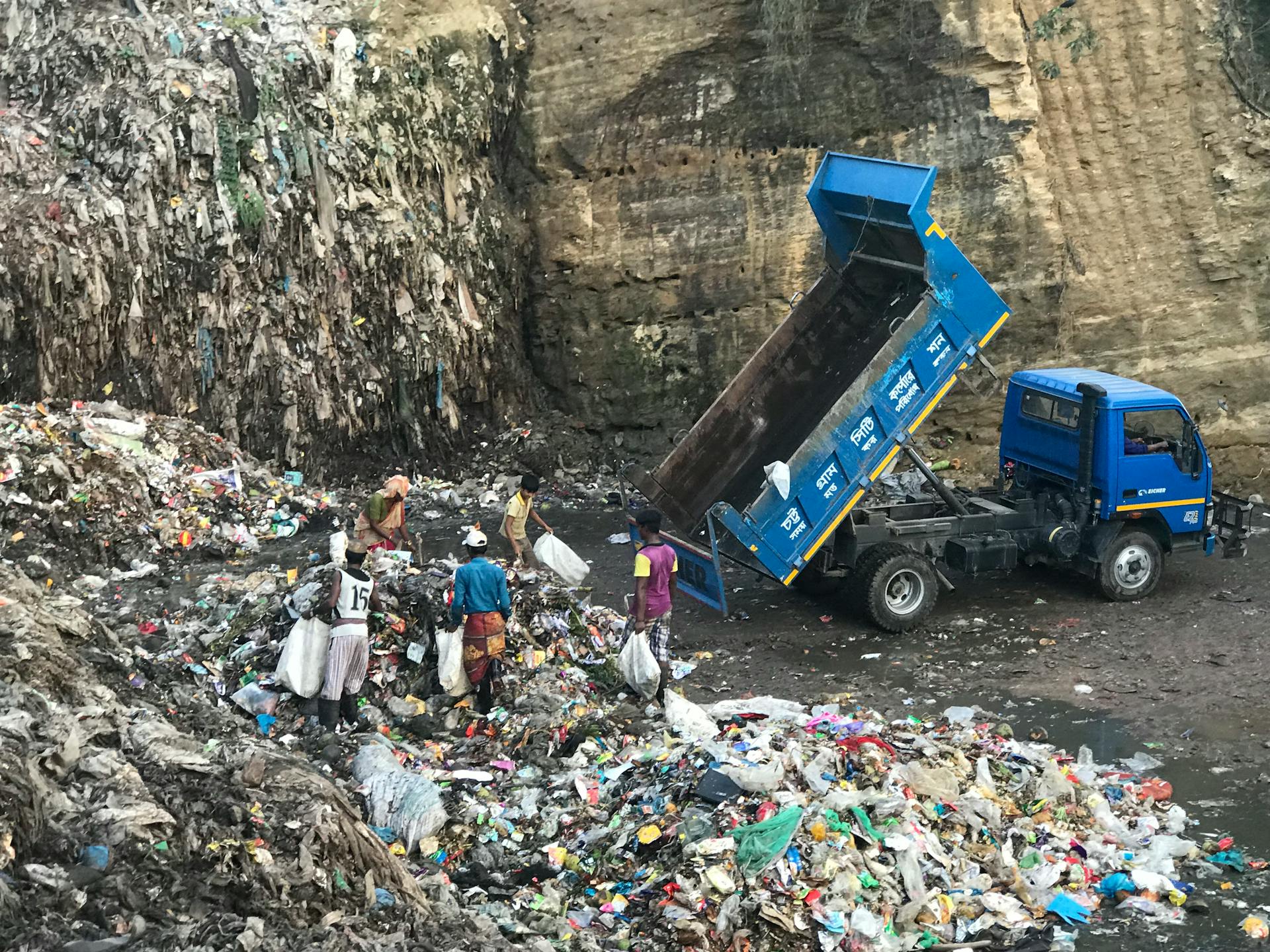
The report mentions how corrupt relationships contributed to the extensive Think Pink scandal being able to continue for a long time. An environmental consultant acted disloyally by shielding the company from supervisory authorities and producing misleading documentation.
The overall picture is clear: without some form of corrupt behavior – bribes, relationships, or pressure – the criminal waste management would have been much more difficult to carry out. At the same time, the police note that almost no reported corruption cases are linked to environmental crimes, suggesting one of the report’s most worrying dark figures.
Vulnerability in Critical Sectors of Society
The report devotes an entire section to how corruption can affect central functions in society. Two sectors are particularly highlighted: the security industry and the ports.
READ ALSO: NATO Shaken by Corruption Scandal
Sweden’s security market turns over more than 100 billion SEK and is directly linked to the protection of critical infrastructure. Here, even small bribes – such as a leisure trip for under 8,000 SEK – can influence which actor receives a major surveillance contract.
The consequences can be dramatic. An erroneous procurement can give criminals access to sensitive areas and technical systems.
Ports – a Bottleneck Exploited
In the same way, ports in Europe have been identified as risk zones for infiltration, and Swedish cases confirm the pattern. The interest in taking control of ports is not new, but it is also a classic mafia territory in other countries that is now spreading in Sweden as well. To facilitate drug smuggling, port workers have been bribed or otherwise encouraged to let cargo pass without inspection.
One example is how an employee at a southern Swedish port helped steer a truck past the Customs Service’s surveillance, making it possible to bring over 300 kilos of cannabis into the country. Here, corruption becomes a link in a larger chain of criminal activity – a link that is often classified as aiding and abetting drug smuggling rather than bribery, further concealing the connection in the statistics.
Welfare Fraud: Doctors as Gatekeepers
The report also points to growing risks in welfare systems. Organized crime has gained increasing interests in various benefit systems and even residential care facilities.
READ ALSO: Police Researcher: Extensive Corruption within Swedish Police
As controls tighten, criminal elements try to find shortcuts – and one such route involves doctors issuing false certificates for compensation. These certificates can form the basis for significant incorrect payments from the state and municipalities.

Here, the police point out that much of this criminal activity is likely classified as, for example, false certification and therefore never captured as corruption – even though it fundamentally involves a person abusing their position in exchange for benefits.
Corruption as a Threat to Democracy
The overarching message of the report is that corruption must be understood as more than an individual crime. It is a vulnerability that can be used to penetrate public institutions, influence decisions, and undermine central aspects of societal functions.
This concerns licensing, supervision, security protection, information management, and political decision-making – areas where the democratic system relies on independent officials acting objectively and without undue influence.
When organized crime uses corruption as a strategic tool, and when the willingness to report is low, a silent infiltration arises that is difficult to detect and difficult to stop.
“The Dark Figure Must Decrease”
The police call for a cultural change. Transparency must increase, the courage to sound the alarm must be strengthened, and municipalities and regions should be subject to the same reporting obligations as state authorities.
READ ALSO: Sida Employee Arrested for Corruption
In addition, according to the police, broad collaboration is required – between authorities, businesses, and civil society – to identify risks early, understand changing attack methods, and strengthen control systems.
The report concludes with a clear warning: the risk picture is changing rapidly, and if society does not raise its preparedness, the development will continue in the wrong direction.
Organized Crime – a Definition
In the police report, the term organized crime is used repeatedly without being defined, specified, or differentiated. Which actors are hiding behind the escalating corruption in society?
The Swedish National Council for Crime Prevention and other knowledge actors describe organized crime as an umbrella term that encompasses both immigrant gang criminality and other criminal networks – from motorcycle environments and clan-based networks with roots in other countries and cultures to looser constellations involved in everything from drug and weapons smuggling to fraud, tax evasion, and exploitation of welfare systems.