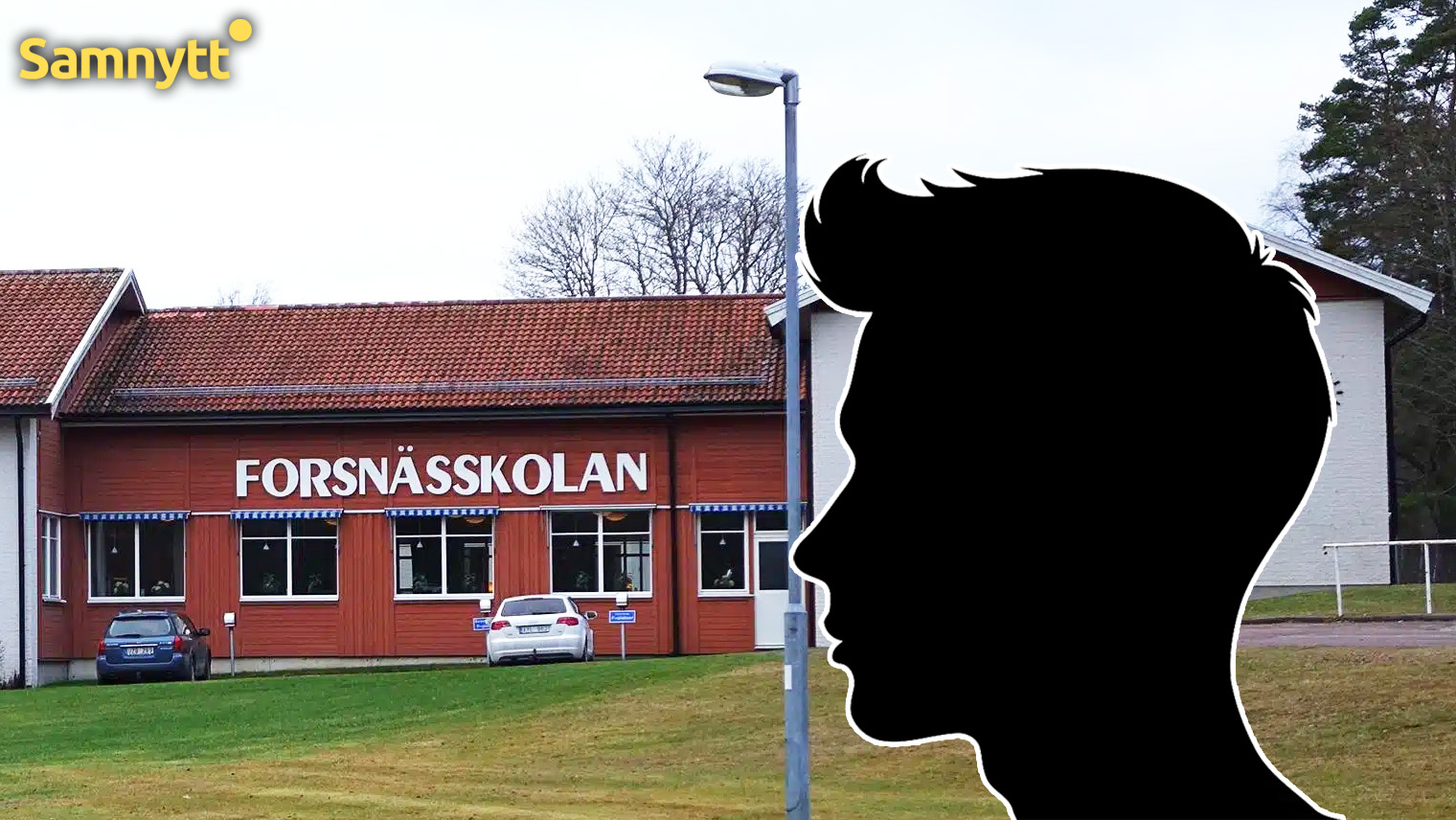
A middle school boy in Munkfors has been convicted of incitement to racial hatred after making a wooden symbol during a crafting lesson and showing it to other students. The boy has consistently claimed that he was trying to make a Buddhist sun symbol – not a swastika, which he was charged with. At the same time, he has been acquitted of making unlawful threats because statements about blowing up the school were not deemed to have been taken seriously.
The incident took place at Forsnässkolan’s middle school in Munkfors during the autumn. The boy had finished his regular woodshop work when he assembled pieces of wood into a symbol roughly the size of an A4 sheet of paper.
According to eyewitness statements reported by NWT , he then brought the item to the doorway of the textile classroom. There, he allegedly drew the attention of several students and teachers to what he had done and showed them the symbol.
The Värmland District Court considers that the object depicted a swastika and that the boy’s actions constituted incitement to racial hatred.
The boy: Tried to make a Buddhist symbol
The boy has denied the offense and has given a different explanation for his actions. According to his account, he got the idea after a religious studies lesson and intended to make a Buddhist sun symbol.
He stated that he even used ChatGPT to check what the symbol should look like, as he wanted to make sure he was making a sun cross and not a swastika.
At the time of the incident, according to case documents, he objected that the object was in fact a sun cross. His position, therefore, is that he neither intended to make a Nazi symbol nor to express contempt for any ethnic group.
The district court, however, did not accept that explanation. In its ruling, the court also took into account information about other antisemitic incidents at the school.
The defense criticizes evaluation of evidence
The boy’s defense lawyer believes that the district court reached conclusions that are not sufficiently supported by the evidence.
“His view is that the verdict is incorrect and is based on assumptions rather than on what has been proven,” defense attorney Jihad Omeirat told NWT.
According to the lawyer, the boy is dissatisfied with the outcome. No decision has yet been made about a possible appeal of the verdict.
The core dispute between the defense and the court thus concerns not only what the wooden object looked like, but also how the boy’s intent and actions should be interpreted. The defense’s argument is that the boy’s own explanation – that he was attempting to recreate a religious symbol from class – has not been disproven in the manner required for a guilty verdict.
Alleged bomb threat did not lead to conviction
The boy was also charged with making unlawful threats following a separate incident at the school during the spring. The background was a conflict over mobile phones.
According to witnesses, the boy said he would blow up the school and also talked about driving into the building with his EPA (a type of vehicle). It was also alleged that he would call someone who could come and blow up the school. The principal contacted the police after the incident.
The boy has also denied this accusation, stating that he did not recall making any threats. The court concluded that the alleged statements did not create the kind of serious fear required for criminal liability.
None of those who heard the remarks, according to the court’s assessment, took the threat seriously or became genuinely afraid. The charge of making unlawful threats was therefore dismissed.
Sentenced to youth service
Regarding the incident in the woodshop, the district court reached a different conclusion. The court found the boy guilty of incitement to racial hatred and sentenced him to 30 hours of youth service. The court was unanimous in the verdict.