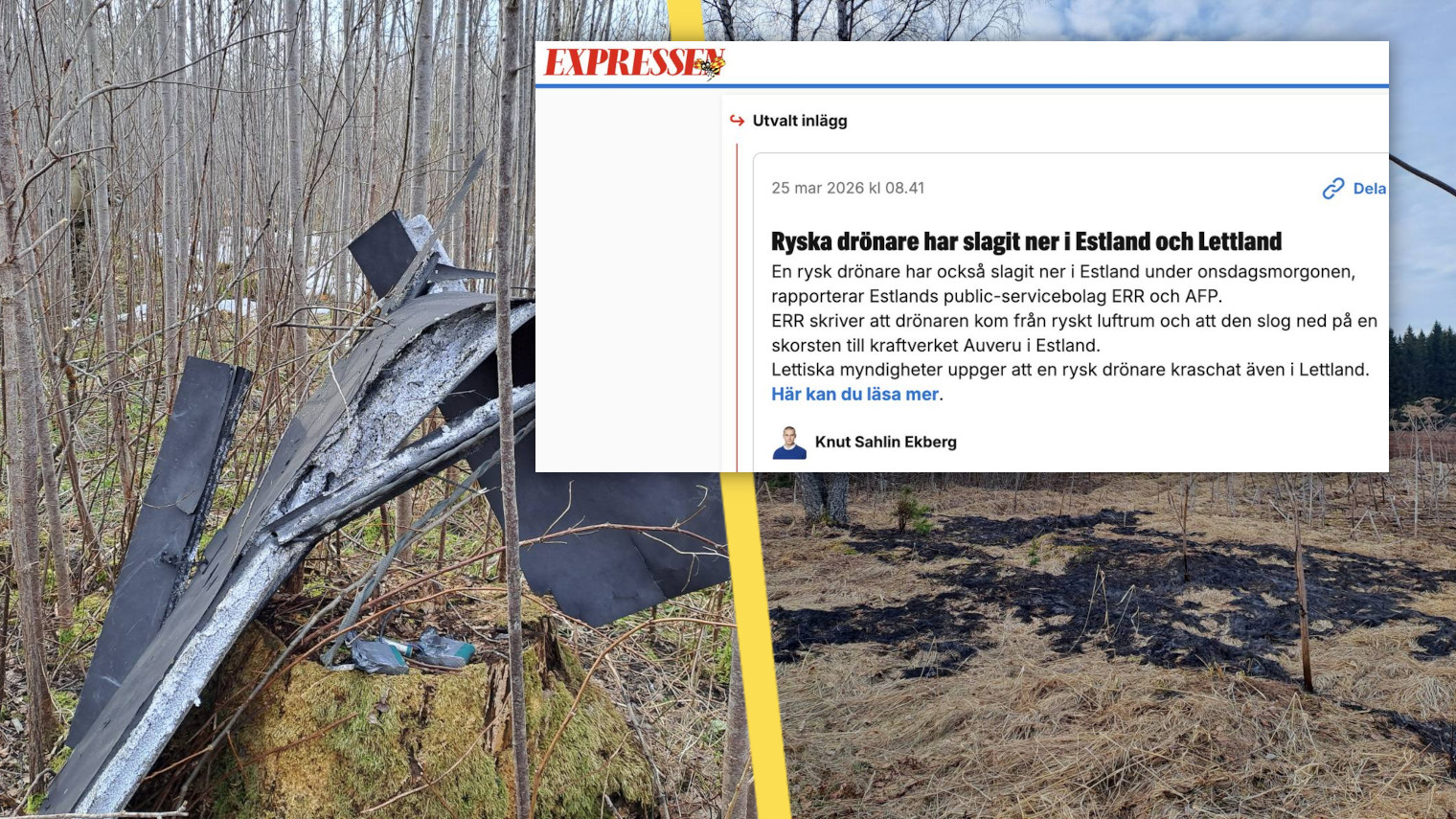
It was Ukraine, not Russia, that was behind the drones that crashed in Estonia and Latvia on the night leading into Wednesday, according to the armed forces of both affected countries.
Several drones entered the airspace of the two Baltic states from Russia during the night before yesterday. One of the drones hit the chimney of a thermal power plant outside Narva, near the Estonian-Russian border.
Russia was immediately blamed for the drone attacks; among others, by Swedish media outlets such as Expressen and Dagens industri. On social media, many argued that the alleged Russian attack should trigger NATO’s Article 5 and a counterattack on Russia.
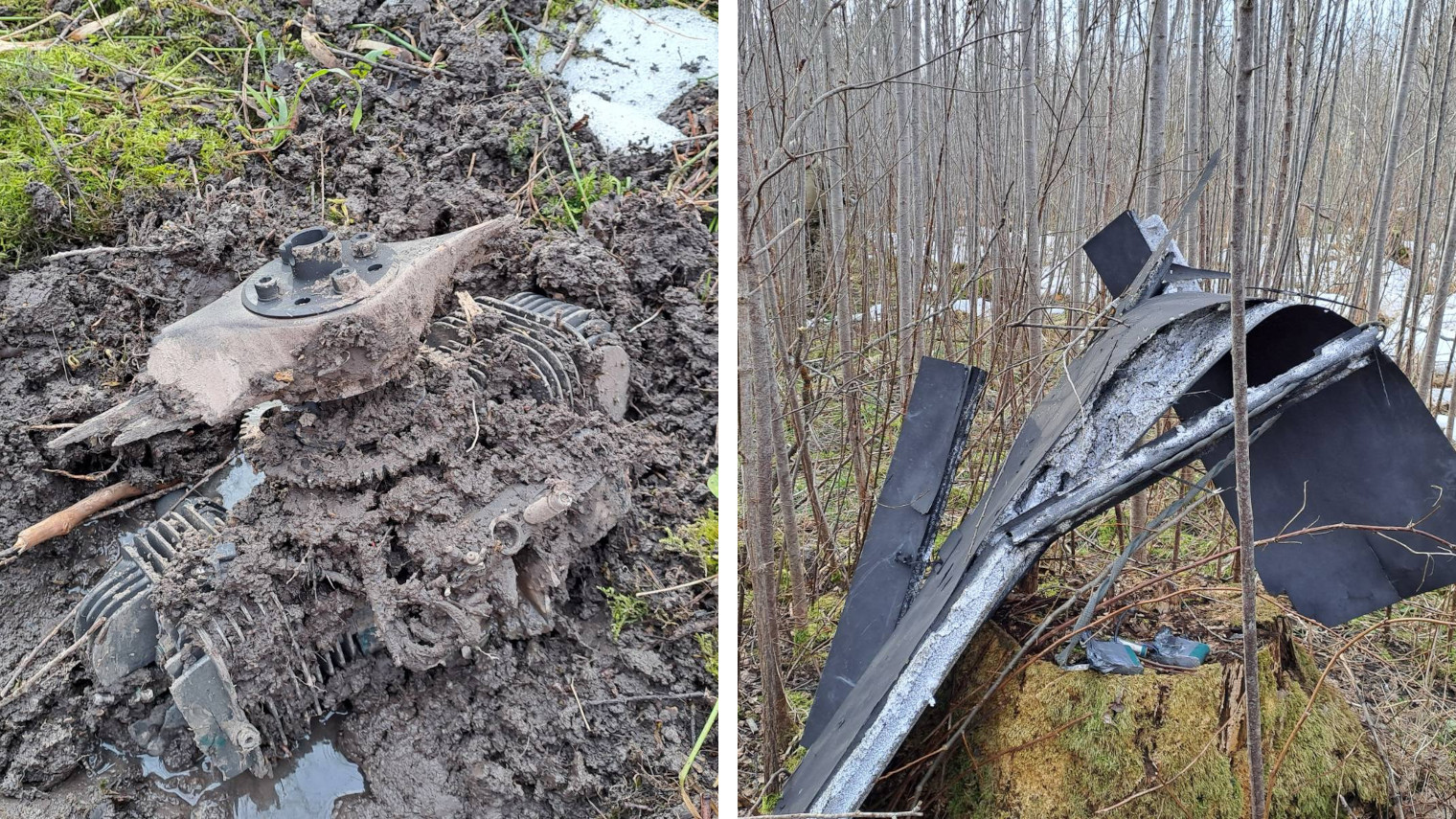
Ukrainian Drones
But the drones that came down in Estonia and Latvia were not Russian, but Ukrainian. This is now stated by the Latvian and Estonian armed forces on their respective websites.
“During the night of Wednesday, March 25, based on the recovered wreckage, an unmanned aerial vehicle (UAV) that intruded into Latvian airspace was identified as a drone of Ukrainian origin,” the Latvian armed forces stated in a press release that continues:
“The National Armed Forces continue to cooperate with the State Police and other relevant authorities to clarify the circumstances of the incident, search the area, and conduct an investigation. A preliminary inquiry has been launched.”

In neighboring Estonia as well, the drone intrusion is explained as the result of Ukrainian drone attacks against Russian infrastructure. Many Estonians are critical that the drone warning system was never activated, as it would have given an opportunity to seek safety. The Estonian armed forces explain it as follows:
“Since only a few minutes passed between the border crossing and the collision with the chimney, there was no time to activate the air raid warning, despite being on alert. When drones or missiles are detected outside Estonian airspace, it is not reasonable to automatically activate the warning system proactively, as attacks against Russian infrastructure are frequent. If warnings are constantly issued without immediate confirmed threats, there is a risk that the population becomes desensitized and does not react to the warnings.”
No one was injured by the drones that crashed in the two Baltic states.