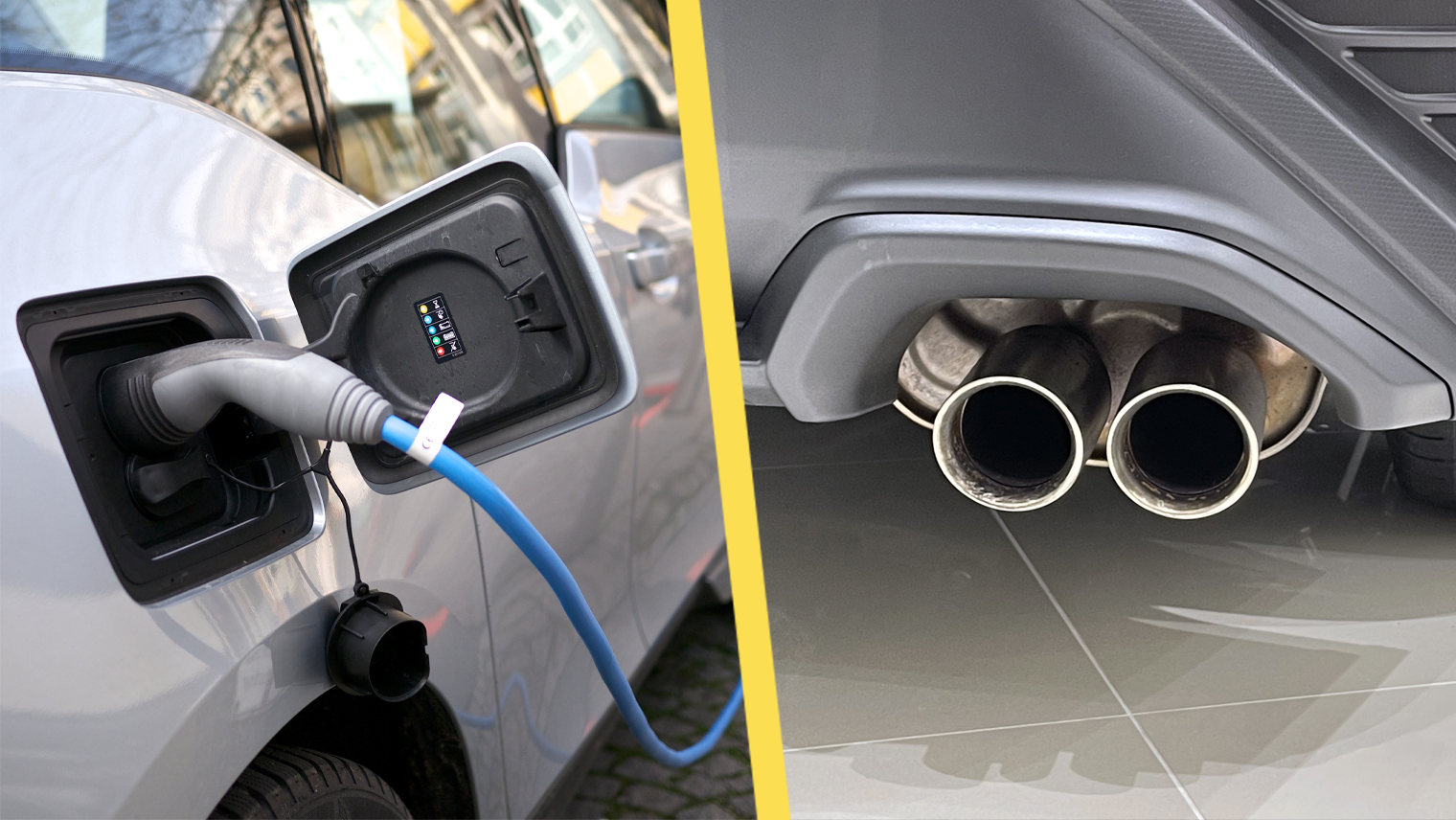
A new review of real-world data raises doubts about how much climate benefit—if any—electric cars actually provide compared to fossil-fuel vehicles. According to the researchers, electrification mainly shifts emissions from the tailpipe to the power plant.
A research group at Queen Mary University of London has conducted a reality check of the country’s net zero emission plans. Their conclusion is that the current push for electric vehicles is based on assumptions that don’t match how the electricity system actually works today.
As long as electricity production is largely backed by gas-fired power plants, more electricity consumption in practice means more fossil fuels must be used. On days when the wind wanes or the sun doesn’t deliver, gaps emerge that are quickly filled by fossil gas.
SEE ALSO: Study: Electric cars are not emission-free
When new electric cars are plugged into the grid during such periods, charging them, the researchers argue, directly leads to increased fossil fuel combustion. For the average person on the street, cars without exhaust pipes appear cleaner, but for the atmosphere and climate, there is no gain.
Forecasts Meet Real-World Data
The study, which has been accepted for publication in Environmental Research, compares political plans for 2030 with the actual energy mix in 2023. The researchers believe the variability of wind and solar power has been greatly underestimated in policymaking. General criticism has been directed at the fact that this is more the rule than the exception in the climate and green transition debate.

At the same time, the UK government has sought to advance a large-scale expansion of renewable electricity production while also stimulating the transition to technologies such as electric cars and heat pumps. But increasing demand before the supply is in place is, according to the researchers, starting at the wrong end.
“It’s the Margin that Counts”
Many calculations of electric cars’ climate impact are based on the average electricity mix in the grid. If a large share happens to be renewable, the calculation naturally looks favorable.
But the researchers argue that it’s not the average, but the margin that decides. When demand rises, more wind or solar isn’t built immediately—instead, more fossil-based production is started up.
The argument then becomes that every new electric car adds an extra “car package” of electricity that in practice must come from fossil gas.
Emissions Don’t Disappear—They Just Move
The consequence, according to the report’s authors, is that emissions don’t disappear, they just change location. The exhaust is no longer visible on the street, but the carbon dioxide is still released at the power plant.

With today’s capacity in the British grid, someone who wants to reduce actual fossil fuel combustion could therefore do more good by driving a highly fuel-efficient hybrid or diesel, the researchers claim.
The Same Situation in Most Countries
The researchers point out that only France, with its extensive nuclear power, will soon reach a point where electrification genuinely delivers clear CO2 savings. For most other countries, a more thorough transformation of electricity production is required first.
SEE ALSO: Professor in hot water—for being too honest about electric cars’ environmental impact
In Sweden, a large part of the emission-free nuclear power has been shut down, often prematurely before the plants reached end-of-life. The expansion of solar and wind has not been able to make up for the lost capacity, and the result has been that the shortfall had to be filled by fossil power.
What Should Be Prioritized Now?
Instead of prioritizing subsidies for more electric vehicles, the researchers want to see faster investments in more wind and solar power, a stronger and more flexible electricity grid, and solutions for storing or utilizing surplus power, such as the production of green hydrogen.
Only when these components are in place does it become meaningful, in their view, to shift large numbers of drivers from efficient combustion engines to fully electric alternatives.
Hidden Environmental Costs Often Forgotten
The debate is not just about how electricity is produced. Critics also highlight other factors over the lifecycle:
• Lithium mining requires large amounts of water and causes significant emissions.
• Cobalt extraction is often linked to harsh working conditions in the Democratic Republic of the Congo.
• Battery production in itself has a large carbon footprint.
• Heavier vehicles may also lead to more particulate emissions from tires and brakes.
The research group’s message is that electric cars can certainly play an important role in the future—but that the climate benefit depends entirely on how clean the electricity is. Until the energy system has been transformed, electrification risks being more symbolic than substantial, they argue.