
Sweden’s criminal economy today turns over as much as the entire construction sector—and generates profits at levels comparable to the gangster rule of Chicago under Al Capone during the Prohibition era in the United States. A new ESO report shows that crime is no longer a fringe phenomenon, but a systemic threat permeating the labor market, businesses, and welfare, with turnovers in the hundreds of billions of kronor.
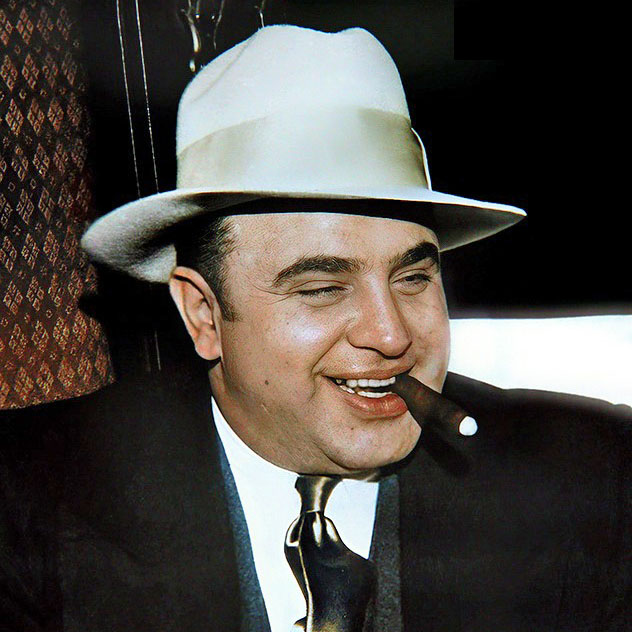
When gangster boss Al Capone controlled the liquor trade in Chicago in the 1920s, he built his empire on a simple principle: enormous profits, low risk of detection, and a society full of vulnerabilities to exploit. According to the Police, the parallel to the new Sweden is no longer far-fetched.
In the new report Svarta siffror from the Expert Group for Public Economics (ESO), Sweden’s criminal economy is estimated to turn over 352 billion kronor per year, with 185 billion in annual profits—equivalent to almost 3 percent of GDP.
“It’s a threat to society and permeates the entire community, all industries. We now see the same types of structures as in classic mafia societies,” says National Police Commissioner Petra Lundh in a comment to TN.
Crime as a Business Model
Unlike the gang crime that often dominates headlines, the report shows that the largest share of criminal profits does not come from drugs or weapons—but from businesses that are fundamentally legal.
Gang crime is demonstrably a problem mainly related to immigration. The investigation does not state how large a share of the other criminality infiltrating legal businesses is also immigration-related.
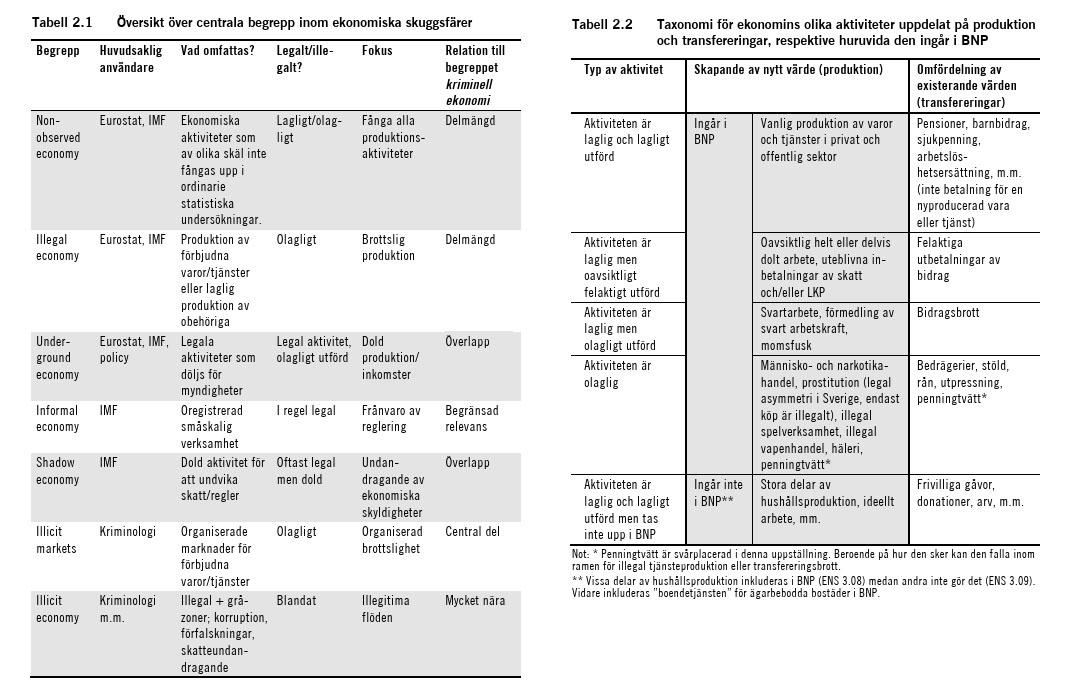
The shadow economy, primarily undeclared work and tax evasion, accounts for 96 billion kronor in annual profits—more than half of the entire criminal economy. Undeclared work alone is estimated to bring in about 60 billion kronor, while other tax errors contribute another 35 billion.
This often does not involve robbery or violence, but companies systematically breaking the rules: cheating with wages, work environment, VAT, and social security contributions. According to the report, it is precisely this type of labor market crime that causes the greatest socio-economic damage.
“It’s the exploitation of societal systems rather than classic criminality that dominates,” says criminology professor Amir Rostami, one of the report’s authors.
Organized—but Not Always Gang-Driven
The report makes an important distinction: not all criminal profits are connected to organized crime in the narrow sense, but the effect is nonetheless a systemic threat.
The illegal economy—drugs, weapons smuggling, counterfeit goods, and organized thefts—generates about 41 billion kronor in profits. Here the connection to criminal networks is clear, as is the use of violence and international structures.
At the same time, large sums come from what the report calls criminal transactions: benefit fraud (10 billion), fraud against the EU (16 billion), and fraud against companies and private individuals (13 billion).
In these cases, it involves both organized schemes and more widespread fraud. But according to ESO, from a systems perspective, it often matters little who does what—when the behaviors are sufficiently widespread, the effect is the same.
“Minor violations on a large scale can be just as harmful as organized crime,” the report notes.
Money Laundering—the Hub of the System
A particularly alarming conclusion is how closely intertwined the criminal economy is with the legal one. Money laundering, frontmen, fake invoices, and shell companies allow criminal profits to be channeled into entirely legitimate businesses.
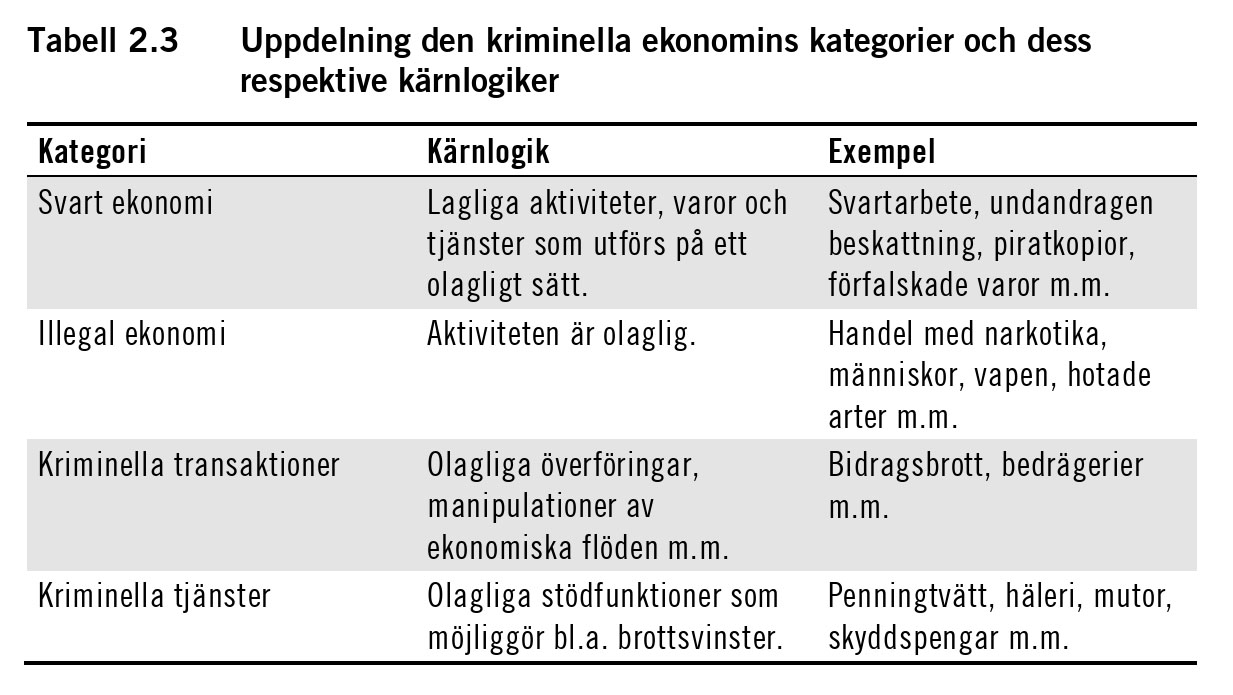
Criminal services—such as laundering money, arranging stand-ins, or utilizing insiders in authorities and banks—are estimated to generate about 9 billion kronor in profit, but their true importance is greater than the figure suggests. They are the prerequisite for the rest of the system to function.
“We Can’t Just Rely on Prosecution”
The ESO report states that repressive actions alone are not enough. Instead, a systemic shift in criminal policy is required: tighter controls, better inter-agency cooperation, and more administrative tools such as business prohibitions and revoked licenses.
This is an analysis shared by the Police.
“We can prosecute as many as we like, but there will always be more. We need to close the gaps, the flaws, and the vulnerabilities in the systems,” Petra Lundh notes.
Just as in the case of Al Capone, the report points out that in the end, it may be tax controls, supervision, and economic follow-up—rather than more prison sentences—that will determine the fight against the modern mafia.