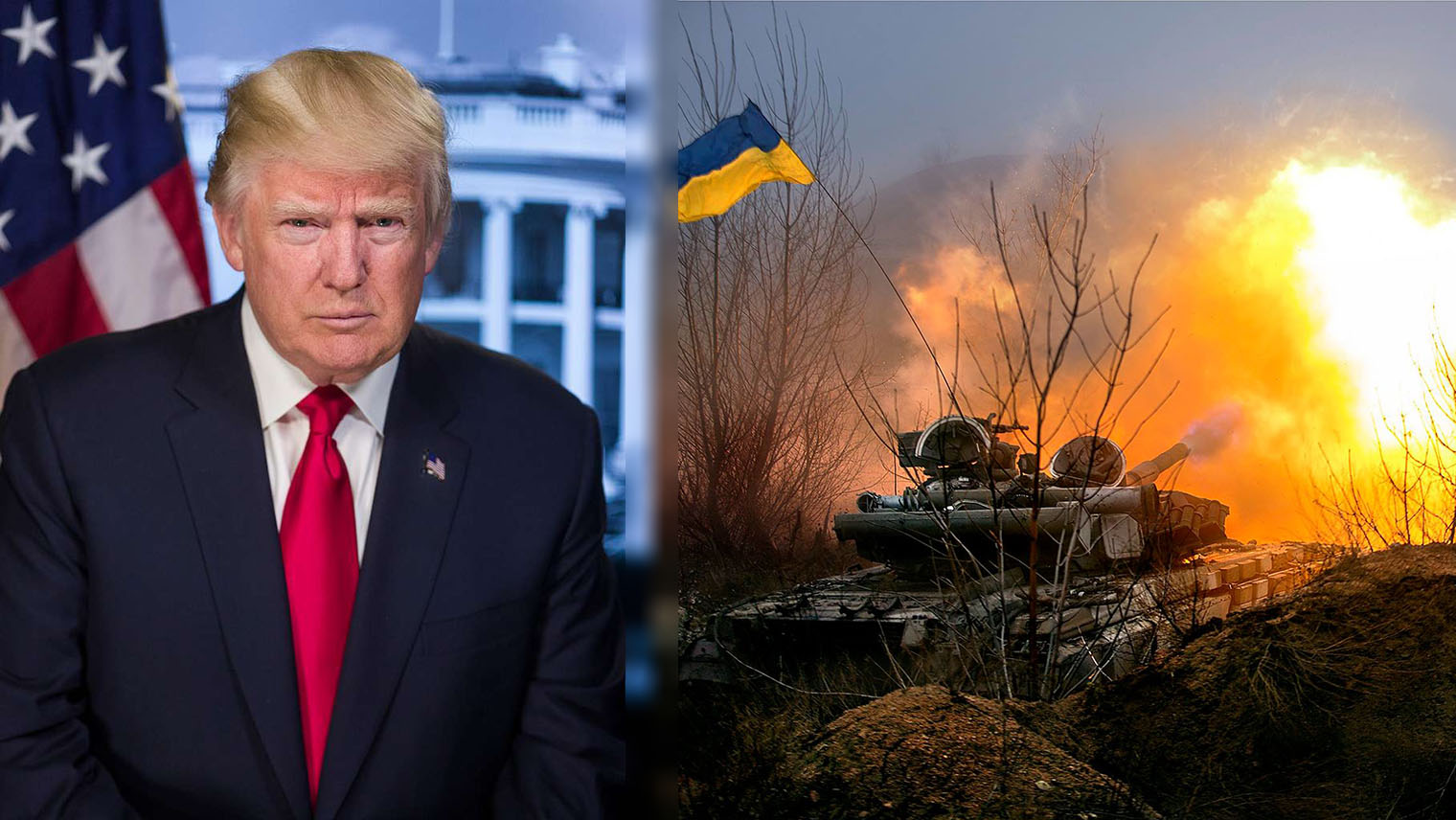
LEADER • When Donald Trump in Davos once again claims that the 2020 presidential election was rigged—a statement for which there is no legal support in terms of outright electoral fraud, but which can be considered true in a broader sense of political dirty tricks—it is easy to dismiss the rest of his message as political theater. Yet, in the same breath, he also puts forward a more substantial claim: that Russia’s invasion of Ukraine likely could have been avoided if he had remained president.
The question is not whether this can be proven. It cannot. However, the question is whether the claim is reasonable, given how the U.S. signaled a shift between the transfer of power in Washington and February 2022.
When Joe Biden took office, his main foreign policy ambition was to restore predictability, alliance coordination, and institutional stability. In Europe, this was received as a relief after four years of Trumpian turbulence. But in Moscow, the same qualities may have been interpreted in a completely different way.
No Ground Troops to Ukraine – Chaotic Withdrawal from Afghanistan
Already months before the invasion, the Biden administration made it clear that the U.S. would not deploy its own ground troops to Ukraine. From an American perspective, this was a logical and responsible announcement, but at the same time, it meant that Russia effectively knew the outer limits of U.S. engagement. When Biden, moreover, in an unfortunately worded statement, suggested that a minor Russian incursion could be met differently than a full-scale invasion—a statement later corrected—it further contributed to perceptions of uncertainty regarding thresholds and consequences.
READ ALSO: Trump in Davos: People Will Be Prosecuted for Rigged 2020 Presidential Election
On top of this came the broader strategic context. The chaotic U.S. withdrawal from Afghanistan in the summer of 2021 had nothing directly to do with Ukraine, but it may have reinforced a Russian perception of a U.S. prioritizing risk minimization and domestic stability over :censored:6:cdd6bbaa89: power projection. In such an interpretation, the West did not appear divided, but rather cautious.
Trump’s Tougher Rhetoric Might Have Deterred Putin
Against this background, it is not unreasonable to wonder how the same situation might have looked under Trump. His foreign policy was certainly marked by sudden shifts and often contradictory rhetoric, but this very unpredictability also created significant uncertainty among other actors. Trump rarely shied away from using threatening language, he avoided preemptively committing to clear red lines, and he showed during his first term that, despite his skepticism toward allies, he was prepared to make decisions that increased Ukraine’s military capability.
This unpredictability can, in terms of deterrence, have a stabilizing effect. For an actor like Vladimir Putin, who weighs risks rather than seeks maximum confrontation, uncertainty about how far the U.S. is prepared to go can weigh more heavily than a clear yet limited response. It is entirely possible that Trump, precisely by not clarifying his boundaries in advance, would have made the calculation riskier for the Kremlin.
Not Certain but Likely
This does not mean that Trump necessarily would have been “tougher” in practice. His recurring questioning of long-term support for Ukraine and his desire to quickly force settlements could also have been interpreted in Moscow as signs that time was on Russia’s side. But if one, as here, allows Trump the benefit of the doubt in these gray areas, it is possible to argue that his personal power politics and unpredictability could have raised the threshold for an invasion decision—at least in terms of its timing.
READ ALSO: Trump on Greenland: “It is our territory”
This leads to a careful but not unreasonable conclusion. There is nothing that shows with certainty that the war in Ukraine would have been avoided with Trump in the White House. Putin’s motivations were deeper than U.S. party politics, and the conflict was about Ukraine’s long-term orientation, not just the American president. But it can be argued that Biden’s clear, conflict-averse, risk-avoiding, and predictable signaling may have lowered deterrence, whereas Trump’s continued presidency could have created enough uncertainty to delay or deter an invasion decision.
In that sense, Trump’s claim is not obviously true—but neither is it easy to dismiss. And in geopolitics, that very difference can be decisive.