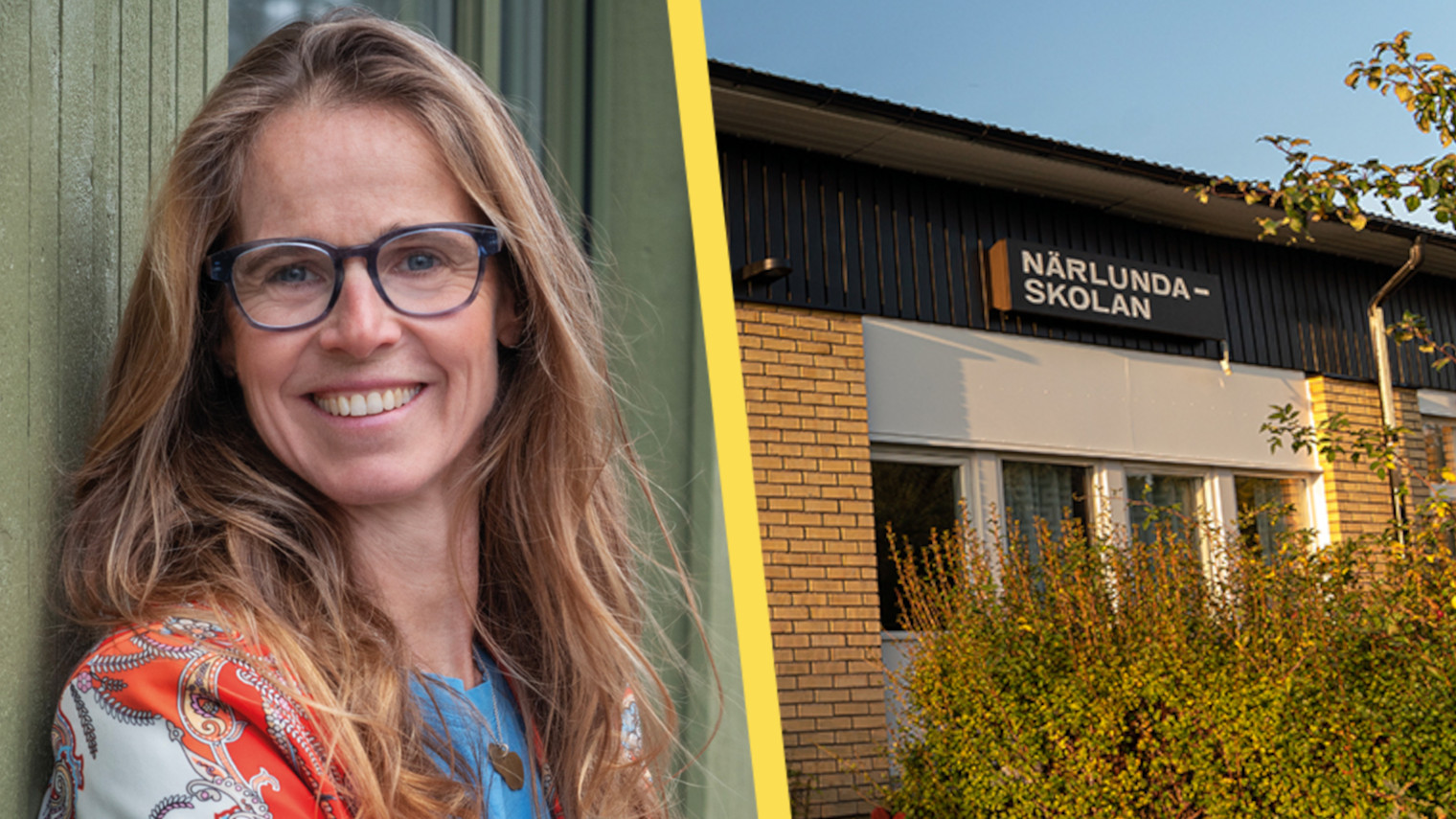
It is possible to ease life for schoolchildren with low cognitive ability, but they will still not be able to achieve passing grades. That’s the opinion of psychologist Jenny Vidarsson.
– They simply do not have the necessary prerequisites, she tells Samnytt.
Jenny Vidarsson is a licensed psychologist and the assistant head of student health in Ekerö, west of Stockholm. During the 2023-2024 school year, she worked on a pilot project at the municipal Närlundaskolan, aimed at finding working methods to support the school’s underperforming students.
The project spanned two grades and involved around 70 students in grades four and five.
– It wasn’t that we identified individual students and made interventions for them, but rather, we looked at the whole class at a group level. What did goal attainment, safety, study environment, and wellbeing at school look like? How much support did they receive from special educators and how many action plans were in place? Vidarsson explains to Samnytt and continues:
– We then worked on this for a year. And we looked at it on a class-wide level.
Children with Low Cognitive Ability
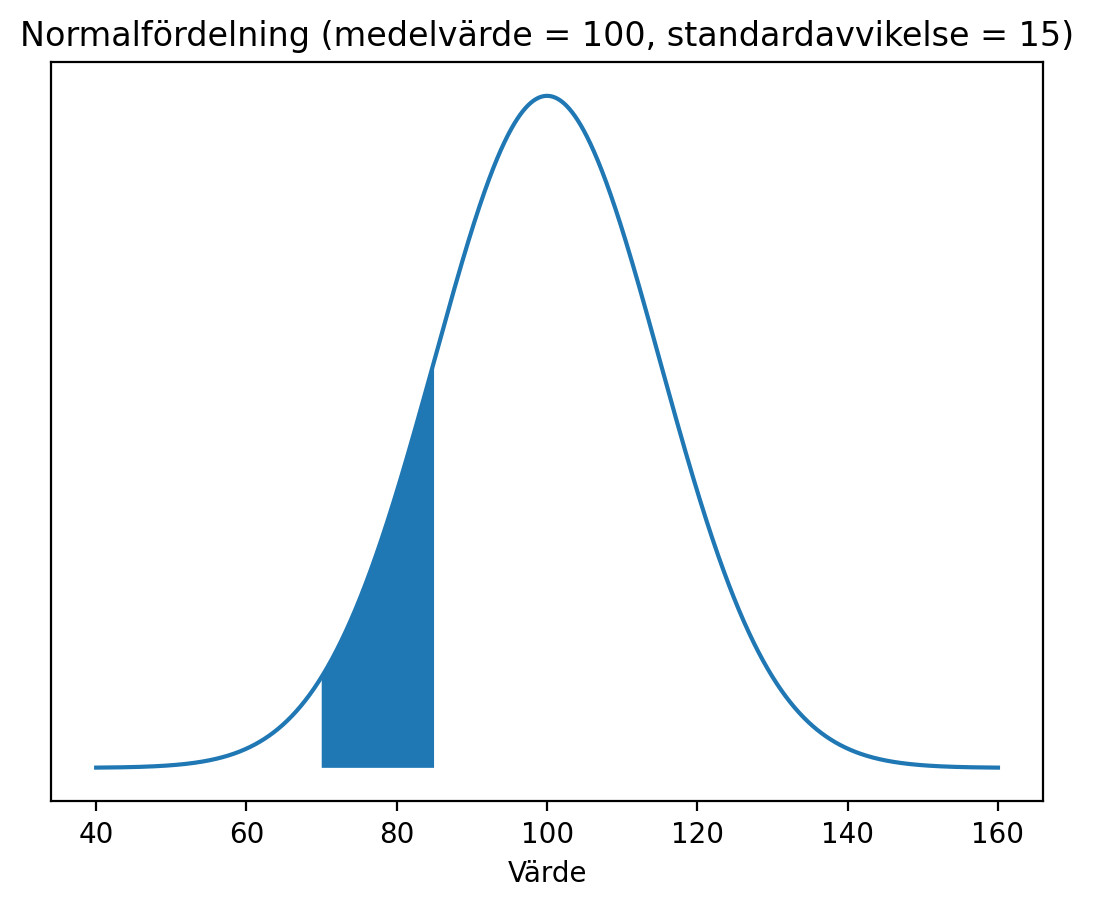
Someone with an intelligence quotient, or IQ, below 70 is considered to have an intellectual disability. In her work, Jenny Vidarsson has focused on those who are just above that threshold, in a so-called gray zone between intellectual disability and normal cognitive ability.
– Cognitive ability is distributed in a normal curve. In the population, we have a group that falls between 70 and 85, which makes up 13–14 percent of the population, she explains.
Schoolchildren with an IQ below 70 attend adapted compulsory school (also known as “särskola”). Those with an IQ above 70 are referred to the regular school system.
Students in this gray zone often face major challenges keeping up with their schoolwork. They need extra clarity during lessons and struggle with abstract thinking.
Jenny Vidarsson says that the issue of students with low cognitive ability is not new—it has existed in Sweden for a long time. However, its prevalence can vary between different parts of the country.
– We do not measure cognitive ability or screen children using cognitive tests or such, but it is known that ability and educational level are linked. In socio-economically disadvantaged areas, this group is likely larger, while they are fewer in highly academic areas, she explains.
– But I don’t have hard facts for this; rather, these are conclusions you can draw based on employment, mental health, grades, and so on in various areas.
Will Continue to Fail
Jenny Vidarsson emphasizes that the pilot at Närlundaskolan was not research: there were no control groups or measurable results.
– We thought: somewhere, we have to start. We began by looking at how we could turn theoretical knowledge into practice to find keys to move forward, she says.
She is convinced that working methods in the classroom can be adapted and that it is possible to make it easier for students with low cognitive ability to follow and take an interest in the teaching.
But she presents no miracle cure. Even with adjusted methods, these students with low cognitive ability will still struggle to attain passing grades in school, she predicts.
– The problem is that this group, to a large extent, is not expected to reach the goals as the curriculum and grading criteria are currently designed. Therefore, goal attainment is quite a poor measure, she says, and elaborates:
– If you have low cognitive ability, you simply don’t have the necessary prerequisites to achieve the criteria required for a grade of E—that is, what is required in today’s grading system.
No Longer Controversial
Vidarsson goes on to say that, as a psychologist, she tries to look at other things than grades or school results to see if their methods are working.
– Therefore, it’s important to follow these students to see other forms of progress. That there is progression, even if it’s not enough to meet the standards for goal fulfilment, she says and gives an example:
– By the end of this project, there were no longer any students who needed remedial instruction in order to keep up with the lessons.
This year, Jenny Vidarsson published a book on low cognitive ability in schools, which has put her in the media spotlight. But isn’t it actually very controversial to talk about IQ and low-ability schoolchildren?
– It may have been eight or nine years ago when we started discussing this, but we’ve come far enough now that I believe it’s no longer a controversial topic, says Jenny Vidarsson.
HALF PRICE ON SUBSCRIPTIONS
Subscription runs until the election
Stop for a moment!
Hundreds of thousands read Samnytt every week—but only 1 in 100 contribute. Help us continue delivering investigations and in-depth reports that reveal more of reality.
Without your support, there is no Samnytt.
Right now, you can become a subscriber at half price—the subscription is valid until the election. An easy way to both save money and support independent journalism.
123 083 33 50
Swisha any amount
Thank you for reading and supporting Samnytt