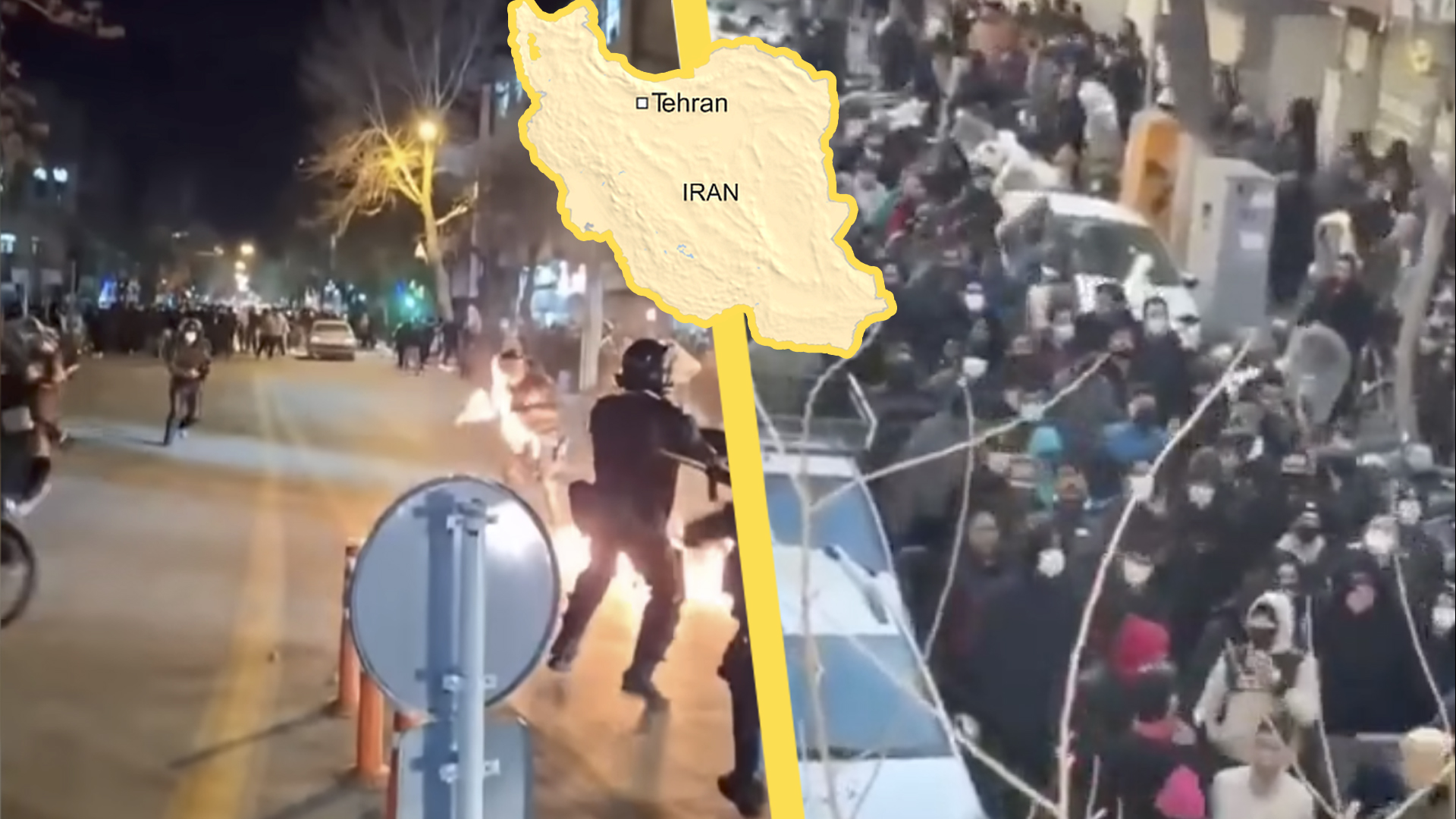
Since late December 2025, Iran has been shaken by widespread protests that have quickly evolved from economic demands to broader political criticism of the regime’s leadership. The protests began in Tehran’s bazaar districts, where shopkeepers closed their stores in protest against a collapsing economy and a sharply falling currency, and have since spread to multiple provinces and social groups across the country.
The waves of protest were triggered after the Iranian rial lost a record amount of value against the US dollar at the end of December 2025, which intensified inflation and drove up prices of food and basic goods. The economic situation, with already high inflation and a weak currency, prompted many small business owners and bazaar merchants to close their shops on December 28, which became the starting point for the current protests.
Initially, the demonstrations focused on economic demands, such as stabilizing the exchange rate, lowering prices, and mitigating the effects of inflation, but they have rapidly broadened both geographically and politically.
Latest Developments
In recent days, the protests have continued to spread across large parts of Iran, with clashes between demonstrators and security forces in many cities. The events have been reported as the most extensive protests since 2022, both in terms of participants and the number of affected regions.
At least 10 people have been killed in connection with the protests, according to reports from both rights groups and news agencies, and over a hundred have been arrested in several provinces. At the same time, the protests have spread to more than 100 locations in at least 22 of Iran’s 31 provinces.
Security forces have used tear gas and, at times, live ammunition in attempts to disperse demonstrators, while protesters chant slogans that criticize the country’s system and leadership.
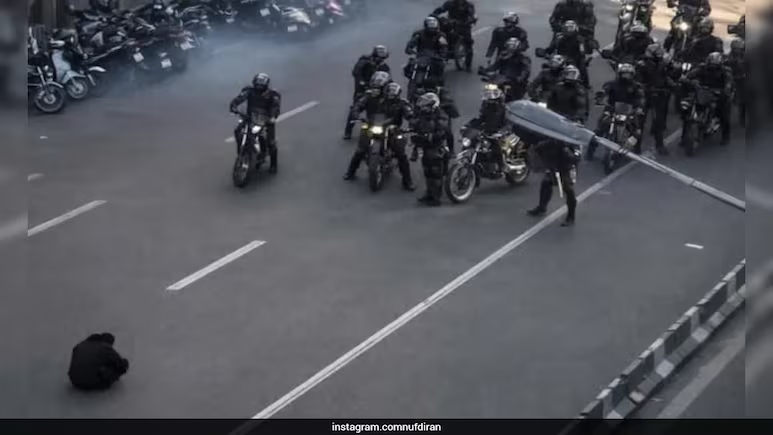
A viral photo and video of a lone protester blocking security forces in Tehran is now being compared to the iconic “Tank Man” photo from China, which has become a symbol of resistance on social media.
International Reactions
Internationally, the protests have also drawn reactions: US President Donald Trump has warned that the US is “locked and loaded” to protect demonstrators if they are attacked, while Iranian officials have accused the US of interfering in the country’s internal affairs.
At the same time, Iranian authorities have expressed a willingness to engage in dialogue with protest leaders and have implemented changes in economic leadership, including appointing a new chief of the central bank in an effort to calm the market.
Analysts describe the ongoing protests as an expression of deeper and longer-standing systemic issues in Iran, rather than just a spontaneous reaction to the currency’s fall. According to several observers, it is noteworthy that the discontent now involves significantly more segments of society than before, with not only bazaar merchants and small business owners participating, but also university students and other parts of the middle class. The broad participation is seen as a sign that frustration is deeply rooted in society and not limited to a single sector, according to analyses summarized by Omni.
At the same time, several analysts emphasize that the protests lack a clear leader or cohesive opposition front. Unlike in some previous waves of protest, there is currently no single person or organization that clearly leads the movement. According to analysts quoted by The Jerusalem Post, this makes a rapid regime change less likely, but it also makes it more difficult for authorities to suppress the movement by arresting or neutralizing individual leaders.