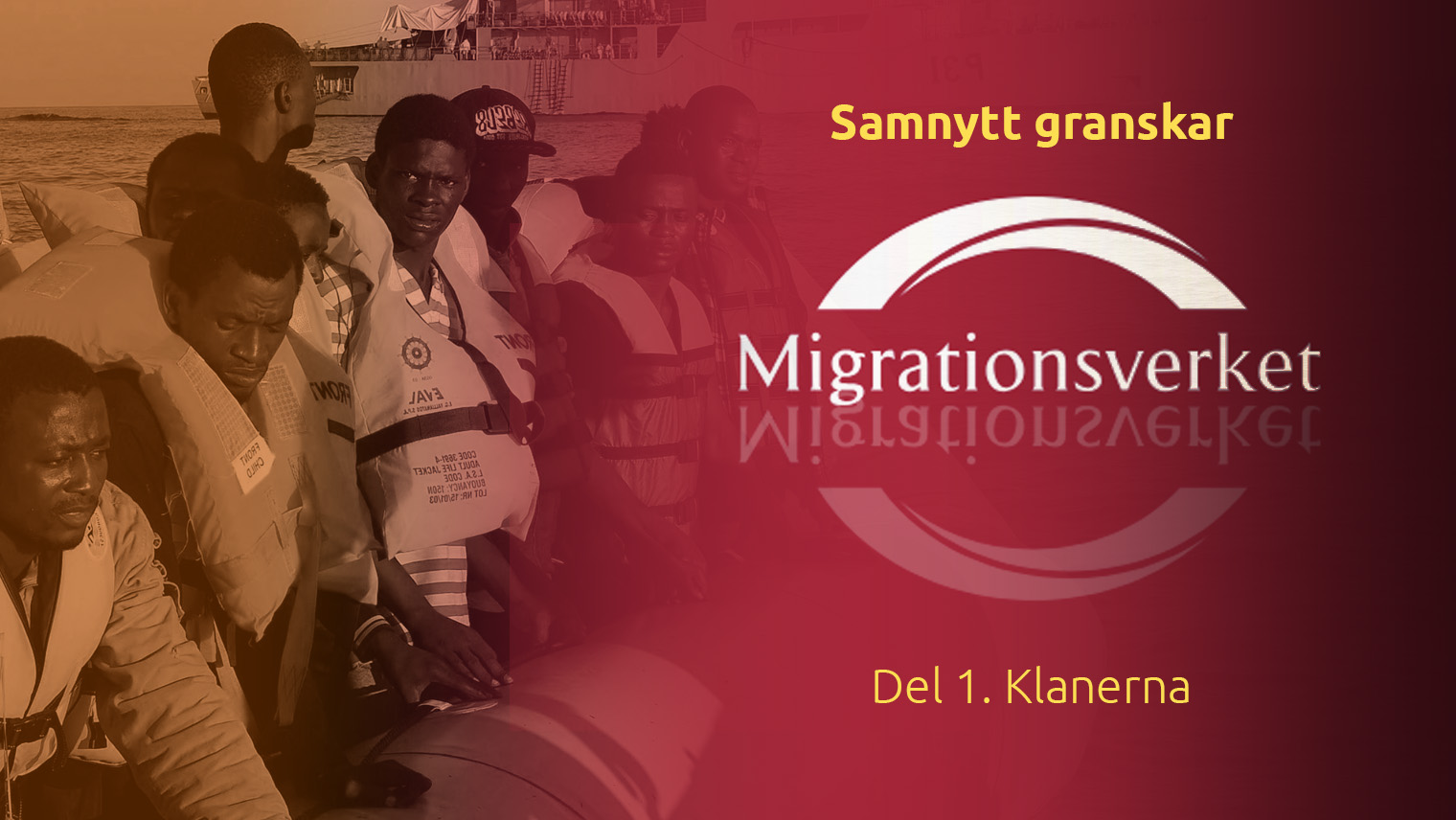
What does the Migration Agency look like on the inside – behind policy documents, value statements, and political promises? Sources who have worked within the agency for several decades describe to Samnytt an everyday life shaped by language affiliations, clan loyalties, and fear of speaking out. The majority of staff have a non-Swedish background. These revelations raise serious questions about legal certainty, leadership, and the state’s control over one of its most powerful authorities—an authority that in the end controls, or fails to control, mass immigration to Sweden. According to Samnytt’s source, clan mentality is now embedded in the agency’s very walls.
The Migration Agency is one of Sweden’s most central and at the same time most controversial authorities. This is where decisions are made about asylum, residency, work permits, and citizenship—decisions that in practice decide who may stay in the country and under what conditions. The agency operates at the intersection of politics, law, and administration, where legislation, EU law, and political signals meet the practicalities of day-to-day case management.
This makes the Migration Agency particularly sensitive to both external pressures and internal shortcomings, while the consequences of poor decisions can be far-reaching, both for individuals and for society as a whole.
It’s not just linguistically that this has an effect—that people don’t understand each other or what is being said—it also means that different groups are formed within the agency, clans who work to bring in their own clan members or relatives from their home countries. They have imported Middle Eastern clan mentality into the agency.
Samnytt’s source at the Migration Agency
The autumn of 2015 was a watershed moment. During the refugee crisis, the Migration Agency received more migrants than the system was designed for, and the agency itself sounded the alarm that it was no longer possible to arrange accommodations.
Samnytt’s source describes the period as chaotic, marked by improvisation and lack of oversight. According to the source, there were already then employees who openly questioned the work at the agency. A telling example is shared of one of the Middle Eastern women working at the agency at the time, who did not wear a veil, saying openly: “What are you doing?”
The crisis exposed structural weaknesses that still shape the agency’s operations—lack of control and improvised solutions. It was also during this period that the Migration Agency received a more politicized role, where signals about humanity, volume, and “showing responsibility” were often felt to be driving factors guiding the agency.
During this period, Dan Eliasson had already left a clear mark on the Migration Agency. His time as Director General coincided with a significant expansion of the authority and with a leadership culture that critics described as politicized and value-driven. When Anders Danielsson took over, the phrase “Let Anders be Anders” became something of a summary of that era.
READ ALSO: Anders Danielsson: Regime-critical opinions can be likened to terrorism
Currently, the majority of staff have a non-Swedish background. Many do not even have Swedish citizenship. And they speak their own language within their groups.
Samnytt’s source at the Migration Agency
This came to represent a person-centered leadership at a time when migration volumes increased dramatically, but also an agency culture where objections to direction and priorities were perceived as disloyal.
READ ALSO: REPORT: Dan Eliasson’s leverage over the Social Democrats makes him impossible to fire
For many, this became a sign of how the line between objective administration and political stance was gradually blurred, while the Migration Agency grew rapidly—both in number of employees and organizational complexity.
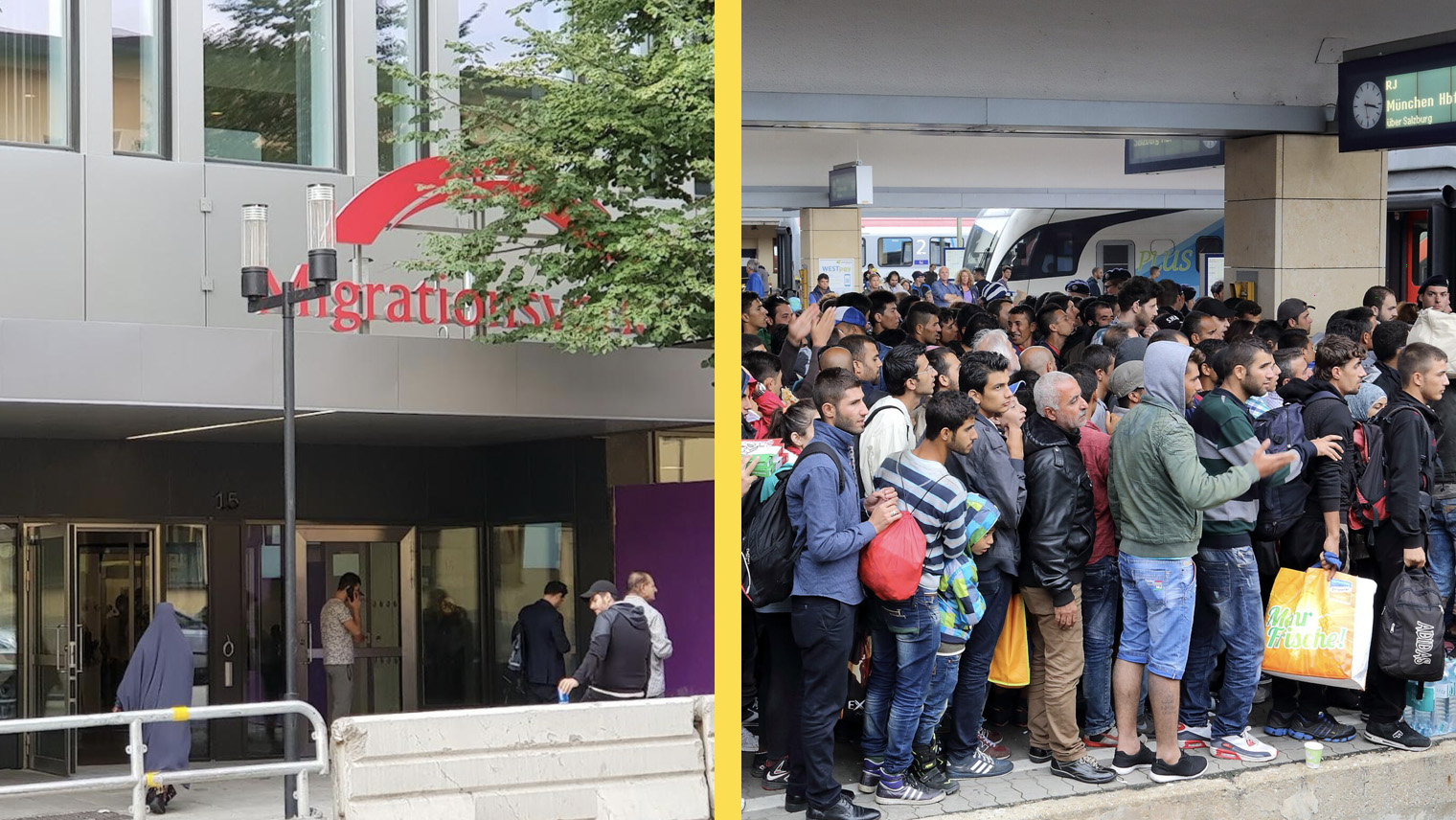
The years after the crisis have been marked by recurring scrutiny, criticism from the Parliamentary Ombudsman, and reports about long processing times, especially in citizenship matters. Samnytt will return to this topic.
READ ALSO: New criticism of the Migration Agency – cases handled arbitrarily
Questions about legal certainty, internal control, and loyalty to the agency’s mission have been raised repeatedly. At the same time, both external reviewers and internal voices testify to an agency that has struggled to return to a stable normal state. Against this backdrop, new information now raises questions about how the Migration Agency really works from the inside—and what forces actually influence its decisions.
Decisions about Sweden’s future are made in an environment where foreign loyalties and clan affiliation are decisive
Samnytt meets with one of the sources we are in contact with inside the Migration Agency. This person has worked in many different roles in the agency over several decades and is still employed there. We start by asking about the staff and workplace in general.
– At present, there are about 6,000 employees; we work in open-plan offices, so you can choose your own place to sit.
How does that affect the work?
– It has quite a big effect because groups choose to sit together with those who speak their own language. Kurds generally sit with other Kurds—even though there are different clans among Kurds; Somalis sit with other Somalis, and Syrians with other Syrians, and so on. Our source continues:
– What has the greatest impact is that everyone speaks their own language, so people don’t understand what is being said between groups or colleagues.
READ ALSO: Brå: The whole society infiltrated by criminal clans
Isn’t the idea that people should speak Swedish at the authority?
– Yes, such initiatives have existed before, but they have been abandoned. Currently, the majority of staff are from non-Swedish backgrounds. Many do not even have Swedish citizenship. And people speak their own languages within their groups. Our source continues:
– It’s not just linguistically that this has an effect—that people don’t understand each other or what is being said—it also means that different groups are formed within the agency. Clans engage in efforts to get their own clan members or relatives from their home countries into Sweden. They have imported the Middle Eastern clan mentality into the agency.
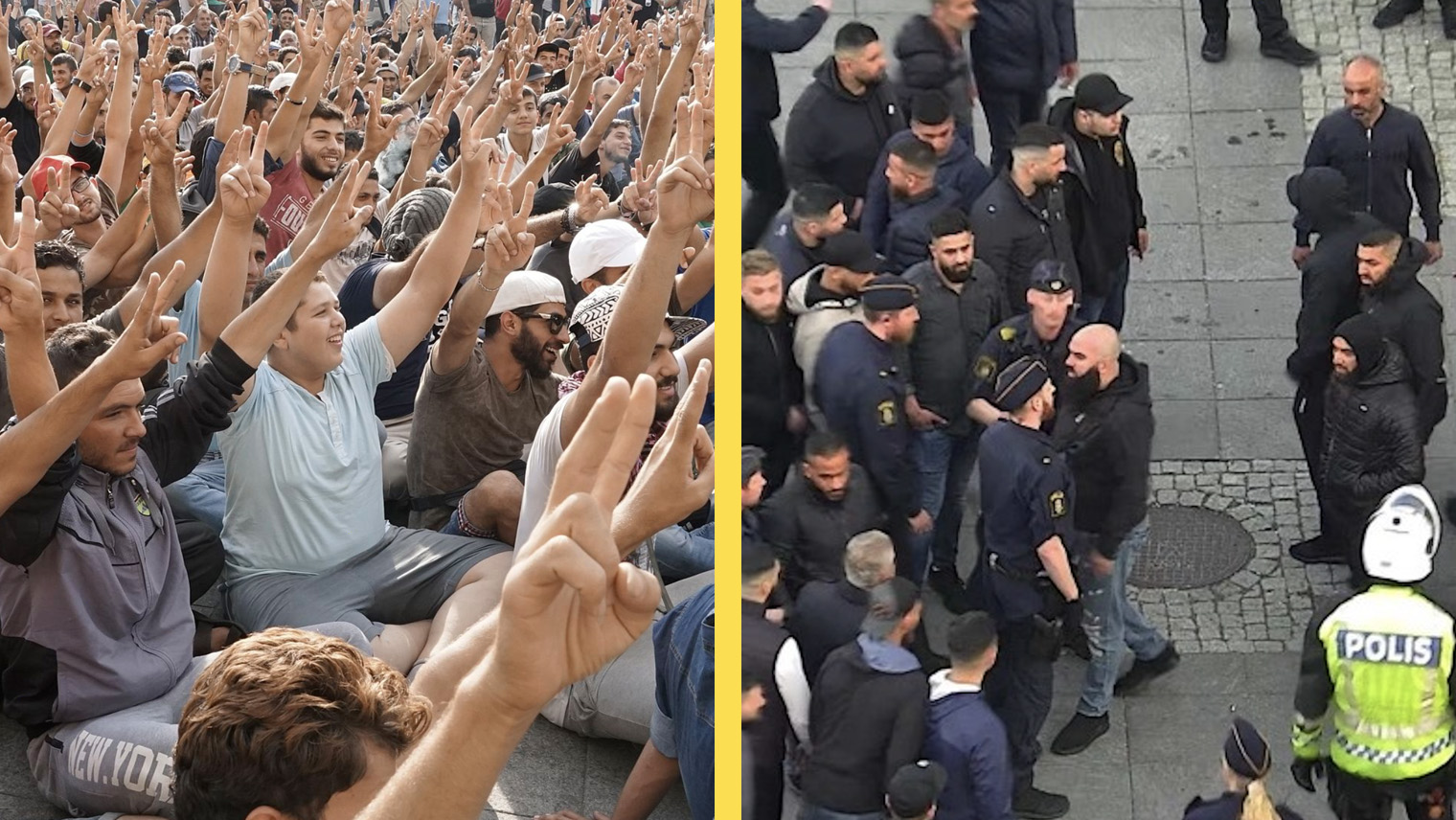
One third Muslims and a minority of Swedes
Is there a difference between Muslims and non-Muslims?
– Yes, currently about 35 percent of employees are Muslim. Many may have been moderate Muslims before, but after October 7, more and more Muslim women began wearing hijab.
So you’re saying more Muslim women working at the Migration Agency started wearing the veil after Hamas’s terror attack and mass murder of Jewish civilians on October 7, 2023?
– Yes, there was a marked increase.
Samnytt’s source describes how the change after October 7 was clear, and how songs about “from the river to the sea” could be heard from the break room at the Migration Agency. “From the river to the sea” means supporting the erasure of Israel from the map and thus all Jews from the region.
READ ALSO: Multicultural chaos at the Migration Agency – urged to convert to Islam
Our source describes how a pronounced clan logic has gradually taken hold inside the Migration Agency. According to the source, it is not only about informal loyalties, but about systematic behavior where employees with strong clan ties actively work to strengthen their clan’s position in Sweden.
This happens by facilitating residence permits, work permits, or other decisions that allow relatives and clan members to settle in the country.
The source further says this is no longer something happening behind closed doors. On the contrary, the behavior has become so normalized that it happens openly, without fear of internal consequences. Colleagues are expected to understand, accept—or remain silent.
Shut down the entire agency. It cannot be changed. If the name is changed or the responsibility is moved to other authorities, the same people will follow. It will be the same all over again. If you want change, you have to take a completely new approach, with new people.
Samnytt’s source at the Migration Agency
According to the informant, there is a widespread belief that loyalty to one’s own clan outweighs loyalty to the agency, legislation, and the mission assigned to the Migration Agency.
The result, according to the source, is an agency culture where legal certainty is eroded from within, and decisions risk being made on the basis of kinship and group belonging rather than objective assessment.
Do you also mean that Muslims actively work to bring other Muslims to Sweden?
– Yes, broadly speaking, but that’s also how Syrians work, who are another group. They are Christians from Syria and work to bring their clan over. Muslims are also divided into many different clans and denominations, so it’s primarily clan affiliation that is decisive, but when it comes to views on Jews and Israel, they unite more. There is definitely a sense of community among Muslims.
READ ALSO: Societal shift no one voted for – concrete traces of Islamization in Sweden
What’s the leadership like within the agency?
– It has varied greatly. Right now, we have a female top manager who mostly walks around saying that everyone is doing so well. There is no actual direction.
How many Swedes work at the Migration Agency today?
– If by Swedes you mean people of Swedish origin or who simply consider themselves Swedish, they are a minority. Our source continues:
– What has become uncomfortable is that those of us who feel that things aren’t being run properly within the agency—and it’s usually Swedes—have to speak behind closed doors so no one hears.
What would happen, in your view, if you spoke out openly?
– Well, you get removed from your position, maybe placed at reception. It’s difficult to fire anyone here since the union is pretty strong, but you simply lose all influence and every chance of a career within the agency disappears.
READ ALSO: Indictment: Taxi driver from Eritrea raped customer – Migration Agency says no to deportation
Has the situation improved since the Tidö government?
– Yes, somewhat, but you can’t change a culture that has settled in. Even though there are now directives to emphasize competence and labor immigration, the “feel sorry for them” mentality remains in the rhetoric. And the clan mentality is still there.
READ ALSO: Government tightens requirements for return – Migration Agency gets new mission
“Shut down the agency”
What is your message to responsible politicians?
– Shut down the entire agency. It cannot be changed. If the name is changed or the responsibility is transferred to other agencies, the same people will move too. It’ll be the same again. If you want to change this, you have to take a completely new approach, with new people.
The information provided by Samnytt’s source is serious and fundamentally concerns the trust in one of the state’s most powerful authorities. If it’s true that loyalties, language groups, and clan ties influence work at the Migration Agency, it’s no longer about isolated irregularities but about structural problems that directly hit legal certainty. It also raises questions about how internal control, leadership, and oversight actually function—and whether policymakers have had insight into what’s really happening behind the authority’s closed doors.
Samnytt will continue to scrutinize the Migration Agency and return with more testimonies, documents, and analyses. At a time when migration policy is said to have been changed, the question remains whether the state really has control over its own administration—or if the cultures that developed during the crisis years still govern decisions, regardless of new directives and political promises.
Samnytt is reaching out to the Migration Agency for comments.
Less than 1% of our readers support us
Hundreds of thousands read Samnytt, but only 1 in 100 contribute. Help us grow and continue providing in-depth reporting and investigations.
Without your support, Samnytt does not exist.
No advertisers. No government support. Only our readers. Thanks to you, Samnytt has published over 31,000 articles challenging the mainstream narrative in Sweden.
123 083 33 50
Swish any amount
Thank you for reading and supporting Samnytt