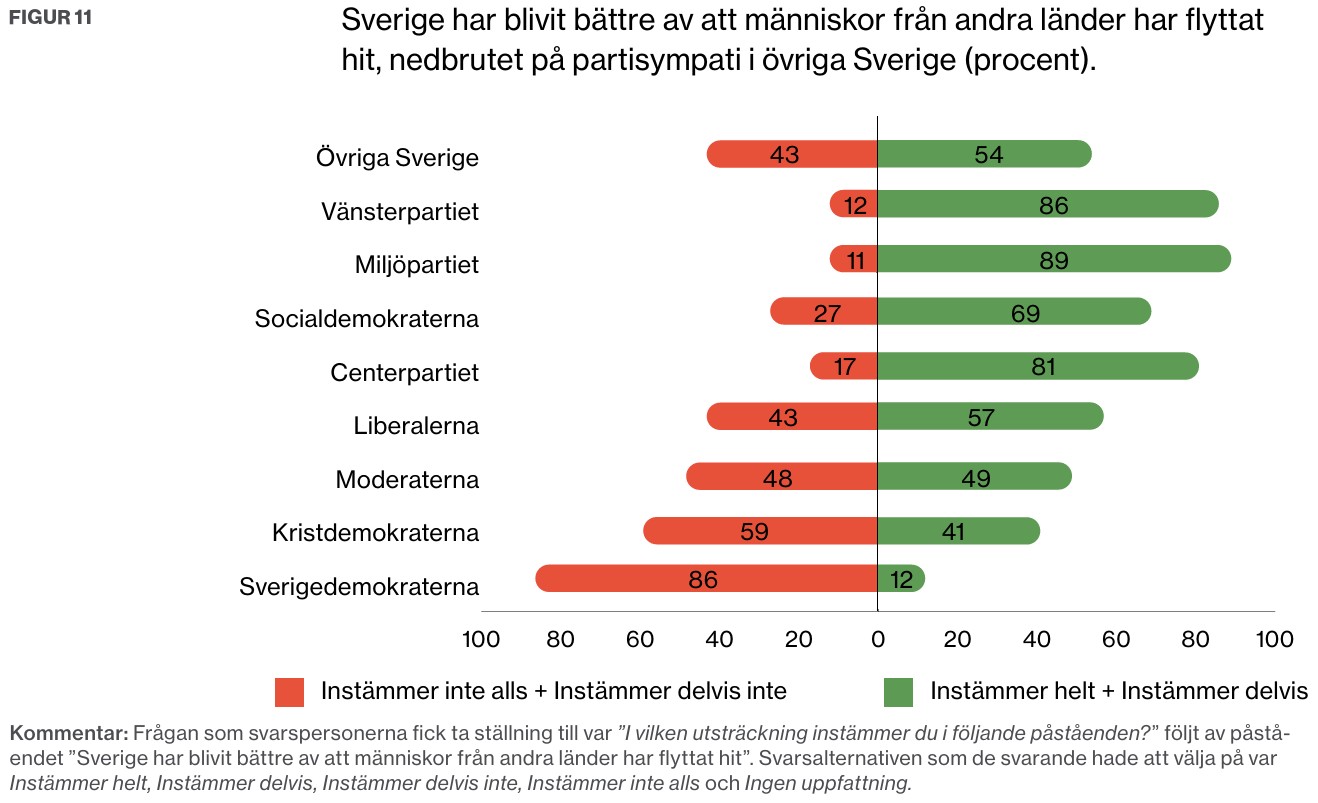
More than half of respondents, both in so-called deprived areas and elsewhere, believe that immigration has made Sweden a better country. This is one of the findings in a new survey.
On behalf of the Järvaveckan Foundation, whose goal is described as “contributing to a society where diversity is a broadly recognized strength,” Indikator Opinion surveyed the population’s attitude towards immigration and multiculturalism. The results were released in December in the study Sverigerapporten: Safety, Belonging, and Integration in Everyday Life. This was developed with support from, among others, the Jacob Wallenberg Foundation.
According to Ahmed Abdirahman, CEO and founder of the Järvaveckan Foundation, Sweden is increasingly being described as “a society characterized by irreconcilable perspectives, where culture, religion, and origin are portrayed as obstacles to community and cohesion,” something he believes “risks overshadowing what actually unites us.”
READ ALSO: Bildt: Immigration works well – crime is a trifle
“Public debate tends to get stuck on symbolic and identity issues. But our data points in another direction. We do not live in a country where people are far apart in viewpoint, but rather in a country where people exist in different realities. The divide does not run between cultures; Sweden’s real line of conflict is material and geographical. It is the everyday sense of security, economy, and housing situation that divides Sweden,” he says.
Immigration Has Enriched Sweden
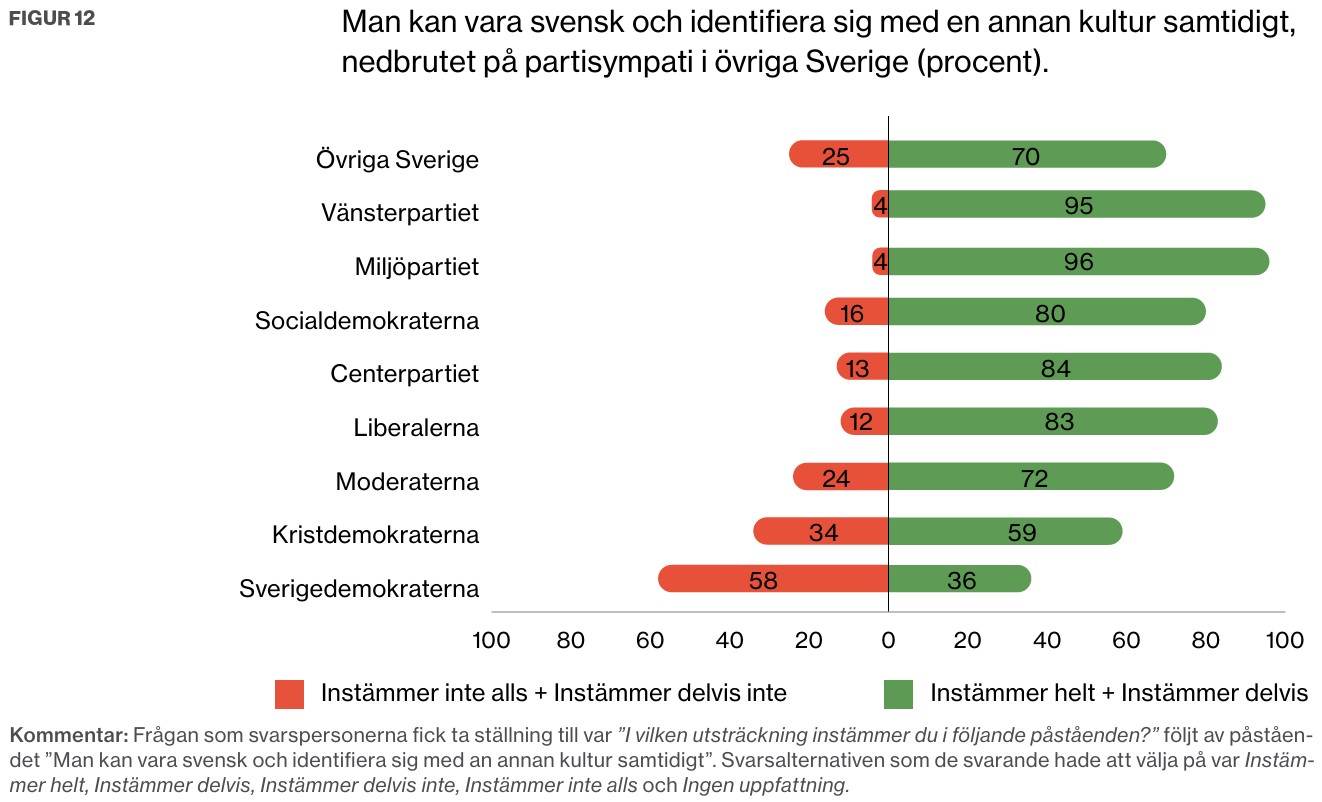
93 percent in the rest of the country and 85 percent in “deprived” areas state that they feel part of Swedish society. Seven out of ten in both groups also believe that it is possible to be Swedish while also identifying with another culture.
At the same time, there is a widespread belief among many immigrants that their presence—in other words, immigration—has made Sweden a better country, even though many of them have not experienced how Sweden was just a few decades ago. In deprived areas, 59 percent agree with this statement, and 54 percent in the rest of the country.
READ ALSO: SD: Sweden Does Not Need More Immigrants on Benefits
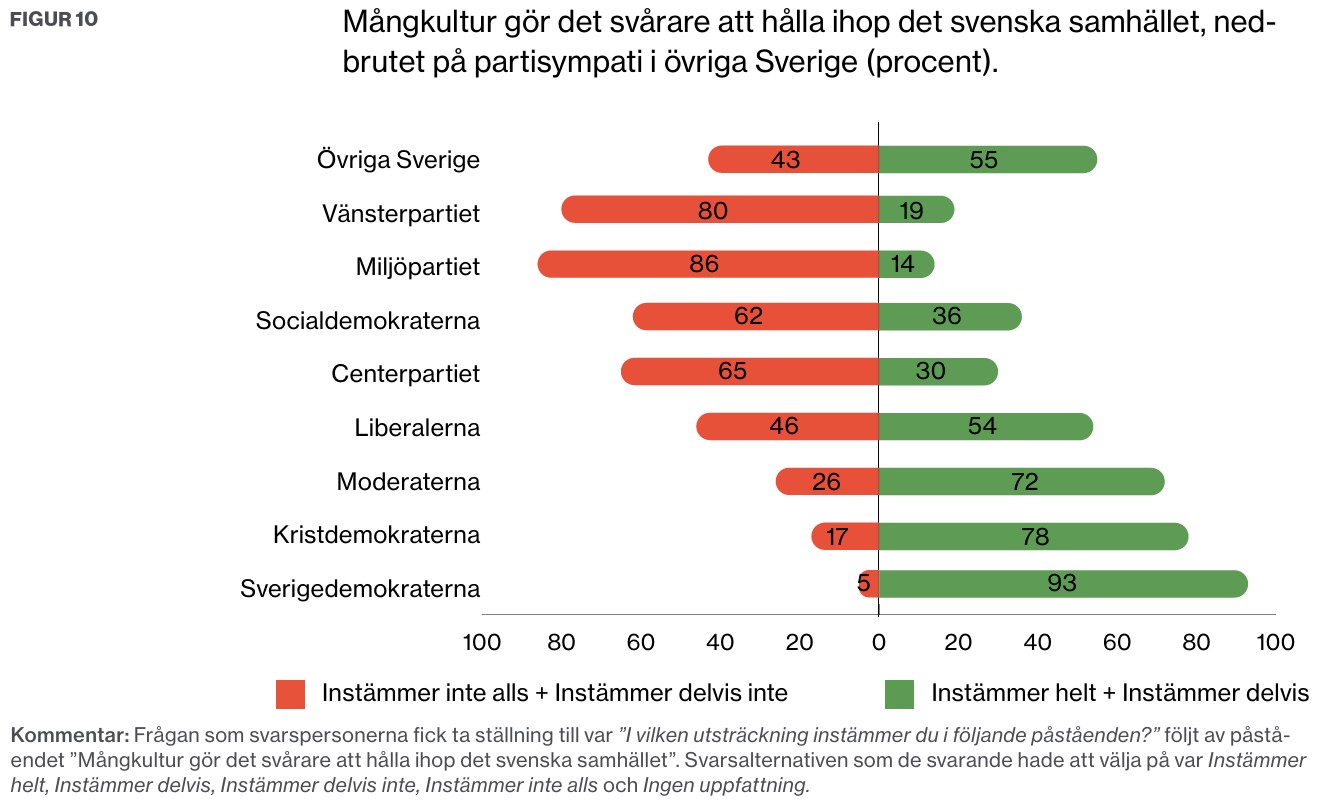
Meanwhile, 43 percent of people living in deprived areas believe that multiculturalism makes it harder to maintain the cohesion of Swedish society, compared to 55 percent in the rest of Sweden. In deprived areas, people with foreign backgrounds are less likely than those with Swedish backgrounds to see multiculturalism as an obstacle to social cohesion.
Regarding the claim that Sweden has become better because people from other countries have moved here, there is a marked difference between young residents with foreign backgrounds in deprived areas and young residents in the rest of Sweden. Nearly seven out of ten young people with foreign backgrounds in deprived areas agree with this statement, while the corresponding figure in the rest of Sweden is just over five out of ten.

The proportion of people who would not mind having a prime minister with a foreign background is 64 percent in deprived areas and 60 percent in the rest of Sweden.
When it comes to having a neighbor of a different cultural or religious background, the proportions are about the same—87 percent and 82 percent, respectively.
Living Area
The differences become much greater when it comes to living area. While 87 percent in the rest of Sweden are satisfied with where they live and only six percent want to move, the corresponding figures for deprived areas are 61 and 26 percent, respectively.
The sense of insecurity in the evenings in one’s residential area is greater in deprived areas—where fears of shootings or bomb attacks are also twice as high.
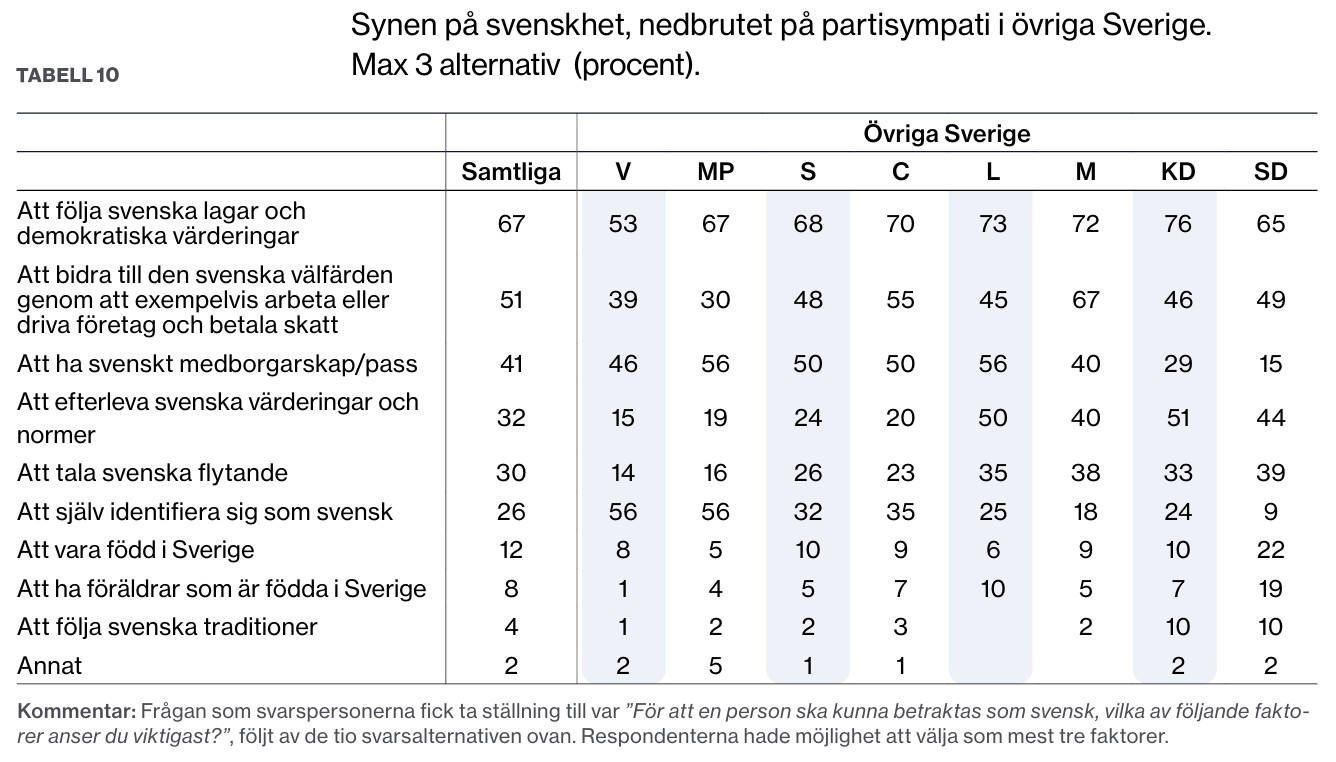
Respondents were also asked what factors they see as most important for a person to be considered Swedish. Here, the most important factor was to follow Swedish laws and democratic values. However, more people in the rest of Sweden chose this option: 67 percent compared to 53 percent among residents in deprived areas.

Different Answers Depending on Party Affiliation
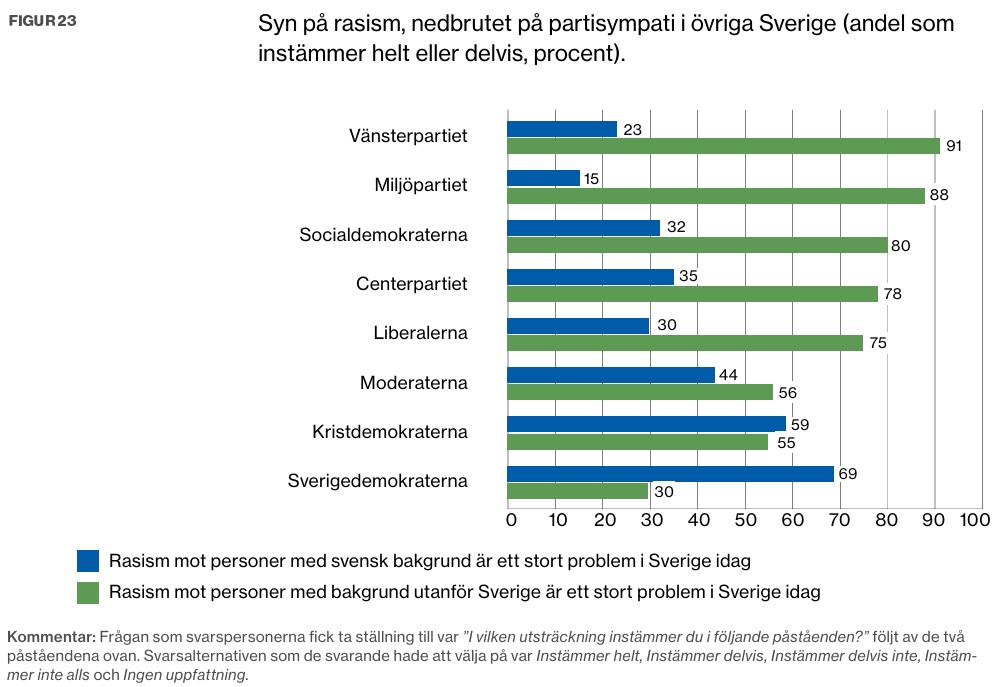
Perhaps unsurprisingly, there is a big difference in how people view issues like multiculturalism depending on which party they vote for: