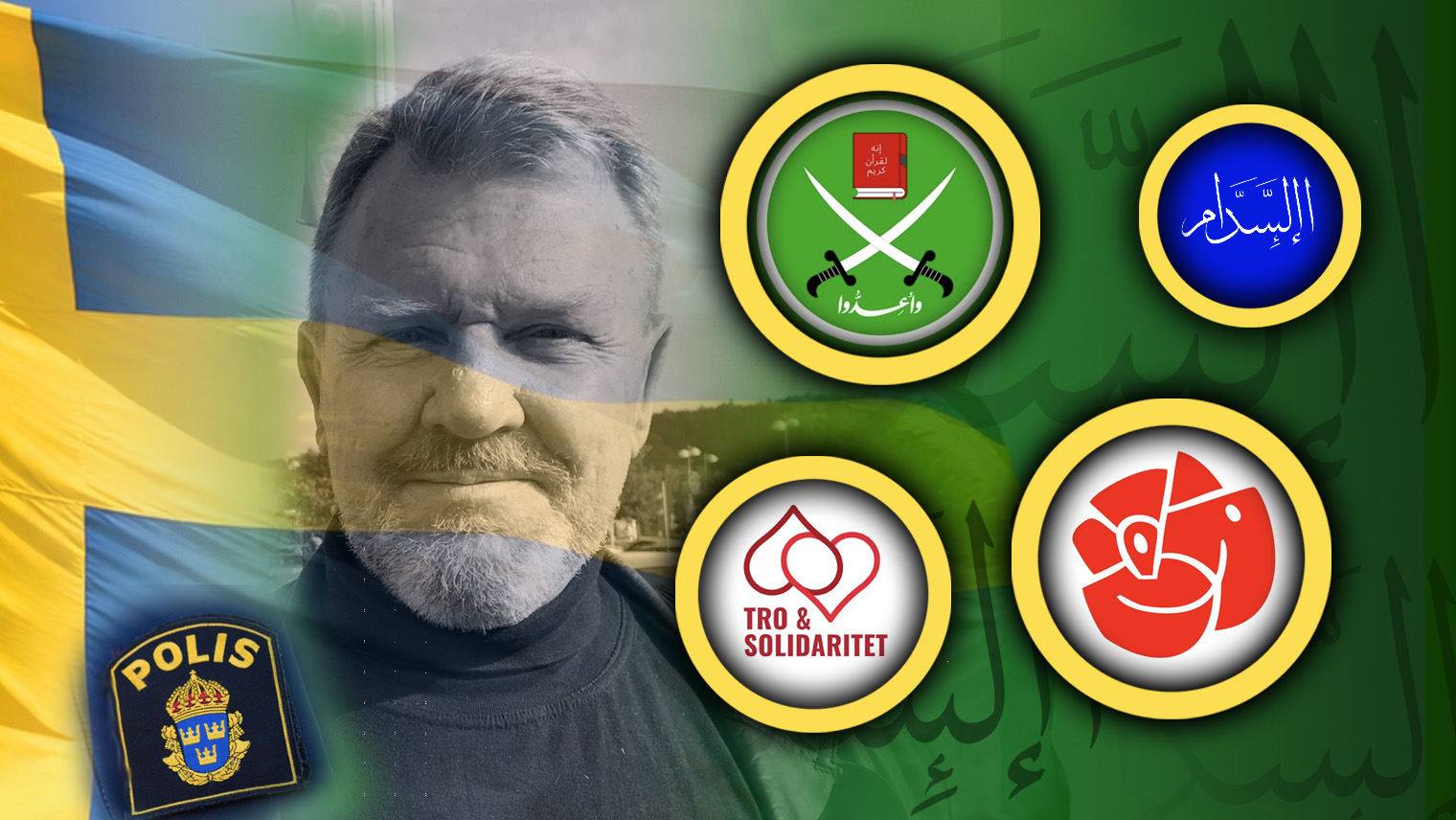
For three decades, Islamist networks, clan structures, and parallel power hierarchies have emerged in large parts of Sweden—often without visible opposition from the state. What is today described as urgent societal problems, according to police officer Ulf Boström, didn’t arise overnight but grew step by step, in parallel with the withdrawal of authorities and an increasingly cautious political climate. The radicalization, he argues, is the result of long-term absence of government agencies, political reluctance to address the issues, and a purposeful organization that has largely been allowed to occur openly, yet society has chosen not to see or take it seriously.
Ulf Boström is a police officer with long experience working in socially vulnerable areas, and for many years has operated at the intersection between crime prevention, integration, and proactive work. He is often described as an integration police officer and has repeatedly participated in public debates concerning parallel societies, radicalization, clan structures, and Islamist environments in Sweden, especially with a focus on Gothenburg.
Based on practical police work, Boström has criticized both the political ‘taboo’ and the state’s withdrawal from local communities, and he has long warned about the consequences of weak state presence, ideological infiltration, and underestimating how religious extremism and organized crime can interact.
When describing developments in Sweden, he rarely uses words like “new” or “surprising”. On the contrary, he constantly returns to the same point—the issues now discussed as urgent have developed over decades—often in full daylight, without political or institutional preparedness to address the consequences.
There are clear links into the Social Democrats, partly through what was previously called the Christian Brotherhood Movement of the Social Democrats, now called Faith and Solidarity.
Ulf Boström, police, Gothenburg, on the Muslim Brotherhood in Sweden
Radicalization, parallel societies, and Islamist networks are, according to Boström, not separate phenomena. They are parts of the same slow process, where the absence of the state in certain areas has coincided with ideological organization, social control, and a gradual shift of power from democratic institutions to parallel power structures.
1991 and Beyond – The Construction of Islamist Infrastructures in Sweden
To understand today’s situation, Boström states that you have to go back at least thirty years, to the big refugee wave around 1991. Sweden then became one of Europe’s largest recipient countries for people from the Balkans, North Africa, the Middle East, and parts of Sub-Saharan Africa. The reasons were many: war, dictatorships, economic hardship—but also political and religious conflicts.
People brought with them experiences, structures, and in some cases, organized movements. According to Boström, this was also the period when the Muslim Brotherhood began to systematically establish itself in Europe, including Sweden. This didn’t happen through open confrontations, but through associations, religious institutions, and long-term organizational work.
— For someone who is religious, religion is central. Just as Swedish emigrants built churches in the USA, the mosque became a natural gathering point here, he says.
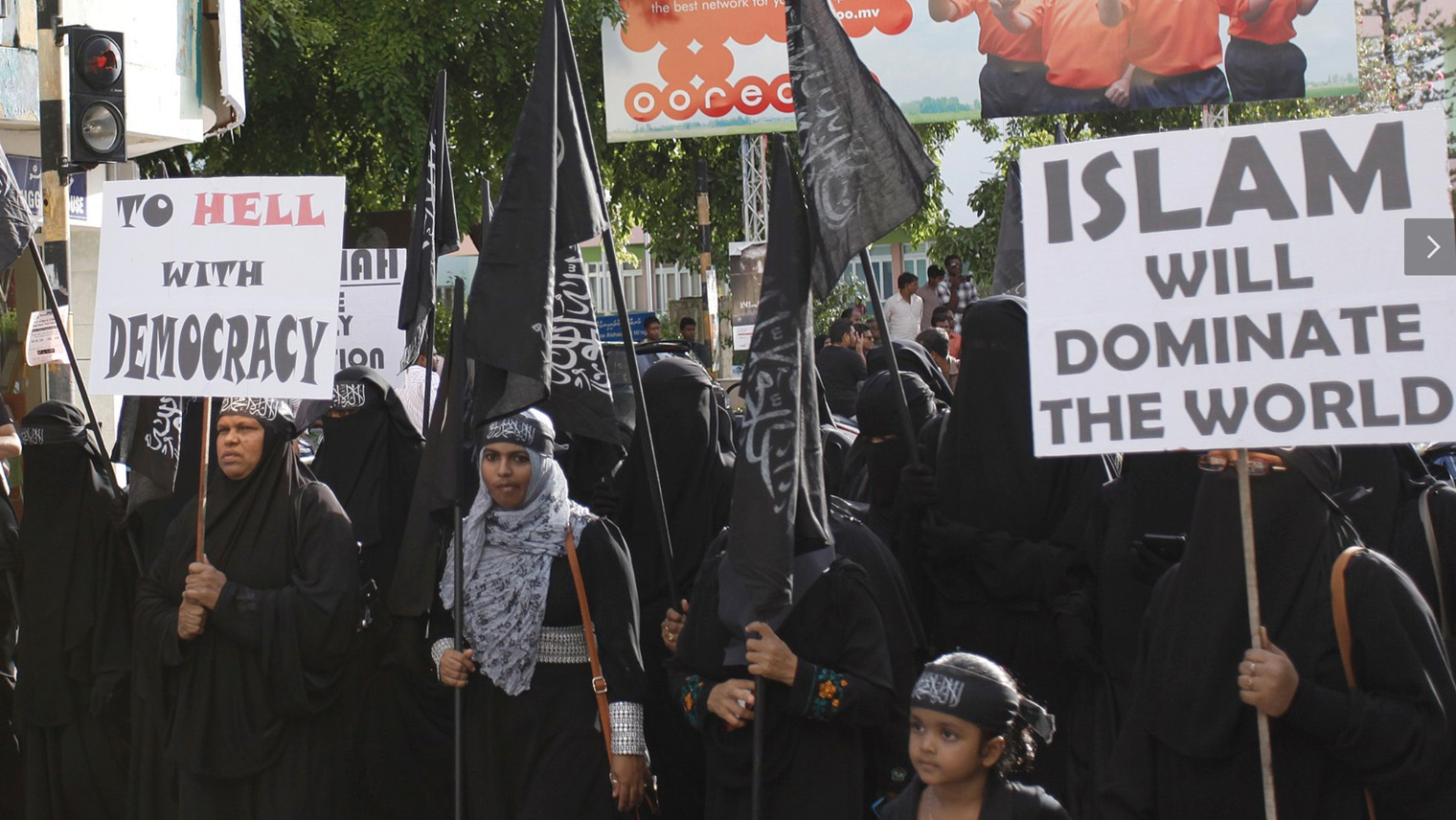
This in itself, he argues, is not remarkable. The problem arises when religious institutions simultaneously serve as political hubs. According to Boström, the Muslim Brotherhood has for three decades consistently worked to take control over mosques, study associations, schools, and educational environments.
Criminals who come here and commit crimes show that they do not want to live in a democracy. They should be sent back. For individuals with dual citizenship, Sweden must be able to say that you are not wanted here.
Ulf Boström, police, Gothenburg
The focus was not on convincing the first generation of immigrants—but rather the children.
Qur’an schools, Islamic charter schools, and preschools became central tools. Parents, who themselves had an everyday and often less ideological relationship to religion, placed their children in activities where Islam was presented in a stricter, more politicized form. The result, according to Boström, was that children sometimes returned home and questioned their parents—their lifestyle, their interpretation of religion, their adaptation to Swedish society.
— This created conflicts within families. And it is the second generation that has become most radicalized, not the first.
In parallel, something else happened: the local state presence disappeared. During the same period, neighborhood police, local police stations, and everyday contact with authorities were dismantled. The result was that Swedish law and Swedish democracy were no longer present in people’s everyday lives in many residential areas.
On the question of how the Muslim Brotherhood has infiltrated Sweden and Swedish authorities and institutions, he is clear that it is first and foremost about the Social Democratic Party.
READ ALSO: Imam held prayer for slain Hamas leader – linked to the Social Democrats
— There are clear links into Social Democracy, for example through what was previously known as the Christian Brotherhood Movement of the Social Democrats and what is now called Faith and Solidarity. He continues:
— Since 1991, the Muslim Brotherhood has strengthened its position every year. Roughly speaking, I would say they control over 80 percent of the mosques in Sweden today.
The Muslim Brotherhood is banned or classified as a terrorist organization in several countries in the Middle East, including Egypt (since 2013, after Morsi’s fall), Saudi Arabia, the United Arab Emirates, and Bahrain.
READ ALSO: Trump labels the Muslim Brotherhood as a terrorist organization
Islam, Clans, Honor, and Parallel Power Structures
During the interview, Boström repeatedly returns to clan structures, but he makes a clear distinction: clans are not inherently a religious phenomenon. They exist in Christian, Muslim, and other contexts and are rooted in honor culture and patriarchal forms of society. The difference, he argues, is what happens when clan logic is combined with religious ideology and political Islam.
— In clan structures there is an internal class system. The patriarchs at the top, the failures at the bottom, and the rich and educated in between. In home countries, the clan is secured by having judges, police officers, prosecutors, and politicians on your side. When you arrive in Sweden, those positions are missing—so it is rational to try to build them here.
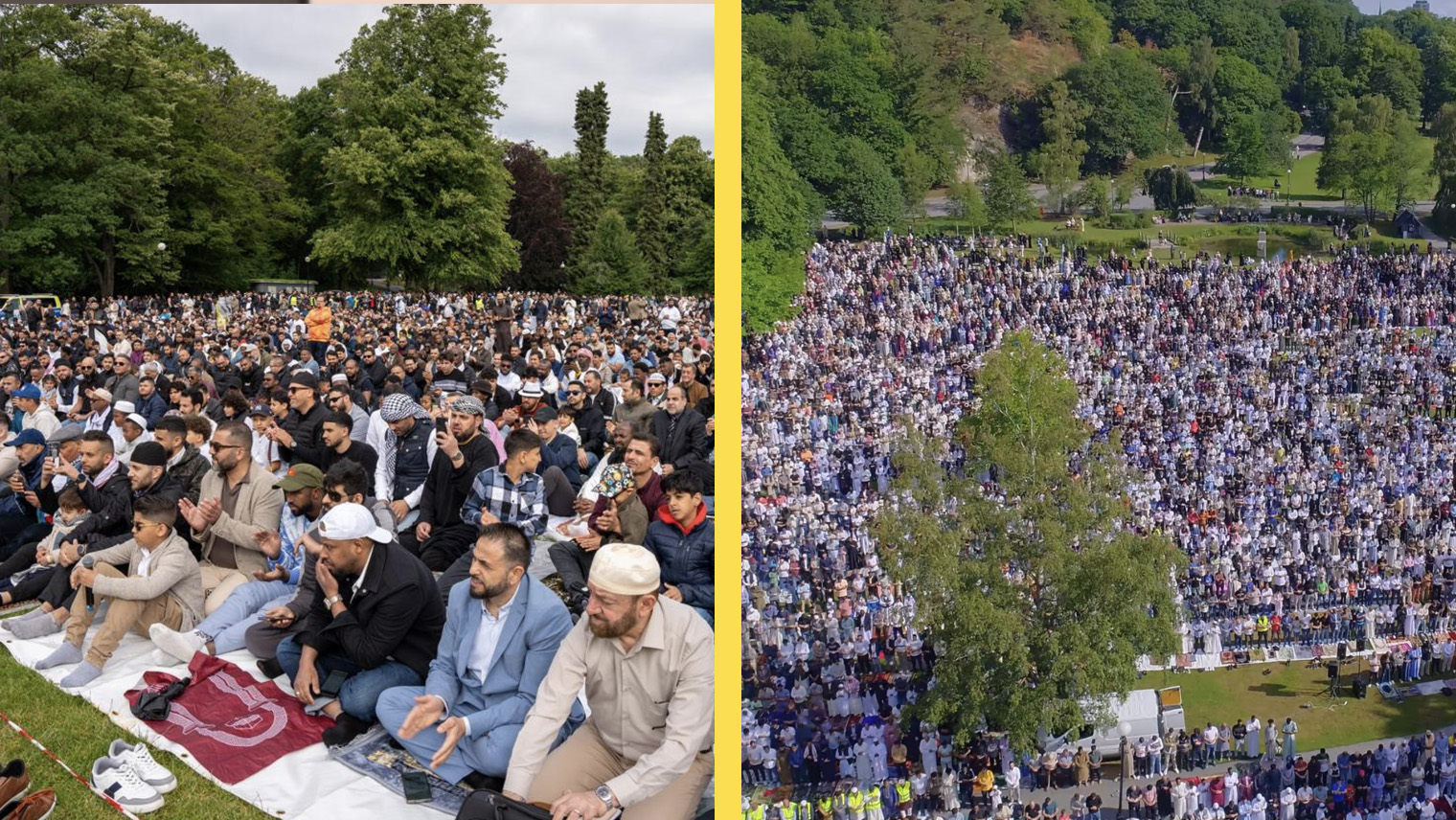
This happens, according to Boström, through education, political involvement, associations, and sometimes through a culture of silence. Women and children are kept out of the criminal or political core and are presented with a tailored image: that society is hostile, that the police persecute “us,” but not why.
When clan logic is combined with religious supremacy, both are reinforced. Honor culture provides social control; religion provides moral legitimacy. In such environments, Boström argues, the step to criminality or violent extremism becomes shorter—especially for young men who are already on the margins.
Are criminal clans and Islamist networks separate phenomena, or do they reinforce each other?
— Criminals of Muslim background can also see crimes against non-believers as “God-pleasing deeds.” He continues:
— Many who fail at criminality can be drawn into mosque environments where recruiters ask questions like, do you drink alcohol, do you do drugs, do you commit crimes—and against whom? For violent elements and certain branches, criminal skills can become “useful.”
What worries Boström the most isn’t individual attacks or spectacular cases, but the everyday radicalization. The kind that happens in schools, at universities, in organizations, and in social environments where the language of democracy is used outwardly, but another language is spoken internally.
He describes this as a “Janus face”: publicly talking about democracy, inclusion, and rights. Internally, a worldview is transmitted where sharia, religious loyalty, and the collective are prioritized over the individual’s freedoms and rights.
For Boström, Sweden is not an abstract system, but a home. And a home, he says, must be defended—not with big words, but with presence, consistency, and the courage to see developments as they really are.
This applies, he believes, not just to mosques but also to academic environments. In the interview, we discuss how young people from the Middle East and North Africa are sometimes radicalized during their studies in Europe—a phenomenon that has led some Arab countries today to restrict scholarships to Western universities.
— It’s all connected, Boström comments.
Many parties talk about repatriation and repatriation subsidies—what is your view on this?
— Criminals who come here and commit crimes show that they do not want to live in a democracy. They should be sent back.
READ ALSO: Gothenburg Mosque refuses to attend the Migration Agency’s conference on repatriation
He believes that everyone who is not a Swedish citizen and who commits a crime with at least one year in the sentencing scale should not be allowed to stay.
— For people with dual citizenship, Sweden must be able to say that you are not wanted here.
And the IS murderers from Gothenburg were not “IS travelers.” They were jihadists who knew exactly where they were going.
Ulf Boström, police, Gothenburg
So they lose their Swedish citizenship?
— Yes, they lose it here in Sweden. He goes on to describe the costs for the immigration Sweden has had:
— We’re talking about enormous societal costs, a loss of business for Sweden of about a hundred billion per year, the criminal economy is around 150 billion per year. The cost per professional criminal over 15 years is about 30 million, in serious cases up to 100 million.
He believes that without a course correction “it will go to hell,” segregation increases—and it must be broken by re-democratizing areas—with police presence and clear norms.
“Swedish Law Must Be Visible—Otherwise Something Else Takes Over”
When asked about the future, Boström is pessimistic—but not fatalistic. He rejects the idea that the threat disappeared when IS lost its territory in Syria.
READ ALSO: Shocking numbers: 4200% increase in mosques in Sweden—in less than 25 years
— Those who think it can never happen again are burying their heads in the sand. New movements are already on the way. Al-Shabaab, various al-Qaeda branches, Boko Haram—they haven’t disappeared, they have simply transformed. He adds:
— And the IS murderers from Gothenburg were not “IS travelers.” They were jihadists who knew exactly where they were going.
If there is no course correction, then these clans or sects will establish their own, parallel societies in Sweden, with their own legal systems, courts, and police.
Sameh Egyptson, Islamic scholar
Boström says that jihadists’ presence is still clearly felt in Gothenburg and warns that Sweden still hasn’t woken up.
— I recently went to a youth center in Hammarkullen and met a returnee from al-Shabaab who was employed by the hour there.
READ ALSO: The giant mosque in Skärholmen: Secret funding, Islamist ties—and concern among residents
At the same time, he believes the state still has the tools. The problem is not a lack of legislation, but a lack of presence and consistency. His most urgent requirement is concrete: bring back neighborhood police, local police stations, and clear authority presence in residential areas. His criticism of the police organization is sharp.
— Swedish law must be visible in everyday life. Otherwise, the vacuum will be filled by something else. He elaborates:
— Unlawful threats are a theft of freedom of speech. Violence is a theft of people’s rights. Those who systematically violate others’ freedoms and rights have forfeited their right to stay in a democratic society.
For Boström, Sweden is not an abstract system, but a home. And a home, he says, must be defended—not with big words, but with presence, consistency, and the courage to perceive developments as they really are.
Egyptson: “The Risk Is Their Own Courts and Police”
Sameh Egyptson is a researcher and PhD in political science, specializing in political Islam, Islamist networks, and the establishment of the Muslim Brotherhood in Europe and Sweden. He has previously received attention for his research on how Islamist actors operate through associations, study circles, and political contacts in the West.
READ ALSO: Ideology before facts—Sameh Egyptson and the reckoning with Swedish Islamic research
Egyptson has also contributed to Samnytt on several previous occasions, where he has been interviewed and analyzed Islamist structures, ideological strategies, and their consequences for democratic societies.
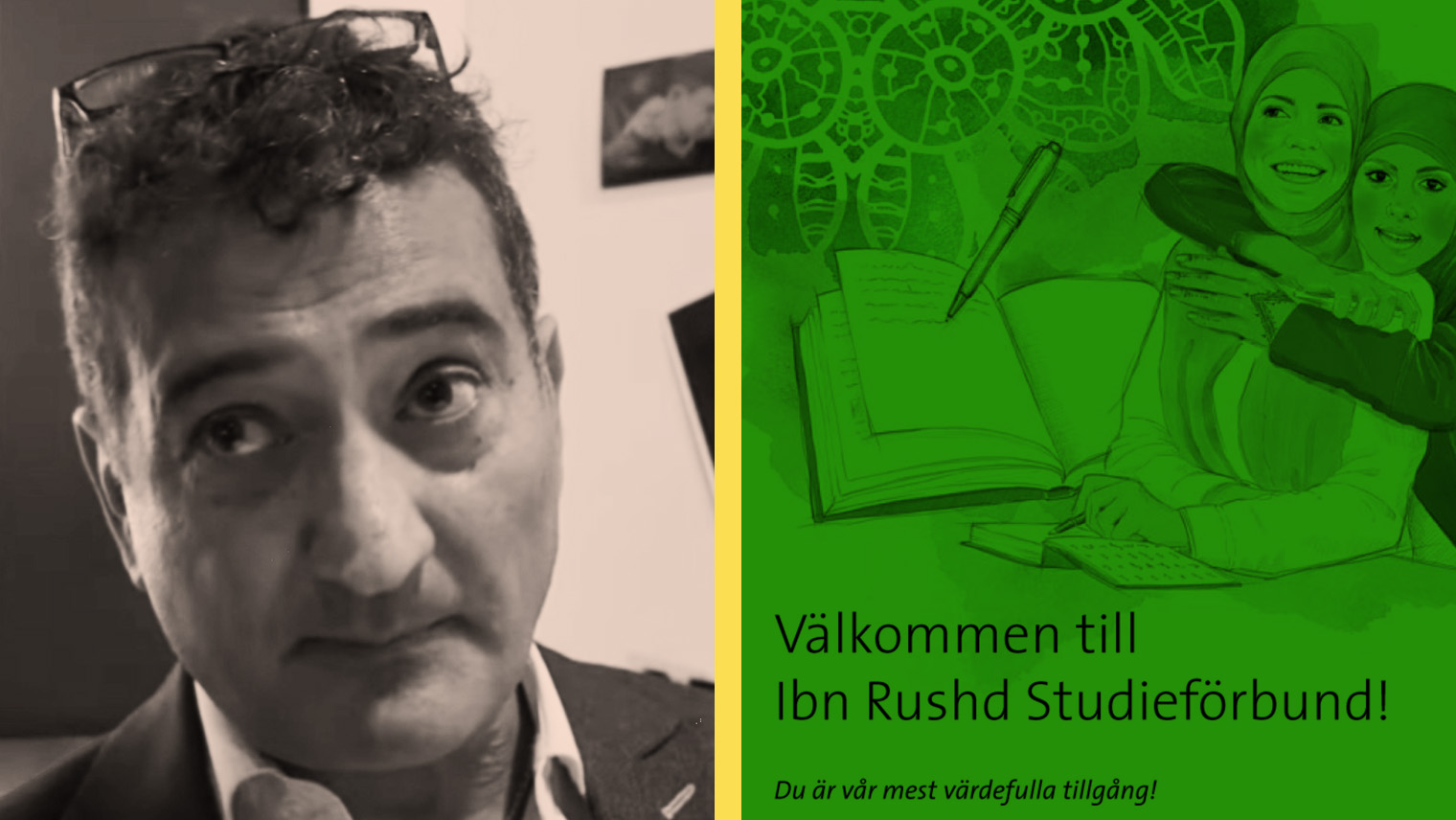
We ask him:
Ulf Boström describes that the Muslim Brotherhood has grown in Sweden over 30 years and taken over more and more mosques and institutions, do you agree with that description?
— I believe the Muslim Brotherhood is increasingly functioning as a clan in Sweden, as an alternative clan. They have major influence and control over almost all the mosques in Sweden.
READ ALSO: Demand: The Social Democrats must disclose their links to the Muslim Brotherhood
In his research and previous interviews with Samnytt, Egyptson has described how closely the rise of the Muslim Brotherhood in Sweden is tied to the Social Democrats and the party’s auxiliary group Faith and Solidarity.
If this development continues without a course correction, what do you think Sweden will look like in ten or twenty years?
— If there is no course correction, these clans or sects will establish their own, parallel societies in Sweden, with their own legal systems, courts, and police.
Egyptson notes that in Denmark it has emerged that police officers with backgrounds from the Middle East have persecuted ex-Muslims. He believes that if the problem is not taken seriously, it will become unsustainable. Regarding the situation in Sweden, he prefers not to comment at this time.
READ ALSO: Societal shift no one voted for—the concrete traces of Islamization in Sweden
Together, the testimonies of the police officer and the researcher paint a picture of a development that extends far beyond individual crimes or isolated environments. Both Ulf Boström and Sameh Egyptson describe how parallel structures have emerged over time, through interplay between ideological organization, clan logic, and insufficient state presence.
What remains to be determined is not whether these structures exist, but how society chooses to relate to them. The question is no longer whether this trend can be described—but whether it can be reversed before parallel systems become permanent.
Fewer than 1% of our readers support us
Hundreds of thousands read Samnytt, but only 1 in 100 contributes. Help us grow and continue to deliver in-depth reporting and investigations.
Without your support, Samnytt does not exist.
No advertisers. No government support. Only our readers. Thanks to you, Samnytt has published over 31,000 articles that have challenged the established narrative in Sweden.
123 083 33 50
Swish any amount
Thank you for reading and supporting Samnytt