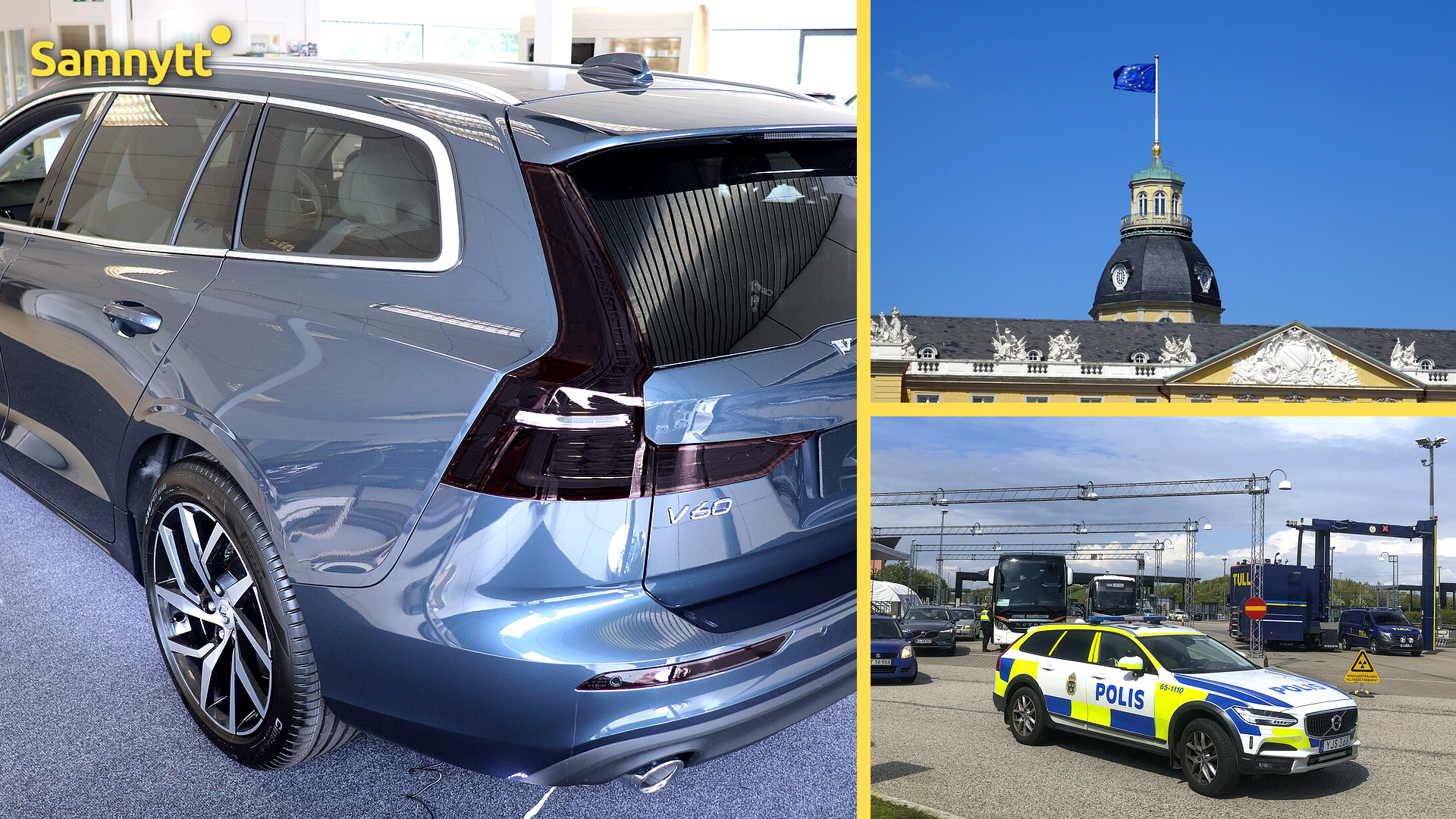
Hundreds of thousands of Swedish car owners are unknowingly driving illegally with their taillights off as autumn darkness and dusk settle on the roads. According to a survey by the Swedish National Road and Transport Research Institute, the problem is due to an EU rule on automatic daytime running lights implemented to save energy, but in Nordic weather conditions renders cars almost invisible from behind.
The automotive site Carup highlights how this technical trap catches Swedish motorists every autumn and winter. According to Swedish traffic regulations, it is forbidden to drive with taillights off during darkness, dawn, dusk, or when visibility is reduced due to rain, fog, snowfall, or road spray.
Nonetheless, field studies from the National Road and Transport Research Institute (VTI) show that a very large proportion of vehicles on Swedish roads lack illuminated rear lights when the weather changes. Björn Lidestam, a VTI researcher, notes that most drivers have no idea that their car is dark at the rear.
– They found that between 20 and 40 percent of all drivers drove with their taillights off in unsuitable weather. Moreover, it turned out that 80 percent of them didn’t know their taillights were off, or how to fix it, says Björn Lidestam to Carup.
EU Directive Sets Limit at 1,000 Lux
The reason so many newer cars drive with unlit taillights is an EU directive on so-called Daytime Running Lights (DRL), which became mandatory for new car models around 2010 and 2011 and has been broadly applied up until a few years ago.
The aim from Brussels was to reduce energy consumption and thereby fuel consumption and emissions by having the rear lights off during daytime, with only the front running lights on.
When the car’s light switch is set to the default “Auto” position, the lighting is controlled by a sensor that measures the ambient light. As long as the outdoor brightness exceeds the threshold of 1,000 lux, the system keeps both the dipped headlights and taillights off.
The problem in Nordic climates is that 1,000 lux is a very low threshold often exceeded during the day, even when there is thick fog, heavy rain, blowing snow, or gloomy twilight. The system only turns on the headlights and taillights when the sun has fully set or the car enters a tunnel.
Researcher Criticizes Energy Saving Argument
According to Björn Lidestam, the EU regulation lacks relevance for Swedish and Nordic traffic conditions, especially since modern cars are equipped with energy-efficient LED lamps whose energy consumption is negligible.
– There haven’t been any proposals for improvement, all in the name of energy saving. But that’s a hollow argument—one accident would cost more energy than what’s saved, says Björn Lidestam.
Traffic police officer Petter Magnusson agrees, noting that many car owners blindly trust the automation since the dashboard is illuminated.
– Technological development hasn’t really gone in the direction we want when it comes to traffic safety, says Petter Magnusson.
Leads to 1,200 Kronor Fine and Mark in Police Register
For a motorist stopped by the police with taillights off in fog, precipitation, or dusk, it won’t help to claim the switch was set to automatic. The driver is always personally responsible for ensuring the car’s lights are appropriate for the road conditions.
Anyone who violates the traffic regulation receives an immediate fine of 1,200 kronor. Since this fine is legally equivalent to a conviction, the offense is registered in the police record, where it remains for five years.
– This is a huge problem and becomes an unpleasant surprise for anyone who is reported by the police for driving without taillights when the weather requires it, says Björn Lidestam.
To avoid rear-end collisions and fines, researchers and traffic police urge car owners to check how their own vehicle’s light automation functions and to manually switch the lights to low beam as soon as visibility deteriorates in autumn and winter.
READ ALSO: New Legal Requirement in Cars—More Safety Systems Become Mandatory