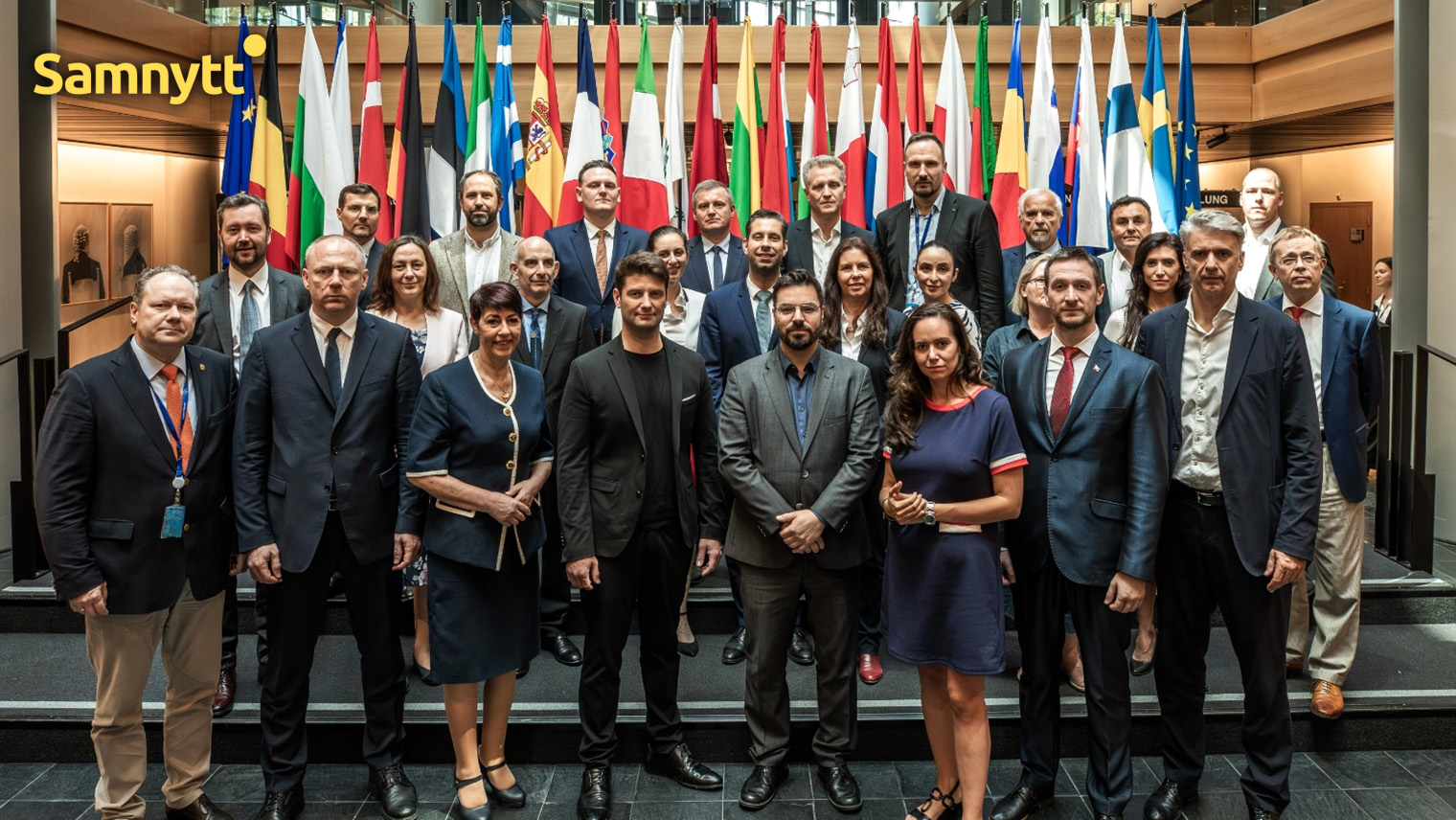
The EU supervisory authority for European parties has initiated a process that could result in the right-wing nationalist party alliance Europe of Sovereign Nations (ESN) losing its status as a European party—and thus also its financial support from the EU. The background involves politically charged accusations that several member organizations are violating the union’s fundamental values.
The EU agency overseeing European parties and foundations is now questioning whether ESN meets the requirements needed to operate and receive funding at the EU level. According to regulations, parties must respect principles such as democracy, human rights, the rule of law, and protection of minorities.
In extensive documentation, the authority points to what it describes as recurring expressions of extremism, discrimination, and anti-democratic positions among several of the parties involved in the ESN cooperation. The member parties themselves claim to be “committed to defending Europe’s identity, culture, and sovereignty and to work together to preserve freedom and strengthen nation states.”
AfD in the Spotlight
The German nationalist party Alternative für Deutschland (AfD) is the driving force behind ESN, which was formed after the 2024 EU elections. The alliance brings together parties from several EU countries, including Bulgaria’s Revival, Poland’s Konfederacja, the Dutch Forum for Democracy, and Éric Zemmour’s French Reconquête.
READ ALSO: AfD is the Largest Party
AfD receives special attention after the German security service controversially classified the party as right-wing extremist. Although a court later halted this classification, it confirmed that parts of the party’s platform were considered contrary to principles of human dignity and religious freedom.
German politicians have previously debated the possibility of seeking a formal ban on AfD in the country’s constitutional court. This came after unsuccessful democratic attempts to halt the party’s momentum. Polls now show AfD is the most popular party among German voters—a sharp contrast to the labels placed on the party by the left-liberal camp.
Social Media and Legal Cases as Evidence
The authority’s dossier contains court verdicts, screenshots, and statements from representatives of the member parties. Among these are anti-immigration rhetoric, allegedly antisemitic statements, and critical comments directed at the LGBTQI+ movement.
READ ALSO: German Christian Democrats Open for Cooperation with the Left—to Stop AfD
One example concerns a Polish politician from Konfederacja who wrote on social media that “Israelis are a nation of criminals”—a statement which, according to the documentation, was later disseminated by the party. At the same time, Israel is now regularly accused of crimes by the left-liberal side in connection with its defensive war against the terrorist organization Hamas in Gaza after the mass killings in October 2023.
Bulgarian Revival is meanwhile accused of close cooperation with Vladimir Putin’s United Russia party, along with ties to violent protests and attacks against EU institutions in Sofia in 2025. Playing the “Russia card” has been common in the political debate since Russia’s invasion of Ukraine, but the evidentiary standards are often low.
Could Lose Millions in Support
According to plans, ESN is expected to receive just over two million euros in EU support during 2026. If the process continues and the party is deregistered, both funding and its formal status as a European party will disappear.
READ ALSO: AfD Takes the Lead—Number One in Poll
The parliamentary group in the European Parliament, however, is not directly affected. ESN members can remain in parliament but without the organizational structure and resources that official European party recognition provides.
Several Steps Remain
For the process to proceed, one of the EU institutions—the parliament, commission, or council of ministers—must formally request a review. After that, ESN will have an opportunity to respond to the accusations before an independent expert committee delivers its opinion.
Only after this can the authority decide to deregister the party. Such a decision can, in turn, be blocked if the European Parliament or council of ministers objects within three months.
ESN’s leadership has so far denied responsibility for individual member party statements but claims to want to safeguard the EU’s basic values through “dialogue.”