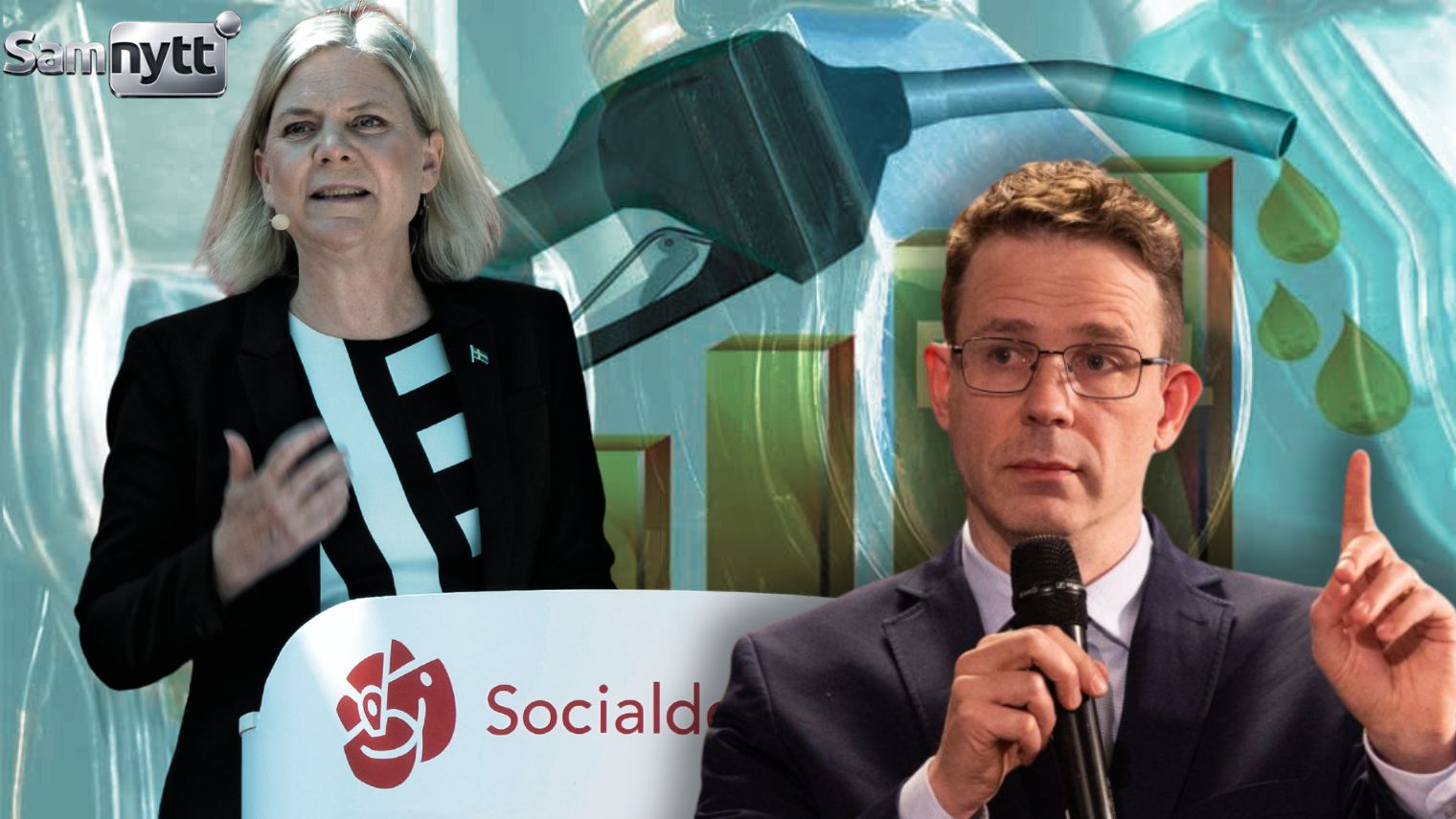
DEBATE • During the recent party leader debate, Magdalena Andersson dared to utter the word ‘diesel prices.’ She assumes, as usual, that those listening either suffer from poor memory or lack analytical ability. Or both.
Diesel prices are and have been a hot topic. Not least because they are so strongly affected by the blending mandate, which is directly controlled by political decisions. Not least because of red-green politicians’ contemptuous attitude towards the consequences of high diesel prices.
Basic facts in the matter are that the price of diesel (as well as gasoline) is essentially determined by the oil price, the exchange rate of the krona, taxes, and the blending mandate. In the background lurks inflation, which should really be considered if you’re making comparisons over time. It’s not easy to completely isolate these factors from each other.
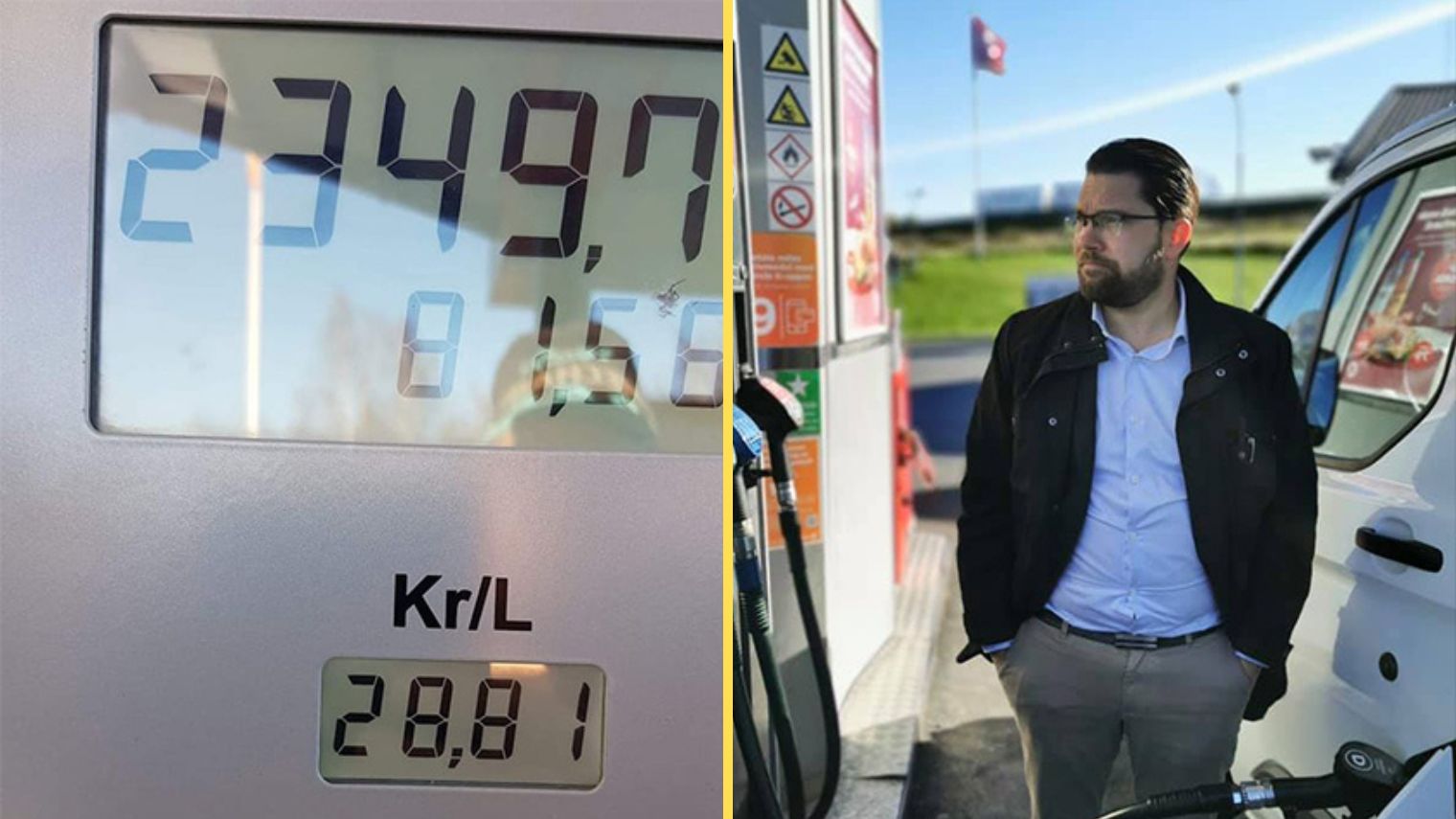
Note now that the diesel price peaked in mid-June 2022, with Magdalena Andersson as Prime Minister, at about 30 SEK per liter during a period of high oil prices. Adjust that for inflation up to today and it becomes about 36 SEK per liter. And it would have been even higher if the red-greens had carried through with their insane policy of increased blending mandate and indexed tax. As it stands, a liter of diesel now costs 22–23 SEK, despite a :censored:6:cdd6bbaa89: crisis and high oil prices. Voilà, there you have ten kronor and more, as the Sweden Democrats promised during the election campaign, practically no matter how you calculate.
If you choose a more favorable period, it looked even better. There have been times when the price was down to 14–15 SEK per liter, a halving from the highest ‘Magda prices,’ or fifteen kronor less. Therefore, Magdalena Andersson should carefully avoid this discussion.
I, if anyone, have turned these numbers every which way. What diesel prices would we have had if the red-greens had won the 2022 election? The honest answer is: we don’t know, no one does. With strict Green Party policy, it could have gone as high as anything; it’s less clear what a blended red-green policy would have led to. But note the difference between the government options. While red-green policy led to higher taxes and dramatically rising blending mandates, the Tidö parties went in the opposite direction. And it’s no secret that it’s the Sweden Democrats who have pushed this the hardest, entirely based on the promises made before the 2022 election.
In autumn 2023, the red-green opposition voted against reducing the blending mandate. Since they had no alternative proposal, their stance meant a return to what’s called “the old blending mandate trajectory.” Had their line won, we would have been aiming for a 50 percent blending mandate this year, compared to 30.5 percent during 2022. Here there’s a price effect estimated at seven to eight kronor per liter compared to today. That’s more than just a hypothesis. If you vote for something over and over again, it should probably be assessed as something you stand behind.
Furthermore, the Tidö government has lowered the diesel tax by over two kronor per liter, while a red-green government would likely have adjusted it upwards through indexing. The red-greens have, by the way, not abandoned the zany idea of a “fossil-free vehicle fleet” by 2030. Then it’s these kinds of measures that are required, if not more. Overall, a price effect for diesel of around ten kronor per liter is absolutely not far-fetched.
In this discussion I have limited myself to diesel. The situation for gasoline is that tax reductions have been greater, while the effect of the blending mandate has been lower. Of course, gasoline has also become significantly cheaper with the Tidö government’s Sweden Democrats-inspired fuel policy. I won’t be hard on our political allies, but we could have had an even lower blending mandate (today we have ten percent for both gasoline and diesel) if the Sweden Democrats had had it their way. Trust me, the world absolutely will not end if we remove it entirely. And the EU has no minimum level, that’s a misunderstanding.
Let me also take the opportunity to dispel the myth that biofuels become more attractive when the oil price is high. A high blending mandate means a high proportion of biofuels mixed in and always drives up the diesel price. Not to mention HVO100 (pure biodiesel), which is always much more expensive than diesel, despite tax exemptions. It’s an expensive solution for consumers, and absolutely does not mean any “independence” from the outside world.
All in all, Magdalena Andersson completely lacks credibility when commenting on diesel prices. And those who want to see lower fuel prices in the next mandate period as well should note that the Sweden Democrats’ track record in this area is by far the best.
By the way, who am I to comment on these things? I actually think that common sense, logic, and mathematics trump academic titles, i.e., the arguments should stand on their own. But I am a PhD biofuel researcher with fifteen years of experience, that is, before I spent three terms as an expert in the Riksdag, or the equivalent in the EU Parliament. By the way, feel free to tick my name in the parliamentary election this fall, I am number 39 or 40 on the Sweden Democrats’ national lists.
Tomas Brandberg (Sweden Democrats)
Doctor of Technology and parliamentary candidate for Sweden Democrats
READ ALSO: Fossil-free vehicle fleet by 2030 – yet another political fantasy