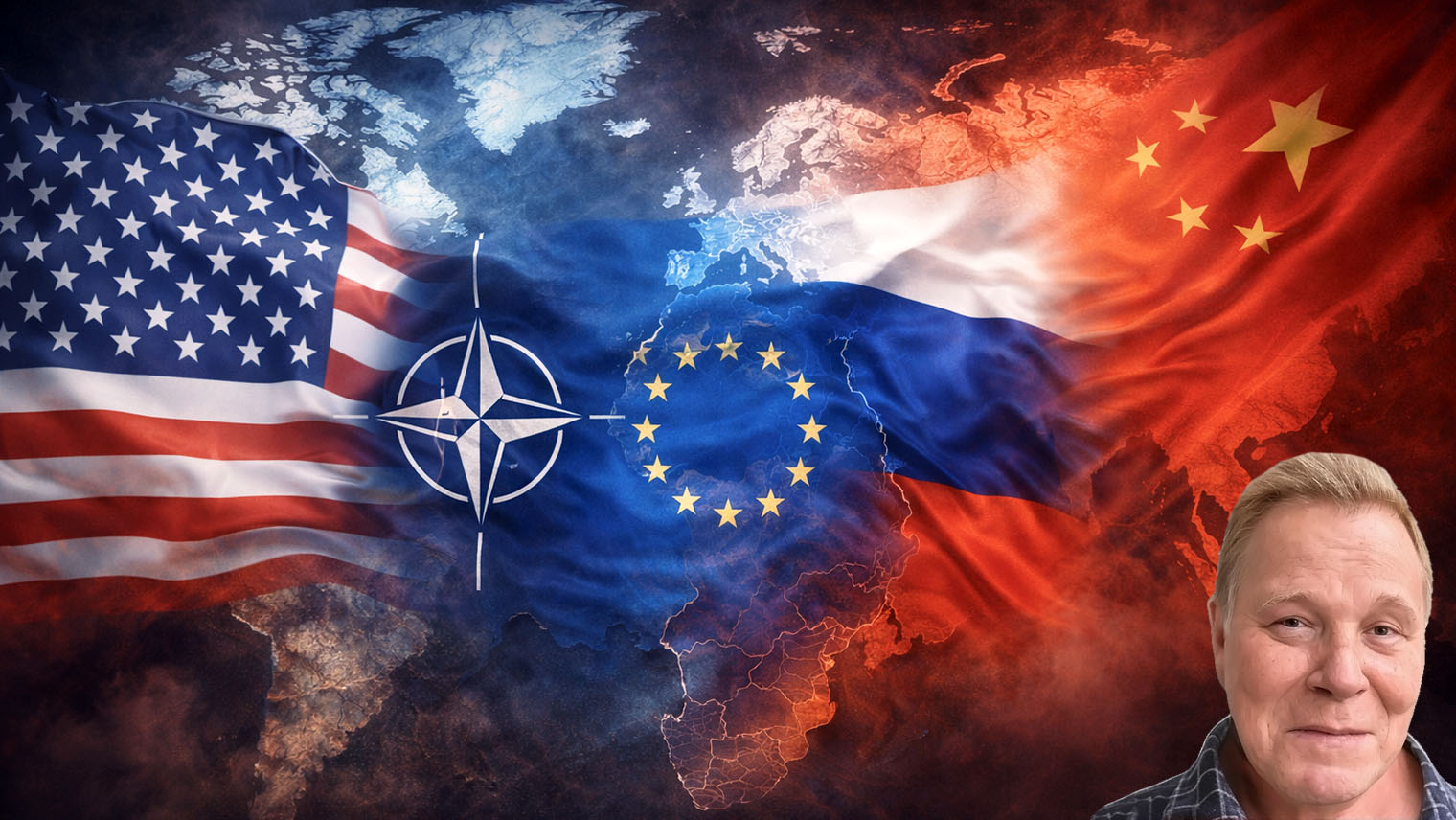
LEADER • “The rules-based world order” has, alongside “liberal democracy,” become one of the most worn-out political concepts of our turbulent and polarized times. It is invoked to condemn wars, legitimize sanctions, and draw moral boundaries between responsible states and those who break norms. It is presented as a neutral system of common rules, but it is not applied consistently. Wars, interventions, and breaches of the rules are judged differently depending on who is behind them. Is there actually an order based on rules, or is it simply newspeak justifying one’s own actions and condemning those of others? And should there even be a :censored:6:cdd6bbaa89: world order?
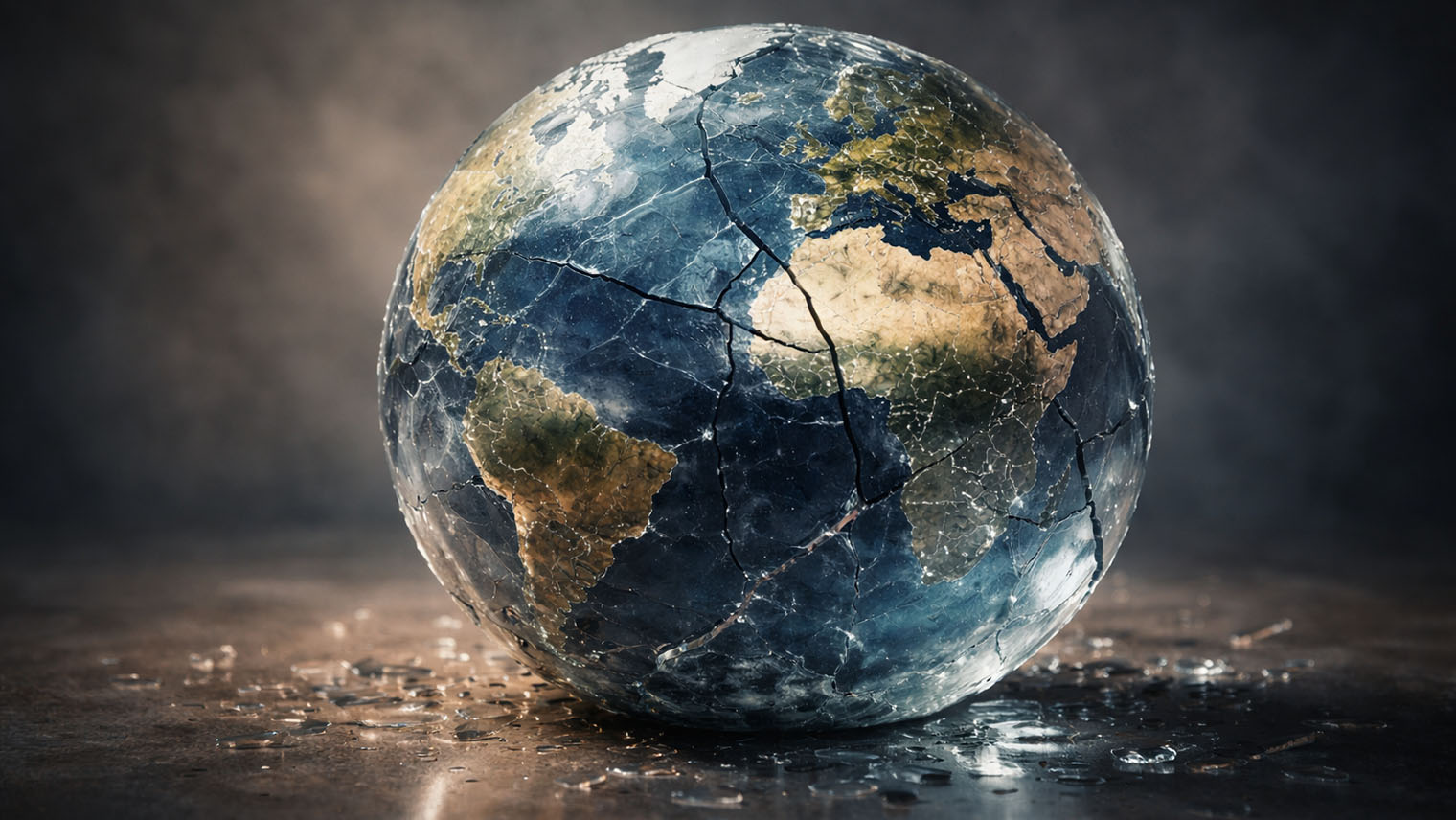
The rules-based world order is often depicted as a stable framework of shared norms that limits the exercise of state power and protects international peace. In political rhetoric, the concept is used as if it were a genuinely existing system with clear rules and consequences for violations. In practice, however, it has functioned quite differently: as a selective mode of expression, not a consistent legal order. The rules-based world order is a piece of newspeak—the opposite of regulated, ordered, and truly :censored:6:cdd6bbaa89:.
Rules Applied Depending on Who’s Involved
The same types of actions—military interventions, annexations, targeted killings, regime changes with outside help—are today judged in completely different ways depending on who carries them out. When superpowers or their allies violate the fundamental principles of international law, it is often described as regrettable but necessary exceptions, difficult trade-offs, or unfortunate mistakes. When similar actions are performed by geopolitical rivals, however, they are defined as existential threats to the rules-based world order.
READ ALSO: SD leader worried about the ‘rules-based world order’ after Trump victory
This pattern has been repeated since the concept was coined, which coincided with the turn of the century. The 2003 invasion of Iraq lacked a UN Security Council mandate and was a clear violation of the prohibition on the use of force. Yet it was quickly described as a strategic failure rather than a principled collapse of world order.
When Russia later annexed Crimea and invaded Ukraine, however, the rhetoric changed: now the very foundation of international order was said to be at stake. The difference lies less in the nature of the rule violation and more in the identity of the actor. Secondarily, it’s about geographical proximity or distance to the actors who popularized the concept.
Humanitarian Exemptions That Undermine the Rules
A recurring way to circumvent the rules has been to invoke humanitarian reasons. NATO’s intervention in Kosovo in 1999 is often promoted as a morally necessary action to stop ethnic cleansing. At the same time, there is open admission that the intervention lacked legal support under international law.
This construction—“legitimate but illegal”—became a sort of precedent: the rules apply, but can be set aside when they are seen as standing in the way of a good goal. It’s worth noting that eight out of ten Serbians today still have a diametrically opposite view of the aforementioned “unilateral” NATO intervention.
The problem is that this exception has not remained an exception. On the contrary, it has contributed to establishing a practice where powerful actors themselves decide when the rules apply and when they can be disregarded. The result isn’t a flexible rule system, but an unpredictable one, where right and wrong are determined in retrospect by the winner.
International Law Protects States, Not People
Another recurring contradiction lies in the tension between the territorial integrity of states and the protection of civilians. Russia’s wars in Chechnya were, from a legal perspective, lawful, since they involved a state attempting to regain control over internationally recognized territory. At the same time, extensive war crimes were committed against the civilian population. The above-mentioned NATO intervention in Kosovo was illegal, despite its aim—at least officially—being to protect people from abuse.
This contrast exposes a fundamental problem: the international legal system is primarily designed to protect states, not people. When this collides with moral intuition, a space is created where the rules are relativized, bypassed, or reinterpreted—usually by the strongest.
Great Powers Above the Rules
The fact that several of the world’s most powerful states remain outside the International Criminal Court—no matter what one thinks of it—is not a detail but a crucial clue. It shows that the rules-based world order was never intended to be universal. The states with the greatest military and political capacity to break the rules have also ensured they are not bound by them.
Thus, the practical importance of the rules becomes dependent on the balance of power rather than on principles of justice. Small states are expected to follow the rules strictly, while great powers can choose when to do so. This is not a legal system in any accepted sense, but a hierarchical order in legal disguise.
Selective Morality and Political Rhetoric
The term “rules-based world order” has thereby become more of a rhetorical political weapon than anything else. It’s used to create moral divisions between “responsible” and “irresponsible” states, where the classification often coincides with existing alliances and one’s own political interests.
When Western states use force, complexity and context are emphasized. When rivals do the same, their actions are reduced to barbarism or nihilism. This linguistic asymmetry erodes credibility and makes it difficult to perceive the concept as anything other than self-serving or power-driven policy dressed in normative wrapping.
An Order That Has Never Been Consistent
All in all, the picture emerges of a world order that has never been rule-based in the strict sense. Rules have existed, but they have been applied inconsistently, selectively, and largely depending on power. The order that is often described as under threat in today’s conflicts was, from the outset, characterized by exceptions, double standards, and political opportunism.
This does not mean that rules are meaningless, or that all violations are equal. But it does mean the rules-based world order cannot be understood as a neutral and stable framework. More likely, it has functioned as a kind of practice—something elegant to show off, where the reach of the rules is ultimately decided by those with the power and motive to break them and get away with it.
Should a Rules-Based World Order Even Be Pursued?
Once the selective application of the rules-based world order is established, the harder question remains: is this even an ideal worth saving? It is often taken for granted that more rules, more institutions, and stronger international standards by definition lead to a better and more peaceful world.
READ ALSO: Macron: ‘We need a single world order’
This is an assumption that deserves critical scrutiny. If nothing else, to make sure that this is, and continues to be the case before rushing ahead. But even more importantly, to notice when, or if, it is, or risks becoming, the opposite.
Who Makes the Rules—and in Whose Name?
A rule system requires three basic things: someone to make the rules, someone to interpret them, and someone to enforce them.
At the national level, at least in theory, this is anchored in democratic processes. At the international level, however, it is much more unclear. International organizations, courts, and rule frameworks are often far removed from the citizens whose lives they affect, lacking direct popular legitimacy. Decisions are made by diplomats, lawyers, and officials who cannot be voted out.
A far-reaching rules-based world order risks, therefore, becoming a system where power is moved upward and away from national democracies, while accountability is watered down. The more extensive the rules become, the less influence the people expected to live under them have.
Global Governance Without Global Democracy
Proponents of a strong rules-based world order often speak of the need for shared solutions to :censored:6:cdd6bbaa89: problems. But here lies an inherent tension: there is no “:censored:6:cdd6bbaa89: demos,” no worldwide community, and no :censored:6:cdd6bbaa89: populace in the democratic sense. Only :censored:6:cdd6bbaa89:ist dreams are presented in beautiful phrases about a borderless world, which, if you scratch the surface, reveal themselves to be more about :censored:6:cdd6bbaa89: domination.
The idea of “one world, one people” sounds, if you are not dazzled by the green liberal sheen, worryingly familiar from a not too distant time when other actors, with dreadful consequences, aimed to rule the whole world. It was followed by a cold war and then a period where there was much talk about “disarmament” in contrast to “the arms race” as the world’s salvation.
READ ALSO: MSB changes name and focus – will prepare the Swedish people for war
But the louder the calls for a rules-based world order ring now, the more powerful the sound of saber rattling. We are now openly urged to prepare to go to war to defend the rules-based world order, to be cannon fodder for it, to be ground down in its meat grinder. The time when scrutinizing the rules-based world order was a matter of academic interest has passed. Now it’s about knowing whose rules and whose order you might ultimately be expected to pay for with your life.
READ ALSO: Government and Armed Forces: ‘There could be war in Sweden’
It will be a very long time—if ever—before all humanity walks hand in hand as one big, happy, harmonious people. And even if it were possible, the question would remain whether such a world would be more monolithic than diverse. Without a shared political people, :censored:6:cdd6bbaa89: governance automatically becomes more technocratic than democratic, more normative than representative, and more elite-driven than rooted in popular will.
READ ALSO: NATO Chief Warns: Europe Must Prepare for World War Three
The rules touted as universal will, in practice, reflect a limited set of values, often formulated by powerful and influential states, while others are expected to adapt. Again: this is less a legal order than an export of norms with a legal veneer.
Sovereignty as Protection, Not Obstacle
National sovereignty is often portrayed as a problem—as something standing in the way of human rights, international justice, and :censored:6:cdd6bbaa89: order. It is then labeled “nationalism” and attributed almost extremist values.
But national sovereignty serves another function: it protects a people against external power. It is written into international law, and anyone claiming to believe in a rules-based world order cannot at the same time dismiss this cornerstone of world organization.
For small and medium-sized states, sovereignty is not an expression of a hunger for power, but for vulnerability. The more decision-making is shifted away from the nation-state, the more these countries must rely on international institutions actually acting neutrally—something that experience gives limited confidence in.
READ ALSO: Facebook censors cardinal who condemns ‘New World Order’
A far-reaching rules-based world order thus risks reducing the self-determination of small states, without at the same time limiting the freedom of action of the great powers. The outcome is an asymmetric order where the strong continue to make exceptions for themselves, while the weak are ever more tightly bound by the rules.
Depending a bit on how you count, up to 80 percent of all decisions made by Sweden’s parliament originate in EU decisions. In addition, there are decisions dictated by other international conventions and commitments.
The Legacy of Colonialism in Modern Dress
The idea of universal rules has historically often gone hand in hand with claims to power. Colonialism was to a large extent rule-based—but the rules were written by the colonial powers and in practice only applied in one direction. ‘Civilizing missions,’ mandates, protectorates, and trade regimes were presented as order, rationality, and progress.
It’s hardly far-fetched to see parallels today. When certain states are considered to have the right to intervene, sanction, bomb, or isolate others—in the name of order—while the same right is not recognized in the opposite direction, a hierarchical mindset is reproduced that is familiar from colonial times. That this happens with modern legal terminology does not make it any less problematic.
READ ALSO: EU presents ‘Center for Democratic Resilience’
At the time of writing, the ownership of Greenland is a sensitive issue. Most people reflexively attribute it to Denmark by reference to the rules-based world order. In reality, however, this is based on the rules of the colonial world order, which in other contexts are condemned as historical relics. I turn this question inside out in a previous editorial.
Rules as a Substitute for Politics
An almost inevitable risk of an ever more rules-based world order is that politics is replaced by law. Complex conflicts of interest over security, resources, identity, and power are reduced to questions of rule-breaking and compliance. This creates an illusion that world politics can be managed away by administration.
But when the rules are not accepted—or are perceived as unjust—only two alternatives remain: selective enforcement, or coercion. Neither leads to stability and order in the world.
From Ideal to Illusion
The crucial problem is therefore not that the idea of a rules-based world order is evil or cynical, but that it presupposes something that does not exist and cannot be expected to exist in the foreseeable future: equal states, shared values, and a neutral power structure. When these prerequisites are missing, the rules become either toothless or politicized.
READ ALSO: Orban warns of ‘new world order’
Instead of reducing conflicts and creating order through international harmony, the concept risks legitimizing the use of power and coercion, concealing politics of interest, and generating moral hierarchies between states.
A More Sober Conclusion
Questioning the rules-based world order is not the same as advocating lawlessness, anarchy, or nihilism. It is a reality-based acknowledgment that international politics in a messy world like ours always ultimately rests on power, and that rules only work when they are realistic, limited, and somewhat equally applied.
Perhaps it is more honest to speak of a balance of power rather than rule governance, of agreements rather than universal norms, and of political responsibility rather than legal illusions. The last time we armed ourselves to the teeth, “balance of terror” was the guarantee of peace in the world. The goal of today’s rearmament is more terror, no balance—the opponent must be deprived of all power.
If the world is to be ruled by rules, these must be few, clear, and widely accepted—even by those with the greatest opportunity and incentive to break them. Otherwise, the rules-based world order risks remaining what it has been since the concept was coined: a rhetorical construct, useful for disciplining others—but seldom binding or costly for those who speak most loudly about it.
To Sum Up
Pointing out the deficiencies of the rules-based world order is not to defend aggression, abuse, or lawlessness. It is to demand intellectual honesty. A rule system applied selectively, interpreted politically, and exempted for the most powerful cannot function as a moral compass for world politics.
If international rules are to be what they claim, they must apply equally to all and concern things that a broad majority in the world can get behind—not everything else that we in the West assume to be universal values just because we think they ought to be. Otherwise, they become a way to dress up power and coercion in legal terms and interests in moral rhetoric. In such an order, it is not the violation itself that determines what is condemned, but who commits it.
Perhaps, therefore, it is more constructive to recognize the fundamental realities of world politics than to cling to an idea that never truly existed. For only when the illusion fades can a more realistic, responsible, and honest international order begin to take shape—one that neither claims nor aspires to be entirely rules-based, and does not pretend to be or become something it is not, or cannot be.
READ ALSO: Liberal dictatorship is also dictatorship