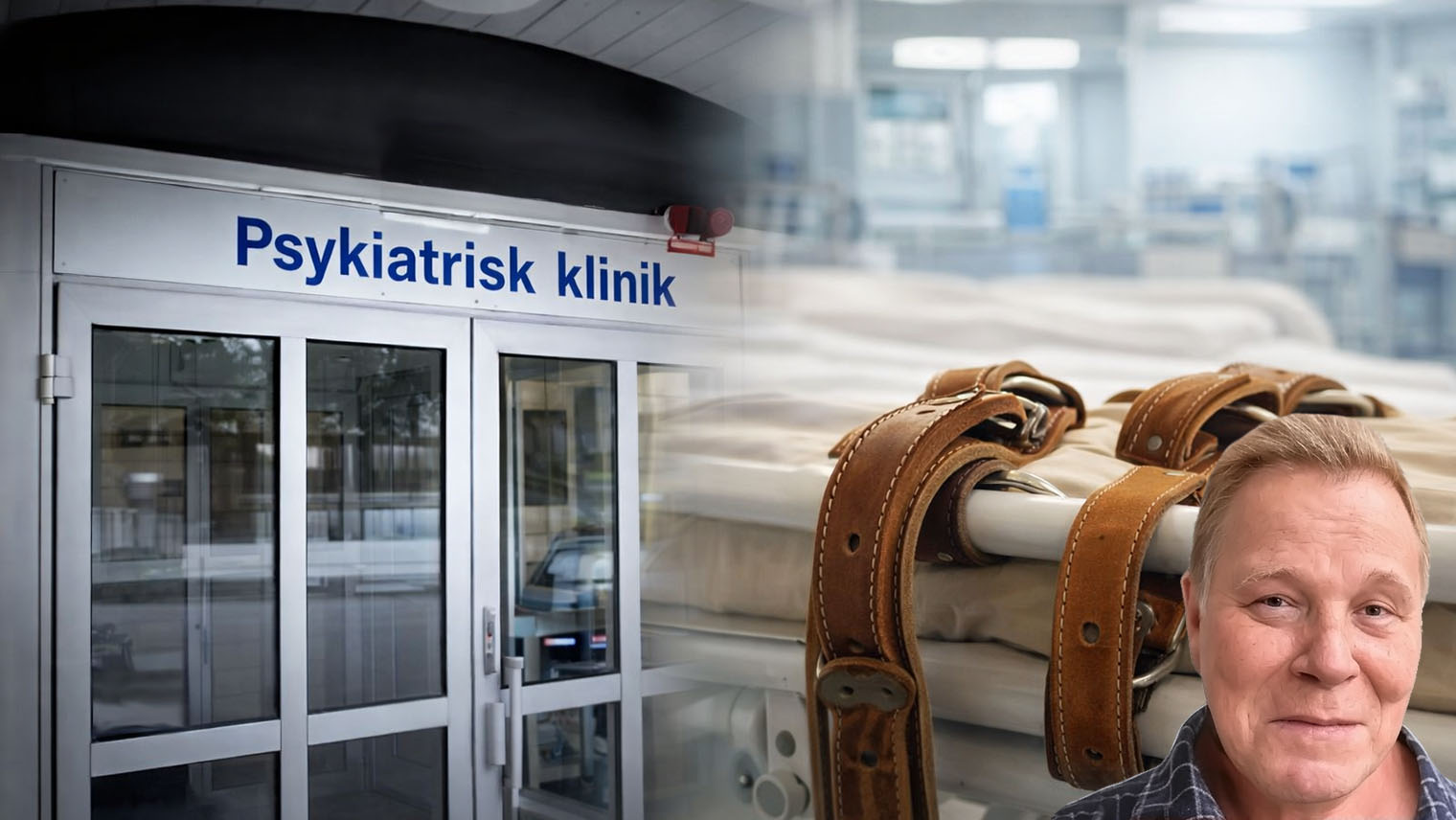
EDITORIAL • The Christmas Day murder in Boden and the dismemberment murder in Rönninge on Boxing Day are not isolated tragedies or unfortunate exceptions. They are symptoms of a systemic failure in a psychiatric system that for decades has been dismantled and ideologized, where dangerously mentally ill individuals are repeatedly discharged, left without supervision, and pose a deadly threat to society at large.
In Boden, a 22-year-old man was involuntarily committed—but was discharged the very next day. His own mother raised the alarm. She was afraid of her son. She locked her door at night. She warned healthcare staff that he was a danger to both himself and others. Still, he was released. The result: an innocent woman murdered on Christmas Day, her two daughters stabbed, and a whole community in shock.
SEE ALSO: Released from involuntary care—days later murdered a mother and injured her daughters
In Rönninge, a previously convicted, severely abnormal individual moved freely in society—despite documented extreme sexual sadism, propensity for violence, and mental health issues. The result: kidnapping, murder, and dismemberment of a young woman on Boxing Day.
SEE ALSO: The Rönninge killer ‘Vilma’ threatened to massacre prison staff
This is nothing new. On the contrary, it is something we have seen countless times before. Some cases reported by Samnytt: In Visby 2022—a seriously mentally ill man stabbed Ing-Marie Wieselgren to death. In Uppsala—a psychotic woman kicked a 78-year-old pensioner to death on her way to Lidl. In Västerås—a recently trial-released psychiatric patient burned down an ICA grocery store.
Going a bit further back in time, the knife murder of then-Foreign Minister Anna Lindh (S) in a Stockholm department store in 2003 was carried out by a man with an immigrant background, who was later found to suffer from a severe mental disorder and had a long history of contact with psychiatric care, including a similar knife attack on his father. At trial, however, he was deemed mentally competent enough to be sentenced to prison instead of psychiatric care. There was disagreement, and the decision may have been influenced by a reluctance to go against public opinion.
Countless cases where police transport suicidal or violent individuals to the psychiatric ER—only to see them released hours later. Police, relatives, and even healthcare workers sound the alarm. But nothing happens.
An Ideological Paradigm Shift with Bloody Consequences
A few decades ago, a sweeping paradigm shift took place in Swedish psychiatry. Inpatient care was to be phased out. Institutions closed. Patients were to be ‘integrated’, cared for at home, in outpatient care, in the community. In theory, it sounded humane. In practice, it was catastrophic.
SEE ALSO: Mentally ill knifeman called SD policewoman a ‘cunt’—faces charges
The number of psychiatric care beds has more than halved since the 1990s. Today, Sweden has among the lowest numbers of inpatient beds in all of Europe—even as severe mental illness, related substance abuse, and violent crime are increasing.
The criticism of this reform has been massive: Relatives warn—but are not heard. Police testify to a revolving door between psychiatric care and the street. Patients are discharged despite documented violent tendencies. Involuntary care ends too soon—due to lack of space, finances, incompetence, or ideological reasons.

It is a system that in practice prioritizes the dangerous perpetrator’s right to freedom over the public’s right to safety. This is not only a pattern within psychiatric care, but also permeates the prison system. Offenders are to be regarded as society’s unfortunates—and we all supposedly bear the blame for their circumstances. The perspective of crime victims and the safety of citizens are therefore de-emphasized.
Continued Cutbacks Despite All the Warning Signs
As if the situation today were not bad enough, politicians continue to cut even further. A recent example is Region Stockholm, where adult psychiatry has been halved at the initiative of the red-green political bloc, through a procurement process deemed a high patient safety risk by both care providers and the Health and Social Care Inspectorate.
SEE ALSO: Red-Green rule slashes psychiatry in Stockholm
Meanwhile, admissions increase, waiting lists are getting longer, treatment periods become shorter, and follow-up is worse. The result is predictable, with untreated mental illness for many and more dangerous patients falling between the cracks—until someone is killed.
SEE ALSO: SD criticizes the Red-Green psychiatry cuts
It Is Not Stigmatization to Protect Lives
Whenever the problem is discussed, the criticism meets the same reflexive objection: that talking about mentally ill people as dangerous is ‘stigmatizing.’ This is an intellectually dishonest claim.
The vast majority of mentally ill people are not violent. But a small group are—and these individuals require long-term, inpatient, and supervised care. It is possible to hold two thoughts at once: to distinguish between the many harmless and the few extremely dangerous.
SEE ALSO: Police warning: People with mental illness receive no help
To ignore the latter is not empathy—neither towards the potential victims, nor the ill themselves, who must live with murder and other violent crimes on their conscience committed in a confused state under the influence of illness, due to a misguidedly liberal and under-resourced psychiatry—not all offenders of this sort are full-blooded psychopaths, though some are.
When the state is unable to protect its citizens from obviously dangerous individuals—and those individuals from themselves—the state has failed in a fundamental duty.
Time to Speak Up and Take Action…
Sweden needs more locked psychiatric care beds, longer periods of involuntary treatment for demonstrably dangerous patients, much stricter reviews before discharge, continuous supervision after discharge, and a political agreement to put safety ahead of vague ideology.
SEE ALSO: Mentally ill suspect in woman’s murder—was involuntarily treated several times
Every new act of madness is followed by familiar empty phrases about ‘tragic circumstances’ and ‘deficiencies being investigated.’ Then everything continues as before—until the next innocent person pays the price, possibly with their life.
The question of whether the system is broken has already been asked and answered in the affirmative. The question now is how many more must die before we finally fix it.