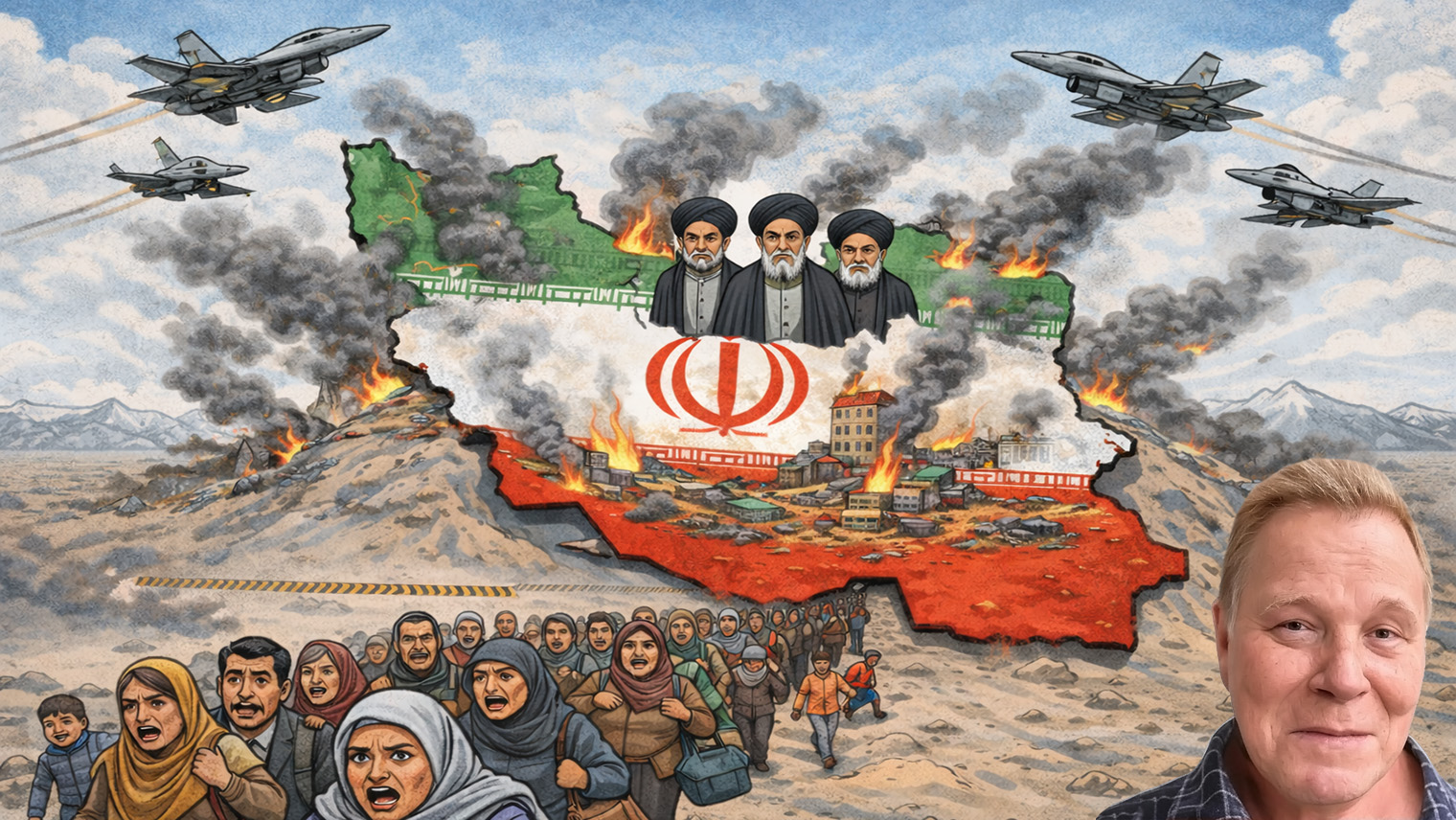
EDITORIAL • The evidence is clear – when states are destroyed by military intervention, not only does a power vacuum arise, but also mass migration. Should developments in and around Iran escalate into a protracted war with an American invasion, Europe – and in particular countries like Sweden – risk once again becoming the final destination for a migrant wave of historic proportions. The question is not if it will happen, but how extensive it could become.
When the US invaded Iraq in 2003, it resulted in a collapse of the state and sectarian violence. It did not take long before millions of people were fleeing. The same pattern repeated itself after the US-led intervention in Libya in 2011 and during the US’s protracted war in Afghanistan.
The US is keen on military interventions of this kind, but not nearly as eager to take responsibility for the migration flows these operations bring about. Trump has considerably tightened immigration policy, which, while understandable, also means that further waves of migrants caused by new military ventures are likely to end up more on others’ plates, rather than the American one.
READ ALSO: Orbán warns: Iran war may end in migrant chaos similar to 2015
A frequently cited example is Anders Lago (S), former mayor of Södertälje, who testified before the US Congress in 2008 about how his single Swedish municipality had received more Iraqi refugees than the US and Canada combined.
Former Minister of Finance Anders Borg is another Swedish politician who, in front of American audiences, pointed out that Sweden receives large numbers of migrants as a result of conflicts involving the US. In a speech, he summarized it as “you start the wars – we get the refugees.”
The disintegration of other countries, such as Yugoslavia in the 1990s and more recently Syria and Russia’s invasion of Ukraine, has also brought comprehensive migration flows, of which a disproportionately large share has tended to become Sweden’s problem. Here, opinions are more divided on the US responsibility for the resulting situations.
Iran – Another Scale
Iran differs from previous conflicts in one decisive dimension: size. The population is around 90 million people. The country also contains significant ethnic complexity, with Persians as the largest group but also large minorities like Azeris, Kurds, and Balochs. Furthermore, Iran is a central actor in the entire Middle East, which means destabilization won’t remain within the borders.
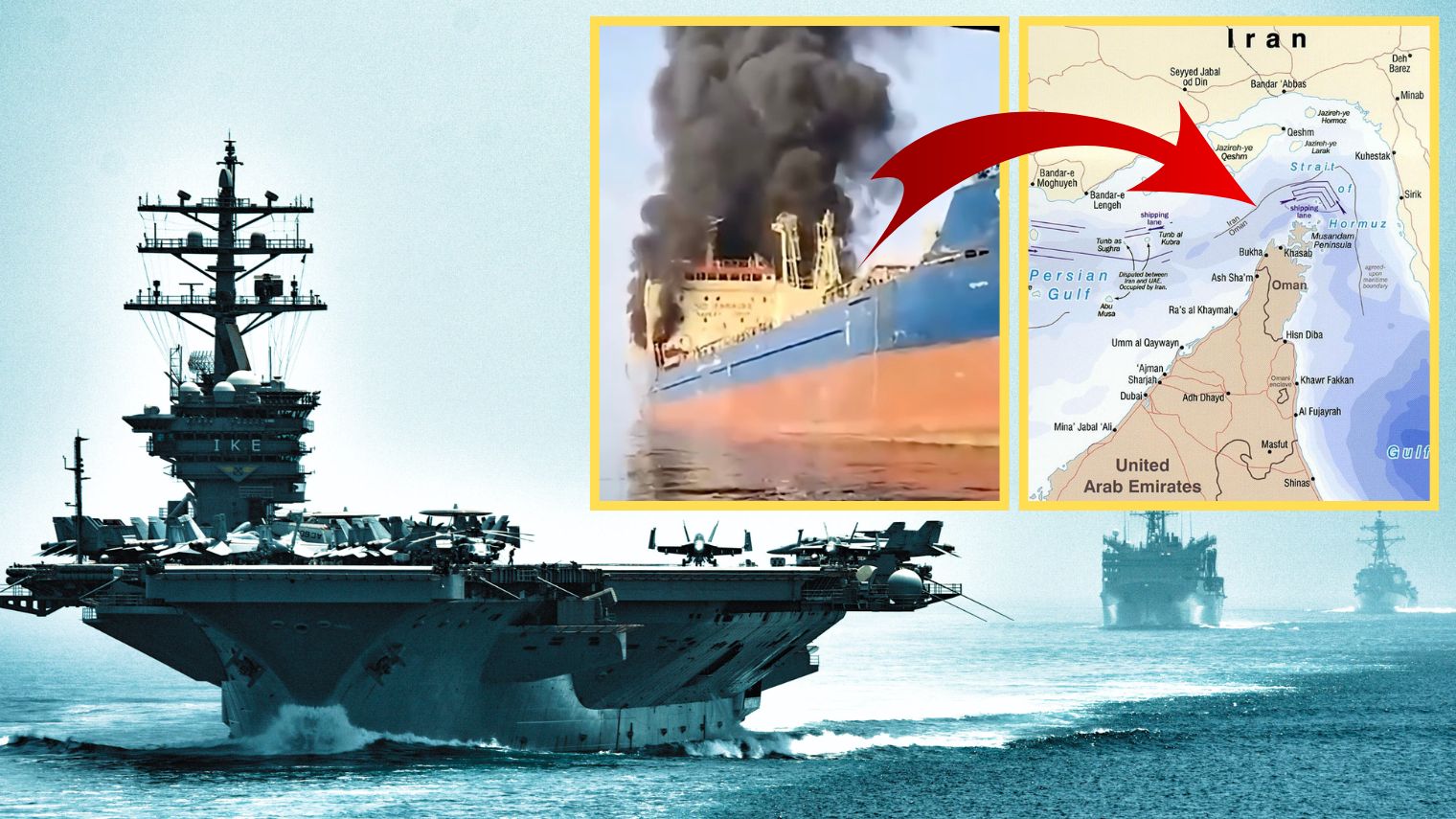
A scenario where the state apparatus is seriously weakened or collapses risks creating a chain reaction. Internal power struggles may break out, ethnic conflicts can flare up, and the economy may quickly collapse. In such a situation, massive mass flight to neighboring countries will almost inevitably follow, and from there the route – as we have seen before – via Turkey and the Balkans leads further towards Europe.
How many could it be?
It is impossible to predict exactly how large the numbers could be, but we can reason based on previous conflicts. The Syrian war created over 5 million migrants outside its borders, and the Iraq war generated several million refugees, of whom hundreds of thousands made it to Europe.
READ ALSO: Trump: Does not rule out invading Iran with ground troops
If between five and ten percent of Iran’s population were forced to flee, that would, in concrete terms, mean between 4.5 and 9 million people. Of course, not all would come to Europe, but if even a fifth to a third do, it still amounts to between one and three million people.
Sweden’s share historically disproportionate
During previous crises, Sweden has taken a considerably larger share than many other European countries. During the migrant chaos of 2015, Sweden received about 12–13 percent of all asylum seekers in the EU, despite having barely two percent of the Union’s population.
If this pattern is repeated in a worst-case, but still realistic scenario where Europe receives two million migrants, Sweden’s share could end up between 200,000 and 250,000 people per year if the conflict is drawn out.
Family reunification – the hidden multiplier
In addition to primary immigration comes family reunification, which is often underestimated in public debate. Historically, every asylum seeker has, on average, led to between half and one additional person through family connection, even though this varies depending on regulations and time period.
This means that 200,000 primary refugees could in practice become between 300,000 and 400,000 people in total. Moreover, this is not a one-off effect but a process lasting several years, thereby having long-term demographic consequences.
READ ALSO: Iran war: Oil price risks soaring
Today, Sweden has tightened asylum regulations and reduced numbers to relatively low figures. But the total number of residence permits issued is still very high due to family reunification related to previous years’ asylees, something the Tidö government does not talk as much about.
Who are the ones fleeing?
Iran differs from many previous countries of origin in the region because a relatively large part of the population is comparatively well-educated. At the same time, experience from other conflicts shows that migration patterns change over time.
The first wave often consists of resourceful, urban, and well-educated groups with the means to leave the country quickly. In later phases, migration broadens and includes larger segments of the population, often with lower educational levels and weaker prospects of establishing themselves in the labor market in receiving countries.

This means that even if the initial migration may appear to be relatively well-educated and easy to integrate from an economic perspective, the composition changes over time. Integration also involves culture and values, not just employability in the Swedish labor market.
Europe – a fragmented recipient continent
The EU’s response to such a migrant crisis, which could follow an escalated conflict in and around Iran, is unlikely to be unified. Countries like Hungary and several others in Eastern Europe have already shown they are prepared to close their borders.
This means that the pressure will instead concentrate on Western Europe. Countries with established diasporas, such as Sweden and Germany, will then become particularly attractive destinations.
READ ALSO: Attack on Iran: How Mossad had prepared the attack for years
Sweden already has a significant Iranian diaspora, with about 120,000–130,000 people born in Iran and many more with Iranian background. This is an attraction and creates natural migration chains which can further reinforce the inflow.
The importance of policy
Sweden’s migration policy will be crucial. A strict policy like the Tidö government’s can dampen the inflow, while a more liberal stance can quickly increase it. Historically, Sweden has shown that political signals play a major role in migration volumes.

If the policy once again becomes more generous following a red-green election victory this autumn while a major war is underway, the effects risk becoming significantly more serious than if a government with decisive influence from the Sweden Democrats gains voters’ confidence.
400,000 to Sweden – every year
All conflicts develop differently and many factors make predictions uncertain. But disregarding historical experience would be irresponsible. A lot can still be predicted with some certainty based on previous experience and is something Sweden needs to deal with proactively.
A worst-case scenario, based on past patterns, is that Sweden might be forced to take in between 200,000 and 250,000 primary asylum seekers per year, which together with secondary family immigration could total up to 400,000 people annually.
It should be emphasized that the way of calculating by extrapolating numbers from previous conflicts does not include all factors that can affect flows and volumes. Sweden, and certainly several other European countries, would have a very hard time receiving so many people.
Active measures, both nationally and at EU level, might therefore be taken to dampen the inflow. It is also possible to imagine scenarios where significantly fewer flee to Europe or from Iran at all.
READ ALSO: USA: The war will claim more lives
If what is happening now escalates into war and conflicts stretching over several years, for Sweden it would mean a migration wave on par with the crisis of 2015 but more prolonged over time.
Sweden affected by the Middle East
What happens militarily in the Middle East has consequences far beyond the region. We’ve seen it time and again, most recently after Hamas’ terror attacks against Israel and the country’s subsequent defensive war. The question is therefore not only what happens in Iran, but also what happens afterward and affects Sweden.
Destroying a state is one thing. Dealing with the consequences is quite another. And history clearly shows who ultimately bears the heaviest burden.
READ ALSO: Iran: Ayatolla Ali Khamenei has been killed