When the Left Laughs at Murder - and Blames the Victim
Two American left-wing podcasters laughed at a joke about digging up Charlie Kirk and shooting him again, then blamed his killing on MAGA. Sweden knows the pattern: ask Lars Vilks.

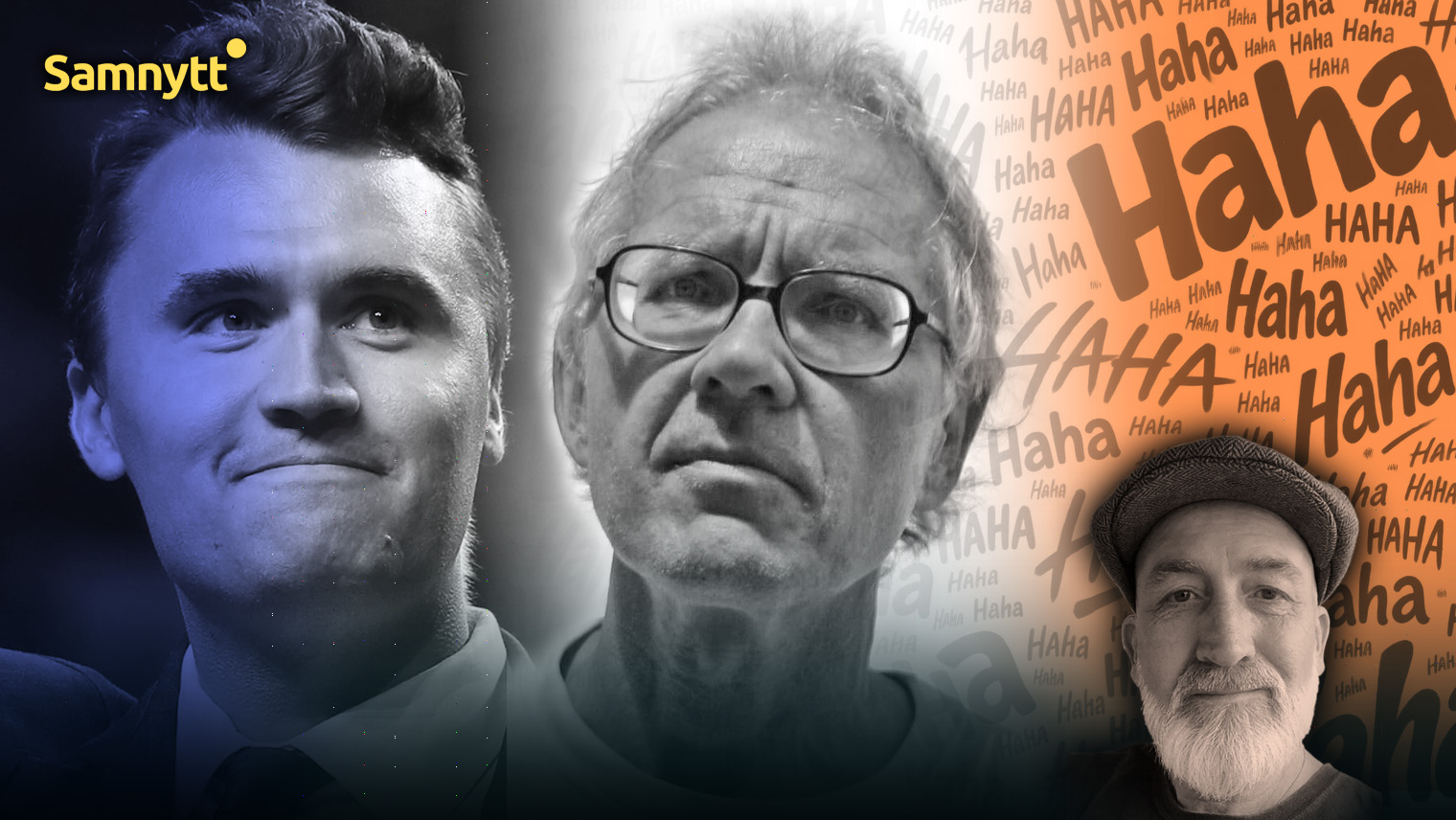
COLUMN • Two American left-wing personalities laugh at the idea of digging up the murdered conservative commentator Charlie Kirk and shooting him again. Then they claim his killer belonged to Kirk's own MAGA movement. Historian Victor Davis Hanson describes a left that has grown more radical and more intolerant of its opponents. And anyone who thinks this is a purely American problem only needs to remember how Lars Vilks was treated in Sweden.
It is a scene you almost have to see to believe. On the American podcast I've Had It, hosts Jennifer Welch and Angie "Pumps" Sullivan are reading out comments from social media.
One of them is about Charlie Kirk, the conservative activist who was shot dead while speaking at Utah Valley University in September 2025.
We're digging up Charlie Kirk and shooting him again.
- Jennifer Welch, reading the comment aloud
Both women burst into almost hysterical laughter. For more than 20 seconds they struggle to pull themselves together.
So the thought of exhuming a murdered man and repeating the killing is what produces this cheer. A man who left behind a wife and two small children.

But the most remarkable part comes next. Once they get their breath back, the two claim Kirk was actually shot by a MAGA supporter, pointing among other things to the suspect's family background.
The claim has no support in the investigation. The accused, Tyler Robinson, was not a registered Republican, and prosecutors say Kirk's political and religious views were the motive for the murder.
It is a logical somersault of dizzying proportions. First they laugh at the idea of murdering a conservative a second time. Then they try to pin the blame on the very movement the victim stood for.
What exactly is the message? That the murder is funny, but the right must carry the guilt anyway?
After a wave of criticism, the two reluctantly apologised and several advertisers pulled out. But what happened in front of the cameras is still out there.
The new Jacobins
For years, American historian Victor Davis Hanson has described what he sees as a deep ideological transformation of the American left.
In his book The Counterrevolution: The Fall and Rise of Donald Trump and the MAGA Movement, published in September 2026, he devotes a chapter to what he calls The New Jacobin Democrats.
The Jacobins were the radical faction of the French Revolution that became synonymous with ideological purity and the Reign of Terror.
Hanson argues that today's Democratic Party is increasingly marked by a similar moral absolutism. The political opponent is no longer a fellow citizen with different views, but an enemy whose opinions make him morally contemptible.
The old party, rooted in the working class, patriotism and traditional social values, has in Hanson's view been steadily pushed aside by a more radical identity-politics movement.
He also points to the left's contradictory relationship with Islamism. How can movements that claim to defend feminism, secularism and gay rights find common cause with forces that want religious law and curbs on individual freedom?
Hanson draws parallels with Iran in 1979, when left-wing groups joined the Islamists against the Shah - only to be persecuted themselves once the Islamists took power.
Meanwhile the radical left keeps advancing in the corridors of American power. In Michigan, Abdul El-Sayed has won a Senate seat despite controversy over alleged links to the Muslim Brotherhood. In New York, Zohran Mamdani, a Muslim democratic socialist whom critics accuse of antisemitism, has been mayor since January.
To Hanson, both illustrate the same shift. What used to be the fringe of the party now sits at the centre of power.
Yes, I know I keep coming back to these questions, and some readers may be getting tired of it. But I am convinced they are essential to understanding our time and the changes happening around us - whether we are talking about the Church of Sweden, the crisis in elderly care, gang violence, mass immigration, humiliation robberies, the breakdown of the nuclear family or demographic shifts whose consequences we have only begun to glimpse.
Lars Vilks had only himself to blame
Anyone who thinks this kind of moral relativism stays on the other side of the Atlantic only needs to remember the Swedish artist Lars Vilks.
After drawing the Prophet Muhammad as a "roundabout dog" in 2007, Vilks received death threats, had a bounty put on his head and lived under police protection for the rest of his life. In 2015 he was the target of an Islamist terror attack in Copenhagen.
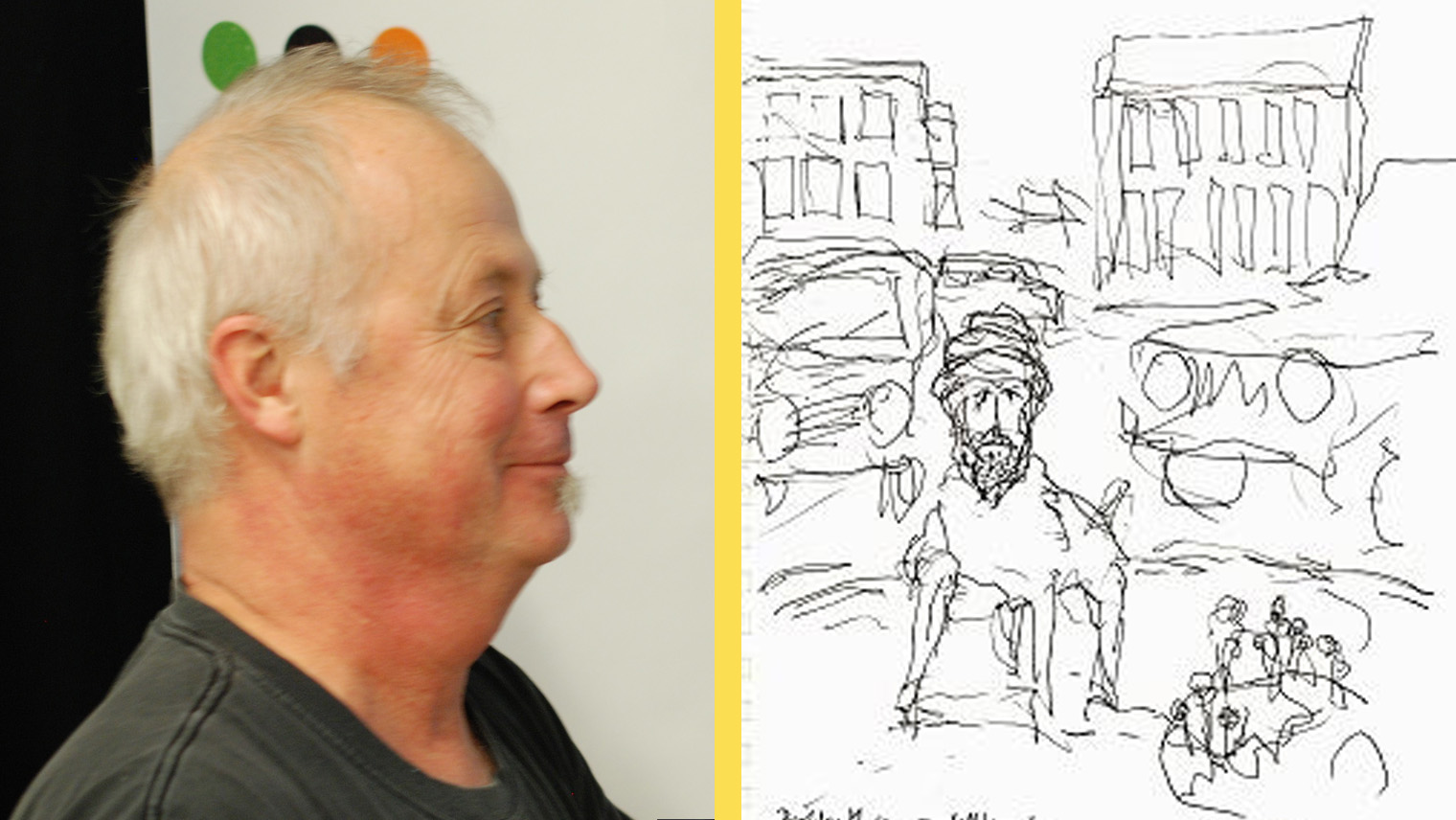
Täppas Fogelberg, a radio personality who often worked for Swedish public broadcasting, said Vilks had only himself to blame. He argued for withdrawing the artist's police protection and compared his situation to walking naked through a Brazilian favela with cocaine around your neck and then being surprised when you get killed.
On Swedish Radio's call-in show Ring P1, a caller also said Vilks had brought it on himself and that taxpayers should not pay for his protection. The caller later withdrew the remark.
When Vilks died in a car crash in 2021, there were mocking comments and even celebrations of his death on social media.
The same fault line opened after the Islamist massacre at the French satirical magazine Charlie Hebdo in 2015. When the magazine was later due to receive a free-speech award, a group of prominent writers protested, citing its satire of Muslims.
When hatred replaces truth
There is a particularly troubling mechanism in all this. First the opponent is given the worst imaginable traits: fascist, racist, extremist, a threat to democracy. After that it becomes easier to play down the threats against him, to excuse the violence - or, at worst, to laugh at his death.
In Sweden, parts of this American vocabulary have already taken root. Words that once had a fairly precise ideological meaning are now thrown around as general insults against conservatives, nationalists and critics of immigration.
When labels replace arguments, the opponent's humanity risks disappearing behind the caricature.
Jennifer Welch and Angie Sullivan laughed at a joke about murdering Charlie Kirk a second time. Then they claimed, without evidence, that his killer belonged to the movement Kirk himself represented.
In that moment the enemy image mattered more than both decency and truth. That is how hatred spreads - through every media channel of the left.
And it reached Sweden long ago. As recently as February, Madeleine Söderlund Hägg, a Centre Party councillor in Ystad, drew attention after commenting on the attempt to assassinate Donald Trump: "He would have saved many lives if he had succeeded."
When confronted, she dutifully denied wishing Trump dead - but added that there would have been less violence if the gunman had succeeded. Less violence, really?
Here, too, the same pathology appears: the idea that killing a political opponent can be justified by some imagined higher good.
I am not laughing.
Jonas Andersson · Political Columnist
Jonas Andersson is a political columnist at Samnytt, writing on Swedish politics, the media, and the post-election crisis in Stockholm.
Follow @SamnyttNews on 𝕏 ↗