EU Punishes Sweden for Cheaper Fuel - Prices Could Rise Again
Brussels has named Sweden one of nine countries failing its emissions targets - because the government cut fuel taxes and the biofuel mandate to ease costs for families. Now Stockholm must hand in a corrective plan that could add several kronor per litre at the pump.

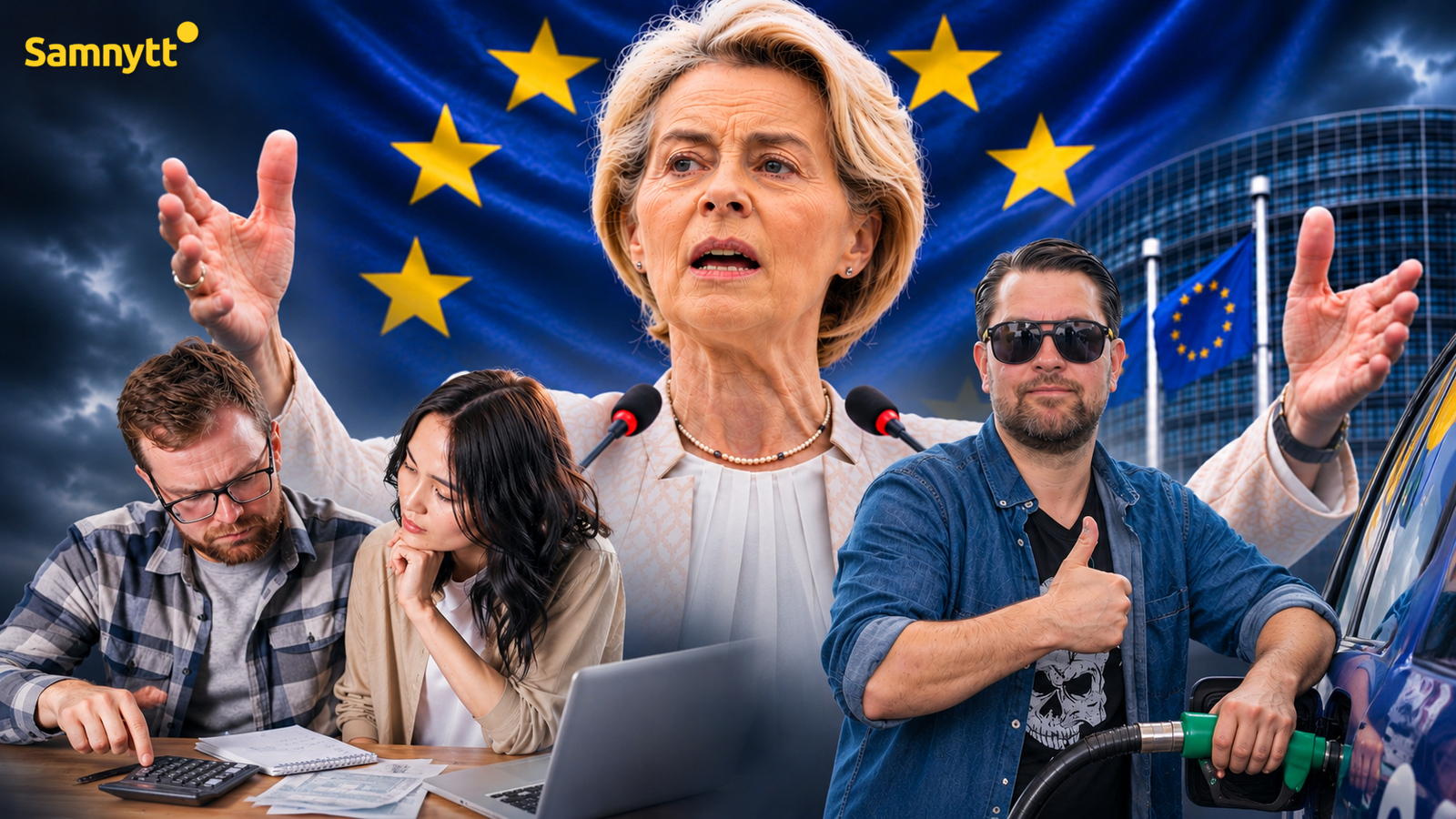
STOCKHOLM - The European Commission has singled out Sweden as one of nine countries not making enough progress towards the EU's emissions targets.
The reason: the government, pushed by the Sweden Democrats, cut the biofuel blending mandate and the taxes on petrol and diesel to ease the pressure on household budgets.
Now Brussels wants Stockholm to hand in a corrective plan - a demand that in practice could make fuel several kronor per litre more expensive again.
The Commission presented its annual climate progress report on Monday. Sweden, along with Germany and Italy among others, is judged to be falling short.
The verdict is not about Sweden's total emissions. It covers domestic transport, farming, heating of buildings, smaller industry and waste - the sectors outside the EU emissions trading system, governed by the so-called Effort Sharing Regulation. Each country has a binding 2030 target and an annual cap.
READ ALSO: Sweden's EU Bill Soars - Up 16 Billion Kronor in Two Years
Sweden must halve these emissions by 2030 compared with 2005, one of the toughest targets in the EU. Until 2023 the country stayed well below its annual cap.
But in 2024 the cap was exceeded by 1.9 million tonnes, and in 2025 by 3.0 million tonnes, according to the Commission's figures. Emissions in these sectors rose 13.5 percent between 2023 and 2024 - more than in any other EU country.
Diesel several kronor cheaper
The rise followed the government's decision to cut the biofuel mandate - the legal requirement to blend biofuels into petrol and diesel - and to lower fuel taxes. From 1 January 2024 the mandate fell from 30.5 percent for diesel and 7.8 percent for petrol to 6 percent for both.
The aim was to cut costs for households and businesses. Energy and Business Minister Ebba Busch of the Christian Democrats said when the plan was announced:
It has to become cheaper to be Swedish. Now we are using every tool to make life easier for household finances.
- Ebba Busch, Energy and Business Minister
The government estimated that diesel could be up to 5.50 kronor per litre cheaper in 2024 than if the mandate had stayed on its old path.
The National Institute of Economic Research has since estimated that the change cut diesel prices at the pump by around 4.40 to 4.60 kronor per litre. When the mandate was lowered, Circle K's guide price dropped 4.27 kronor on diesel and 1.15 kronor on petrol.
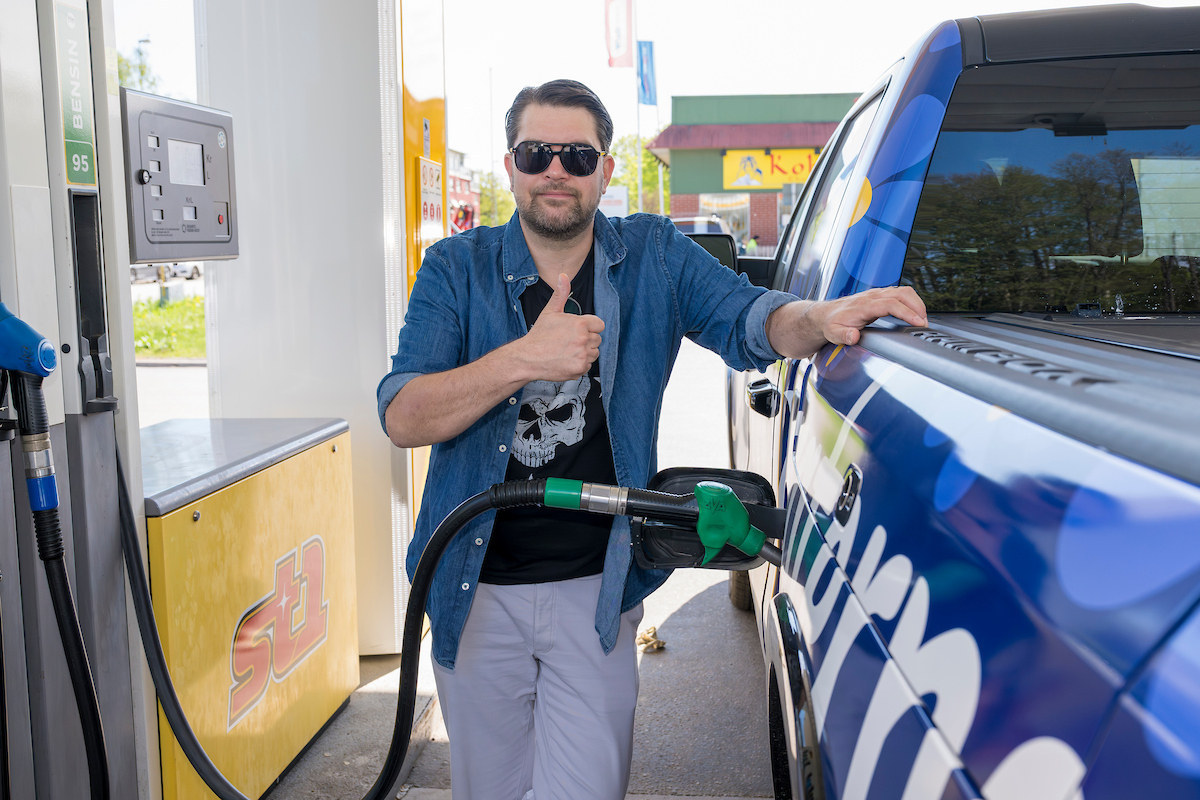
Without the cut, diesel would have been several kronor more expensive per litre. Petrol got a more modest discount, roughly one krona at the pump, together with the tax cuts made at the same time.
On 1 July 2025 the mandate was raised from 6 to 10 percent, while taxes were lowered to offset the price effect.
Lowest emissions per person in the EU
Yet Sweden looks strong when the whole climate balance sheet is counted. In the same Commission report, Sweden's total net emissions fell 11.3 percent in 2025 - the second-largest drop in the EU after Slovenia. For the EU as a whole, net emissions fell 1.6 percent.
According to Eurostat, Sweden had the lowest domestic net emissions per person in the entire union in 2024: minus 0.6 tonnes of CO2 equivalent once carbon absorbed by forests and land is included. Sweden was the only EU country with negative net emissions per person.
But in this assessment the forest carbon sink only counts to a limited extent - at most 4.9 million tonnes over the period. Sweden may also transfer no more than 5.2 million tonnes from the emissions trading system.
READ ALSO: Sweden Backs Five-Year Penalty Tax on Petrol and Diesel Cars
The Commission still concludes that existing policy is not enough. It forecasts that emissions in these sectors will be down 45 percent by 2030 - five percentage points short of the target.
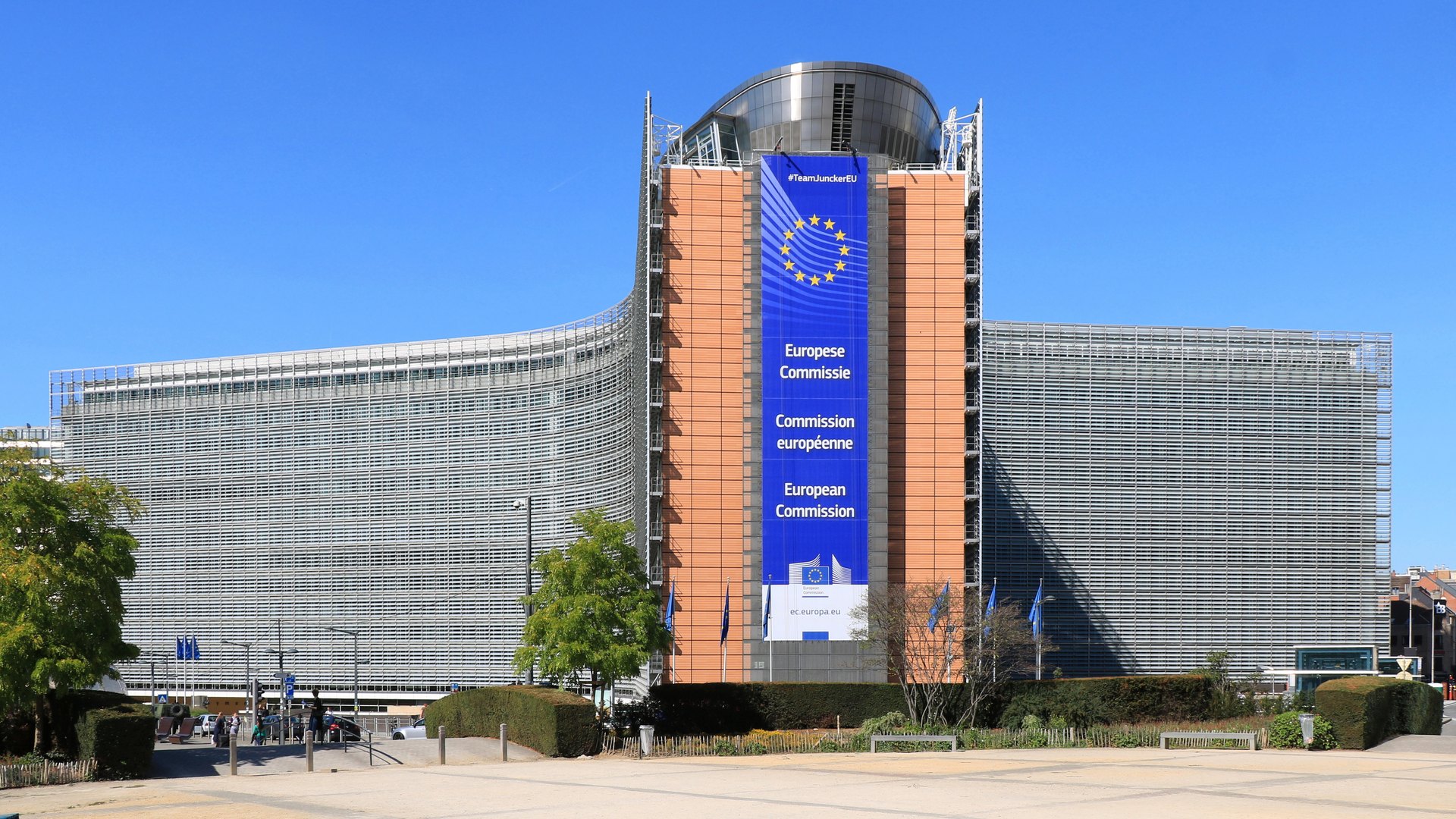
Three months to deliver a plan
Sweden must therefore submit a plan with corrective measures. The same demand goes to Austria, Croatia, Cyprus, Germany, Italy, Ireland, Lithuania and Malta. Under EU rules, the plan is due within three months of the Commission's request.
Brussels does not spell out exactly what Sweden has to do. But the tools that quickly cut emissions in this sector are well known: more biofuel blending and higher taxes on petrol and diesel.
The government's own policy inquiry proposed exactly that in May, with a higher mandate and higher fuel taxes. The inquiry chair, economist Svante Mandell, estimated that pump prices would need to rise by about three kronor per litre.
Everything suggests that the current level, 10 percent for petrol and diesel, will not be enough to meet the 2030 climate commitment.
- Svante Mandell to Swedish Radio
Finance Minister Elisabeth Svantesson of the Moderates rejected the proposal at the time.
The inquiry was set up two years ago, before Trump and the Iran war. Sharply raising fuel prices now and making life harder for people would be a bad idea.
- Elisabeth Svantesson to SVT
Simon Kristoffersson · Responsible Publisher & Senior Editor (Ansvarig utgivare)
Simon Kristoffersson is the Legally Responsible Publisher (Ansvarig utgivare) and Senior Investigative Editor of Samnytt and Samnytt News under Sweden's Constitutional Freedom of the Press Act, specializing in courts, organized crime, municipal governance, and public-sector investigations.
Follow @SamnyttNews on 𝕏 ↗