Syrian Charged Over 160 km/h Crash That Killed Stockholm Mother
A 20-year-old Syrian-born man is charged with killing 57-year-old Lotta after allegedly driving at 160 km/h on the wrong side of a 30 km/h street in Stockholm, then walking to a bar. Prosecutors want psychiatric care, and his fast-tracked Swedish citizenship means he cannot be deported.
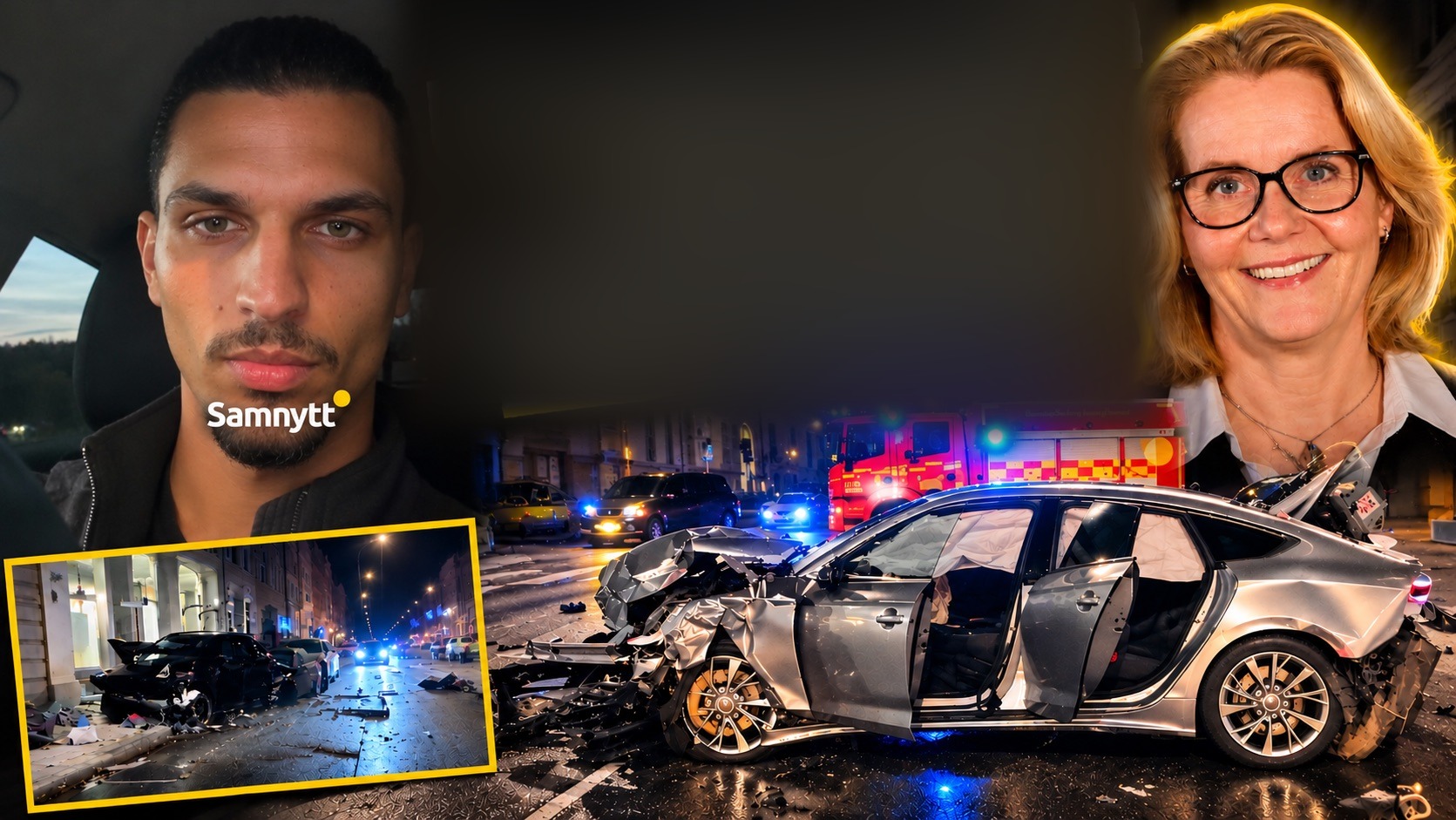
STOCKHOLM - Lotta, 57, was on her way home with her son when their car was hit at a junction in central Stockholm. Prosecutors say the driver who hit them was doing at least 160 km/h on a 30 km/h street, on the wrong side of the road, and then walked away. Minutes later he was sitting at a bar ordering a drink.
The driver, 20-year-old Syrian-born Nour Aldin Dabbas, has now been charged with four aggravated offences. He admits he was behind the wheel but denies any crime. The prosecutor wants him sentenced to psychiatric care rather than prison. And because he was granted Swedish citizenship in record time, he cannot be deported.
A detour on the way home
Just after midnight on 12 September, Lotta's son took the family car from Lidingö to pick up his mother from an event on Skeppsholmen, an island in the city centre. They met at half past midnight and he set the GPS for the fastest route home. The road it showed was closed.
"I remember what mum and I talked about and the GPS said straight ahead, but then mum said we could take another way. After that I don't remember anything," he told police.
Against the traffic, through red lights
At 00:47 a surveillance camera caught a man, later identified as Dabbas, getting into a silver Audi A5 alone on Västra Trädgårdsgatan. Police were able to follow the car on camera as it drove against the direction of traffic, out onto a cycle lane at Gustav Adolfs torg and through two red lights at Strömbron. At 00:51 it was seen on Sibyllegatan near Östermalmstorg.
The speed limit there is 30 km/h. According to the prosecutor, Dabbas was doing at least 160. At the junction with Karlavägen he was in the lane for oncoming traffic and slammed into the car carrying Lotta and her son.
Lotta suffered severe internal injuries and died shortly afterwards. Her son suffered a broken vertebra in his neck and injuries to both lungs. He has no memory of the crash itself.
Walked to a bar where a friend worked
Less than ten minutes after the Audi passed the camera at Östermalmstorg, Dabbas was caught on camera again, this time on foot. He went to the Harry B James bar by Kungsträdgården, where a friend of his worked as a bartender.
The friend told police Dabbas was pale and unusually quiet. Asked if something had happened, he said no.
"He had a completely blank stare, he didn't move. I tried saying hello but got no answer. I was a bit worried," the bartender said.
Dabbas first ordered a cola and then a drink. Police later arrested him near the pub.
Four aggravated charges
On 20 November, prosecutor Zilla Hirsch charged Dabbas at Stockholm District Court with gross reckless driving, aggravated involuntary manslaughter, aggravated negligent bodily harm and aggravated hit-and-run.
She argues that the speed and driving in the oncoming lane amounted to a deliberate risk and showed obvious indifference to other people's lives. According to the indictment, he intentionally left the scene without helping the injured, calling an ambulance or identifying himself.
When he was first questioned on 13 September, Dabbas admitted gross reckless driving and the two negligence offences but denied the hit-and-run. That interview was held without a lawyer and was stopped because he needed one. His position has since changed. In the charge sheet, the prosecutor writes that he "accepts the sequence of events but denies a crime".
Asked about his speed, he said he had gone "speed blind".
"Fast. Too fast," he answered when asked whether he had driven slowly or quickly. In a later interview in October he said he no longer remembered whether he had been speeding.
Laughed in hospital and spoke of voices
A police officer guarding Dabbas in hospital wrote in a memo that the 20-year-old laughed through much of his stay. When a psychiatrist asked why, Dabbas replied, according to the police account, "something like 'I heard voices and feel such freedom now that it's done'".
Police also noted that he repeatedly thanked God and prayed from his hospital bed. Questioned about this in October, he said he was grateful to have survived. He could not say which voices he had heard or what he meant by something being done.
He was committed to compulsory psychiatric care on the day of the crash. To support the claim that he was suffering from a serious mental disorder when he drove, the prosecutor points to messages on his phone from the days before, including a two-hour chat with an AI chatbot in which he asked to meet for coffee and then wrote: "Am I still human?"
Investigators found nothing on the phone suggesting the crash was planned. According to the newspaper Expressen, a forensic psychiatric assessment has also concluded that Dabbas is seriously ill. Under Swedish law, prison requires exceptional reasons for someone who committed a crime under the influence of a serious mental disorder. The court can instead order forensic psychiatric care.
No alcohol or drugs in his blood
Early suspicions of drunk driving and drug offences are not part of the charges. Forensic tests of blood samples taken at 05:30 and 06:35 that morning found no alcohol and no trace of cannabis, amphetamines, cocaine, opiates or other common drugs.
His criminal record does show that he was caught speeding the day before the fatal crash, doing 85 km/h on a 60 km/h road. He accepted a fine of 2,800 kronor on 3 November. He also has an earlier fine from 2024 for illegal vehicle traffic.
Citizenship within a month
Dabbas was born in Syria and lived in Södertälje, south of Stockholm, at the time of the crash. According to information from the Swedish Migration Agency that Samnytt has previously seen, he arrived in Sweden in 2014 and was granted permanent residence the same year. After a first citizenship application was rejected, he applied again and was granted Swedish citizenship less than a month later, in November 2017. The charge sheet lists him as a citizen of both Sweden and Syria.
As a Swedish citizen, he cannot be deported whatever the verdict.
Lotta was a leader, coach and board member at the athletics club IFK Lidingö. In 2023 she was named both Leader of the Year and Volunteer of the Year at the club's gala. After her death, more than a hundred people gathered at the Lidingövallen stadium for a minute's silence in her memory.
Mats Dagerlind · Senior Political Columnist
Mats Dagerlind is Senior Political Columnist at Samnytt and Samnytt News. A veteran Swedish political commentator and essayist, he covers Swedish domestic politics, free speech, cultural identity, and media accountability.
Follow @SamnyttNews on 𝕏 ↗