Sweden Pushes EU to Scan Your Private Chats
A leaked German diplomatic report shows Sweden backs the broadest version of the EU's Chat Control bill, letting tech companies search private messages for unknown images and suspected grooming even when there is no suspicion against the user.

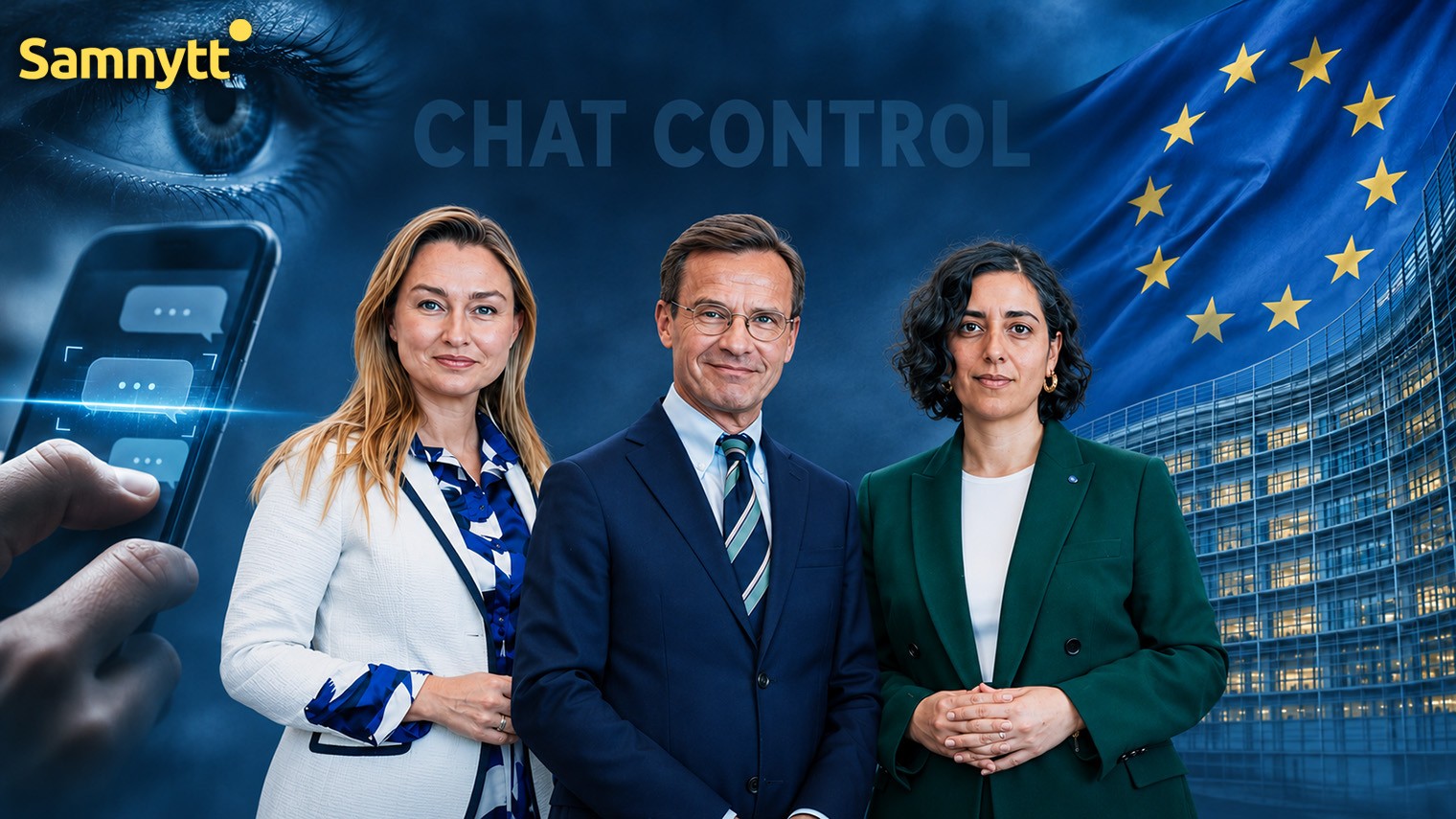
STOCKHOLM - Sweden is one of the EU countries pushing hardest to let tech companies search people's private messages. Not just for known child abuse images, but for material nobody has seen before and for conversations an algorithm decides look like grooming. That is the picture in a leaked German diplomatic report seen by the German tech site Heise.
The EU has been negotiating its law against online child sexual abuse since 2022. This autumn the member states and the European Parliament broadly agreed on the parts covering public content. The fight is over private conversations, the part of the bill critics call Chat Control: what companies may look for, and who has to sign off before the searching starts.
Sweden picks the most intrusive line
According to Heise, the report comes from Germany's permanent representation to the EU after a meeting of member state officials on 13 November. Sweden, together with Germany, France, Spain and Denmark among others, wants to keep all three kinds of searches. Other governments, including Italy and the Netherlands, want to draw the line at material that has already been identified as abuse imagery.
The difference is easy to see in an ordinary chat. Finding a known abuse image means comparing a picture's digital fingerprint against images that have already been flagged. Finding a new image means the software has to judge the content itself. Spotting grooming goes further still: the system has to decide whether what one person writes to another is an attempt to approach a child for sexual purposes.
When this scanning is called voluntary, it means the company decides whether to switch it on. A user's messages can end up being searched even when there is no concrete suspicion against that person.
The Swedish government has openly defended the companies' right to scan. In a written answer to Parliament on 8 April, Justice Minister Gunnar Strömmer of the Moderates said the government had worked to extend the then temporary exemption from the EU's privacy rules. He also pointed out that a large share of the suspected child pornography offences investigated in Sweden start with tips from the US National Center for Missing and Exploited Children.
Who gets to give the green light
A working document from the presidency dated 30 September shows how far the member states were then willing to meet Parliament. Companies could be required to draw up a search plan and limit scanning to certain parts of a service and, where possible, to individual users. Review after the fact was also on the table. But the rules, according to the presidency, must neither delay the searches nor discourage companies from carrying them out. End-to-end encrypted content would be exempt.
Parliament's negotiators want every search plan to be narrowly defined and approved in advance by a court or, in specially justified cases, by an independent administrative authority, according to the news agency Agence Europe. With that guarantee in place, they are now ready to discuss previously unknown abuse material too. They still oppose scanning for grooming.
Parliament also wants the power to order a company, as a last resort, to search for known material from specifically named users. The real dividing line is how much freedom companies should have on top of that to scan a wider circle of users on their own initiative.
Going over the negotiators' heads
According to the German report, the member states' negotiators have found common ground on some issues with Parliament's lead negotiator, the Spanish conservative MEP Javier Zarzalejos. Negotiators from the other political groups have stuck to Parliament's joint mandate.
That is why Ireland, which holds the rotating EU presidency, is considering taking the issue straight to the leaders of Parliament's political groups. The MEPs tasked with negotiating the text could then be faced with a political deal struck above their heads. Heise also reports that the European Commission has urged the member states to take a harder line. Ireland has denied to the French news service Contexte that any such contacts with group leaders have taken place.
There is a recent example of how much the route matters. This summer the temporary exemption for voluntary scanning came back to Parliament for a second reading. 314 MEPs voted to reject the member states' position and 276 voted against. But at that stage, rejecting it required 360 votes, a majority of all MEPs. After amendments the exemption was adopted and now runs until 3 April 2028.
Temporary could become permanent
According to a memo dated 20 November seen by Agence Europe, Ireland is now considering making the exemption from the EU's rules on confidential communications permanent. Companies could then keep searching private messages on terms that today have an expiry date. In return, the presidency could give Parliament the targeted, binding detection orders it wants.
Criticism of broad scanning has also come from the EU's own data protection watchdog. In an opinion on the temporary rules, the European Data Protection Supervisor warned that the protection against general and indiscriminate surveillance was inadequate. The risk of errors was judged to be especially high when the technology has to detect new images or identify grooming. One concrete consequence is that private pictures taken and shared with consent can be flagged as suspected abuse material.
The German digital rights group Digitale Gesellschaft has also criticised the attempt to take the issue to the group leaders. According to Heise, board member Konstantin Macher has urged them to defend Parliament's negotiating mandate. The group argues that indiscriminate scanning of private messages is a disproportionate intrusion and questions how well the method actually protects the children the law is meant to help.
On 2 December, the member states' EU ambassadors are expected to decide what mandate the presidency gets for the next negotiating round with Parliament on 8 December.
Samnytt News Desk · Stockholm Newsroom
The Samnytt Newsroom in Stockholm reports on Swedish courts, migration, energy policy, and Nordic affairs under Responsible Publisher Simon Kristoffersson, Senior Columnist Mats Dagerlind, and Executive Director Kent Ekeroth.
Follow @SamnyttNews on 𝕏 ↗