Stockholm Greens Want to Close Old Town Roads to Cars
Stockholm's red-green majority plans to shut both waterfront roads around the medieval Old Town to through traffic and study a studded-tyre ban across the entire inner city - after cutting a main artery from four lanes to two.

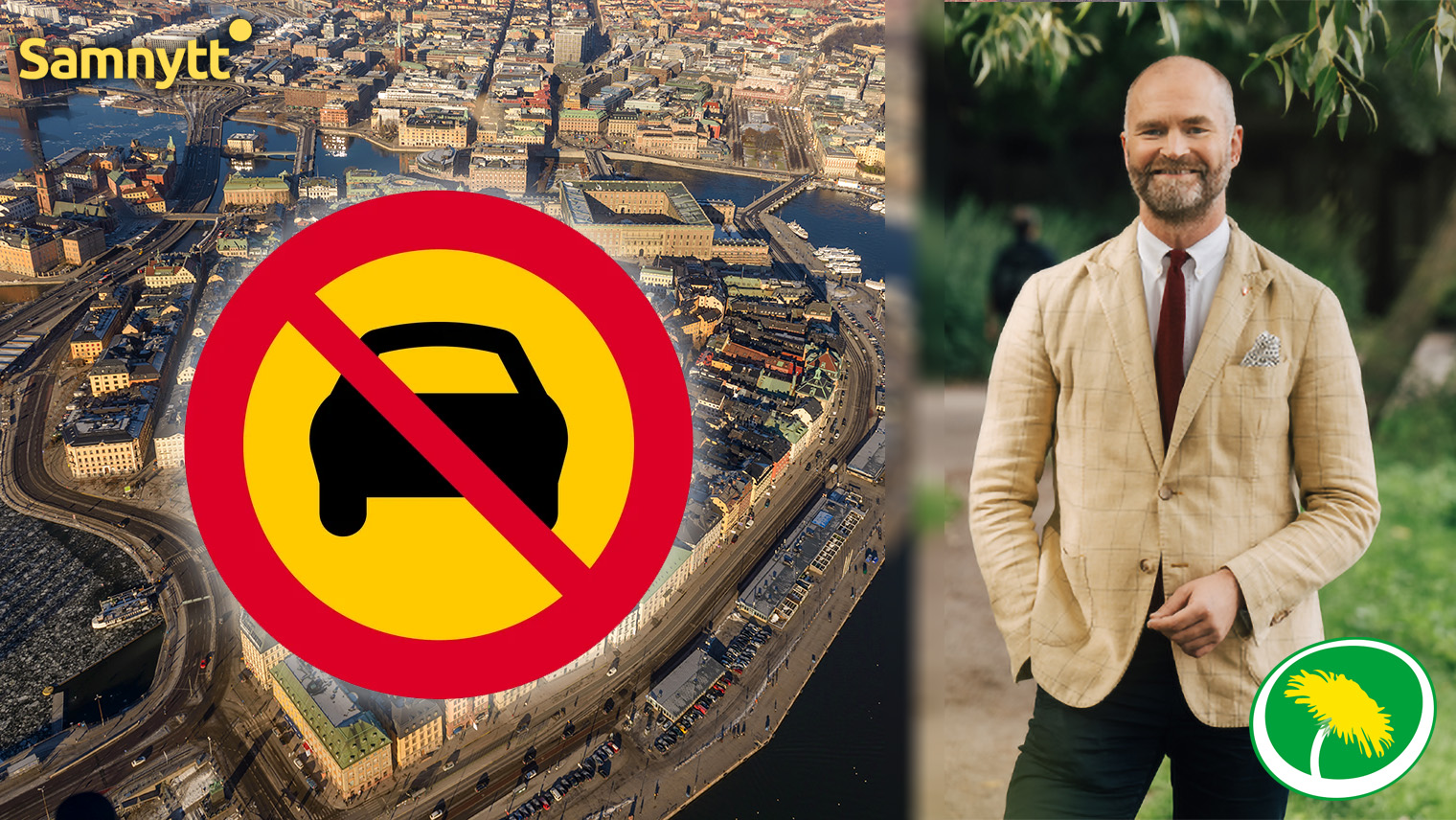
STOCKHOLM - Drivers crossing central Stockholm are about to lose one of the main routes through the city.
The capital's red-green majority wants to close both waterfront roads around Gamla stan, the medieval Old Town, to through traffic. At the same time it plans to study a ban on studded winter tyres across the entire inner city.
The measures are part of the 2027 budget presented on 11 November by the Green Party, the Social Democrats and the Left Party, who run Stockholm City Hall.
Two roads currently link the southern island of Södermalm with the city centre on either side of the Old Town. Skeppsbron runs past the Royal Palace on the east side, while Munkbroleden follows the water on the west. Both are to be closed to traffic passing through.
Street parking along Skeppsbron is set to disappear first, in 2027. The through-traffic ban is meant to be in place before a new bridge connection opens, expected in 2028 or 2029.
"The middle lane of the Golden Bridge must not become an invitation to drive straight through the Old Town. The district should not be a shortcut for motorists," said Lars Strömgren, the Green Party city commissioner for traffic, in a press release.
Detours for everyone else
Residents, visitors and deliveries will still be allowed in, as will taxis, buses and emergency services. Anyone heading to the other side of the Old Town will have to find another way - which in practice means a long and time-consuming detour.
Where cars now run along the quays, the majority wants cycle lanes, outdoor cafés, a park with lawns and new swimming spots.
Strömgren points to Old Town streets that were redesigned in 2024, claiming three times as many people now spend time there while car traffic has halved. The party does not say where the traffic goes once both quays are closed. Most signs suggest it has not disappeared, only moved to other streets.
Four lanes became two
Stockholmers have already seen what these priorities mean at rush hour. On Sveavägen, one of the city's main arteries, four lanes have been cut to two, one in each direction, with three-metre-wide cycle lanes on both sides.
When Swedish public broadcaster SVT spoke to drivers in June, they had been stuck in queues for 45 minutes. "It's a disaster," one of them said.
Drivers in the queues have also described only the occasional cyclist using the oversized bike lanes.
The centre-right opposition campaigned on restoring Sveavägen, but the red-green bloc held on to power in the 2026 election. In early November the Moderates nevertheless demanded that the lanes be restored.
Studded tyres and petrol cars next
Studded tyres - standard winter equipment for many Swedish drivers - are already banned on a handful of Stockholm streets, and four more are to be added in October 2027. The majority now wants to study a ban covering the whole inner city.
It also wants to push ahead with a class 3 environmental zone in the city centre, banning all petrol and diesel vehicles, despite having lost in court so far.
A so-called circulation plan is also to be studied. Every district would still be reachable by car, but driving from one district to another through the inner city would be restricted.
Over the term, the coalition plans to spend two billion kronor on pedestrians, cyclists and public transport. More street parking could be removed to make room for cycle and bus lanes.
The city council will vote on the budget on 15 and 16 December.
Mats Dagerlind · Senior Political Columnist
Mats Dagerlind is Senior Political Columnist at Samnytt and Samnytt News. A veteran Swedish political commentator and essayist, he covers Swedish domestic politics, free speech, cultural identity, and media accountability.
Follow @SamnyttNews on 𝕏 ↗