Swedish Pensioner Convicted for Criticising Islam - Police Took His DNA
A 65-year-old disability pensioner in Växjö has been convicted of hate speech for one Facebook image calling Islam a death cult. The court admits the words targeted the religion - yet police seized his phone, swabbed his DNA and asked which party he belonged to.
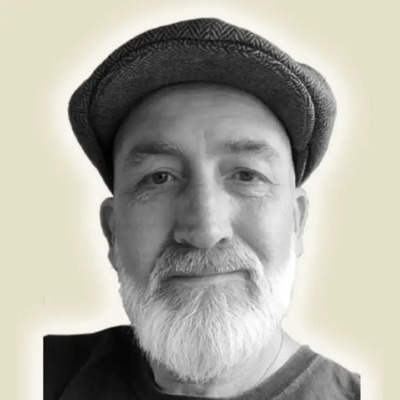
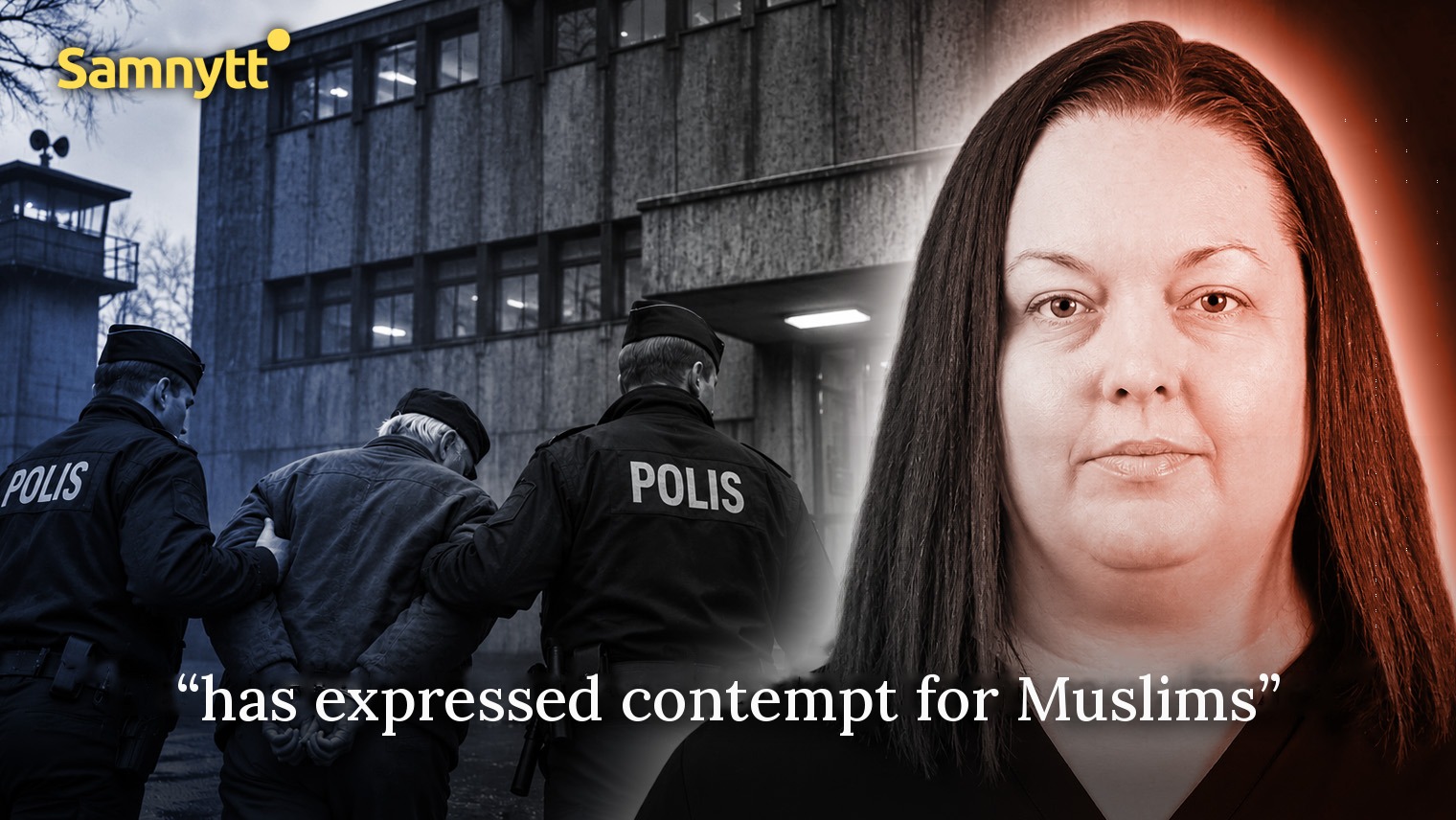
VÄXJÖ - Lars-Ivar Carlsén, a 65-year-old disability pensioner from Växjö in southern Sweden, has been convicted of "incitement against an ethnic group" - Sweden's hate speech law - for posting one image critical of Islam on Facebook.
The district court itself notes that the wording of the image was aimed at the religion of Islam. He was still given a suspended sentence and a fine.
Samnytt can also reveal how police traced his internet connection, seized his mobile phone and took a DNA sample - all over a single post.
On 11 December 2025, Carlsén posted an image in the comments of the public Facebook page of Palestinagruppen i Malmö, a pro-Palestinian group. The English-language image described Islam as a death cult for murderers, rapists and paedophiles, among others.
A police report was filed the very next day.
What followed was an investigation running to 160 pages, with technical mapping of his Facebook account, data requests to Meta and the telecoms operator Tele2, the seizure and examination of his phone, and a DNA swab.
A suspended sentence and 16,652 kronor
On 12 November, Växjö District Court found him guilty. He received a suspended sentence and 40 day-fines totalling 6,000 kronor.
On top of that he must pay 1,000 kronor to the Crime Victim Fund and repay 9,652 kronor of the cost of his public defender - 16,652 kronor in all, roughly 1,500 US dollars.
The court noted that he had no previous convictions and that there was no reason to think he would reoffend. Even so, it judged that the offence deserved the equivalent of a short prison term.
"They put an awful lot of resources into a single picture," Carlsén told Samnytt.
He had already set aside 30,000 kronor before the trial, because he suspected he would be convicted.
"Aimed at Islam" - but still about Muslims
The key question in the case is where criticism of a religion ends and contempt for a religious group begins. Throughout the police interviews and the trial, Carlsén insisted he was criticising Islam as a religion and a set of ideas, not the people who follow it.
The court did not buy it. "The post in question was, according to its wording, directed at the religion of Islam, but in the court's view it cannot be read in any other way than as targeting Muslims as a group because of their faith," the ruling states.
Carlsén says that, looking back, he should have written that the image was about literalist, extremist Islamists. He points to the case of Pentecostal pastor Åke Green, who was acquitted by Sweden's Supreme Court after a sermon with harsh statements about homosexuality, and argues that his post should be protected in the same way.
Phone seized after he admitted posting it
The preliminary investigation report, which Samnytt has read, shows how far police went.
When Carlsén was questioned as a suspect on 1 June 2026, he admitted that he had posted the image himself but denied any crime. "It is criticism of religion and nothing else. There is no hate and no threat," he told police.
His phone was seized anyway. Investigators documented his installed apps and browsing history. He was also made to give a DNA swab.
The interviewer also asked whether he was politically active. When he said he had once been secretary of a political association, police wanted to know which party.
"No, I'll keep that to myself," he answered. "They wanted to know where I had been politically active. And that was none of their business," he says now.
The report does not explain why his party background was relevant to a hate speech suspicion.
According to police's own documentation, the image had received exactly one like when it was secured on 30 December 2025. The investigator also noted that it was impossible to say how many people had actually seen it.
Prosecutor: "A completely normal investigation"
Samnytt asked chamber prosecutor Marika Jönsson, who led the investigation, why a single Facebook post justified such sweeping measures.
"That is the investigation that was carried out in the case," she said, adding that she had not handled the case from day one and that measures are weighed case by case. "It is a relevant and completely normal investigation for this type of case."
Asked where the line goes between attacking Islam as a religion and attacking Muslims as people, she said the question was "too big" to answer over the phone.
"We can say that freedom of expression is limited by law. I made the assessment that the line had been crossed. I brought charges. The district court has tried it and found that this post is incitement against an ethnic group."
When Samnytt pointed out that the court itself wrote that the image targeted the religion, not Muslims, she replied: "That's a question you'll have to take up with the district court."
"Blasphemy laws - but only for Islam"
Carlsén sees the case as a return of blasphemy laws through the back door. "You could call it blasphemy laws, but only when it comes to Islam," he says.
Asked whether he would have been convicted for a similar image about Christianity, he answers simply: "No. It is not equal before the law."
The Swedish hate speech law formally covers all religious groups. But Carlsén believes cases like his are meant to make people afraid to criticise Islam at all. "People use the justice system to silence their critics instead of taking the debate," he says.
He has until 3 December to appeal to the Göta Court of Appeal and says he is considering it.
Does he still think Sweden is a country where you can freely criticise religion? "No, I don't."
His answer to the problem is to scrap the law altogether, "like in the US", and leave defamation of individuals to the courts.
Jonas Andersson · Political Columnist
Jonas Andersson is a political columnist at Samnytt, writing on Swedish politics, the media, and the post-election crisis in Stockholm.
Follow @SamnyttNews on 𝕏 ↗